Induction Cooktops Gaining Ground Over Gas in Contemporary Kitchens
Imagine preparing a meal in your kitchen, deciding between a traditional gas burner and a modern alternative. Homeowners increasingly question the reliance on gas as induction cooktops rise in popularity amid stricter regulations. This transition stems from advantages in efficiency, safety, and environmental impact. For those contemplating an upgrade from a gas cooktop, induction offers compelling reasons to make the change now.
Reasons Homeowners Choose Induction
Gas stoves have dominated professional and home cooking for decades. Induction cooktops challenge this by employing magnetic fields to heat pots and pans directly, bypassing the inefficiency of heating ambient air. This approach yields quicker response times, reduced energy loss, and a kitchen that stays cooler during use.
Regulatory pressures accelerate the shift. Several municipalities now restrict new gas connections in homes to curb emissions and improve indoor air quality. Even in areas without bans, induction aligns with goals for cost-effective, future-proof appliances.
The Mechanics of Induction Cooking
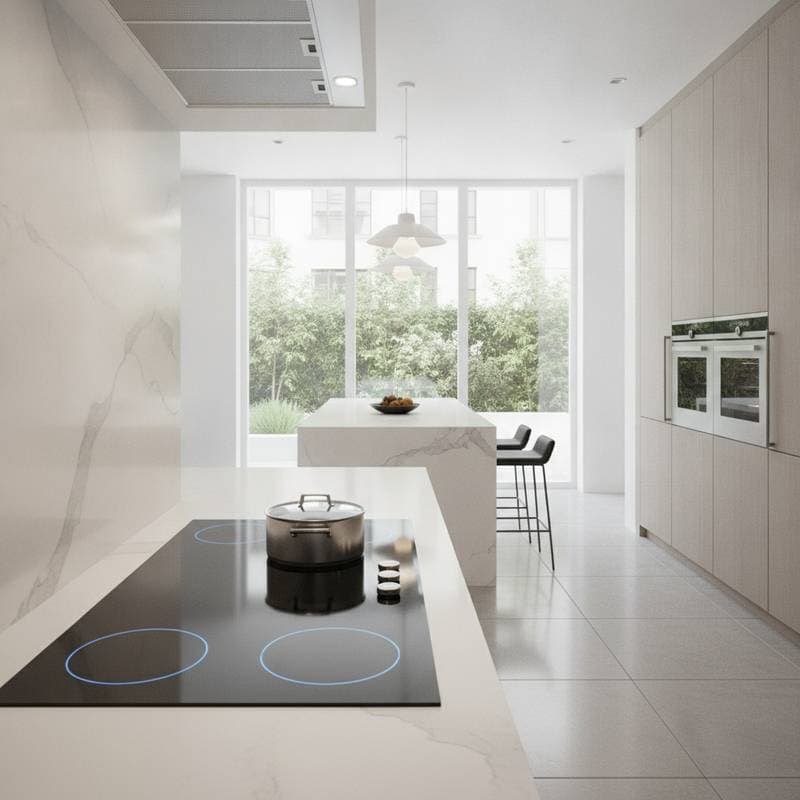
At the core of an induction cooktop lies a copper coil under a smooth glass panel. Activation generates an electromagnetic field that induces heat in compatible cookware, such as cast iron or magnetic stainless steel. This process achieves gas-like immediacy with superior accuracy and minimal energy dissipation.
The cooktop surface stays cool outside the cookware contact area, preventing baked-on residues and simplifying maintenance. Wiping spills requires only a damp cloth. To verify compatibility, test if a magnet adheres securely to the pan base.
Evaluating Expenses and Capabilities
Upfront investment: Entry-level induction models range from $800 to $1,200, compared to gas options starting at $600. Premium induction setups, featuring advanced interfaces or built-in extraction, surpass $2,000.
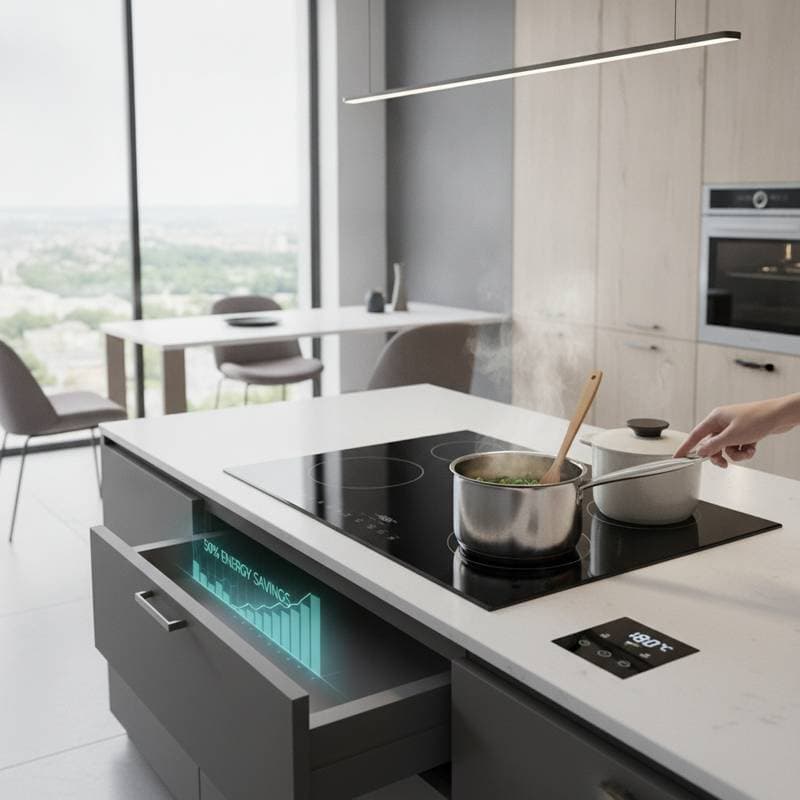
Energy expenses: Induction consumes 10 to 15 percent less power than gas, varying by regional rates. This savings accumulates over time, often recouping the initial premium within several years.
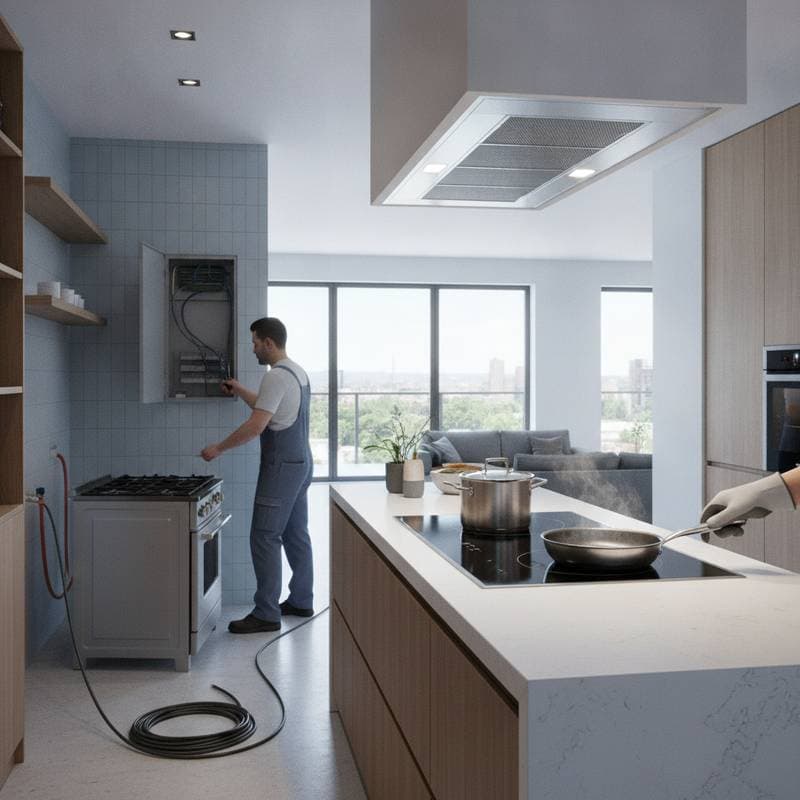
Setup expenses: Converting from gas involves $200 to $600 for electrical modifications, including gas line disconnection. Older residences might require a 240-volt dedicated circuit, installed by a certified electrician.
Operational strengths: Induction boils water in half the time of gas and supports nuanced temperature settings akin to high-end ranges. Removing the cookware instantly halts heating, minimizing risks and conserving power.
Safety Features and Upkeep
Induction ranks highly for safety. The glass remains safe to touch away from active zones, lowering scald hazards. Sensors deactivate the unit without detected cookware, eliminating flame-related dangers or gas byproducts.
Maintenance proves straightforward. The seamless surface cleans with a gentle wipe using non-abrasive solutions. Steer clear of scrubbers that might damage the glass.
Professional assistance ensures proper setup. Engage an electrician for electrical work and a plumber for gas line capping to avoid hazards.
Options Across Budgets and Styles
-
Entry-level portable: Single-burner plug-in units under $200 suit testing or temporary setups, ideal for apartments.
-
Standard built-in: 30- or 36-inch models priced $1,000 to $1,800 integrate into common counter spaces with intuitive digital controls.
-
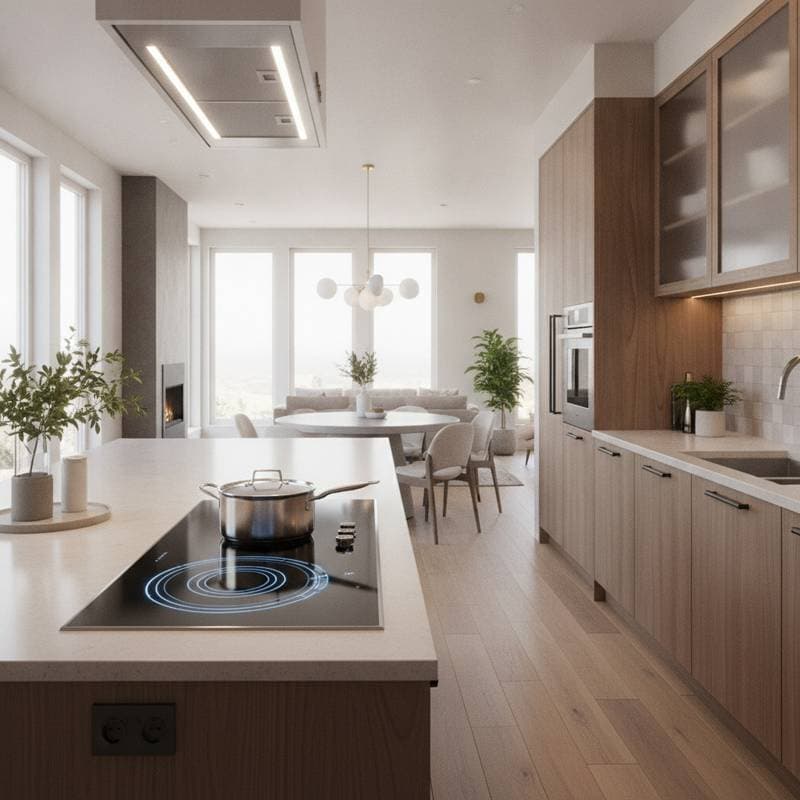
Luxury installations: Seamless or edge-less designs exceed $2,000, complementing integrated vents and bespoke cabinetry for streamlined appearances.
Induction enhances modern and hybrid kitchen designs. The level glass top contributes to a tidy, uninterrupted surface that harmonizes with quartz or composite counters.
Steps to Upgrade Effectively
Assess your kitchen's electrical setup before selecting an induction model. Evaluate options by dimensions, interface preferences, and output capacities to match your cooking habits.
Transitioning to induction extends beyond aesthetics. It promotes healthier environments, secure operations, and optimized energy use for enduring kitchen performance.