2025 Kitchen Evolution: Induction Replaces Gas Stoves
The kitchen undergoes a significant transformation in 2025. Induction cooking emerges as the preferred choice, supplanting gas stoves in modern homes. This technology integrates advanced performance with sustainable practices, appealing to homeowners seeking efficiency and style. Induction suits various budgets and spaces, from full remodels to simple upgrades.
Why Induction Excels in Performance
Induction cooking employs electromagnetic fields to heat cookware directly. This method avoids heating the surrounding air or cooktop surface, resulting in rapid response times and precise temperature management. Water reaches a boil in less than two minutes, steaks achieve even searing, and delicate sauces maintain consistent heat without burning.
Beyond speed, induction addresses health and environmental concerns associated with gas. Gas combustion releases pollutants that compromise indoor air quality. Induction produces no emissions, creating a safer environment for households with children, pets, or individuals sensitive to respiratory irritants. Professional designers recognize this as a comprehensive solution for contemporary living.
Design Benefits That Enhance Aesthetics
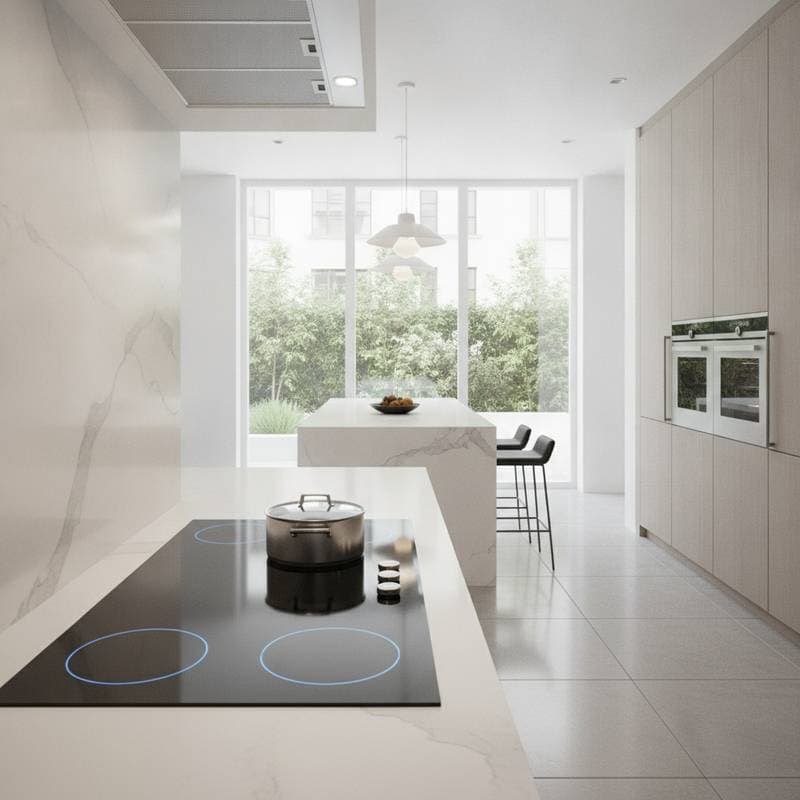
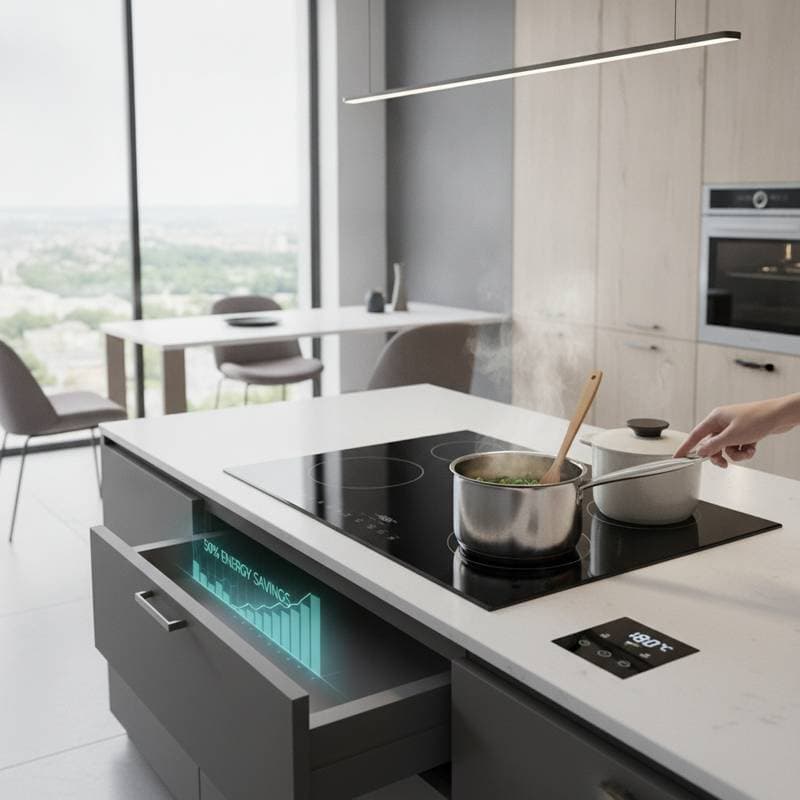
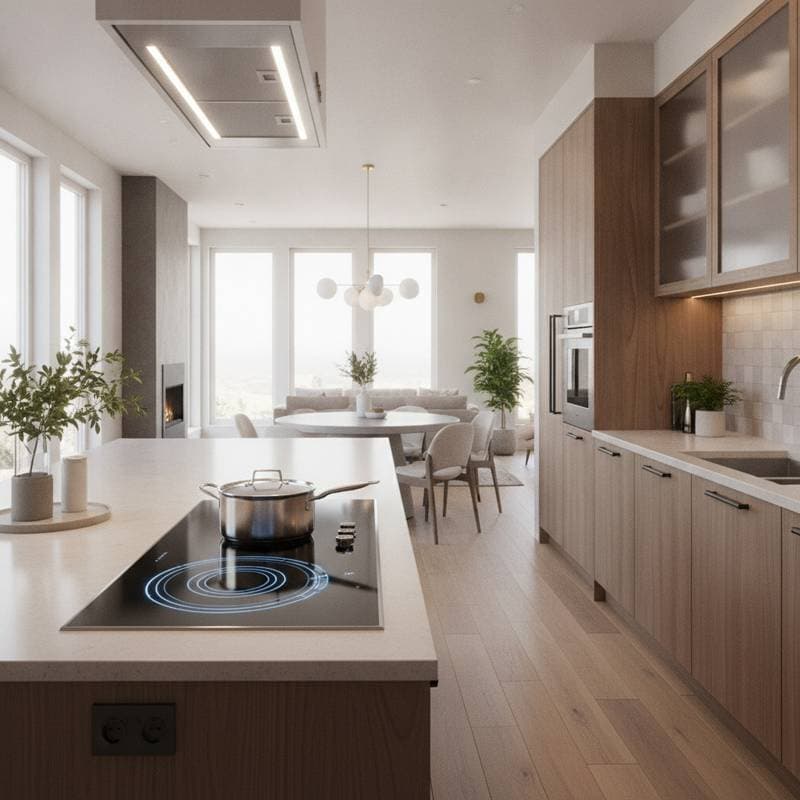
Induction cooktops offer a streamlined appearance that complements modern interiors. Their flat, smooth surfaces eliminate visible grates and controls, preserving the continuity of countertops. Cleaning requires only a damp cloth, and when powered off, the cooktop merges invisibly with surrounding materials.
Flush-mount installations provide an even more seamless integration. In kitchen islands, unused zones function as additional prep or dining space. This versatility maximizes utility while maintaining visual elegance. For compact areas, the unobtrusive design prevents visual clutter.
Budget-conscious options include portable induction units, priced from $50 to $100. These devices connect to standard outlets and perform comparably to permanent installations. They allow users to experiment before investing in built-in systems, offering flexibility for renters or small households.
Practical Cooking Advantages
Induction delivers immediate responsiveness in everyday use. Heat adjustments produce instant changes, preventing overcooking or uneven results common with gas flames. Temperature stability ensures reliable outcomes, from simmering soups to baking preparations.
Professional chefs value this precision for consistent results. Unlike gas, which requires manual flame adjustments, induction maintains exact settings. This reliability extends to home cooks, simplifying complex recipes and reducing trial-and-error.
Safety features further distinguish induction. The cooktop surface remains cool to the touch, as heat activates only in compatible cookware. Without open flames, risks diminish for accidental burns. Non-reactive elements, such as utensils or fabrics, remain unaffected by the magnetic field.
Accessible Options Across Budgets
Induction technology accommodates diverse financial situations. Entry-level choices enable gradual adoption without major renovations.
-
Portable Single-Burner Units: Available for $50 to $100, these plug into standard outlets. They suit apartments, dormitories, or recreational vehicles.
-
Countertop Two-Burner Models: Ranging from $150 to $300, these serve small families or serve as introductory tools.
-
Built-In Four-Burner Cooktops: Starting at $700, these replace existing surfaces and provide professional functionality.
-
Full Induction Ranges: Beginning at $1,000, these include ovens and scale up to $5,000 for premium features.
Portable models bridge the gap for those planning future upgrades, delivering benefits immediately.
Sustainability and Energy Efficiency
Induction promotes eco-conscious cooking through superior energy use. Direct heat transfer minimizes waste, directing nearly all power to the food. Homeowners experience reduced utility costs alongside a lower environmental impact.
When paired with renewable energy sources, induction operates emission-free. The absence of gas infrastructure eliminates fumes and installation complexities. Many integrate these systems with solar setups, fostering comprehensive sustainable kitchens.
Essential Installation Considerations
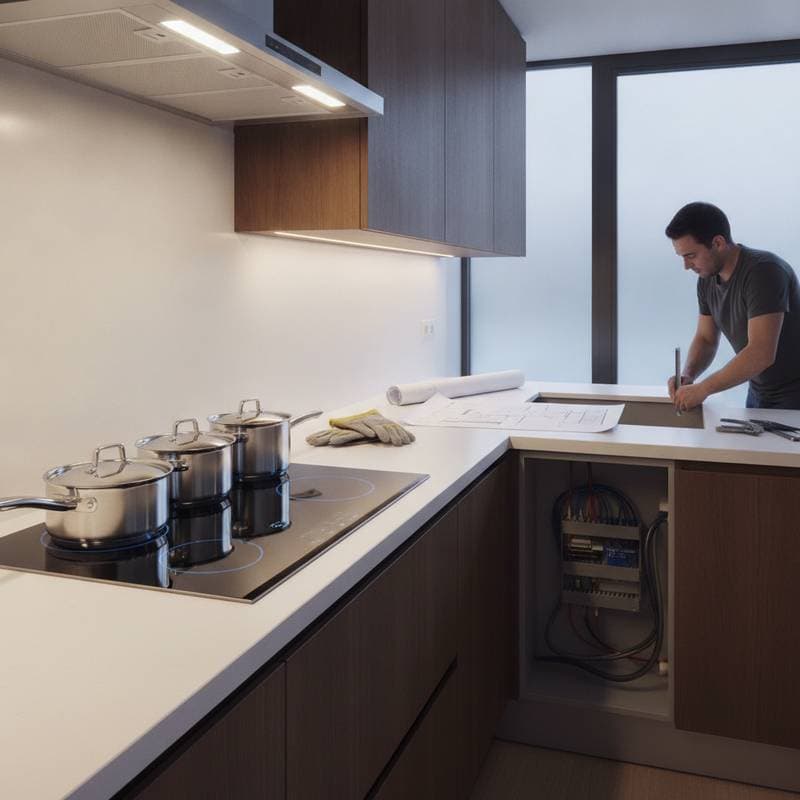
Transitioning to induction involves straightforward preparations. Electrical requirements include a dedicated circuit, which most homes support. Consult a licensed electrician to verify capacity and ensure compliance.
Compatible cookware features ferrous bases; test with a magnet for adhesion. Cast iron and certain stainless steel items function well. Inexpensive induction-ready sets address any gaps in existing collections.
Ventilation needs decrease without combustion byproducts, allowing for simpler hood designs or open shelving. Measure cutouts precisely, as standard sizes align with most models. Post-installation, maintenance proves minimal, with no components requiring disassembly.
Advances in Induction Technology
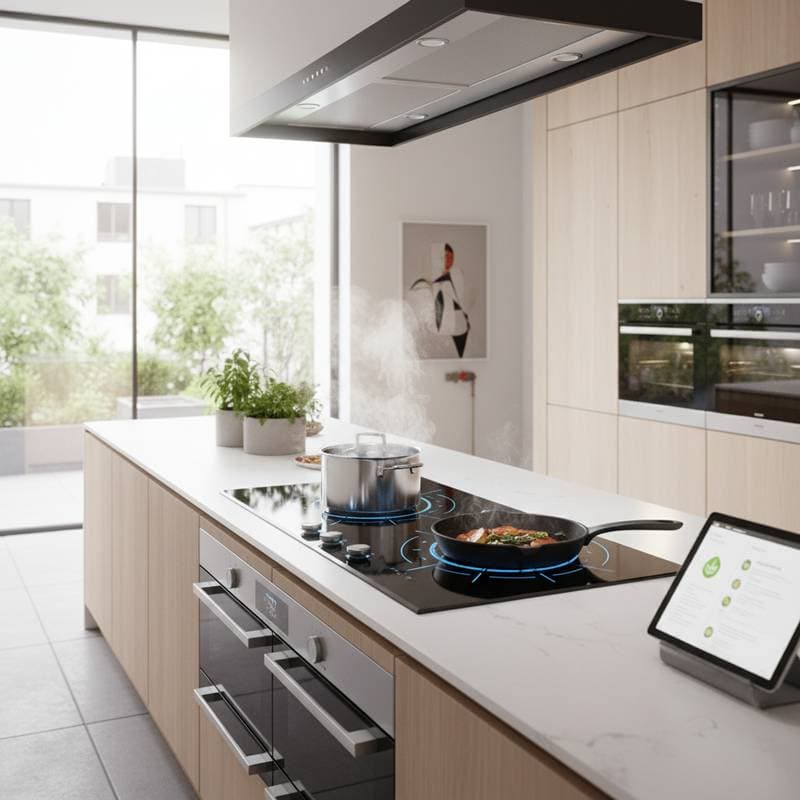
Manufacturers innovate to meet growing demand. Smart cooktops connect to applications for recipe guidance and automated adjustments. Flexible zones adapt to various cookware sizes, accommodating oversized pots or griddles.
Custom integrations embed elements beneath counter surfaces, activating on demand. Off-duty, the area remains cool and unnoticeable. These developments enhance both form and function in residential design.
Specialized cookware lines optimize performance, promoting even heating and simple upkeep. Entrepreneurs explore these opportunities, expanding product ranges for induction users.
Integrating Induction into Daily Routines
Adopting induction transforms cooking routines. The cool kitchen environment reduces ambient heat, benefiting smaller spaces or warmer climates. Responsive controls and easy maintenance elevate the overall experience.
Steps to Adopt Induction Cooking
-
Evaluate Electrical Infrastructure: Engage an electrician to assess compatibility.
-
Verify Cookware Suitability: Test items with a magnet and acquire necessary replacements.
-
Define Budget Parameters: Select portable, built-in, or complete systems based on needs.
-
Align with Kitchen Style: Choose finishes that harmonize with existing aesthetics.
-
Incorporate Sustainable Elements: Combine with efficient appliances or green energy for long-term gains.
These steps facilitate a smooth upgrade, yielding enduring efficiency and satisfaction.