Aging in Place: Universal Bathrooms for 2026
Designing spaces that adapt to changing needs defines forward-thinking home improvements. Universal bathrooms achieve this by uniting safety, aesthetics, and autonomy for users of all ages and abilities. These designs suit long-term homeowners seeking to enhance property value or those undertaking practical renovations. The following sections outline strategies to implement such bathrooms within various budgets.
Integrating Function and Aesthetic Appeal
Accessibility no longer implies stark or utilitarian aesthetics. Contemporary universal bathrooms deliver spa-inspired elegance alongside robust functionality. Initial planning emphasizes inclusivity, ensuring the space accommodates diverse users through broad pathways, seamless showers, and reachable storage solutions. This approach merges utility with visual harmony.
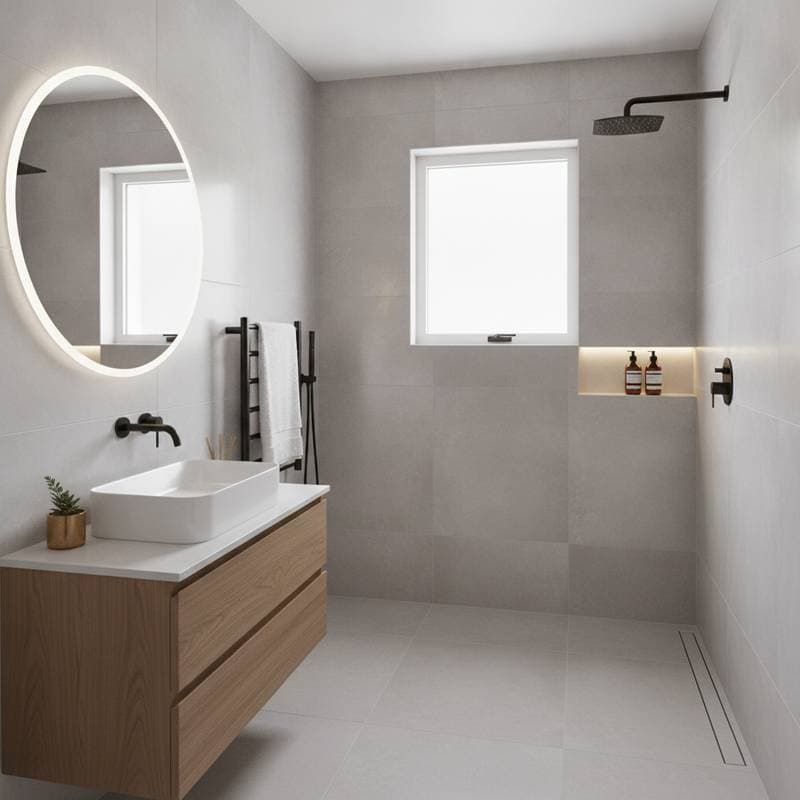
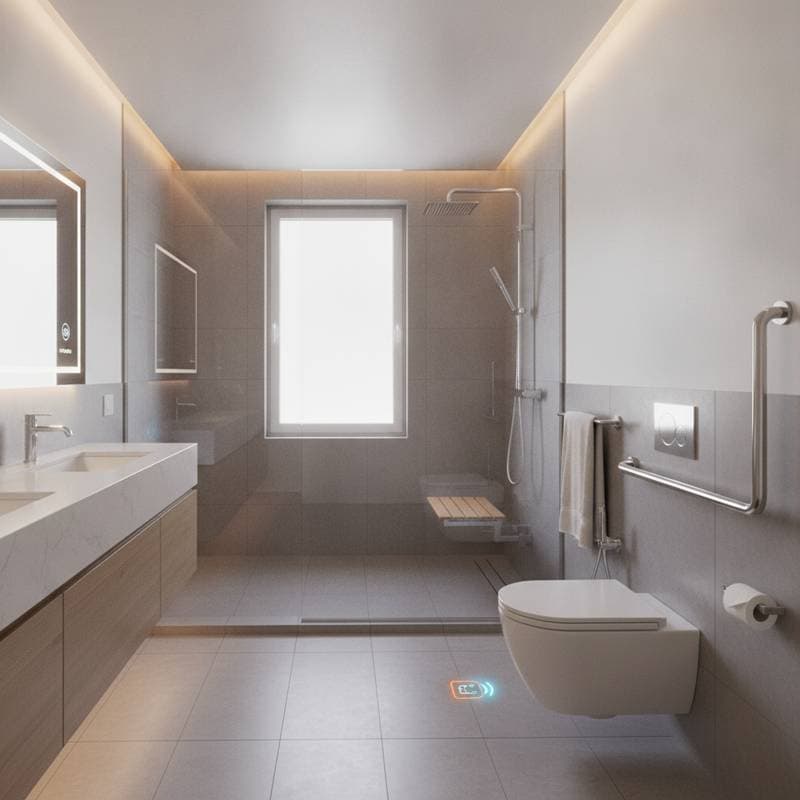
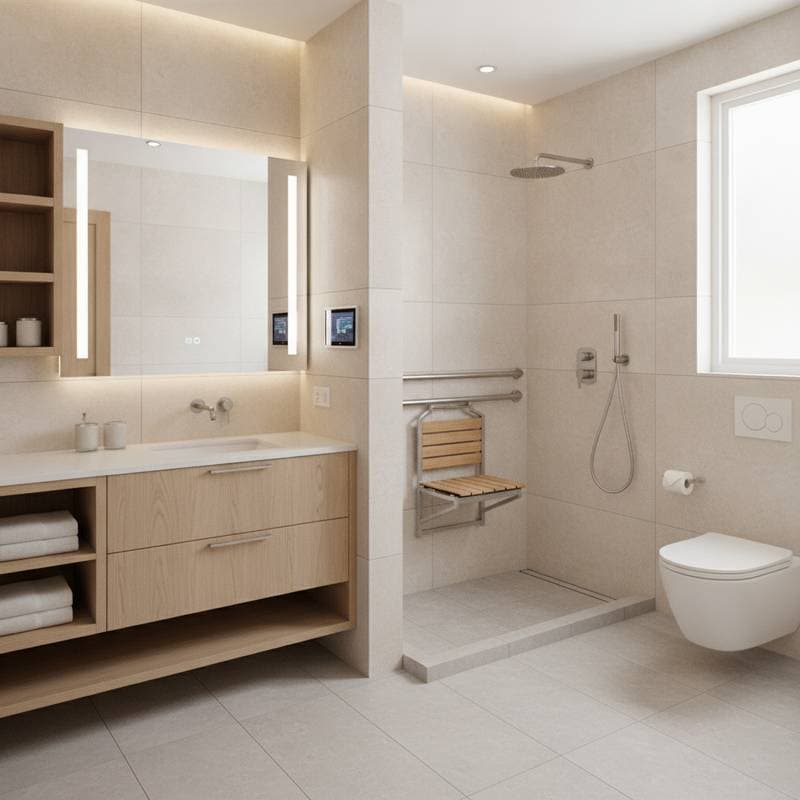
A curbless shower stands out as a key enhancement. It establishes a level floor surface that expands perceived space and eliminates fall risks. Combine it with oversized tiles and a linear drain to achieve a streamlined, modern appearance compatible with traditional or minimalist decors. For constrained budgets, opt for prefabricated low-threshold bases installed over existing flooring. These provide equivalent accessibility advantages at reduced custom fabrication costs.
- Measure the shower area to confirm compatibility with low-threshold options.
- Select tiles with at least 0.6 coefficient of friction for slip resistance.
- Position the linear drain to facilitate even water flow and minimize maintenance.
Optimizing Layouts for Mobility and Comfort
Effective space planning forms the foundation of a universal bathroom. The configuration must permit unrestricted movement and ease for all occupants. Widen doorways to a minimum of 36 inches where possible, and maintain a 60-inch turning radius in the room's center. Such modifications significantly aid wheelchair navigation and accommodate families during routines like bathing children.
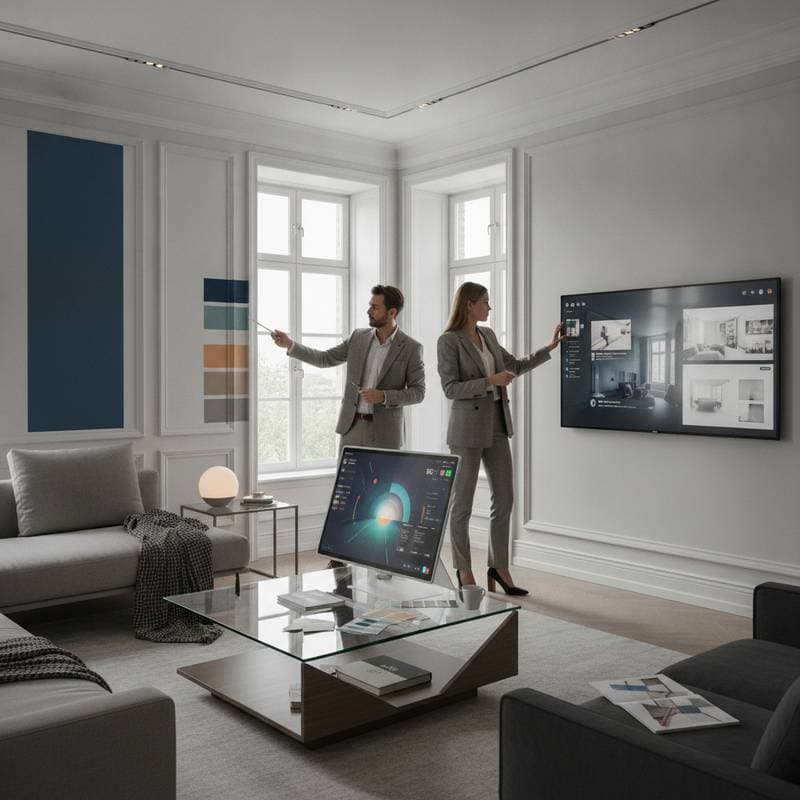
In compact bathrooms or limited remodels, pocket doors or sliding barn doors preserve floor space. These alternatives prove economical and require little structural modification. Professionals often employ them in high-stakes projects, such as television renovations, where spatial efficiency proves essential and enhances on-screen presentation.
Consider these layout principles:
- Allocate at least 30 inches of clearance on all sides of fixtures.
- Position the vanity and toilet to avoid tight corners.
- Use mirrors that extend to full height for better visibility without added steps.
Selecting Supportive Fixtures
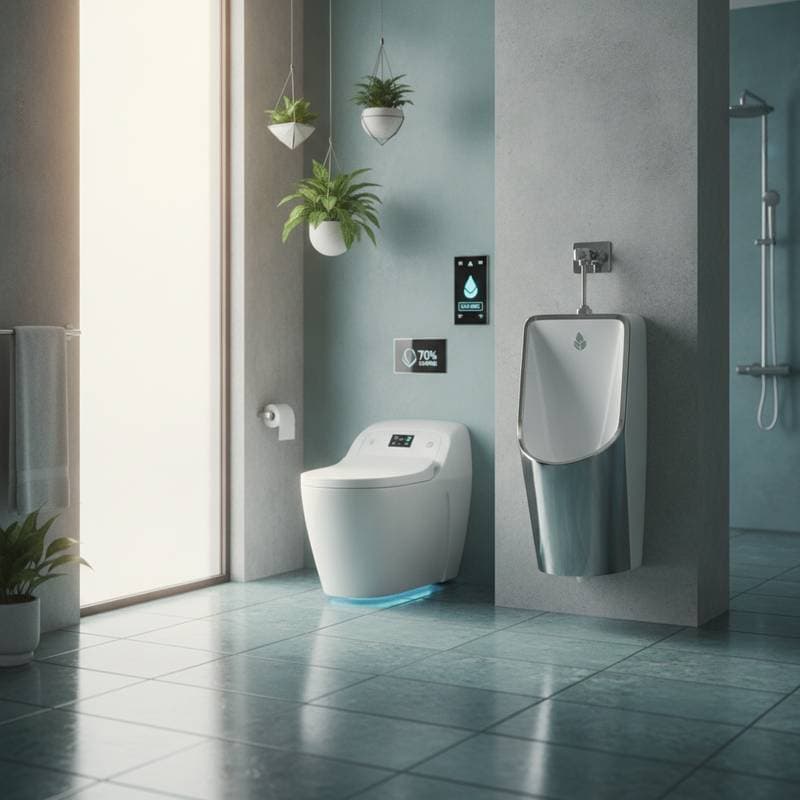
Fixtures play a pivotal role in user comfort and independence. Lever-handled faucets and single-control mechanisms accommodate varying dexterity levels. Sensor-activated options further promote hygiene and ease, benefiting all household members. For toilets, select comfort-height models elevated 17 to 19 inches from the floor. This adjustment eases standing and sitting, promoting self-reliance without altering the room's proportions.
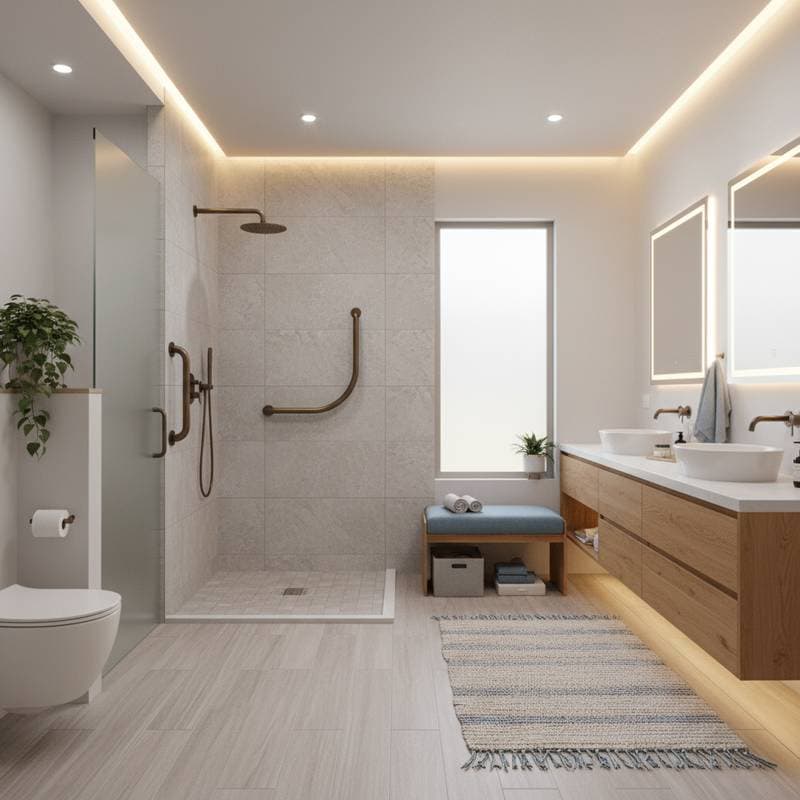
Grab bars enhance stability, yet modern iterations blend seamlessly into decor. Available in finishes like matte black or brushed brass, they coordinate with towel racks and hardware for cohesive styling. Install them at strategic points: near the toilet, shower entry, and alongside the tub if present. This integration ensures every element contributes to both safety and design intent.
For temporary or budget-conscious solutions, adhesive or suction-mounted grab bars offer repositioning flexibility. They suit rental properties or trial installations before permanent fixtures. Verify weight capacities exceed 250 pounds and test adhesion on targeted surfaces.
Choosing Resilient Materials
Slip-resistant flooring remains crucial for universal bathrooms. Textured porcelain tiles or waterproof luxury vinyl planks deliver traction while upholding sophisticated appearances. Vinyl planks perform reliably in moisture-prone environments and capture light effectively for photographic appeal in design showcases. For accessible installation, peel-and-stick vinyl tiles provide a swift, reversible alternative suitable for future updates.
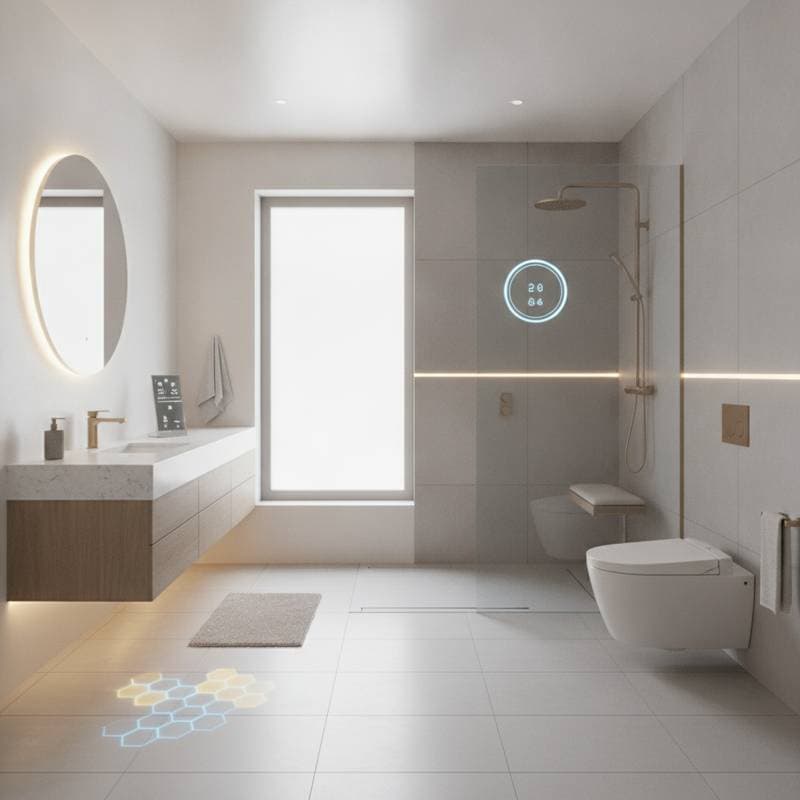
Lighting influences both safety and ambiance. Employ layered systems: overhead ambient sources for general illumination, focused task lights above mirrors, and subtle accents for depth. Dimmers allow customization of intensity to suit activities or preferences. Under-cabinet LED strips and toe-kick baseboard lights offer low-level guidance during nighttime use, combining practicality with atmospheric enhancement.
Evaluate material selections with these criteria:
- Prioritize low-VOC options to maintain indoor air quality.
- Ensure waterproofing ratings meet or exceed IP65 standards for wet zones.
- Test samples in the actual space for color accuracy under installed lighting.
Evolving with Scalable Enhancements
Universal bathrooms excel in their adaptability over time. Each deliberate feature supports transitions, from post-surgical recovery to assisting family members or proactive planning. These spaces simplify daily tasks, fostering enjoyment and confidence in personal care routines.
Maintain a prioritized list of phased upgrades. Begin with essentials like grab bars and improved lighting, then progress to curbless showers or radiant floor heating. Each addition reinforces the environment's safety and allure, ensuring longevity.
This design philosophy elevates aging in place beyond necessity. It empowers sustained independence and infuses luxury into essential spaces. Through strategic choices and incremental refinements, homeowners create bathrooms that endure and inspire across generations.