Waterless Fixtures That Cut Bills 70 Percent
You open your water bill and notice another increase. Household habits remain steady, yet costs continue to rise. Waterless fixtures offer a direct solution by targeting bathroom use, the largest source of indoor water consumption in most homes.
These systems replace standard toilets, urinals, and faucets with models that require little or no water. Households that complete the switch often record utility reductions of up to seventy percent. The following sections explain the mechanisms, costs, and steps required for a successful upgrade.
Sources of Savings
A conventional toilet flushes between 1.6 and 3 gallons each time. Older units consume even larger volumes. A waterless toilet eliminates nearly all of this demand.
Standard urinals in frequent use can draw 35,000 gallons annually. Waterless models remove that volume entirely. When lower water heating and sewer charges are included, total utility expenses typically fall between fifty and seventy percent in areas with high rates.
Waterless Urinals
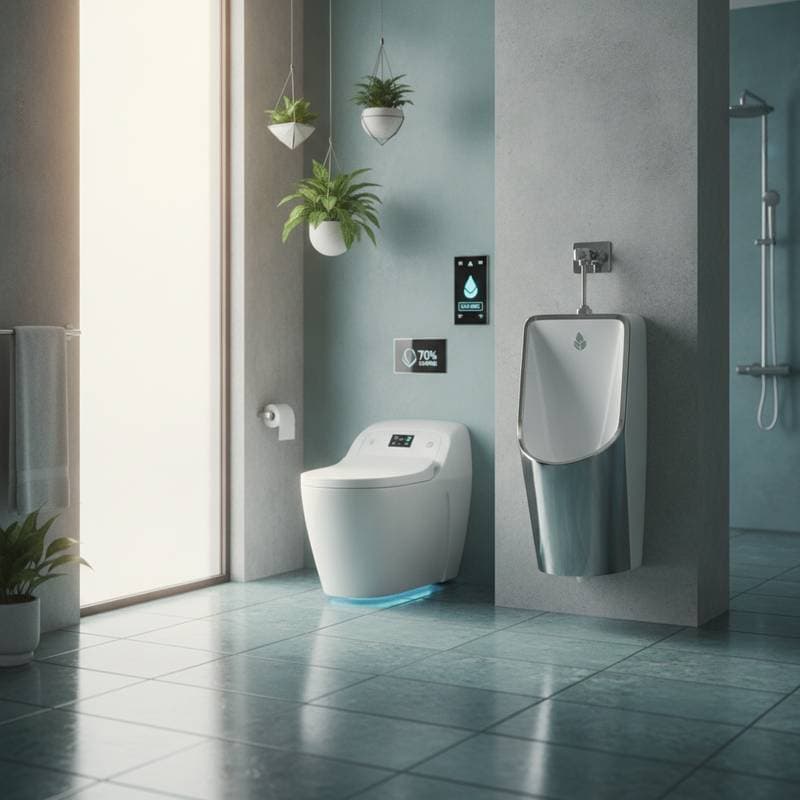
Waterless urinals fit any bathroom that has an existing drain line. They rely on a replaceable cartridge or a sealing liquid to block odors while directing waste into the sewer.
How They Work
Urine passes through a barrier liquid lighter than water. The liquid creates a seal that prevents odors from rising. Some units substitute a cartridge for the liquid.
- Cost ranges from 400 to 800 dollars per fixture.
- Maintenance requires cartridge or liquid replacement every few months.
- Installation difficulty remains low for individuals with basic plumbing experience.
Benefits
Absence of flush valves removes moving parts that commonly fail. Surfaces stay cleaner because mineral buildup decreases. Long-term maintenance expenses decline as a result.
Installation Preparations
- Review local building codes to confirm whether permits are required for composting or incinerating models.
- Verify that the bathroom layout provides space for vent pipes or exhaust fans needed by certain systems.
- Schedule routine maintenance tasks such as emptying compost containers or replacing cartridges.
- Engage a licensed plumber or electrician for vacuum or incinerating units that involve electrical connections.
Investment and Returns
A complete bathroom retrofit typically costs between 2,000 and 6,000 dollars. Annual water savings often exceed 500 dollars in high-rate regions. Over five years the cumulative return becomes substantial, especially when plumbing repairs also decrease.
New construction allows lower installation costs because venting and drainage can be designed around the fixtures from the start.
Hygiene and Safety
Modern designs control odors through biological or mechanical barriers rather than chemical additives. Routine cleaning with mild soap maintains sanitary conditions. Harsh chemicals must be avoided because they damage sealing liquids or composting bacteria. Gloves should be worn during any emptying procedure, and manufacturer disposal instructions must be followed.
Broader Impacts
Each converted household conserves thousands of gallons per year. Reduced water demand lowers the energy required for treatment and distribution. The fixtures also remain operational during supply interruptions or municipal restrictions.
Planning Your Installation
Begin with a single fixture such as a waterless urinal or low-flow faucet. Monitor water meter readings for several months to quantify the change. Larger projects benefit from consultation with professionals experienced in water-conservation systems. Inquiries about local rebates can further improve project economics.