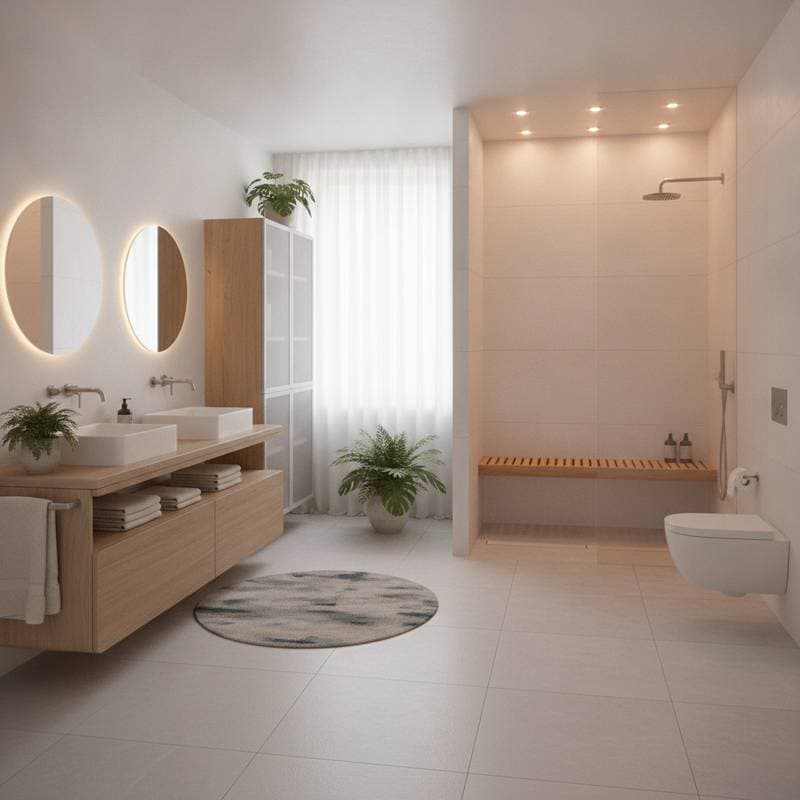
The 2026 Vision for Aging in Place Bathrooms
The bathroom serves as a space for daily rituals and personal restoration. As needs change with age, this room can present unexpected challenges. Universal design addresses these shifts by creating adaptable environments that maintain dignity and ease of use. This approach balances visual appeal with practical function to produce rooms that grow with their occupants.
The following sections present five core principles that guide modern aging in place bathrooms. Each principle shows how material selections and layout decisions turn a basic room into a supportive setting.
Layered Lighting for Safety and Serenity
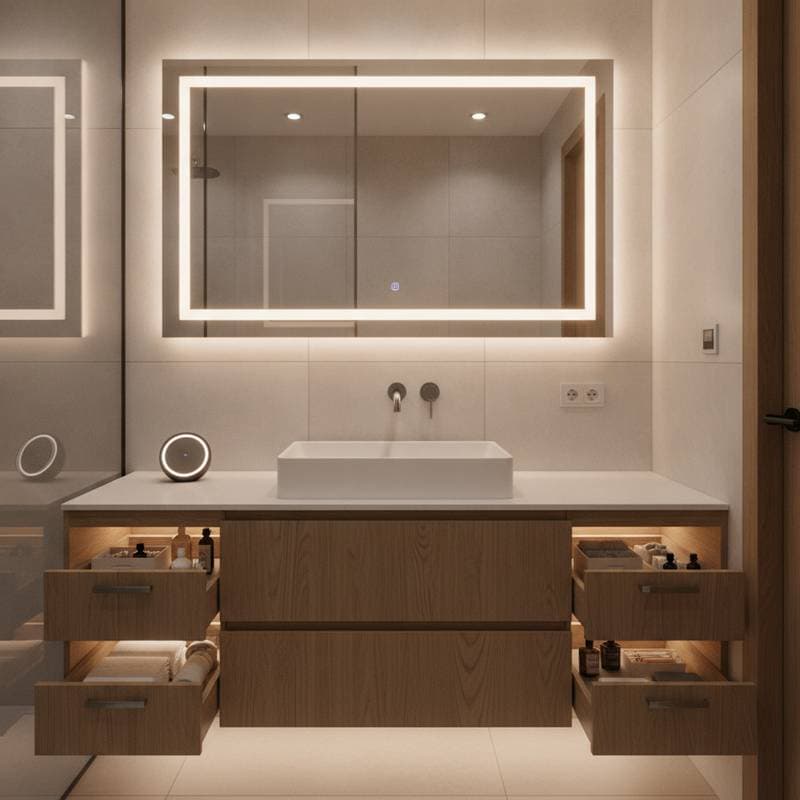
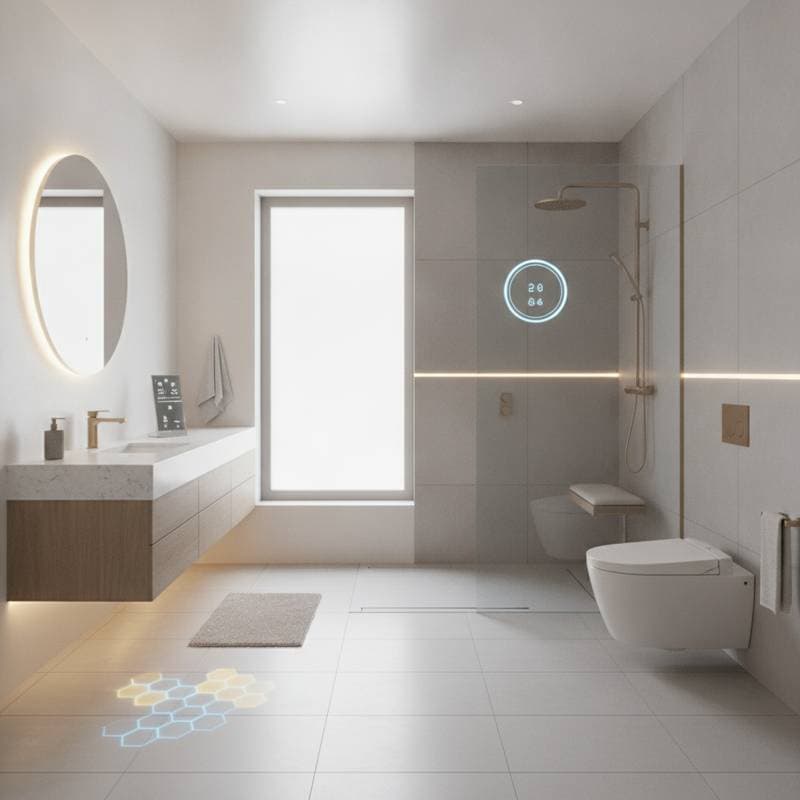
Effective lighting improves both visibility and atmosphere. Layered systems that combine ambient, task, and accent sources help users adjust to changing light levels and reduce harsh glare. Indirect cove lighting paired with mirrors that include integrated LEDs creates a gentle glow at a color temperature near 3000K.
Motion sensors placed at low levels provide subtle guidance during nighttime visits. Touch sensitive dimmers allow precise control without complex switches. These elements work together to support clear vision while preserving a calm environment.
Ergonomic Hardware That Enhances Security
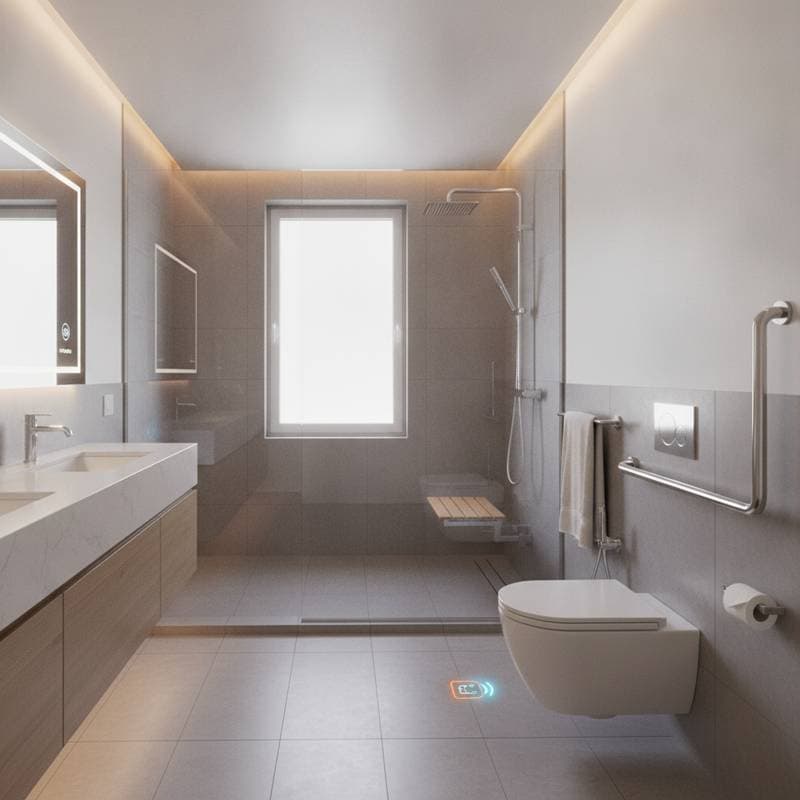
Grab bars now appear in refined finishes that complement overall room aesthetics. Collections from established manufacturers offer options in polished nickel, brushed brass, and matte black that meet ergonomic standards. Proper placement along shower walls, near toilets, and beside tubs integrates support into the architecture.
Designers often align these bars with matching towel rails to maintain visual flow. This method delivers necessary assistance while avoiding a clinical appearance. The result is a consistent look that signals stability without dominating the space.
Flexible Vanities for Varied Users
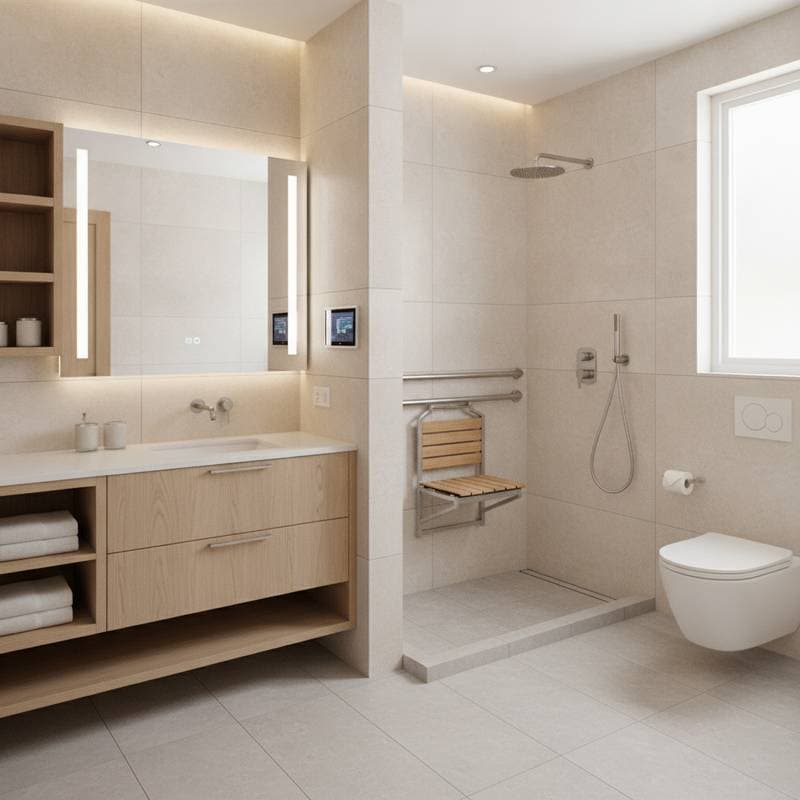
Vanities now accommodate both seated and standing positions through adjustable height options. Wall mounted modular units allow changes in elevation, and durable quartz surfaces resist daily wear. Knee clearance beneath the sink supports wheelchair access while concealed panels keep plumbing out of view.
Lever style or sensor operated faucets simplify water control. Tilting mirrors with magnification options improve visibility for users of different heights. Finishes such as pale wood veneers with satin hardware keep the area residential in character.
Showers Configured for Easy Access
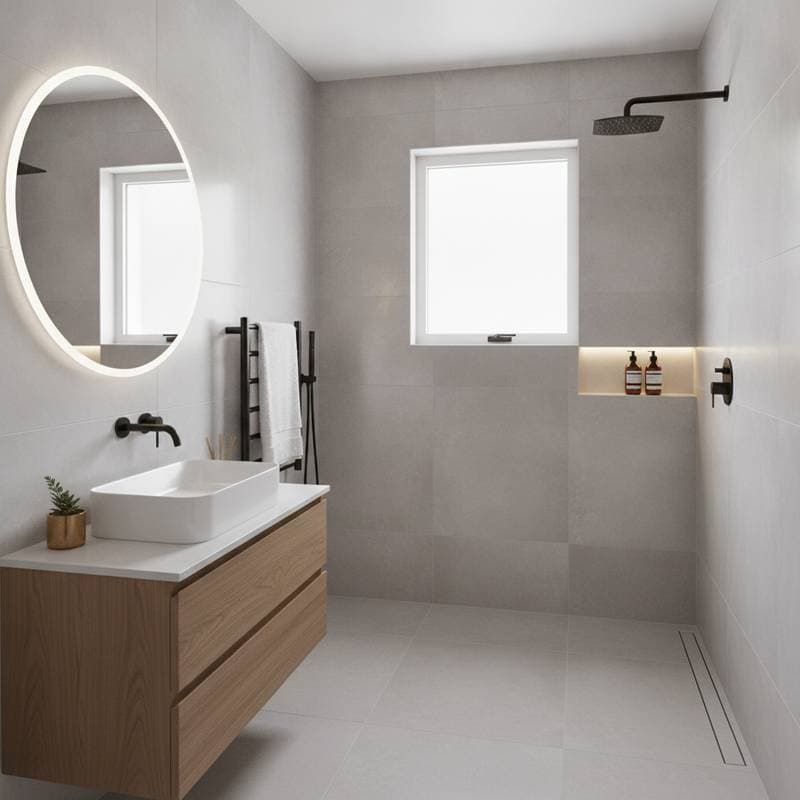
Curbless showers serve as central features in these bathrooms. Large format tiles reduce grout lines and simplify cleaning. Built in benches or fold down seats supply resting spots without crowding the floor plan.
Adjustable shower heads on slide bars permit changes in height and angle. Handheld units with thermostatic controls offer additional precision. Low friction door tracks or open wet room layouts preserve movement while creating a spa like setting.
Personal Details That Reflect Individual Style
Successful aging in place bathrooms incorporate elements that match personal preferences. Moisture safe artwork, textured rugs, and integrated sound or scent systems add character. These additions reinforce the room as a restorative area rather than a purely functional one.
Designers focus on flexibility so that each choice supports both aesthetic goals and daily needs. The outcome feels natural and enduring.
Maintaining Function Over Time
An aging in place bathroom requires periodic attention to remain effective. Reapply slip resistant treatments as needed and adjust lighting controls when vision changes. Modular storage systems allow reconfiguration as requirements evolve.
Homeowners benefit from treating the space as adaptable rather than fixed. This ongoing approach preserves both practical performance and emotional comfort across many years.