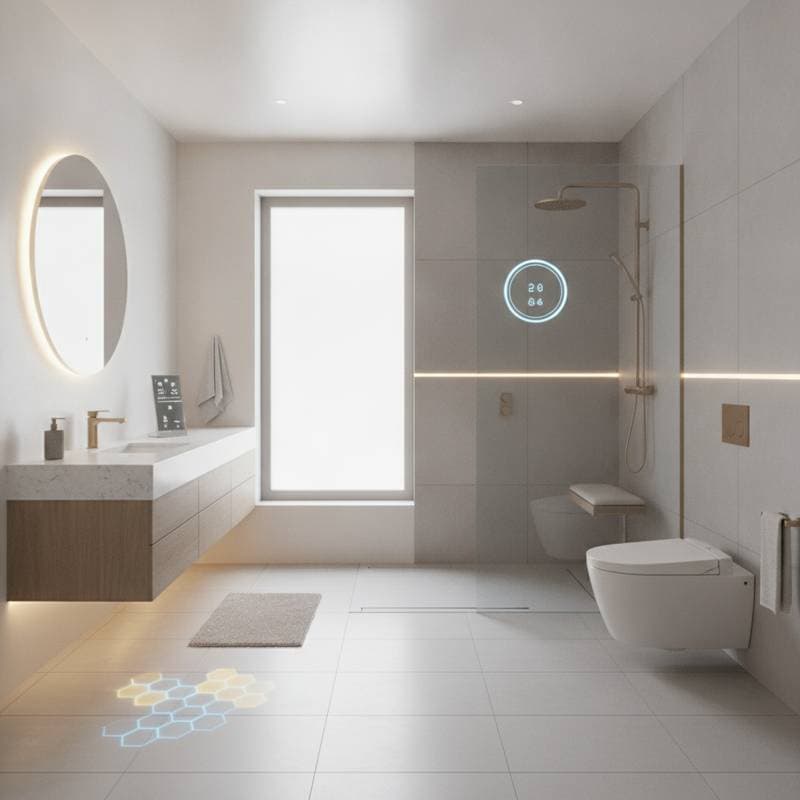
New Tech Revolutionizing Aging in Place Bathrooms
You may have noticed that getting in and out of the shower feels a little trickier these days. Or bending to reach the faucet puts extra strain on your back. Many homeowners plan ahead for themselves or their parents. They want a bathroom that feels safe, comfortable, and stylish for years to come. Aging in place works well when the right design and technology come together. The newest wave of bathroom innovations makes it easier to stay independent at home while enjoying modern comfort.
The Challenge of Traditional Bathrooms
Most standard bathrooms were not built with mobility or long term use in mind. Slippery floors, narrow doorways, and awkwardly placed fixtures can quickly become safety hazards. Falls remain one of the most common household injuries among older adults. Many of these incidents happen in the bathroom. The good news is that you do not have to give up style or convenience to create a safer space. A new generation of smart, accessible technology is changing how homeowners approach bathroom remodels.
The Promise of Smart Accessibility
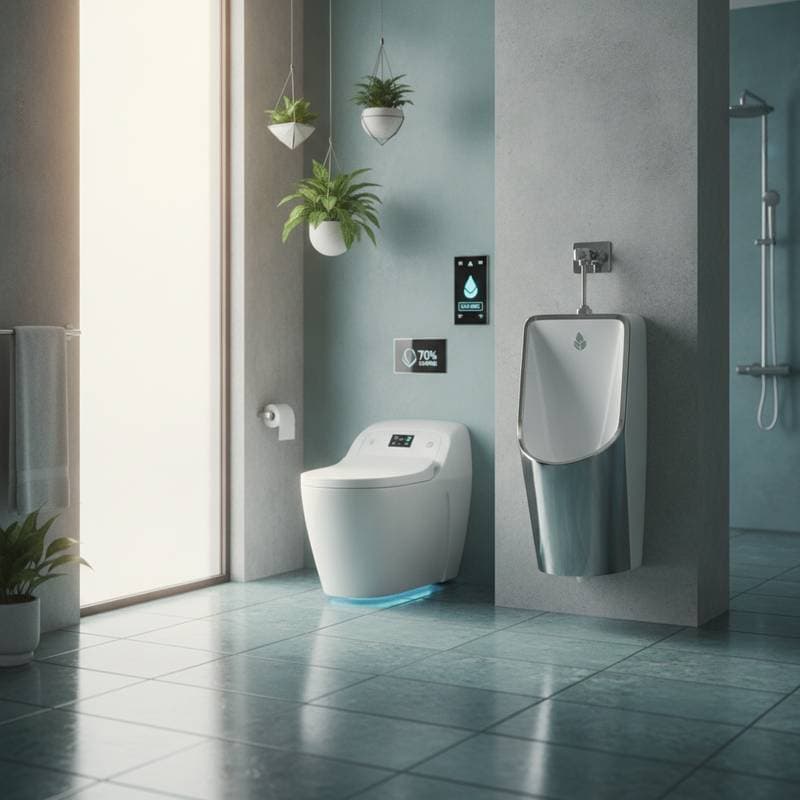
Modern bathroom tech goes far beyond grab bars and nonslip mats. Today systems integrate sensors, automation, and adaptive design to help maintain independence. Think hands free faucets that adjust temperature automatically. Lighting brightens when you enter. Toilets handle cleaning and flushing without lifting a finger. These updates restore confidence, privacy, and daily ease.
Here is how the latest technology is reshaping aging in place bathrooms. You will see details on cost, performance, and maintenance.
Responsive Lighting Systems
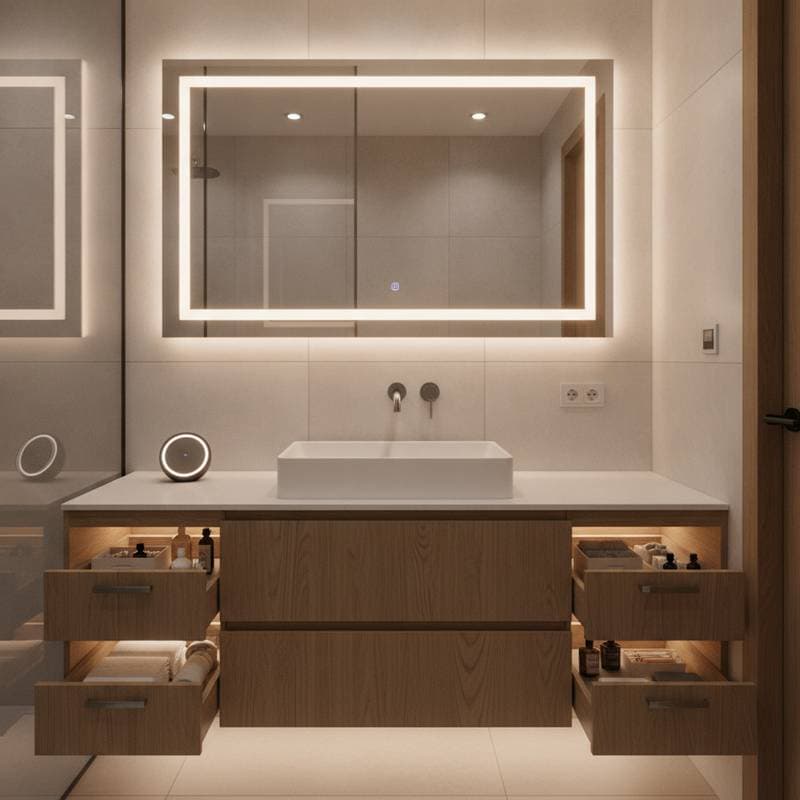
Poor lighting is one of the biggest hidden hazards in older bathrooms. Smart lighting systems now include motion sensors that activate soft, indirect light when someone enters the room at night. LED strips along baseboards or under cabinets improve visibility without glare. A simple motion activated nightlight can cost under 50 dollars. A full integrated lighting system can reach 1000 dollars.
Lighting color and intensity matter too. Cool white light enhances visibility. Adjustable color temperature can mimic natural daylight. This improves mood and alertness. Many homeowners combine ambient, task, and accent lighting for a layered effect that looks high end yet serves a clear safety function.
Voice Activated and App Controlled Features
Voice control has become a game changer for accessibility. With systems like Alexa or Google Home, you can say commands such as turn on the shower or dim the lights. Paired with smart mirrors or speakers, this tech brings both convenience and safety. You can even set up routines like evening shower mode. This warms the room, turns on soft lighting, and starts the water at a preset temperature.
The cost varies depending on how automated you want your space to be. A basic setup using smart plugs and bulbs might be under 300 dollars. A fully integrated system with sensors, lighting, and temperature control could run between 2000 and 4000 dollars.
Realistic Budget Planning
Every homeowner budget is unique. Planning in tiers can help.
- DIY upgrades under 1000 dollars: Add motion lights, non slip mats, handheld showerheads, and simple voice controlled plugs.
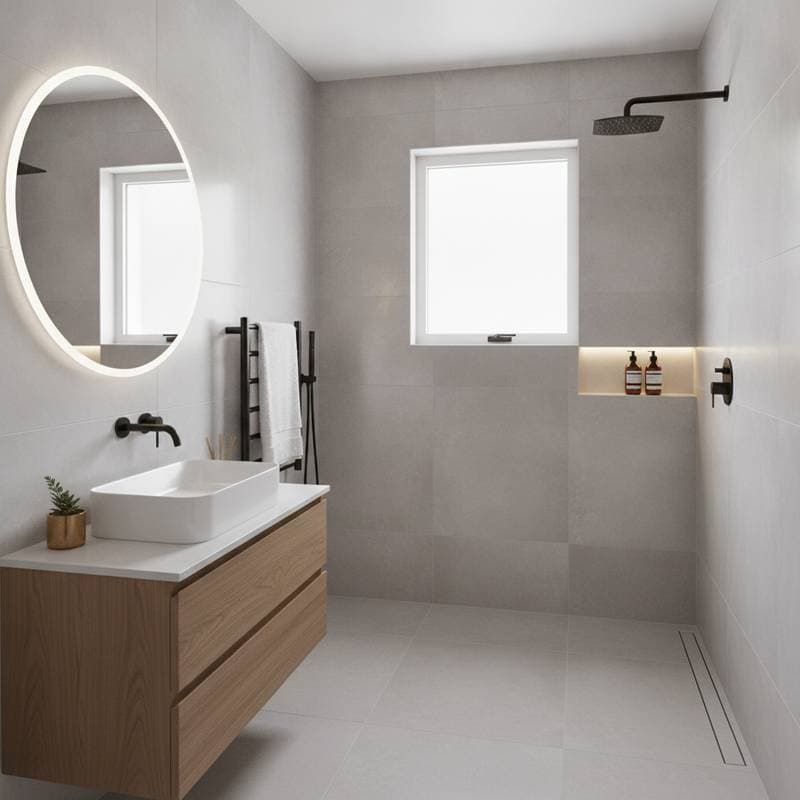
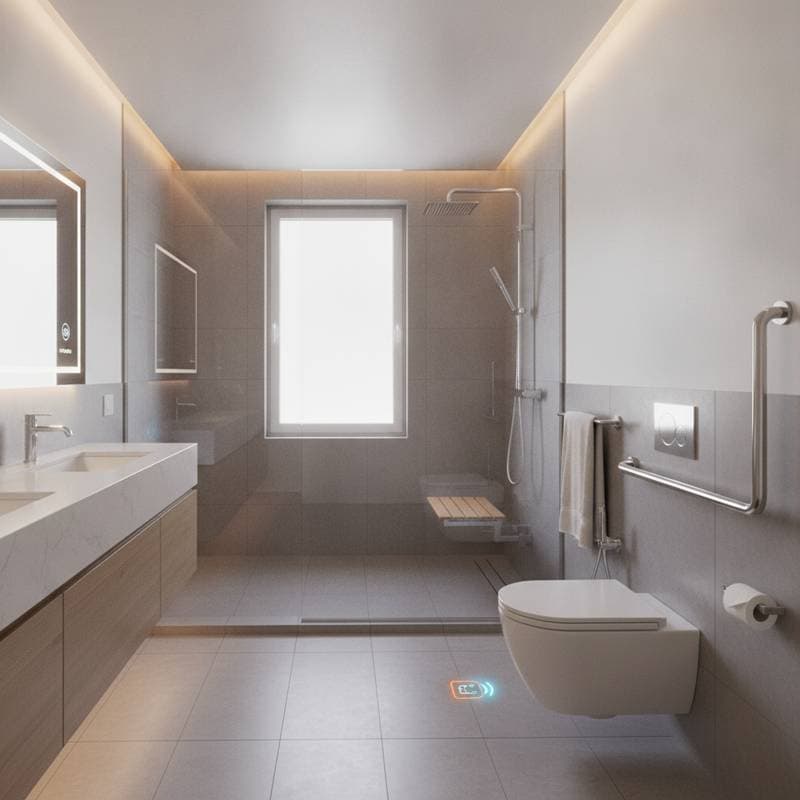
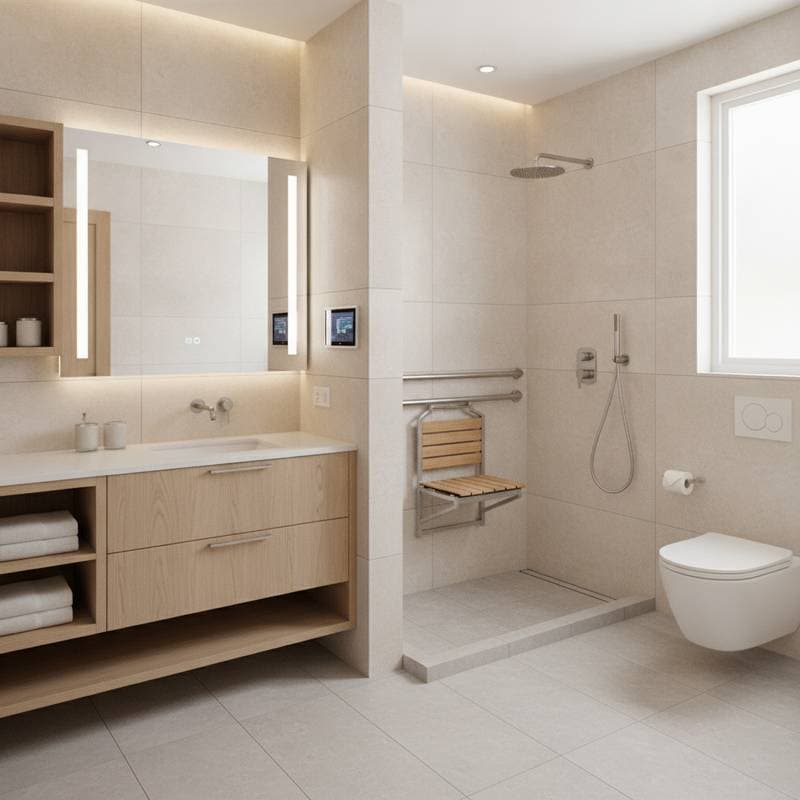
- Mid range remodel between 5000 and 15000 dollars: Install smart faucets, improved lighting, grab bars, and a curbless shower.
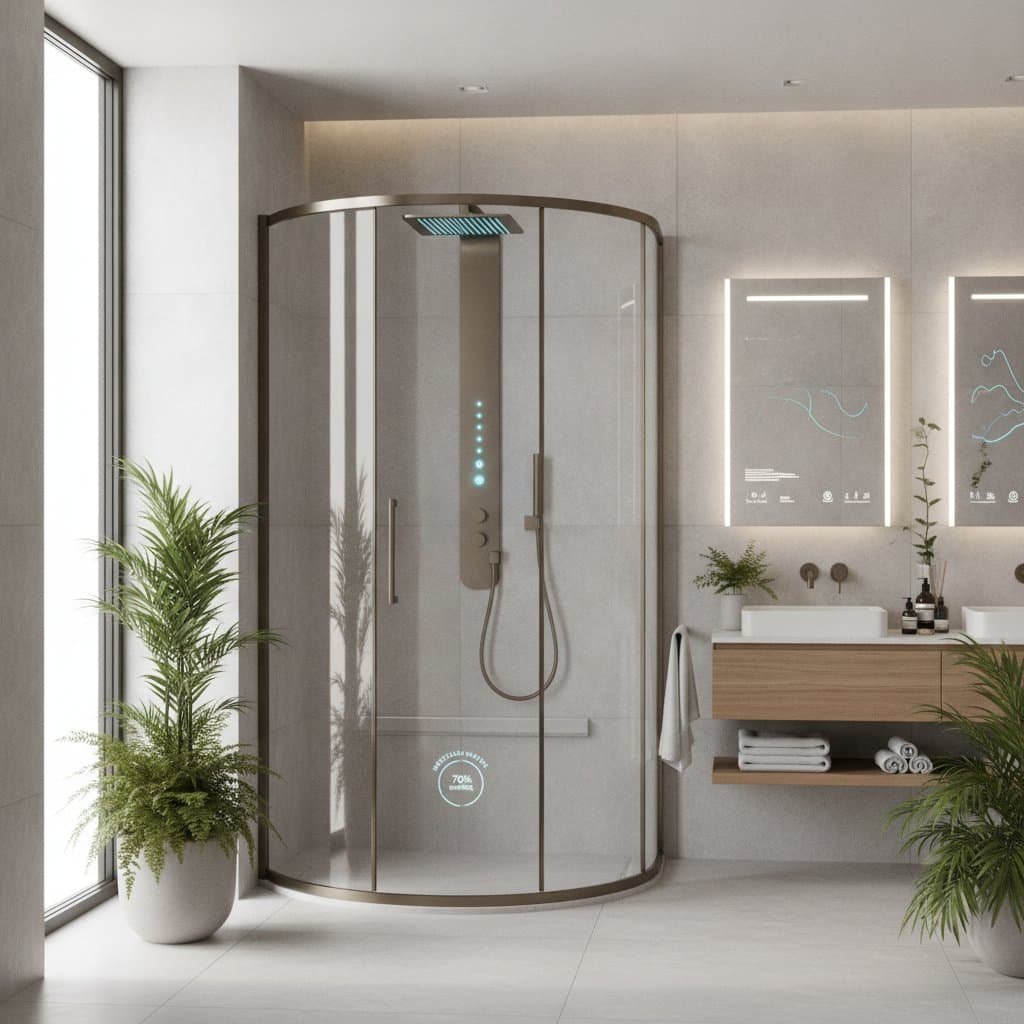
- Premium remodel at 20000 dollars and up: Combine digital shower systems, self cleaning toilets, heated floors, and voice integrated features for full automation.
Most homeowners recover part of these costs through improved resale value and reduced future care expenses. Accessible design is becoming a sought after feature. Even younger buyers appreciate convenience and safety.
Planning Your Upgrade
Aging in place does not mean settling for outdated design or limited function. With thoughtful planning and the latest technology, your bathroom can be both safe and beautiful. Start small if needed. Replace old faucets with touchless ones. Add motion sensing lights. Or upgrade to a more supportive shower seat. Each step improves your comfort and independence.
If you are planning a full remodel, focus on the essentials first. These include slip resistant flooring, proper lighting, and accessible layouts. Then layer in smart technology to enhance convenience. The key is balance. You want a space that feels natural to use today and adaptable for tomorrow.
Your bathroom should work for you, not the other way around. With smart fixtures, responsive lighting, and barrier free design, aging in place becomes less about compromise and more about continuing to live comfortably in the home you love.