The Allure of Doorless Showers in Wet Rooms
Imagine entering a bathroom that exudes openness, freshness, and minimalism. A doorless shower eliminates barriers, allowing water to flow freely while maintaining a clean, spa-inspired environment. This European-influenced approach combines visual appeal with everyday convenience, transforming routine routines into indulgent experiences.
Homeowners increasingly adopt this style for its streamlined look and reduced upkeep. However, successful implementation demands attention to details such as water containment and structural integrity. This guide addresses key considerations, from splash prevention to expense estimates, empowering you to determine if a doorless shower suits your space and needs.
Why Doorless Showers Appeal to Homeowners
Doorless showers attract attention through a mix of visual and functional advantages that enhance bathroom usability.
1. Enhanced Openness and Natural Light
Without enclosing panels or fabrics, illumination circulates unimpeded throughout the area. Even modest-sized bathrooms gain a sense of expansion and vitality, as the lack of partitions removes confining visual elements.
2. Simplified Cleaning Routine
The design reduces surfaces prone to buildup, such as tracks or frames that harbor residue. Smooth, continuous materials allow for swift maintenance using a squeegee or soft cloth, preserving hygiene with minimal effort.
3. Improved Accessibility Features
Individuals with limited mobility benefit from barrier-free entry, eliminating steps or tight swings. This configuration supports universal design principles, making it suitable for multigenerational households or future-proofing renovations.
4. Contemporary Aesthetic Integration
The minimalist profile fosters a serene, unified atmosphere with fluid transitions between zones. Clean edges and open layouts align with modern trends, elevating the overall room harmony.
5. Superior Longevity and Protection
Proper construction ensures comprehensive waterproofing across the entire floor, minimizing risks of moisture intrusion compared to isolated shower enclosures. This holistic approach promotes resilience against wear and environmental factors.
Step-by-Step Guide to Planning a Doorless Shower Wet Room
Creating a wet room involves meticulous preparation to ensure durability and performance. Follow these structured steps to guide your project from initial assessment to final installation.
Step 1: Assess the Available Space
Begin with precise measurements of the bathroom footprint and note the positions of existing plumbing. Allocate sufficient area to delineate wet and dry sections, aiming for a minimum of 5 by 7 feet to accommodate movement without constraint.
Step 2: Verify Structural Compatibility
Examine the floor's capacity to support alterations, such as creating a sloped surface or recessed pan. In older structures, engage a certified contractor or engineer to evaluate load-bearing elements and potential reinforcements.
Step 3: Implement Comprehensive Waterproofing
Cover the floor and lower walls with a robust membrane system prior to any surfacing. Options include sheet-based liners or liquid-applied barriers, which form a seamless shield against water penetration and subsequent structural harm.
Step 4: Select Appropriate Fixtures and Materials
Opt for showerheads that direct flow precisely, such as overhead rain models to minimize overspray. Incorporate adjustable wall sprayers for versatility. Prioritize finishes with high traction ratings, like textured porcelain or sealed stone, suited to constant moisture exposure.
Step 5: Integrate Effective Drainage and Airflow
Collaborate with a plumbing specialist to position linear or point drains that align with the room's contours. Complement this with an exhaust system calibrated to the space's dimensions, ensuring rapid moisture removal to avert buildup.
Step 6: Apply Tiling and Final Seals
With infrastructure secured, lay tiles using adhesive formulated for wet areas. Employ epoxy-based grout and meticulously caulk all intersections, focusing on wall-floor junctions to eliminate vulnerability points.
Costs and Budgeting Essentials
Expenses for a doorless shower wet room fluctuate based on scale, selections, and regional labor. Use this overview to forecast and allocate funds effectively.
Basic DIY Approach
Experienced individuals modifying a compact zone might invest $2,000 to $5,000 in essentials like membranes and basic hardware. Note that errors in sealing could incur significant remediation costs, warranting caution.
Standard Professional Installation
Most projects benefit from expert oversight, with mid-tier setups ranging from $8,000 to $15,000. This encompasses thorough waterproofing, quality tiling, fixture integration, and workmanship for a polished result.
Luxury Customization Tier
Elaborate versions featuring premium elements such as underfloor heating, bespoke partitions, and advanced airflow systems exceed $20,000 to $30,000. These enhancements deliver elevated comfort and bespoke elegance.
Key Expense Influences
- Relocating pipes can escalate totals by thousands if substantial reconfiguration proves necessary.
- Upgrading subfloors or drainage in legacy buildings often demands additional investment.
- Premium surfacing, including expansive porcelain or quarried stone, substantially raises material outlays over standard alternatives.
- Local regulations may necessitate permits and evaluations, particularly for plumbing or framework changes.
Maintenance Strategies for Optimal Performance
Doorless showers demand routine attention to sustain their pristine condition and functionality.
- Perform daily surface wiping to eliminate residues and prevent spotting.
- Reapply grout sealant yearly to uphold barrier effectiveness.
- Install mesh guards over drains to capture debris and avoid clogs.
- Monitor exhaust operation periodically to control ambient moisture.
- Examine sealants for wear, addressing any fissures promptly to safeguard integrity.
Should overspray occur, redirect fixtures or introduce a low-profile guard. Such adjustments maintain efficiency without compromising the open aesthetic.
Prioritizing Safety and Inclusivity
Aesthetic appeal must yield to hazard prevention in wet environments. Select flooring with documented non-slip coefficients, verified through standardized testing for damp conditions. Incorporate support rails adjacent to access points or seating for stability.
Families with young children or seniors gain from integrated perches and ergonomic sprayers, enhancing usability while preserving sleek lines. Pair with programmable radiant heating to regulate warmth, mitigating chill and mold risks.
Styling Concepts Across Aesthetics
Adapt doorless showers to diverse tastes, ensuring harmony with your home's character.
1. Sleek Minimalism
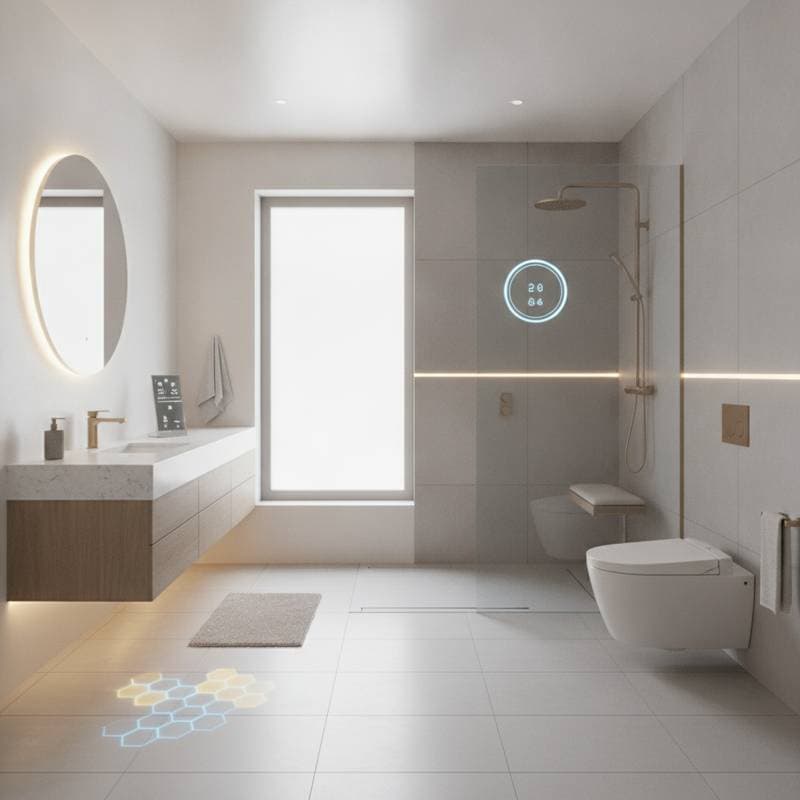
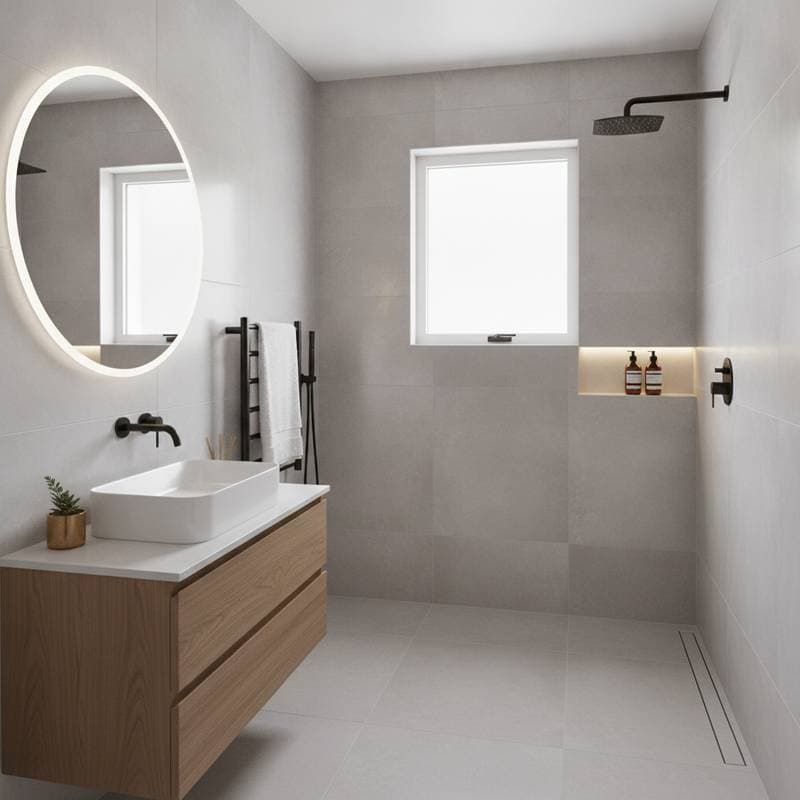
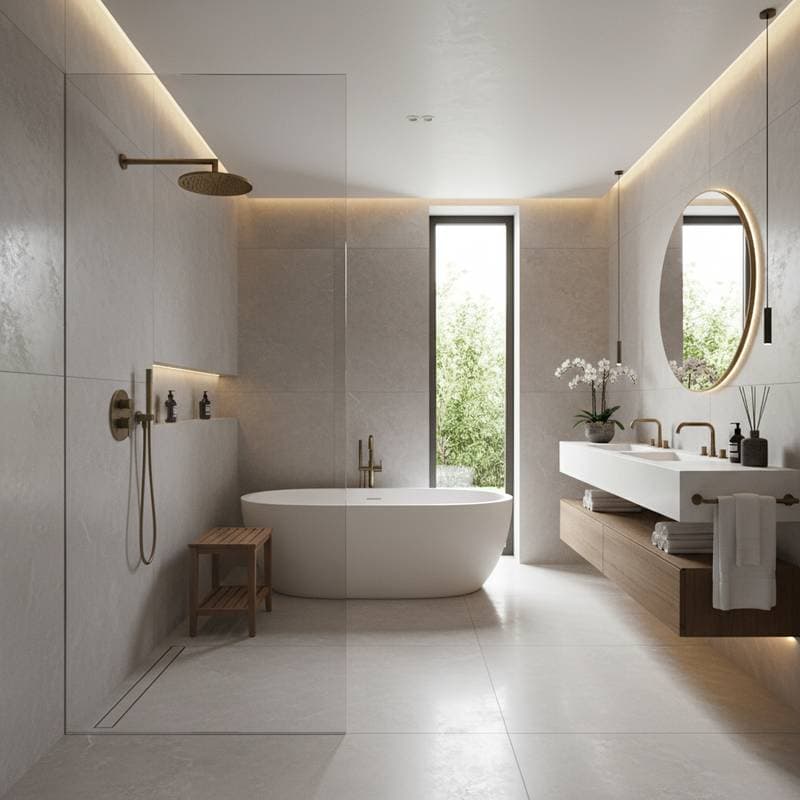
Employ expansive neutral tiles, a borderless divider, and an overhead cascade fixture. Streamlined hardware reinforces the understated sophistication.
2. Organic Retreat Vibe
Blend stone-emulating surfaces with timber elements and diffused illumination. Include a recessed shelf and integrated seating to evoke natural tranquility.
3. Urban Industrial Tone
Feature raw concrete finishes, dark metal accents, and elongated drains. This robust palette suits dynamic, character-rich settings.
4. Timeless Heritage Look
Incorporate crisp white mosaics, polished metalwork, and a partial barrier wall. The arrangement echoes classic continental designs with enduring grace.
5. Space-Efficient City Solution
In tighter quarters, use a solitary pane and pale hues to amplify light. Strategic corner drainage optimizes containment without enclosure.
Executing Your Wet Room Transformation
Embark on this upgrade by consulting professionals early to align vision with practicalities. Weigh the long-term joys of a spa-caliber space against initial commitments, and select elements that endure daily use. The result: a bathroom that refreshes both body and spirit, seamlessly integrated into your home.