2026 Bathroom Trends for Effortless Aging in Place
Imagine starting your day in a bathroom where slip-resistant floors provide secure footing, lighting shifts seamlessly to match your needs, and all elements fall within easy reach. This environment promotes safety and comfort while projecting a contemporary aesthetic, far removed from institutional sterility. Such designs represent the essence of aging in place, allowing individuals to maintain their homes as mobility evolves.
Homeowners increasingly prioritize long-term livability in their renovations. Bathrooms pose unique challenges due to slick surfaces and confined areas, yet current trends demonstrate that accessibility enhances rather than detracts from visual appeal. Professional designers emphasize solutions that support autonomy across life stages without compromising on elegance.
The following sections outline key strategies to achieve this balance.
Optimizing Layouts for Universal Mobility
Effective aging in place bathrooms prioritize unobstructed pathways, reduced obstacles, and strategic fixture arrangements. Begin by expanding doorways to a minimum width of 36 inches, accommodating walkers, wheelchairs, or standard mobility aids. Ensure a clear turning radius of at least five feet in the room's central area to facilitate smooth navigation.
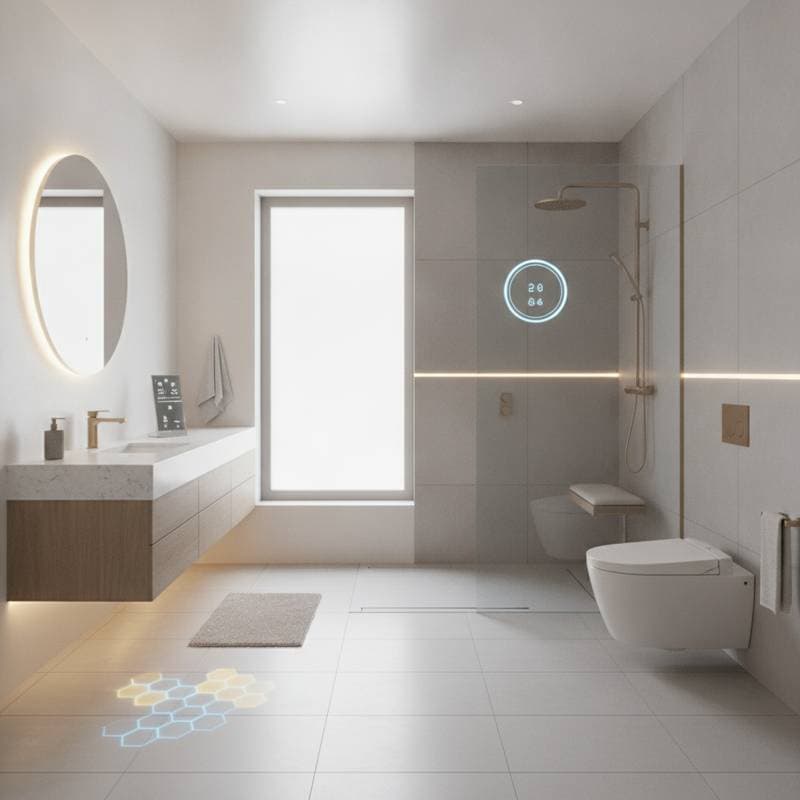
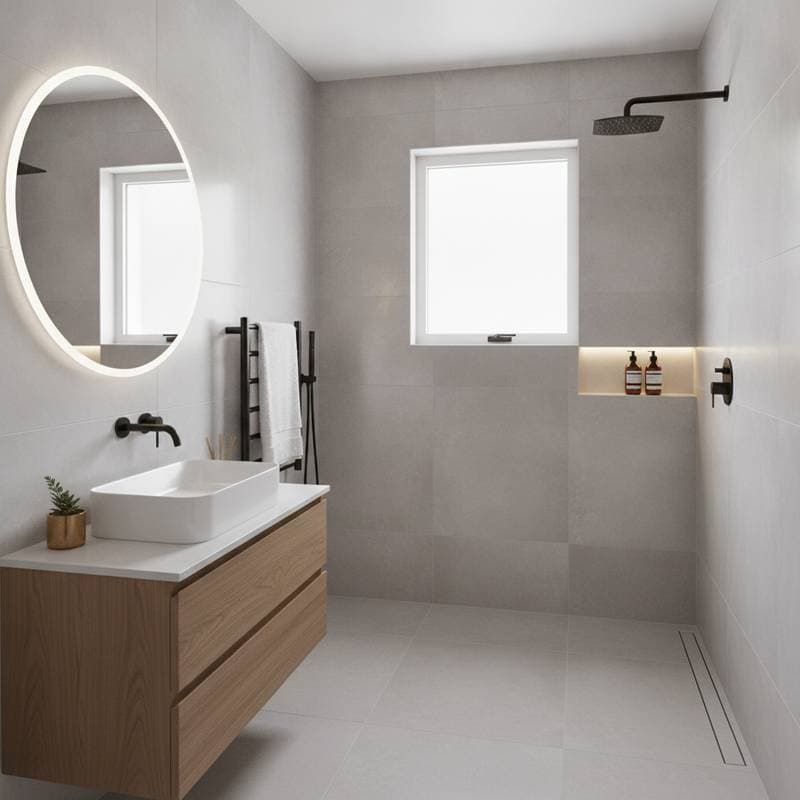
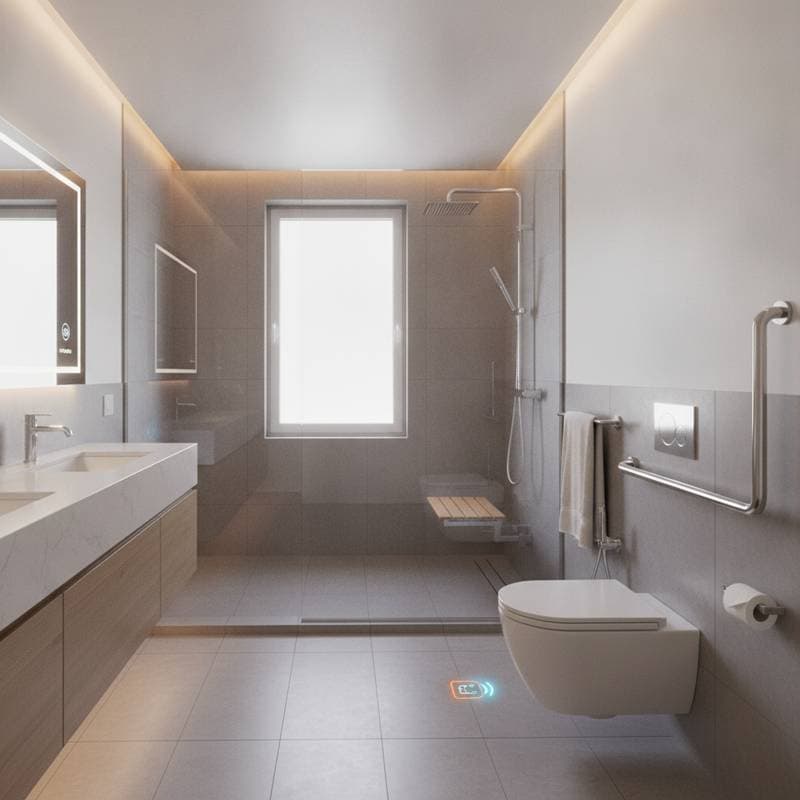
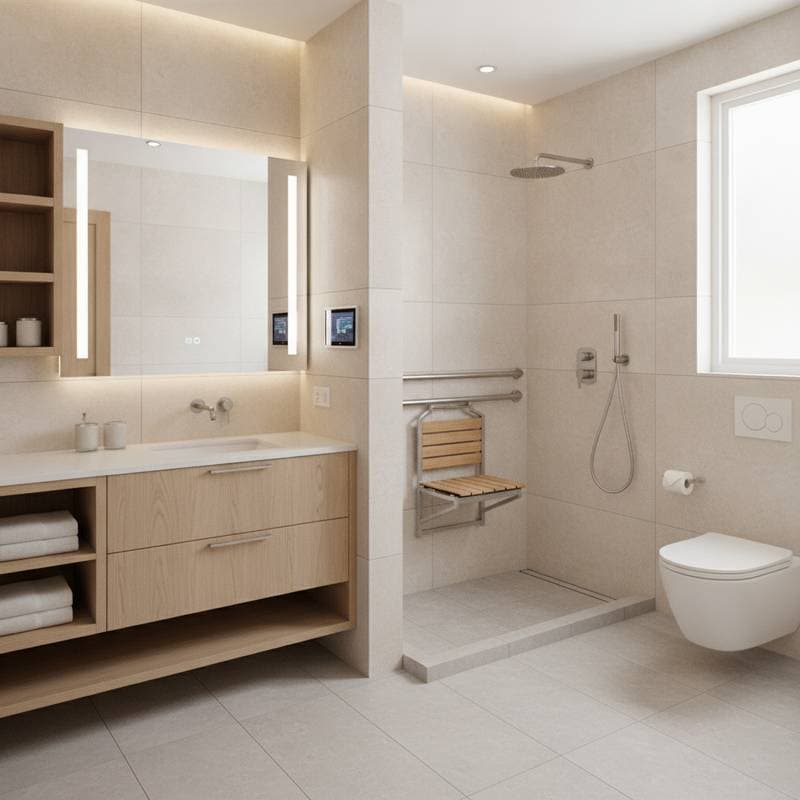
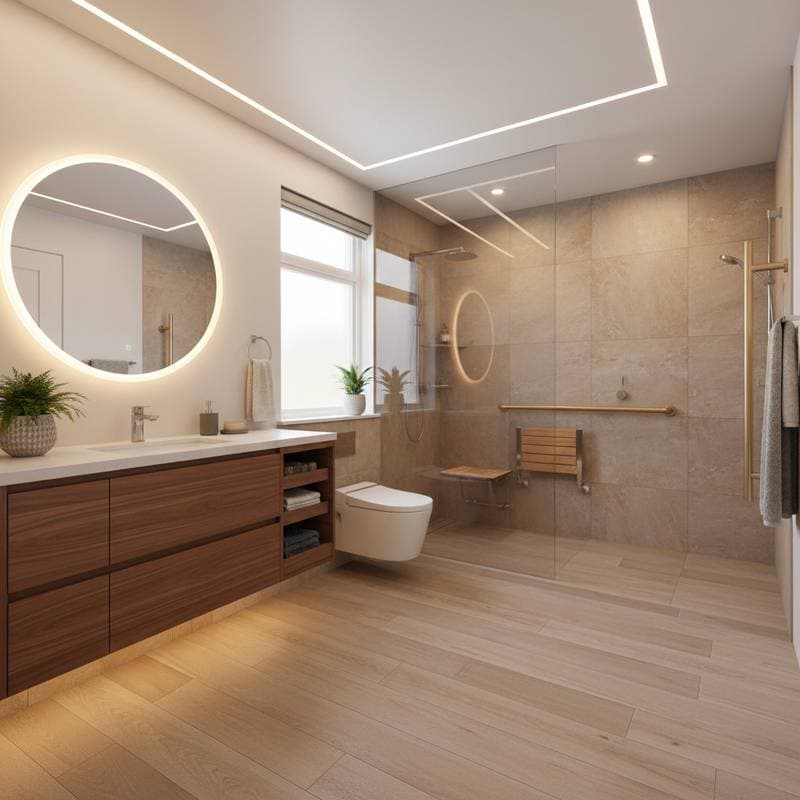
Curbless showers emerge as a cornerstone of modern accessibility, removing traditional thresholds that pose tripping hazards. Pair these with linear drains positioned along the wall to direct water flow efficiently, and select porcelain or ceramic tiles rated for high slip resistance, such as those with a wet dynamic coefficient of friction above 0.6. Incorporate fold-down benches crafted from teak or composite materials for seated showering, alongside adjustable handheld showerheads with multiple spray settings for versatility.
For toilet areas, opt for wall-hung models installed at a height of 17 to 19 inches, which aligns with ADA guidelines and eases transfers. These fixtures free up floor space beneath for cleaning and allow customization based on user height preferences. In larger bathrooms, integrate a separate compartment for the toilet to enhance privacy and reduce congestion during use.
Integrating Style with Practical Functionality
Contemporary designers reject the outdated, utilitarian appearance of past accessible features. They incorporate warm color palettes, including soft earth tones like terracotta or sage green, paired with matte black or brushed nickel hardware for a cohesive, residential feel. Grab bars, once stark and conspicuous, now come in powder-coated finishes that mimic decorative towel rails or faucet pulls, seamlessly blending into the decor.
Large-format porcelain tiles, measuring 24 by 48 inches or larger, minimize grout joints that accumulate moisture and grime, simplifying maintenance while creating a spacious illusion through continuous surfaces. Choose floating vanities with reinforced corian or quartz tops, suspended at 30 to 34 inches high, to provide knee clearance for wheelchair users and maintain an airy floor plan.
Wall-mounted sinks with lever handles further enhance usability, preventing strain on wrists and allowing one-handed operation. To add texture and warmth, introduce natural elements such as woven reed mirrors or stone vessel sinks, ensuring all selections resist humidity and align with the overall scheme.
Enhancing Safety Through Lighting and Smart Innovations
Strategic lighting transforms bathrooms into safer havens with minimal effort. Implement a layered approach: recessed ceiling fixtures for general illumination, vanity-mounted LEDs with dimmable controls for grooming tasks, and toe-kick strips under cabinets for subtle pathway guidance. Motion-activated sensors, wired to low-wattage LED night lights emitting 3000K warm white, activate upon entry to prevent disorientation in low light without causing visual discomfort.
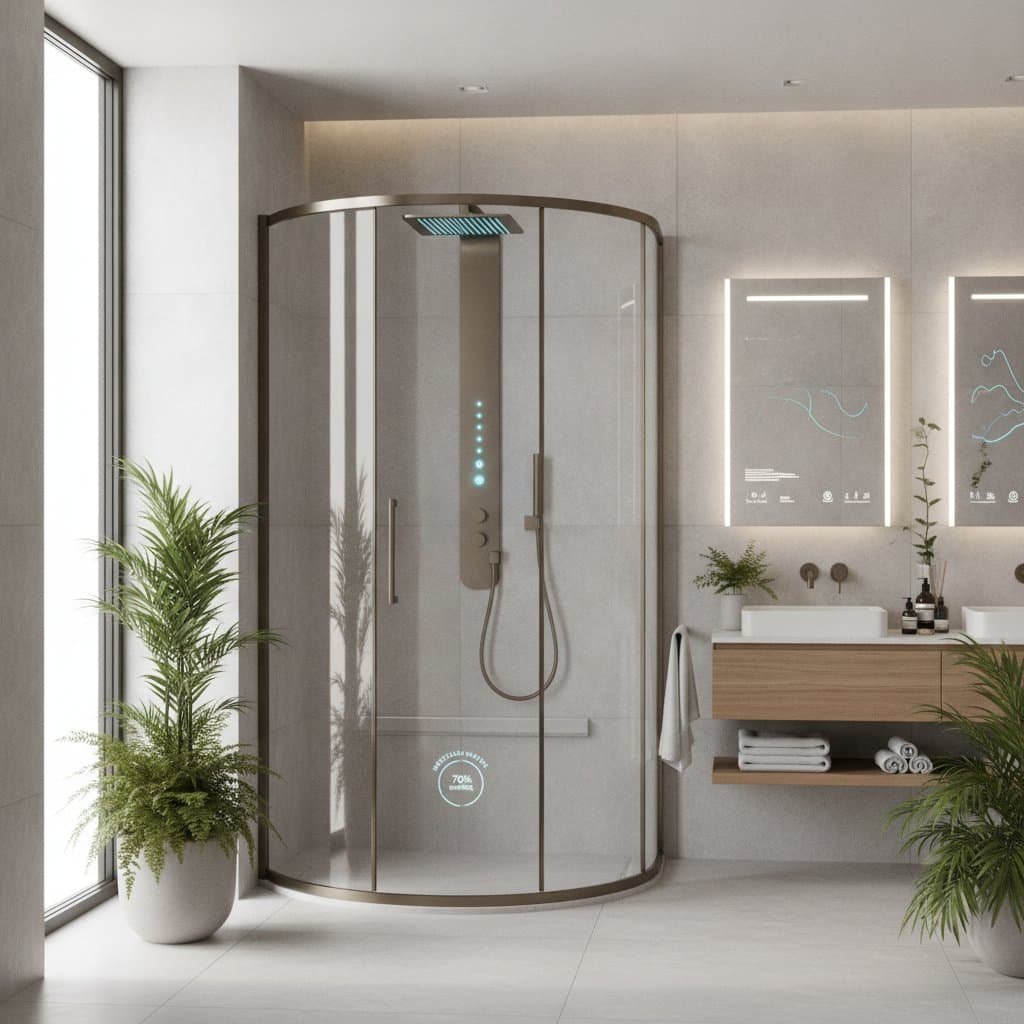
Technology integrations elevate both security and convenience. Thermostatic mixing valves on showers and faucets maintain water at a preset 105 degrees Fahrenheit, eliminating scald risks for children and those with diminished sensation. Voice-controlled systems, compatible with platforms like Alexa or Google Assistant, enable hands-free adjustments to lights, mirrors with anti-fog heating, or even exhaust fans to control humidity levels.
For added assurance, install non-slip mats with weighted edges in shower areas and lever-style door handles throughout. These elements benefit all household members, from young families to multigenerational living arrangements, fostering an inclusive environment.
Budgeting and Implementation Essentials
Comprehensive accessible bathroom renovations typically cost between $15,000 and $40,000, depending on scope and material quality. Basic enhancements, such as installing grab bars or upgrading to slip-resistant flooring, range from $1,000 to $5,000. Premium options like full smart home integrations or custom cabinetry can push expenses higher, but they yield long-term value through durability and reduced future modifications.
Consult local building codes early, as they dictate requirements for grab bar load capacities (at least 250 pounds) and electrical outlet placements. Engage certified plumbers for waterproofing membranes behind walls and electricians for GFCI-protected circuits near water sources. While professionals handle structural changes, individuals with handyman skills can tackle surface-level tasks like installing peel-and-stick backsplashes or swapping out hardware.
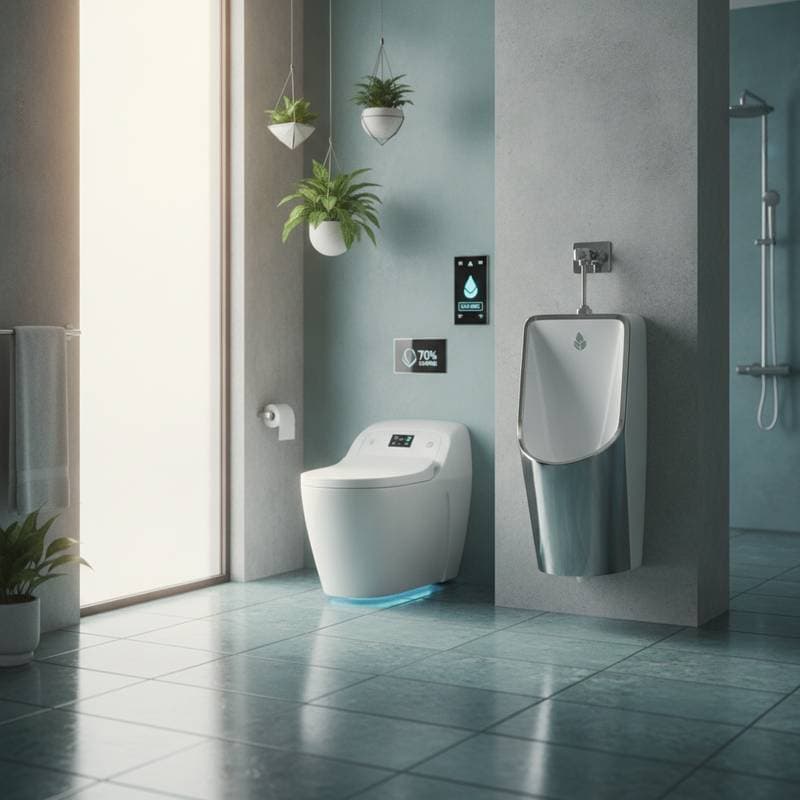
Factor in energy-efficient choices, such as low-flow fixtures that conserve water without sacrificing pressure, to offset initial investments through utility savings.
Advancing Your Renovation with Purposeful Choices
Aging in place modifications extend beyond mere adaptation; they cultivate resilient living spaces that evolve with personal circumstances. Initiate with targeted improvements, like retrofitting a shower for curbless entry or installing sensor lighting, to realize immediate gains in daily comfort.
Prioritize universal design principles that accommodate diverse needs, from temporary injuries to lifelong conditions. This forward-thinking approach safeguards property value, streamlines routines, and preserves the home as a sanctuary of self-reliance and joy for decades ahead.