AI Color Tools Revolutionizing Kitchen Design
As a remodeling contractor with years of experience in real kitchens, color decisions frequently challenge homeowners. Cabinets, countertops, flooring, and backsplash selections must harmonize, and an incorrect color match can undermine the entire aesthetic. Artificial intelligence color tools now guide homeowners and professionals through this process, eliminating uncertainty, accelerating timelines, and ensuring digital previews align precisely with the final installation.
The Real Cost of Color Mistakes
Color errors during kitchen remodels extend beyond aesthetics. A mismatched cabinet finish or inaccurate paint hue often requires full repaints or countertop replacements, escalating expenses significantly. Clients experience frustration alongside financial strain, as projects lose momentum amid repeated adjustments.
Traditional methods depend on physical samples and subjective judgment. Variations in lighting, display calibrations, and surface textures distort perceptions. A color that appears ideal in natural light might appear dull under kitchen fixtures, a discrepancy AI tools address directly.
How AI Color Tools Function in Kitchen Design
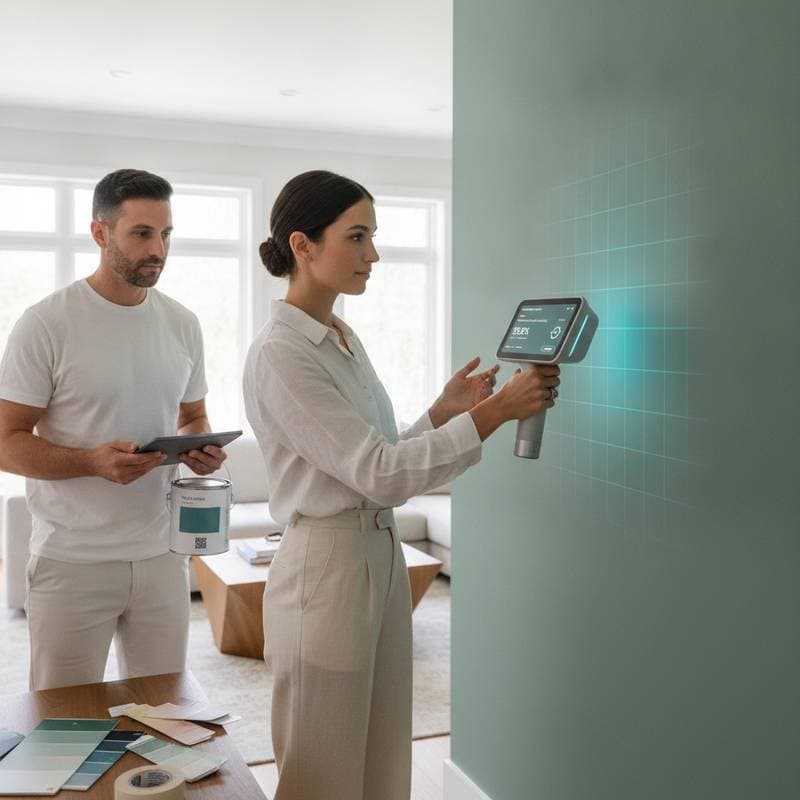
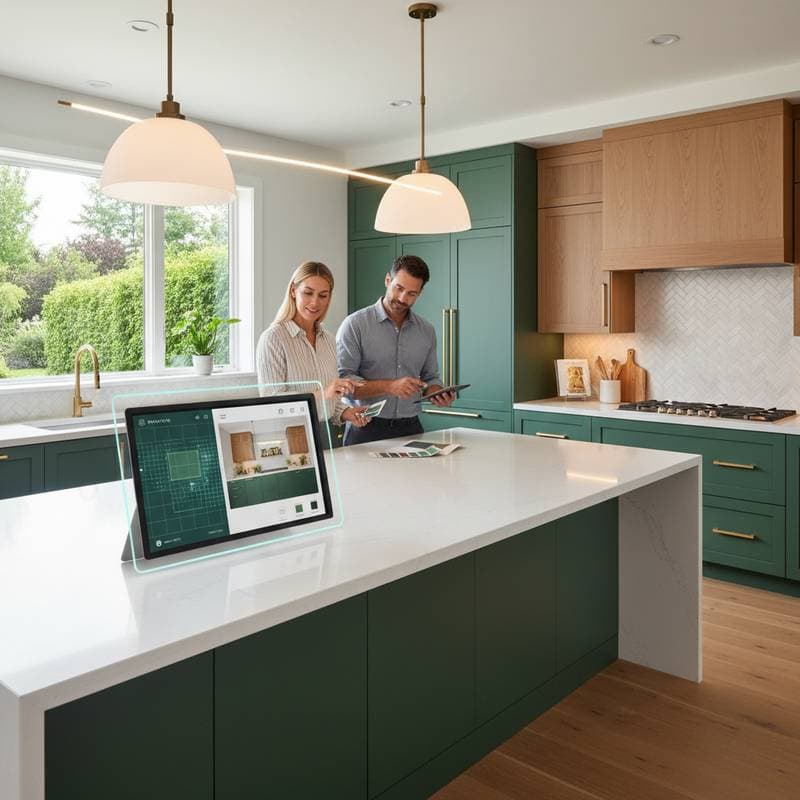
Advanced color tools employ image recognition and analytical algorithms to detect, align, and forecast color interactions. Beyond basic matching, they assess undertones, illumination, and adjacent materials to develop cohesive schemes. Uploading a kitchen photograph enables the software to process extensive data, recommending tones for walls, cabinets, surfaces, and accents.
Consider a client seeking a warm white palette. After testing multiple paint samples without success, we scanned the existing countertop and flooring with an AI tool. It proposed a shade that neutralized conflicting undertones, resulting in a seamless application with no deviations from the preview.
Why Contractors Rely on AI Color Tools
Professionals benefit from these tools by simplifying client discussions, minimizing material overuse, and decreasing revision requests. Accurate visualizations prior to procurement conserve resources for all involved.
Contractors also leverage AI to cross-verify vendor specifications. Disparities arise between paint formulas, tile codes, and cabinet finishes from various suppliers. The tools convert these into a standardized scheme, ensuring delivered items match initial samples consistently.
Key Pitfalls AI Tools Mitigate
Lighting profoundly influences color perception, yet homeowners often overlook this factor. A neutral gray in store lighting may shift to an unintended tint under household bulbs. AI simulations replicate diverse scenarios, from dawn sunlight to overhead LEDs, allowing previews without physical trials.
Undertone mismatches pose another frequent challenge. Whites harbor subtle yellow, pink, or blue bases that conflict with neighboring elements. AI systems detect these nuances and highlight incompatibilities, averting surprises like a supposed crisp white appearing off-toned post-installation.
Selecting an Effective AI Color Tool
AI color tools vary in scope and sophistication. General applications suit casual users, but remodeling-specific options offer deeper functionality. Prioritize these capabilities during selection:
-
Material Identification
Tools that distinguish surfaces like paint, timber, or granite in images provide precise recommendations. -
Illumination Modeling
Adjustable settings for light warmth and brightness reveal color shifts across environments. -
Scheme Generation
Options to produce palettes aligned with styles such as contemporary, traditional, or eclectic. -
Vendor Compatibility
Integration with leading brands facilitates direct application of suggestions to purchases. -
Output Features
Functions to export schemes or share renders support collaboration with teams.
Integrating AI Color Tools into Your Remodel
Incorporate these tools across project phases for optimal results:
-
Initial Assessment
Photograph your existing kitchen and analyze prevailing hues. The tool suggests expansions that maintain balance. -
Sample Testing
Digitize countertop or tile options to evaluate pairings. Alerts identify clashing or overpowering combinations. -
Light Analysis
Simulate fixture types before approving finishes. This reveals performance under specific conditions without delays. -
Comprehensive Review
Create a rendered overview of selections. Confirm unity among components prior to execution.
Projects using AI in planning advance efficiently, adhere to budgets, and yield unified designs.
Enhancing Contractor-Client Dialogue
Misaligned color visions frequently disrupt remodels. Homeowners describe a desired shade verbally, but interpretations differ under varying lights.visuals establish shared references, reducing errors.
Reviewing identical simulations fosters agreement and streamlines approvals. Contractors archive these outputs in project records, providing evidence of decisions to resolve potential issues.
Combining AI with Professional Insight
AI excels at data processing but lacks tactile evaluation. It cannot assess surface feel or emotional impact. Skilled contractors interpret outputs, pairing them with in-person checks for authentic results.
In practice, AI serves as an initial guide. Physical verification follows to validate choices before commitments, blending analytical precision with experiential wisdom.
Safeguarding Your Remodel Investment
Color inaccuracies risk substantial losses in time and funds. AI tools function as preventive measures, validating selections upfront to curb waste and interruptions.
Coordinated designs also bolster resale appeal. Harmonious kitchens demonstrate superior craftsmanship, enhancing market value. Inconsistent palettes diminish even premium investments, underscoring the strategic importance of precision.
Advancing Your Kitchen Vision
Begin exploring AI color tools upon project inception. Experiment with space images and material pairings to inform selections systematically.
Contractors adopting this approach secure satisfied clients and avoid expensive fixes. Homeowners achieve assurance in realizing their concepts. These tools refine decision-making, ensuring creativity and accuracy converge for enduring satisfaction.