Why Recycled Glass Surpasses Quartz in 2026 Kitchens
Homeowners, builders, and designers increasingly select recycled glass countertops for kitchens that balance innovation with responsibility. This material excels in sustainability and aesthetics, accommodating diverse budgets. Its rise reflects a broader shift toward eco-conscious design that prioritizes both environmental impact and visual appeal.
Professionals in kitchen design recognize recycled glass for its ability to capture light and integrate seamlessly into various styles. The following sections examine its advantages over quartz, from environmental benefits to practical applications, providing insights for incorporating this material into home projects.
Sustainability Rooted in Reuse
Recycled glass countertops contribute meaningfully to environmental conservation by diverting glass waste from landfills. Production processes repurpose post-consumer glass, such as bottles and windows, minimizing the extraction of virgin materials. This approach lowers energy consumption compared to traditional manufacturing methods.
Quartz production, by contrast, depends on quarried stone and high-temperature processing, which demand substantial resources. Recycled glass fabrication requires less energy and generates fewer emissions, making it a superior choice for reducing carbon footprints. Homeowners committed to green practices find this material aligns with their values without compromising on quality.
To maximize impact, select suppliers who source locally to shorten transportation distances. Such choices not only enhance sustainability but also foster community ties through regional recycling initiatives.
Durability Paired with Low Maintenance
Concerns about fragility in recycled glass often stem from misconceptions, yet properly fabricated slabs prove robust. Resin-bound varieties rival quartz in resistance to impacts and scratches, while cement-based options benefit from periodic sealing to maintain integrity. Professional installation ensures edges and seams withstand daily use.
When evaluating options, inquire about the resin type and thickness, typically ranging from 1.25 to 2 inches for optimal strength. Reputable fabricators provide warranties covering defects, offering peace of mind for long-term performance.
Upkeep remains straightforward: clean with warm water and mild soap using a soft cloth. Steer clear of abrasive cleaners to preserve the surface finish. Unlike natural stone, recycled glass eliminates the need for frequent resealing, simplifying care for households with demanding routines.
Design Innovation and Versatility
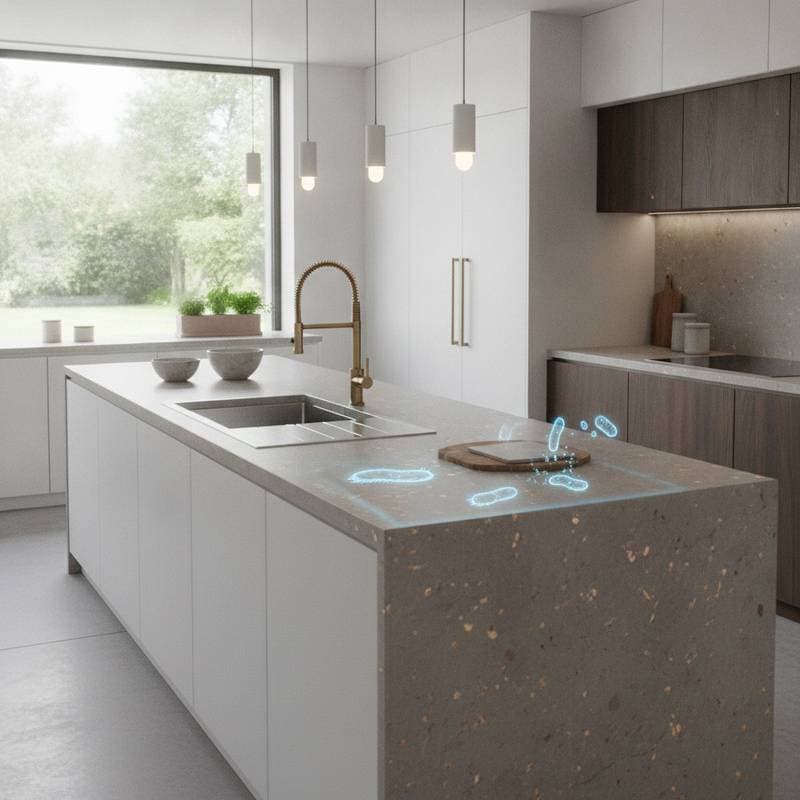
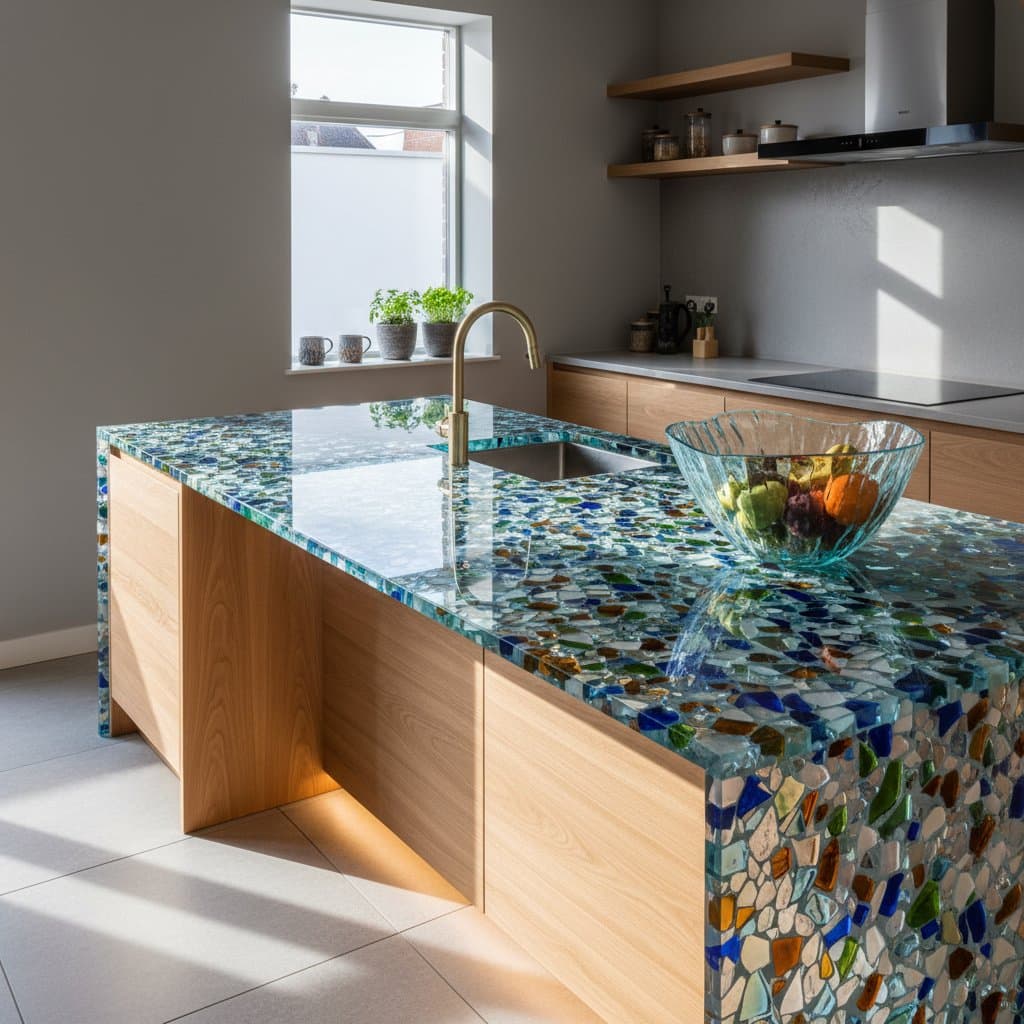
Recycled glass embodies the forward-thinking ethos of contemporary kitchen design. Fabricators innovate with translucent panels suitable for backlighting, creating ambient glows that elevate spaces. Terrazzo-inspired mixtures blend recycled fragments into patterns that evoke both heritage and modernity.
Collaborations with local artisans yield custom palettes drawn from community waste streams, infusing projects with unique narratives. For instance, coastal regions might incorporate sea glass for subtle blues and greens, tying the material to its surroundings.
Designers and entrepreneurs can explore partnerships with specialized labs to develop bespoke products. These efforts not only support local economies but also appeal to clients seeking authentic, story-driven elements in their kitchens.
Timeless Style and Adaptability
The inherent variability of recycled glass ensures no two slabs match, granting each kitchen a distinctive character. This authenticity transcends fleeting trends, allowing the surface to harmonize with evolving decor. Reflective properties amplify surrounding colors, enhancing overall cohesion.
Integrate it with reclaimed wood for rustic warmth or sleek metals for industrial edge. In renovations, its adaptability facilitates updates without full replacement, as the material responds dynamically to new fixtures and palettes.
For television productions or high-visibility installs, recycled glass delivers striking visuals that suit multiple aesthetics, from rustic to refined. This versatility positions it as a staple for professionals aiming to create enduring, personalized environments.
Practical Integration and Care
Installation of recycled glass countertops marks the start of enhanced kitchen functionality. Position under-cabinet lights to accentuate the material's luminescence, drawing attention to its textured depth. Balance the shine with neutral cabinetry or organic textures to create inviting focal points.
Daily habits ensure longevity: address spills promptly and employ trivets under hot items. For cement-based surfaces, apply a penetrating sealant annually following manufacturer guidelines. These routines sustain the countertop's vibrancy, keeping the kitchen visually appealing over time.
Embracing Sustainable Kitchen Design
Recycled glass countertops signal the trajectory of thoughtful interior design: environmentally sound, creatively expressive, and broadly accessible. Professionals and homeowners alike benefit from its blend of resilience, style, and ethical production. Whether embarking on a new build or a targeted refresh, this material underscores the potential of sustainable selections to transform everyday spaces into remarkable ones.