Why Induction Cooktops Are Overtaking Gas in Modern Kitchens
Kitchens today serve as the central hub of home life, blending functionality with social interaction. Technology in these spaces evolves to match contemporary needs, and induction cooktops lead this change. They provide advanced performance beneath a sleek surface, surpassing traditional gas options in efficiency and design.
Precision Cooking at Your Fingertips
Induction technology uses electromagnetic fields to heat pots and pans directly, keeping the cooktop surface cool. This method delivers immediate response: heat activates when cookware contacts the surface and ceases instantly upon removal. Cooks gain exact control over temperatures, preventing overcooking delicate sauces or under-searing proteins.
Experts compare this to shifting from manual to automated systems. In open kitchens, where cooking occurs amid gatherings, such reliability ensures consistent results without constant adjustments. Select compatible cookware, like cast iron or magnetic stainless steel, to maximize this benefit.
Seamless Integration for Sleek Designs
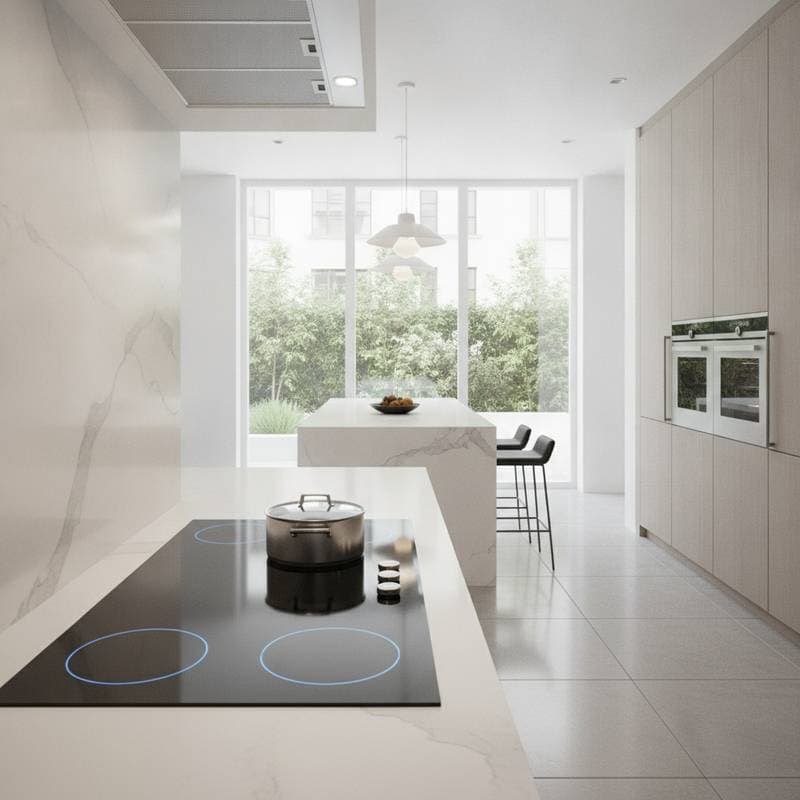
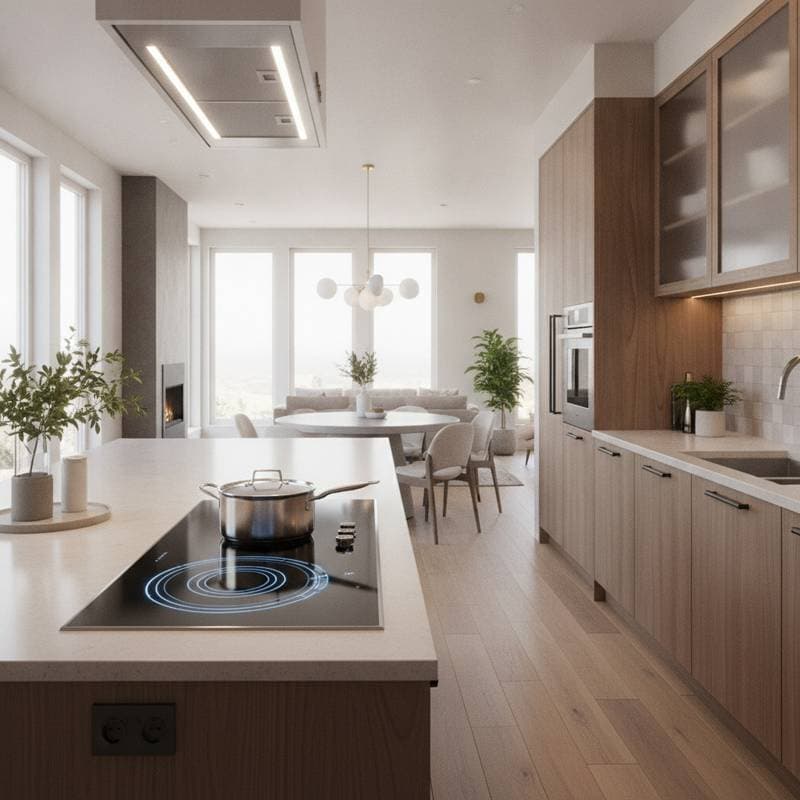
Induction cooktops feature smooth ceramic glass surfaces that blend effortlessly with countertops. Manufacturers such as Gaggenau, Miele, and Bora incorporate touch controls and integrated ventilation, removing the need for prominent hoods. This creates uninterrupted lines that highlight surrounding materials like marble or oak.
Pair these cooktops with neutral wall colors to enhance the serene aesthetic. The result supports minimalist interiors where the focus remains on architectural elements rather than appliances. For renovations, measure spaces carefully to ensure flush installation.
Quiet Operation Enhances Home Ambiance
Unlike gas burners that produce ignition sounds and faint gas odors, induction operates with minimal noise, limited to a subtle hum during use. This silence fosters peaceful environments in open-plan layouts. Families can converse or work nearby without distractions from cooking sounds.
The absence of combustion scents improves overall air quality. Choose models with variable power settings to maintain this tranquility across different cooking intensities. Such features align with designs that prioritize relaxation and connectivity.
Enhanced Safety for Everyday Use
Surfaces stay cool outside active zones, minimizing burn risks from accidental touches. Without open flames or gas lines, hazards like leaks or fires decrease significantly. Cleaning occurs right after cooking since spills do not bake onto hot surfaces.
Professionals recommend induction for compact urban dwellings. Verify electrical compatibility before installation to support these safety advantages. This technology effectively prevents forgotten burners by deactivating heat automatically.
Superior Energy Efficiency
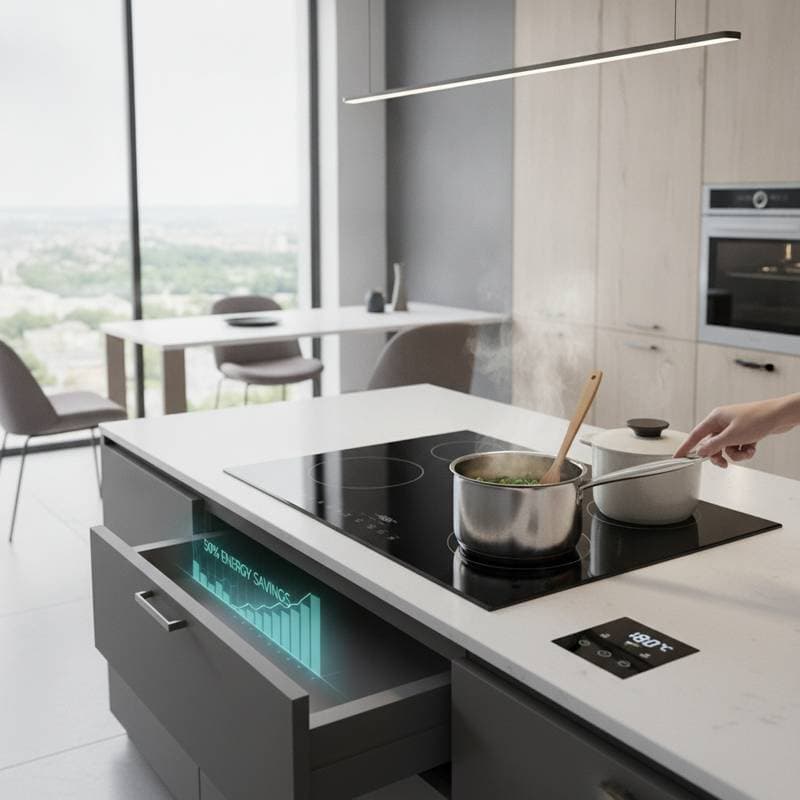
Induction directs nearly all energy to the cookware, unlike gas systems that lose heat to the surrounding air. Boiling water happens faster, and kitchens remain cooler, reducing the need for extensive ventilation. These traits lower utility costs and support eco-friendly building standards.
Opt for models certified for high efficiency to align with sustainable goals. In all-electric homes, induction eliminates gas dependencies entirely. Track energy use post-installation to appreciate the savings.
Flexible Zoned Cooking Options
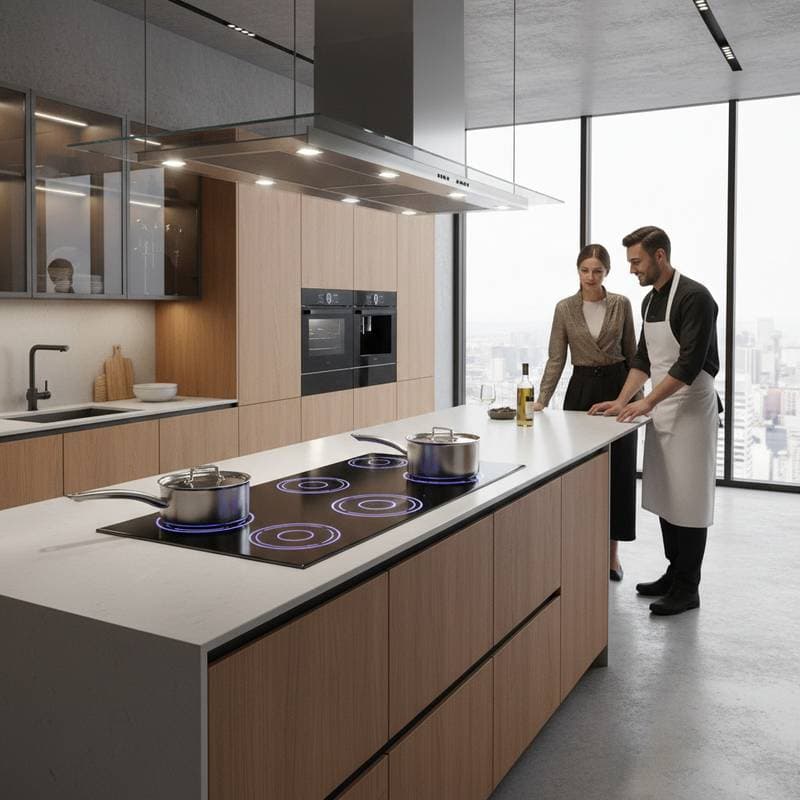
Advanced induction surfaces feature adaptive zones that sense cookware size and position automatically. Pots can move across the cooktop while heat adjusts in real time. Brands like Siemens and Fisher & Paykel excel in this versatility, enabling multiple dishes without fixed burner constraints.
Chefs value the freedom for tasks like simultaneous simmering and frying. Home users find it intuitive for daily meals. Test zone functionality with various pan sizes to optimize layout during setup.
Improved Indoor Air Quality
Gas stoves emit pollutants including nitrogen dioxide, which affect health in enclosed areas. Induction avoids combustion, producing no such byproducts. Combine it with quality air filtration for optimal wellness.
This choice supports toxin-free environments alongside natural materials and ample ventilation. Monitor air quality improvements after switching to confirm benefits. Designers increasingly specify it for health-focused renovations.
Effortless Cleaning and Maintenance
Flat surfaces wipe clean with a damp cloth, free from grates or crevices that trap grease. No flame exposure causes discoloration over time. This simplicity suits high-traffic households.
Regular care involves non-abrasive cleaners to preserve the glass finish. The low upkeep frees time for cooking rather than chores. Many report it as a key factor in kitchen satisfaction.
Adoption by Professional Chefs
Even gas loyalists among chefs switch to induction for its precise heat management. In sustainable restaurants, it cuts heat buildup and supports consistent output. Integration with stainless counters maintains professional workflows.
Consultants note the transition feels like upgrading to intuitive tools. Train staff on power levels to leverage full capabilities. This shift enhances comfort during long service hours.
Practical Steps for Renovations
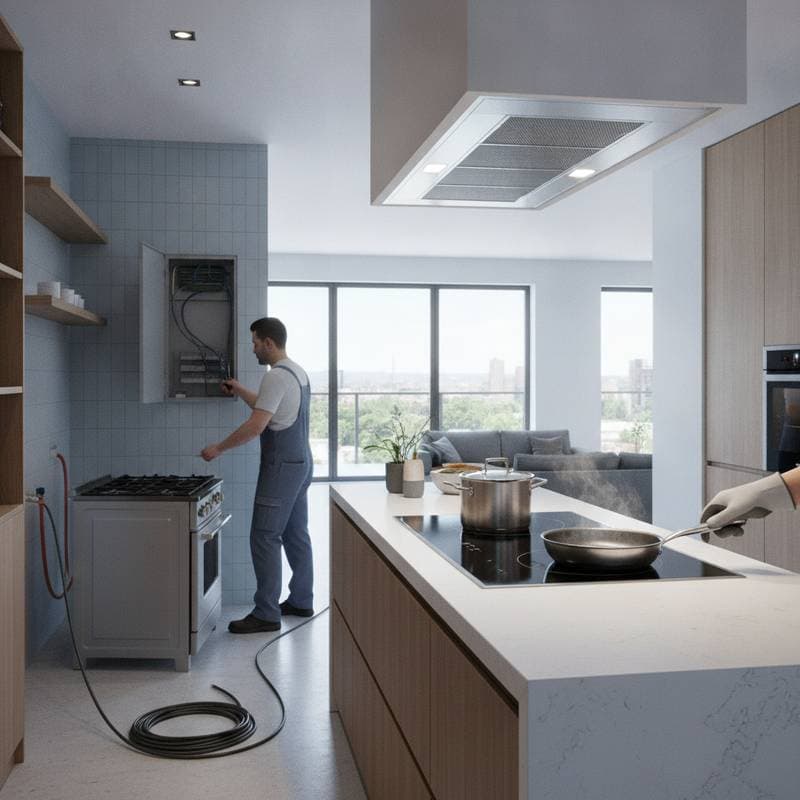
Upgrading from gas requires assessing electrical capacity, often needing panel updates. Compact plug-in units suit small or interim setups. Firms specializing in historic adaptations favor induction for preserving original layouts without gas piping.
Budget for professional installation to ensure compliance. Select sizes matching existing cutouts where possible. This modernization boosts functionality while respecting design heritage.
Integrating Induction into Daily Life
Transitioning to induction involves selecting responsive cookware and complementary surfaces like quartz. Position lighting to accentuate the glossy finish without reflections. These choices create cohesive, efficient spaces.
The technology promotes sustainable habits through lower emissions and energy use. Homeowners experience refined cooking that balances aesthetics with practicality. Ultimately, it elevates kitchens as thoughtful extensions of modern living.