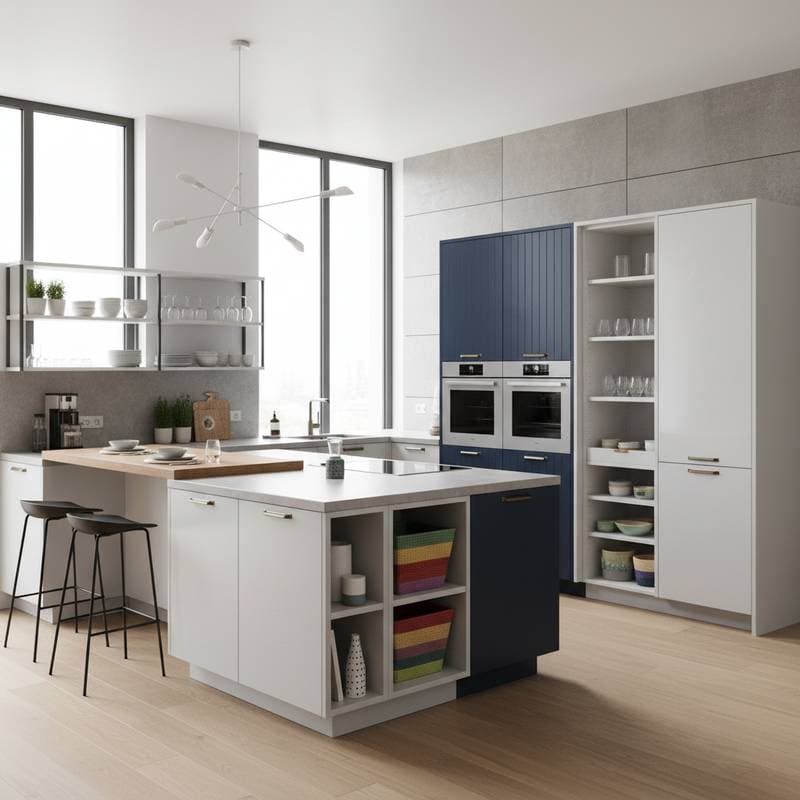
Unlock Flexible Kitchens with DIY Modular Cabinets
Many homeowners face kitchens that feel cramped, outdated, or inefficient for daily cooking and family gatherings. Limited storage and awkward layouts often turn meal preparation into a challenge. A rigid design restricts how space serves real-life needs, but DIY modular cabinets offer a solution by enabling ongoing adaptation without full renovations.
These cabinets consist of independent units that rearrange, expand, or replace as requirements change. Homeowners achieve a kitchen that grows alongside their lifestyle while managing costs effectively. The following sections outline the process from concept to completion.
Why Modular Cabinets Make Sense
Fixed built-in cabinets demand extensive work for any modification after installation. In contrast, modular cabinets feature standalone modules that adjust individually, supporting customization over time.
Key advantages include:
- Adaptability: Incorporate additional units as family size increases or cooking preferences evolve.
- Affordability: Update single components rather than overhaul the entire setup.
- Ease of repair: Isolate and replace damaged modules without affecting the whole system.
- DIY-friendly: Standardized dimensions and basic hardware simplify assembly for those with fundamental skills.
Modular systems function like interlocking components, each self-sufficient yet integrable, which promotes creative layouts and reduces long-term expenses.
Planning Your Modular Layout
Evaluate current kitchen usage before assembly begins. Identify areas of inefficiency, such as crowded counters or inaccessible storage, to prioritize functionality over aesthetics.
Follow these steps:
- Map your workflow: Define zones for preparation, cooking, cleaning, and storage. Position cabinets to streamline movement between these areas.
- Measure precisely: Standard widths include 12, 15, 18, 24, and 30 inches. Align plans with these sizes to minimize gaps and ensure seamless fit.
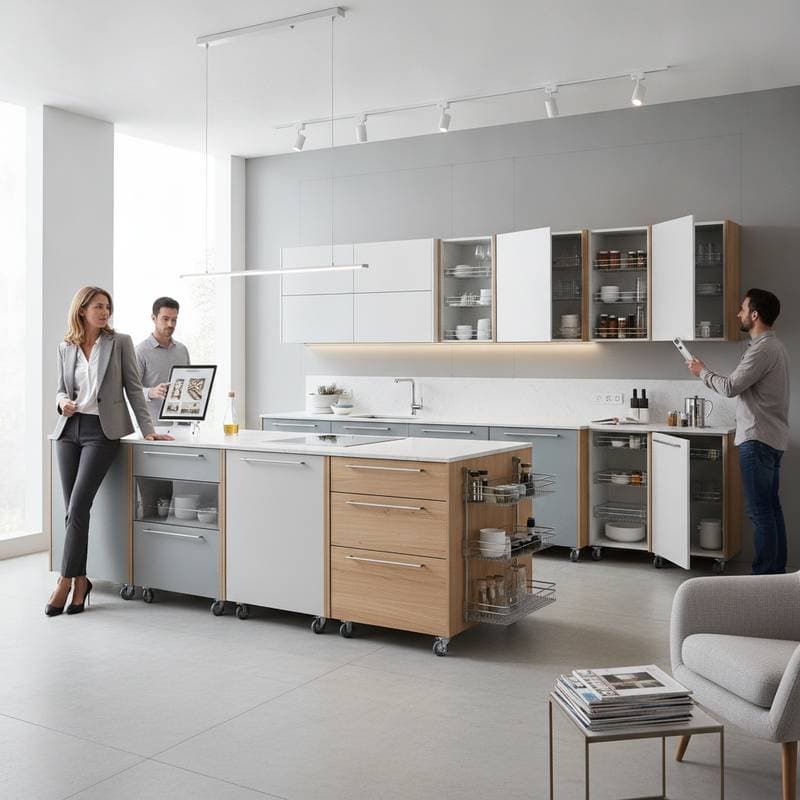
- Incorporate mobility: Attach casters to base units for repositioning during events or cleaning tasks.
- Maximize vertical space: Use stackable wall-mounted units to increase storage capacity without altering floor area.
Create a detailed sketch on graph paper or utilize free digital tools for visualization. Maintain 36 inches for primary walkways and 42 inches between facing cabinets to support comfortable navigation.
Choosing the Right Materials
Material selection influences aesthetics, longevity, and upkeep. Consider environmental factors like humidity near sinks when deciding.
Common options include:
- Plywood: Provides strength and water resistance, suitable for base cabinets exposed to spills. It costs more initially but endures heavy use.
- MDF: Offers a smooth surface for painting, at a lower price point, though it requires sealing against moisture.
- Particleboard: Lightweight and economical, ideal for overhead cabinets with minimal weight demands.
- Solid wood: Delivers timeless appeal and robustness, though its weight and expense limit it to accents like doors.
Opt for laminate finishes to resist stains or wood veneers for a natural texture. A popular approach combines plywood carcasses with painted MDF doors to optimize durability and budget.
Building and Installing Modular Cabinets
Basic woodworking knowledge suffices for most modular projects, which often arrive as flat-pack kits with straightforward connections. Proceed methodically to achieve professional results.
The installation sequence involves:
- Assemble cabinet boxes: Secure panels with manufacturer-specified screws or cam locks. Verify squareness using a carpenter's square to prevent misalignment.
- Install doors and hardware: Mount hinges first, then attach doors. Invest in soft-close mechanisms to reduce noise and wear.
- Place modules: Begin at a corner, level bases with shims, and anchor to wall studs for stability.
- Fit countertops: Position after bases stabilize. Connect panels using bolts or clips for a continuous surface.
- Fine-tune alignment: Ensure doors and drawers align flush, then secure all connections.
For safety, disconnect electricity before altering outlets. Consult licensed experts for any plumbing or wiring modifications.
Cost and Budget Breakdown
Expenses fluctuate based on materials, hardware, and scale. A small kitchen refresh starts affordably, while larger projects scale accordingly.
Budget tiers include:
- Entry-level: $1,000 to $3,000, featuring particleboard or MDF with laminate surfaces.
- Mid-range: $4,000 to $7,000, incorporating plywood, quality hardware, and durable countertops like quartz.
- High-end: $8,000 or more, with solid wood elements, natural stone counters, and tailored features.
Reduce costs through self-assembly, salvaging existing surfaces, or finishing raw units. Allocate several weekends for a complete installation, factoring in tool availability.
Practical Design Tips
Integrate varied storage types for efficiency. Open shelves suit frequent-access items, while enclosed cabinets conceal less-used goods.
Enhance functionality with:
- Modular drawers: Install deep pulls for utensils and cookware, minimizing stooping.
- Pantry towers: Employ tall units to organize dry goods vertically, preserving floor space.
- Integrated lighting: Add LED strips beneath cabinets for precise illumination during tasks.
- Future-proofing: Reserve outlets and gaps for emerging appliances or expansions.
In open-plan homes, position modules as dividers or casual bars to blend kitchen and living areas seamlessly.
Maintaining Your Investment
Regular care preserves the modular system's appearance and performance. Clean surfaces with a gentle soap solution weekly to prevent buildup.
Perform biannual inspections: Lubricate slides, tighten hardware, and address minor wear promptly. This routine extends usability and avoids costly repairs.
Modular designs facilitate relocation; disassemble units for transport and reassemble in new spaces with minimal effort.
Start Your Modular Kitchen Transformation
DIY modular cabinets eliminate the need for disruptive overhauls, allowing incremental improvements that match your pace. Begin with a single unit, such as a base or wall cabinet, to test the approach.
As skills develop, integrate more elements to craft a cohesive, responsive kitchen. This method yields a space tailored to your routines, delivering enduring value through thoughtful, piece-by-piece construction.