Why Antimicrobial Surfaces Will Dominate Kitchens by 2026
Homeowners seek kitchens that combine aesthetic appeal with effortless cleanliness. Even meticulously maintained spaces can conceal bacteria on surfaces like cutting boards, countertops, and sink rims. Materials lacking proper sealing or upkeep often become hotspots for microbial proliferation. As a remodeling contractor with extensive experience, observations reveal that kitchen surfaces profoundly influence daily maintenance ease or ongoing challenges. Antimicrobial surfaces emerge as the preferred solution for those prioritizing hygiene alongside longevity.
The adoption of antimicrobial materials transcends fleeting design fads. This evolution represents a strategic advancement toward healthier, more enduring, and simpler-to-manage kitchens. Rapid progress in underlying technology reshapes homeowner expectations for their substantial investments.
Understanding Antimicrobial Surface Technology
Antimicrobial surfaces receive engineering to inhibit bacterial, mold, and mildew proliferation. Integrated agents within the material disrupt microbial survival and replication processes. Unlike surface-applied coatings that degrade over time, this protection integrates directly into the material composition.
Two primary antimicrobial technologies appear in kitchen applications:
-
Metallic Ion Integration
Materials incorporate silver, copper, or zinc ions to impair bacterial cellular operations. These ions halt microbial reproduction. Since the ions form part of the material matrix, protection persists throughout the product's lifespan, unaffected by wear or abrasion. -
Polymer-Enhanced Formulations
Engineered polymers deter moisture adhesion and suppress bacterial adhesion. Such additives integrate uniformly during production, prevalent in quartz and solid-surface countertops. This homogeneous distribution ensures consistent performance across the entire surface.
Both approaches maintain efficacy despite scratches or general wear. This durability surpasses traditional disinfectants requiring frequent reapplication, offering sustained defense without additional effort.
Optimal Kitchen Areas for Antimicrobial Integration
While not all kitchen elements demand antimicrobial features, targeted zones yield significant advantages. Experience highlights these priority locations for maximum impact:
-
Countertops
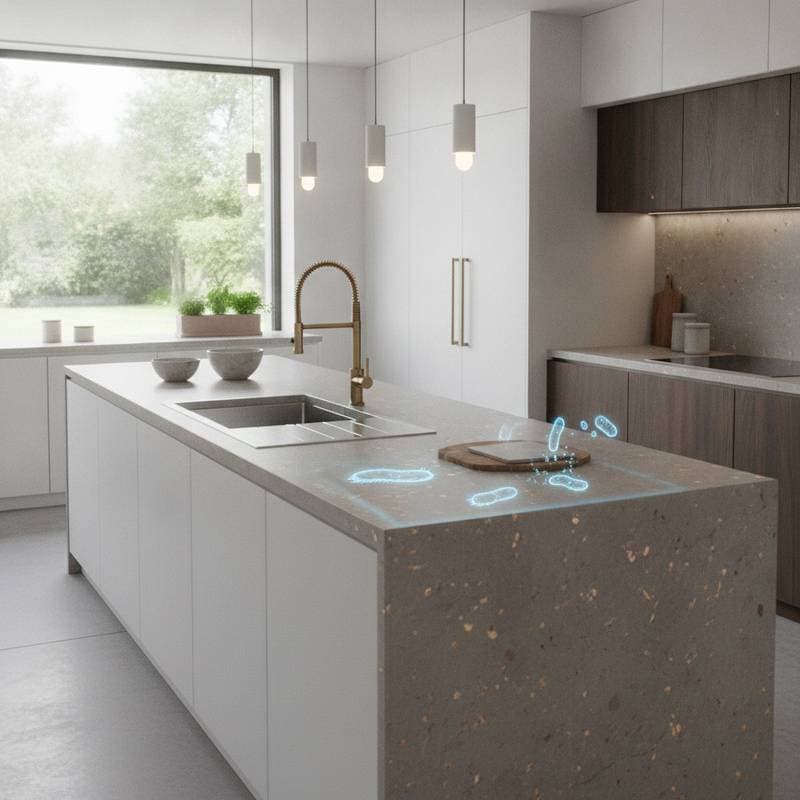
Food preparation occurs here, making countertops prime candidates for enhancement. Antimicrobial quartz or solid surfaces deliver both visual elegance and functional superiority, resisting contamination during chopping, mixing, and serving tasks. -
Sink Surrounds
Sink edges frequently retain dampness, fostering mold and bacterial accumulation. Opt for antimicrobial composites or stainless steel variants with inherent protection to eliminate these risks and simplify routine sanitation. -
Backsplashes
Although not primary prep areas, backsplashes capture food splatters and grease residues. Antimicrobial tiles or panels minimize concealed buildup, preserving a pristine appearance and reducing deep-cleaning frequency. -
Cabinet Hardware and Fixtures
Frequent contact during meal preparation heightens contamination potential. Modern hardware incorporates durable antimicrobial treatments, maintaining effectiveness through repeated handling and exposure to kitchen vapors. -
Integrated Cutting Boards and Inserts
For avid cooks, embed antimicrobial materials in cutting surfaces or provide removable inserts. These options prevent cross-contamination from raw proteins or vegetables, enhancing overall food safety protocols.
Strategic placement in these areas not only elevates hygiene standards but also extends surface usability, aligning with the demands of busy households.
Partnering with Contractors for Flawless Implementation
Selecting appropriate materials constitutes one aspect of success; precise installation proves equally vital. Premium antimicrobial countertops lose effectiveness if seams seal inadequately or moisture barriers falter. Instances abound where homeowners forfeit benefits from high-quality selections due to subpar workmanship.
Safeguard your project by enforcing these essential practices:
-
Engage Certified Experts
Confirm licensing and insurance status prior to commitment. Such verification establishes reliability and recourse in case of issues. -
Secure Detailed Contracts
Documentation must detail specific brands, material specifications, and antimicrobial attributes. This clarity averts unauthorized swaps to inferior options. -
Demand Compatible Sealing Techniques
Inquire about sealants applied at joints and sink perimeters. Compatibility with antimicrobial properties ensures mold resistance and long-term integrity. -
Conduct Pre-Installation Assessments
Evaluate base cabinets and substrates for moisture presence before proceeding. Overlaying new surfaces on compromised foundations invites trapped contaminants and premature failure.
Contractors versed in antimicrobial systems adeptly manage these nuances, delivering installations that fully realize material potential.
Sustaining Antimicrobial Surface Performance
Antimicrobial surfaces inherently reduce maintenance demands, yet proactive care preserves their pristine condition for years. Implement these routines to optimize longevity and appearance:
-
Routine Cleaning with Gentle Solutions
Employ mild soap and water for daily wipes. Steer clear of abrasive tools or aggressive chemicals that might compromise surface integrity. -
Immediate Spill Management
Antimicrobial properties do not confer stain resistance. Promptly address acidic substances or oils to avert discoloration or etching. -
Periodic Joint and Edge Evaluations
Monitor for developing gaps or fissures that harbor moisture. Apply resealing as necessary to maintain a continuous barrier. -
Heat Protection Measures
Position trivets or mats beneath hot cookware. This precaution prevents thermal stress, warping, or localized damage. -
Annual Professional Inspections
Schedule expert reviews to detect subtle wear. Early interventions extend service life and uphold warranty conditions.
Consistent adherence to these steps ensures antimicrobial surfaces deliver ongoing value, minimizing repairs and maximizing enjoyment.
Advancing Kitchen Hygiene Through Antimicrobial Innovation
Antimicrobial surfaces position kitchens at the forefront of health-conscious design by 2026. Their integration promises reduced microbial risks, simplified upkeep, and enhanced durability. Homeowners embracing this technology invest in spaces that support wellness, withstand daily rigors, and retain appeal over time. Consult professionals today to incorporate these advancements, securing a cleaner, more resilient kitchen legacy.