Why Curved Kitchens Are Becoming 2026's Viral Trend
As a kitchen designer and builder I have observed trends that fade quickly and others that redefine how people use their homes. Curved kitchens fall into the second category. They mark a shift toward spaces that feel softer and more responsive to daily movement.
Traditional kitchens rely on straight lines and right angles. These layouts fit standard floor plans but often clash with how families actually navigate the room. Curves address that mismatch by guiding motion in a more natural way.
Limitations of Straight Line Designs
Rectangular islands and sharp cabinet corners create predictable problems. Traffic paths narrow between the island and appliances. Unused corners collect items that never find a home. Stone edges at hip height produce repeated minor collisions.
Homeowners notice these issues after living in the space for months. The cumulative effect turns routine tasks into small irritations. Rounded forms reduce those interruptions.
Defining Elements of Curved Kitchen Design
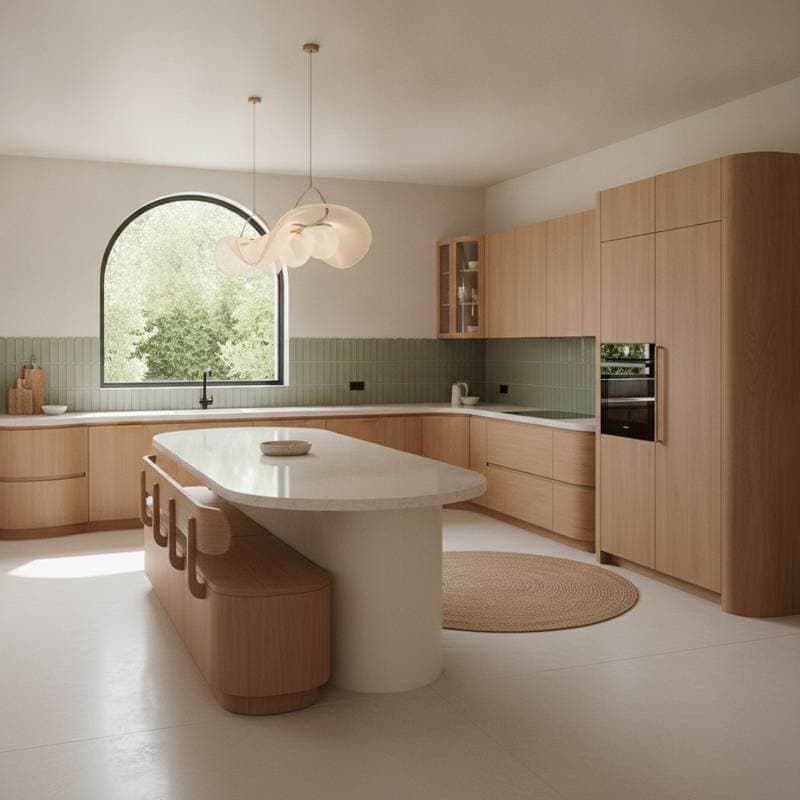
A curved kitchen replaces rigid geometry with continuous lines. The change can appear in several places at once.
- Rounded islands that allow people to stand at varied angles
- Cabinet doors shaped along gentle arcs rather than straight runs
- Countertops cut to follow smooth radii without visible seams
- Breakfast bars arranged in partial circles for balanced seating
- Cabinet corners finished with softened profiles instead of sharp returns
These choices work together to make the kitchen feel like an extension of living areas.
Practical and Emotional Advantages
Soft lines lower visual tension and encourage people to linger. At the same time the layout improves circulation between work zones and adjacent rooms. Sightlines open up so the kitchen integrates with the rest of the home.
Social interaction improves when everyone faces inward around a curved island. One client replaced a straight island with a semicircular counter and reported that guests now stay longer during meal preparation.
Added Functional Gains
Safety increases because rounded edges lower the chance of impact injuries. Storage becomes more usable when curved cabinetry reaches into former dead corners. Cleaning takes less time without tight angles that trap debris. Movement patterns align better with natural body rotation.
Construction Requirements
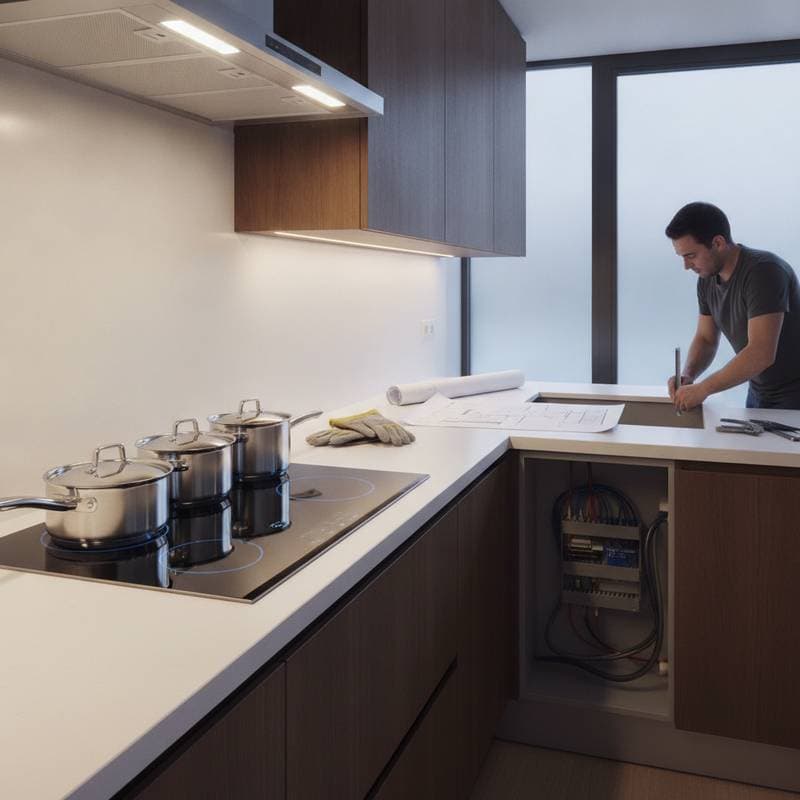
Standard cabinets do not accommodate curves. Fabricators must build radius frames and use flexible plywood or kerfed panels. Countertop suppliers need CNC equipment to produce accurate stone shapes. Flooring transitions require materials that bend or cut cleanly around the new forms.
Budget planning should account for longer labor hours and specialized materials. Appliance clearances must be verified early so ventilation and access remain code compliant.
Suitable Materials
Solid surface products can be heated and formed into seamless curves. Quartz and granite accept precise cuts but limit the tightness of radii. Veneers and laminates wrap curved surfaces when applied with proper adhesives. Metal trim pieces add definition without adding bulk.
Execution Steps
- Meet with the designer and contractor before drawings begin so structural and utility needs are mapped.
- Request full scale shop drawings that list every radius measurement.
- Verify the cabinet maker and stone fabricator have completed similar projects.
- Select finishes that age evenly rather than follow short term color trends.
- Install layered lighting that accentuates the curves once construction finishes.
Long Term Value
A restrained curve complements most architectural styles and remains appealing for years. The design supports both daily function and occasional gatherings without requiring future modification.