Modern Terrazzo Designs Making Bold Statements in 2026
Terrazzo has returned to prominence in residential and commercial projects. What was once viewed as a retro flooring choice now appears in kitchens, bathrooms, and public spaces with updated proportions and finishes. As a contractor who has completed numerous terrazzo installations, I have seen the material move beyond its traditional limits.
The appeal of current terrazzo lies in its combination of skilled execution and design flexibility. Each surface results from a deliberate mix of aggregates and binders. When proportions and curing are managed correctly, the result is a durable surface that functions as a focal point for decades.
Distinctions in Contemporary Terrazzo
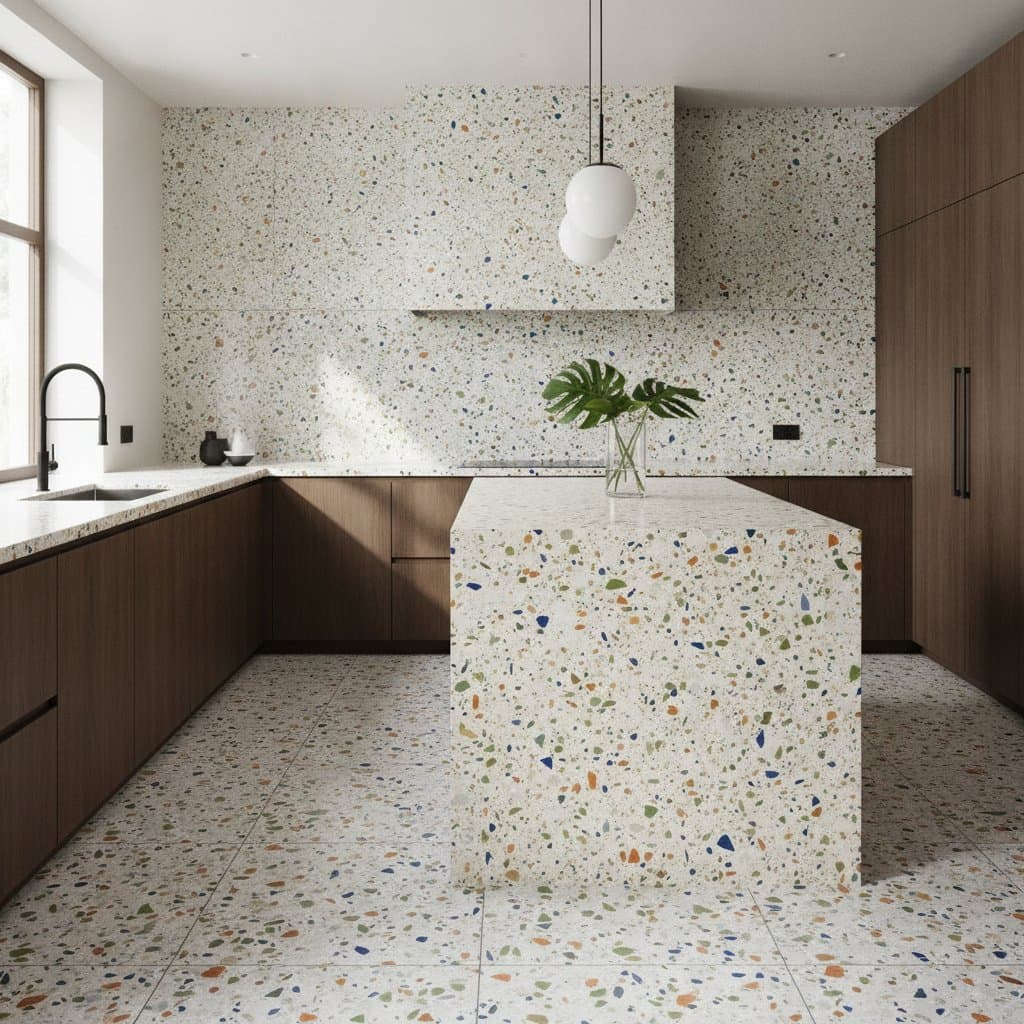
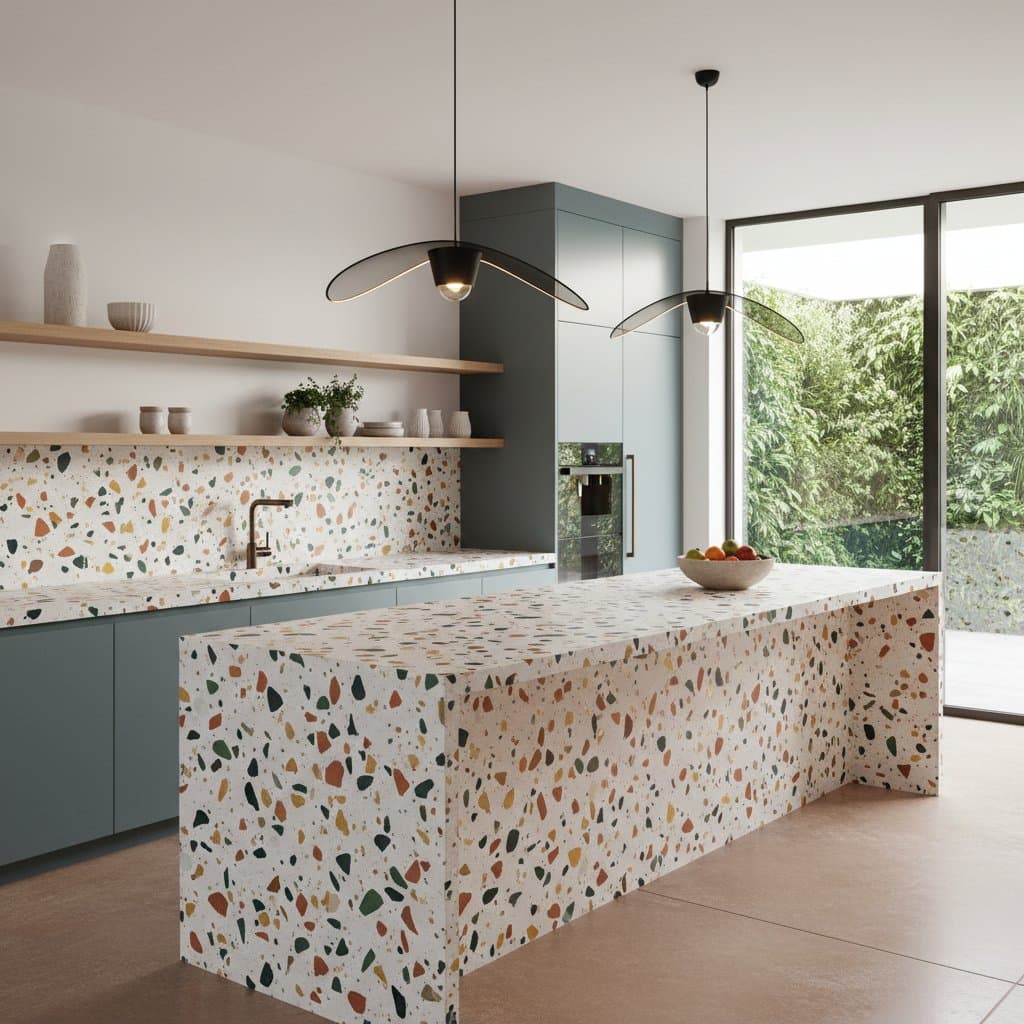
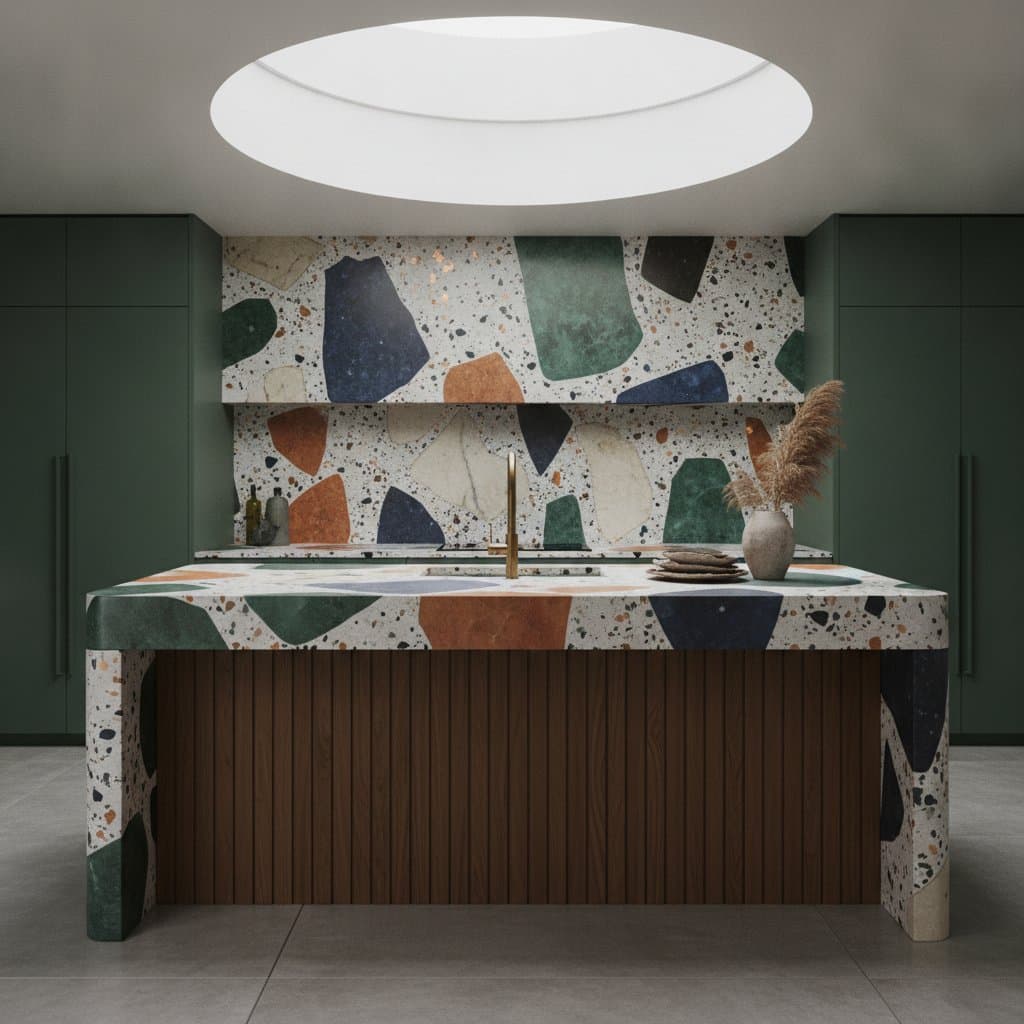
Earlier terrazzo installations relied on muted palettes and fine chips. Present-day versions incorporate larger fragments, saturated colors, and reflective elements. These changes allow surfaces to read as intentional design statements rather than background textures.
Recent projects illustrate the range. One installation used a charcoal epoxy base with brass and mirror chips that reflected daylight across a living area. Another featured a soft pink matrix with white marble pieces on a bathroom vanity, creating contrast without visual noise.
Current directions include the following approaches:
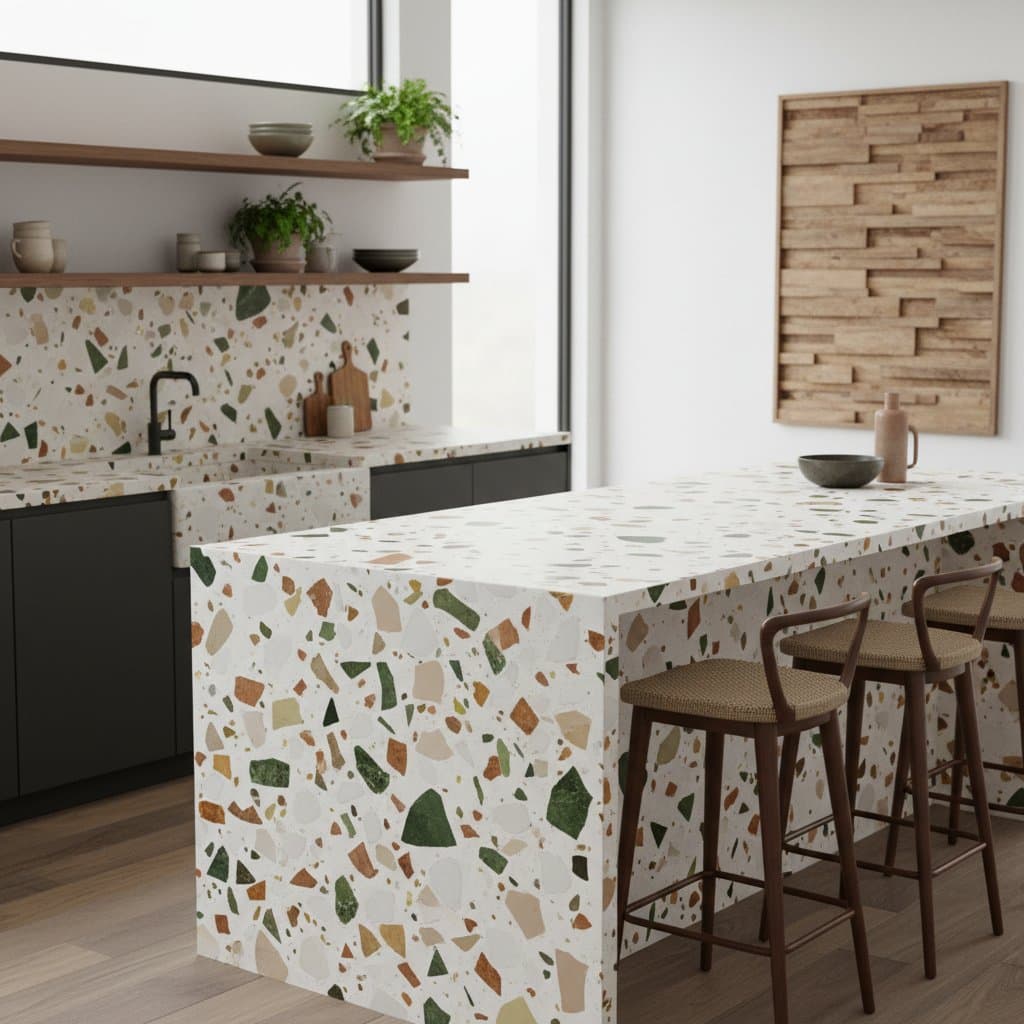
- Oversized aggregate patterns use substantial marble or quartz pieces to produce movement that reads clearly across larger floor areas.
- Monochrome treatments employ a single binder color with subtle chip variations to add depth while preserving a restrained appearance.
- High-contrast combinations pair dark matrices with light stone or saturated pigments with neutral fragments when the ratio prevents visual overload.
- Embedded motifs allow logos or geometric forms to be cast directly into the surface, suiting both commercial and residential applications.
- Reflective inclusions such as metallic or glass particles introduce light play when distributed sparingly.
Each option depends on accurate mixing ratios and controlled grinding. Proper installation technique determines whether the surface remains intact and attractive over time.
Suitable Applications
Terrazzo now serves multiple functions beyond floors. Installations on countertops, walls, stairs, and exterior paving demonstrate its adaptability when the binder type matches the exposure conditions.
Countertops and Vanities
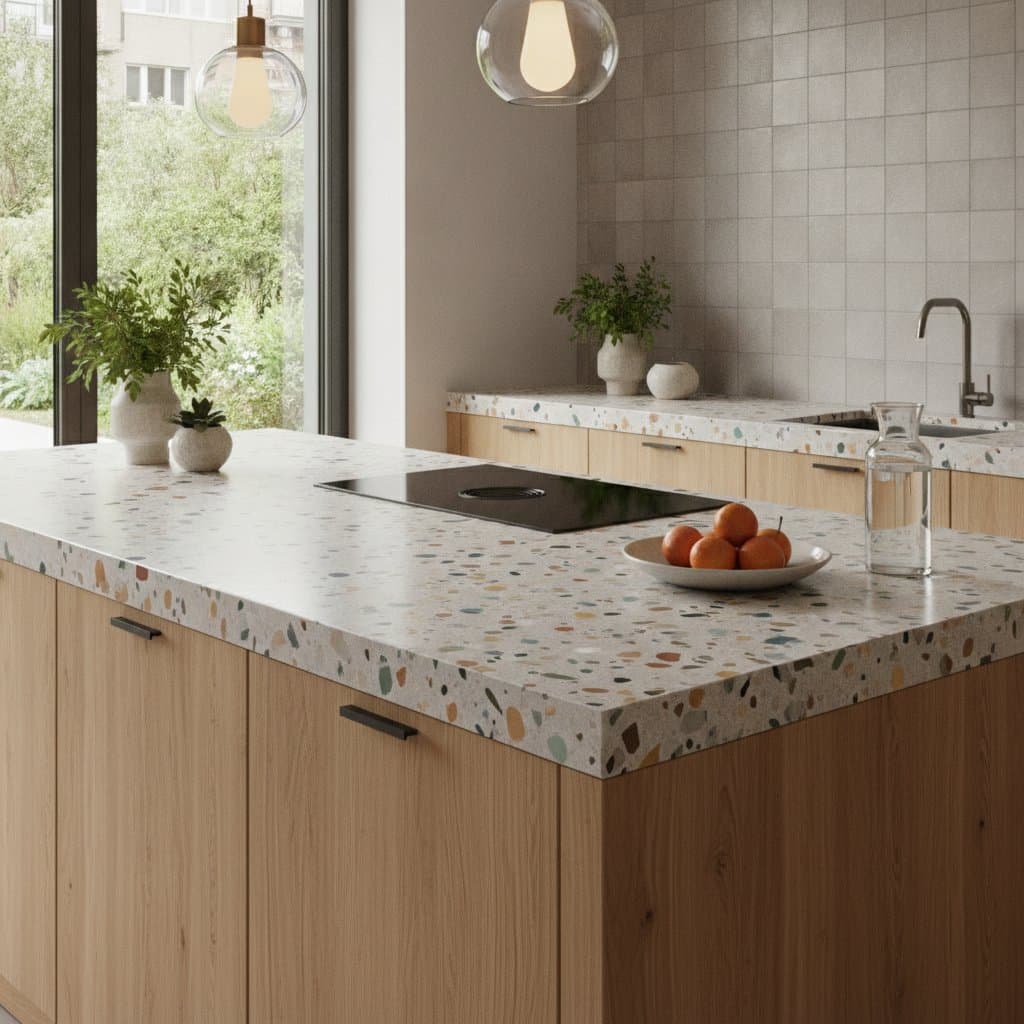
Epoxy terrazzo forms seamless surfaces that resist staining and require no grout. Color customization aligns the material with surrounding cabinetry and fixtures. Heat tolerance supports kitchen use when the mix includes appropriate aggregates.
Feature Walls
Precast terrazzo panels convert entryways or fireplace surrounds into focal elements. Off-site fabrication reduces dust and shortens on-site work.
Stair Treads
Contrasting nosing strips on terrazzo stairs improve visibility while maintaining a continuous appearance across levels.
Exterior Paving
Cement-based terrazzo performs reliably on patios when sealed for weather exposure. Surface texture can be adjusted during finishing to maintain traction.
Epoxy systems suit interior work because they accept vibrant pigments and polish to a smooth plane. Cement systems provide better stability for outdoor conditions.
Investment and Upkeep
Terrazzo carries a higher initial cost than many alternatives, yet its service life offsets that difference. A correctly installed and maintained floor can remain serviceable for generations with periodic polishing and resealing.
Early involvement of a terrazzo specialist during design helps align pattern scale with available material sizes. This step reduces waste and supports consistent color across pours. Routine care consists of neutral cleaners, avoidance of acidic products, and resealing at intervals determined by traffic levels.
Planning Your Terrazzo Project
Begin by clarifying the scale and function of the intended surface. Reference images help communicate desired color and aggregate size, yet site-specific factors such as substrate condition and lighting influence final selections. Collaboration with an experienced installer translates those preferences into a workable specification that balances appearance and performance.