Terrazzo's Revival in 2026: Sustainable Surfaces for Modern Homes
Design trends cycle through nostalgia and innovation, and terrazzo exemplifies this rhythm. Once a hallmark of midcentury architecture, terrazzo now captivates contemporary interiors with its mosaic blend of marble chips, glass fragments, and mineral elements embedded in a polished binder. Designers value terrazzo for its craftsmanship, resilience, and commitment to environmental responsibility, positioning it as a surface that harmonizes heritage with forward-thinking aesthetics.
Embracing Material Authenticity
Terrazzo's appeal lies in its honest expression of composition. The visible aggregates of stone, glass, and minerals reveal the material's origins and creation process. Elena Rossi of Studio Formare calls terrazzo "a material that wears its making on the surface," highlighting its tactile depth that contrasts with uniform synthetic options.
Polished to a satin finish or left with a honed matte texture, terrazzo shifts appearance with natural light throughout the day. These subtle variations and inherent imperfections celebrate the handcrafted nature, providing homeowners with a surface that feels alive and connected to natural elements.
Sustainability Built into Every Element
Terrazzo originated as a resourceful use of marble remnants, and modern versions amplify this ethos. Producers incorporate recycled glass, post-consumer porcelain, and reclaimed stone, achieving up to 70 percent recycled content in formulations from companies like Diespeker & Co. and Terrazzo Australian Marble.
Low-VOC cement binders or natural lime-based resins further enhance its eco-profile. This durability allows terrazzo to last decades, with refinishing options that prevent waste, unlike short-lived composites that demand frequent replacements.
Color and Pattern as Design Foundations
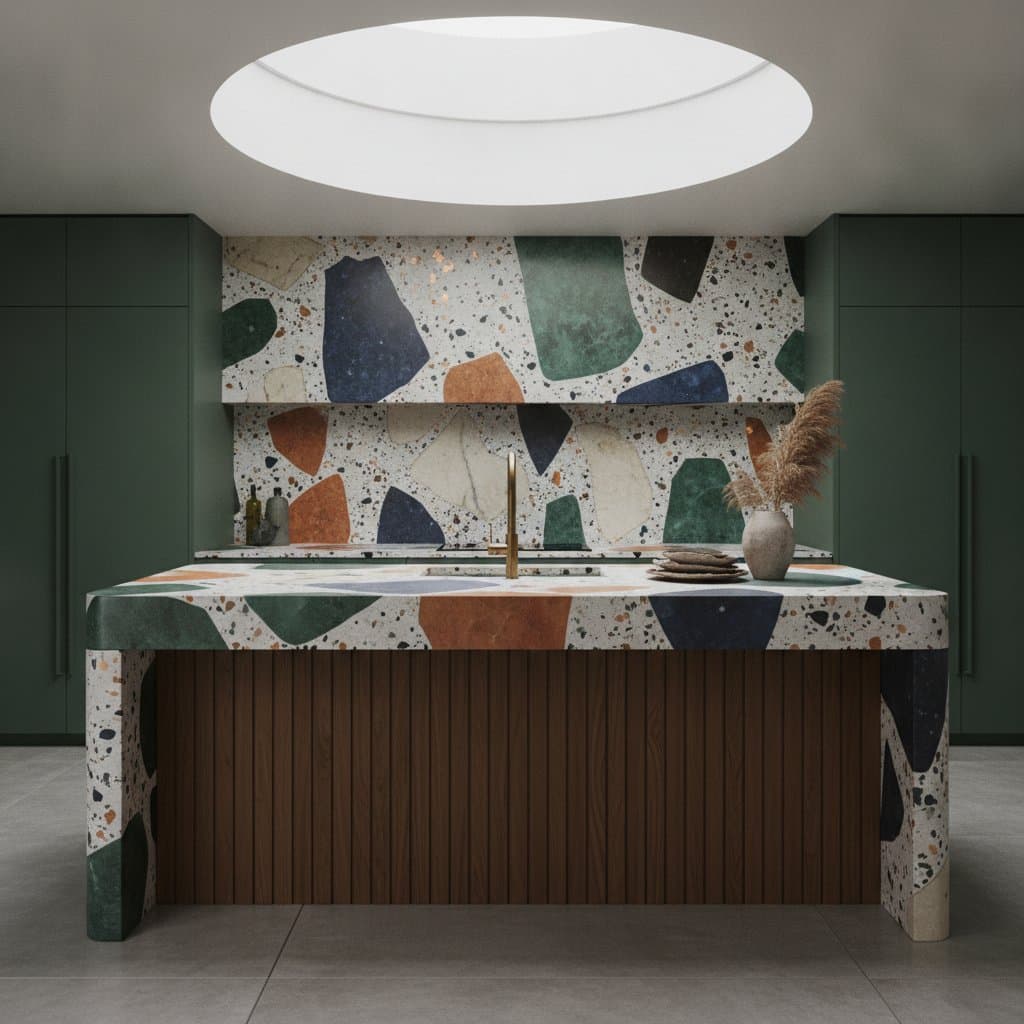
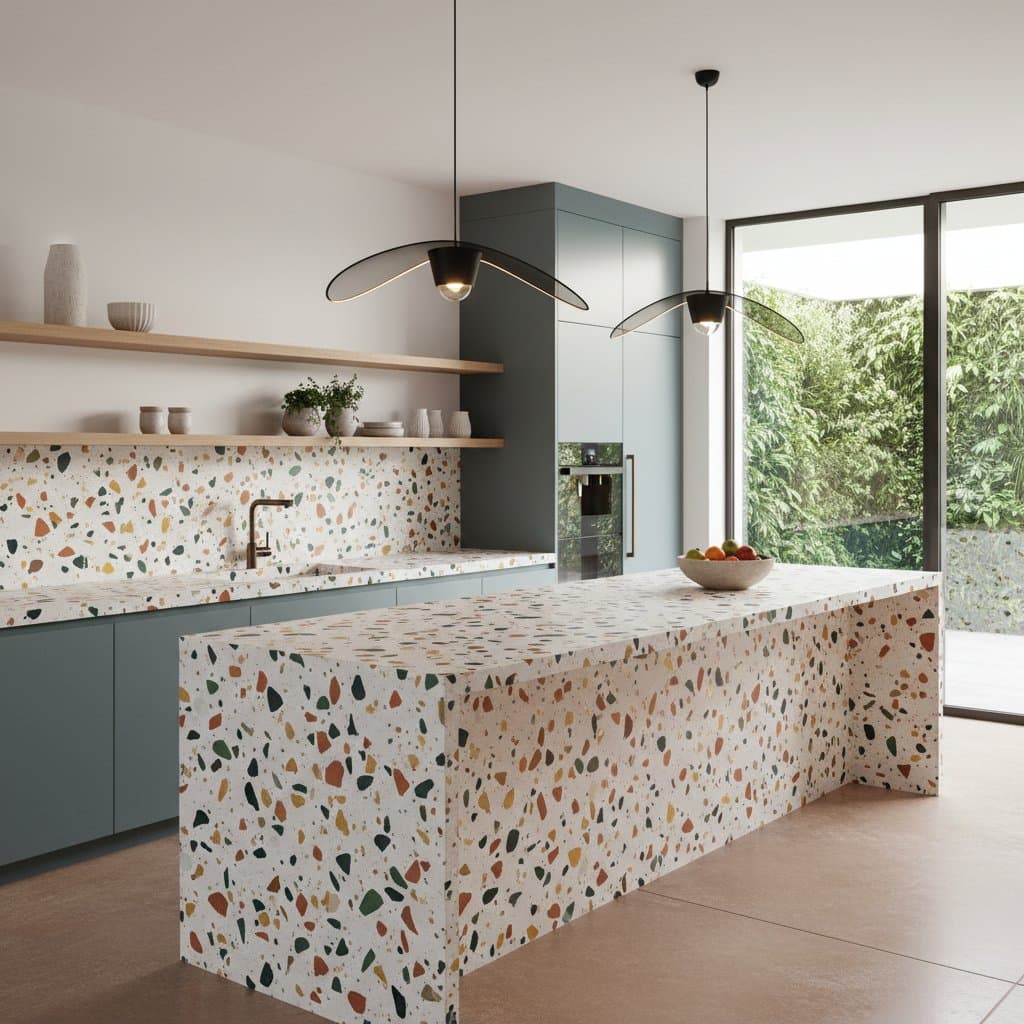
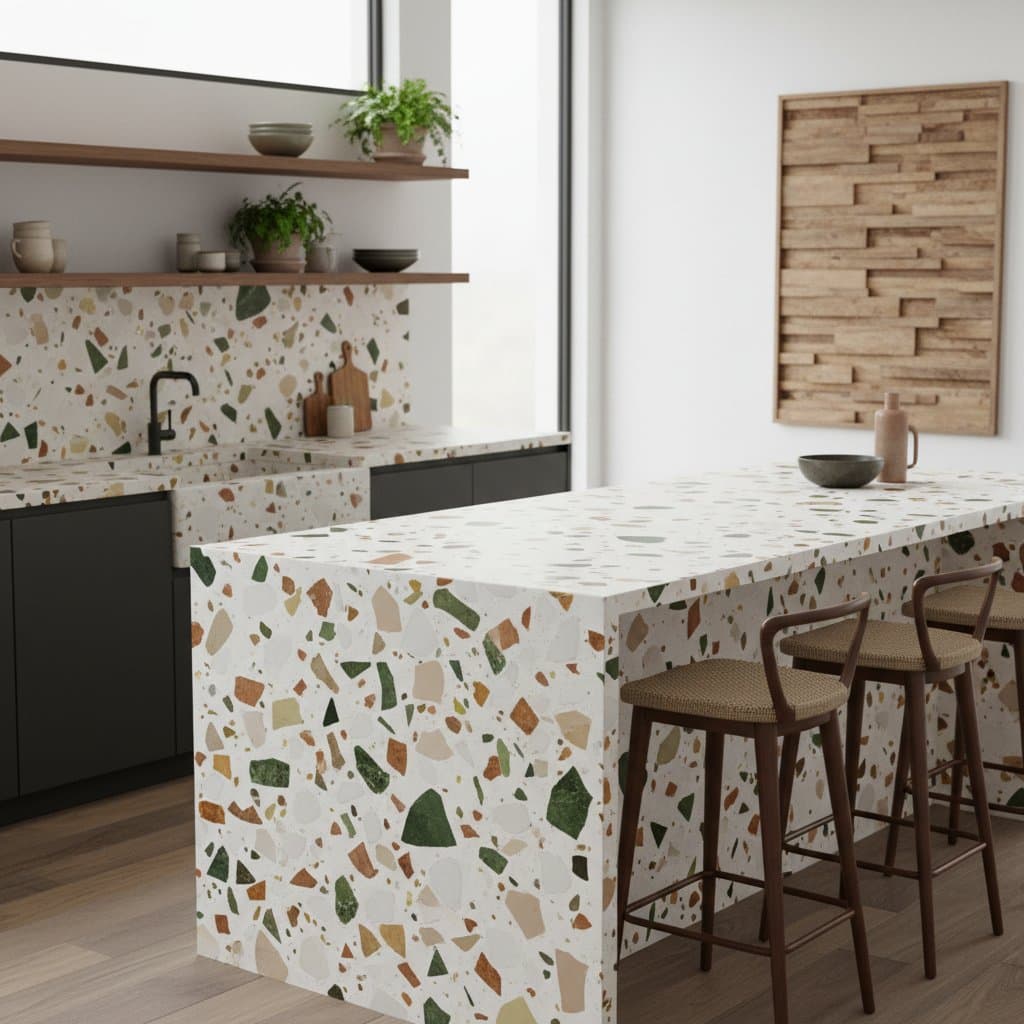
Contemporary terrazzo transcends muted tones, embracing vibrant aggregates for character. Studio Bua's emerald green chips in a pale blush binder evoke coastal Italy on a kitchen island, while graphite or chalk options create understated rhythm.
Pair these surfaces with cabinetry in shades like Farrow & Ball's Down Pipe or Benjamin Moore's Hale Navy. The interplay of matte paint against terrazzo's gloss creates sculptural depth, elevating kitchens and bathrooms to refined focal points.
Terrazzo in Kitchen Design
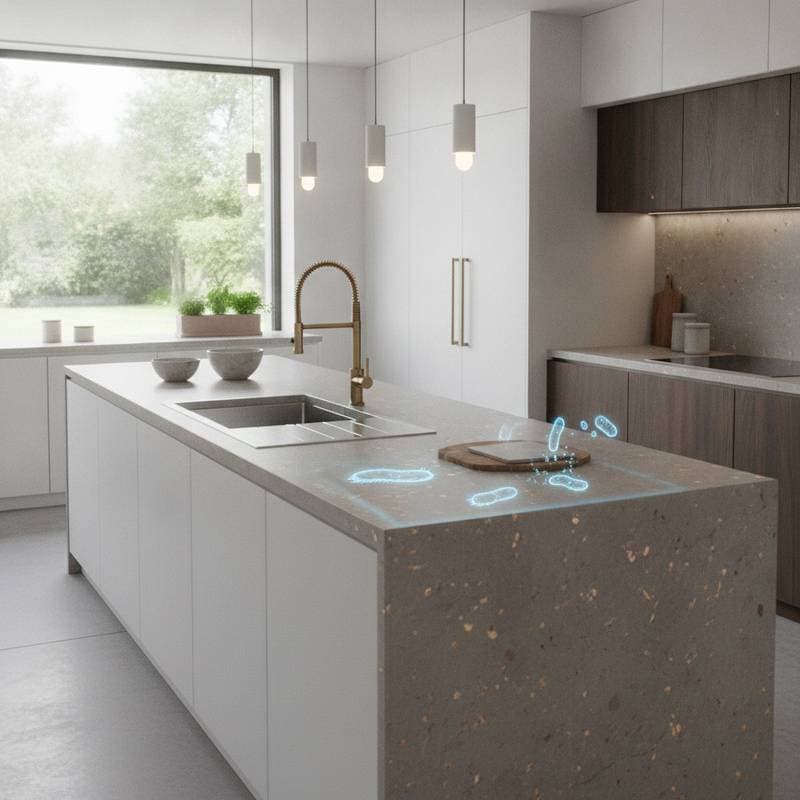
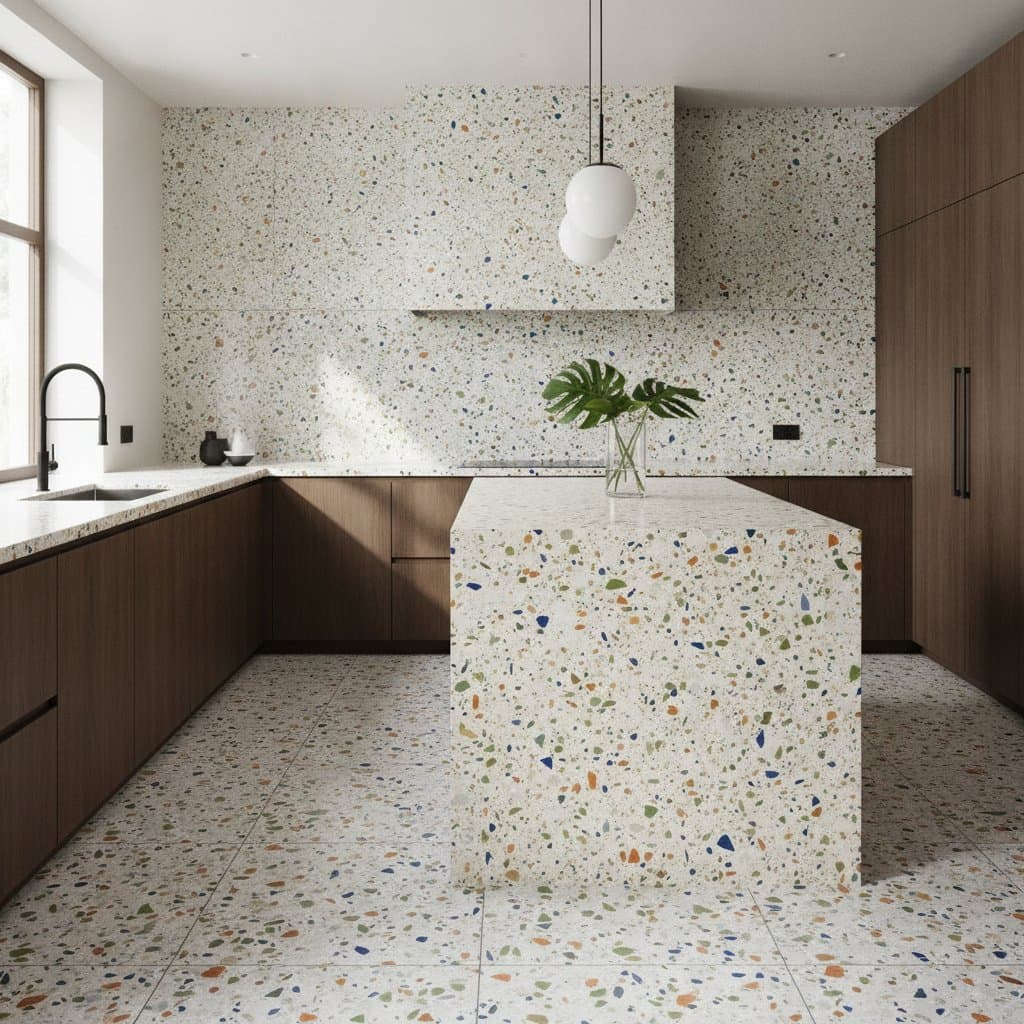
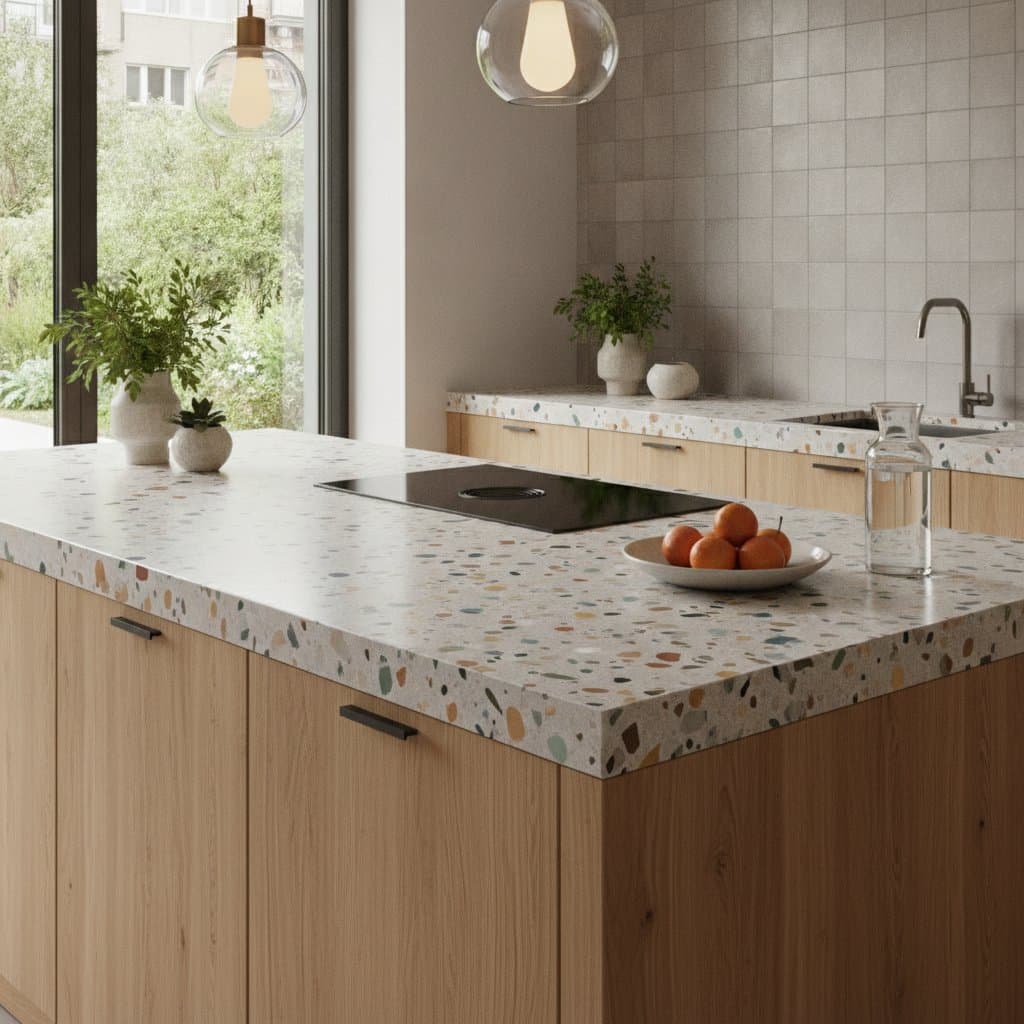
Kitchens demand surfaces that withstand daily rigors, and terrazzo delivers exceptional performance. Heat-resistant and stain-repellent, it suits countertops, backsplashes, and floors seamlessly. Architect Javier Morales of Forma Studio refers to terrazzo as "the working artist's surface, equally elegant underfoot or under a chef's knife."
In open layouts, terrazzo flooring links cooking, dining, and living areas with light-reflecting continuity. Large tiles ensure visual flow, while poured slabs offer expansive, pattern-rich expanses that anchor the space in practical texture.
Terrazzo for Thoughtful Bathrooms
Bathrooms gain warmth and sophistication through terrazzo's mineral richness. Combined with brushed brass hardware or oiled walnut cabinetry, it tempers the sterility of tiles and glass. Smaller aggregate patterns on shower walls or vanity tops yield a luxurious, fine texture.
Strategic lighting amplifies terrazzo's reflective qualities, transforming bathrooms into tranquil retreats. Artisanal basins from Concrete Nation or Lunaform Studio serve as functional sculptures, integrating artistry into everyday routines.
Expanding Terrazzo's Applications
Designers push terrazzo beyond floors and counters into vertical and decorative realms. Stair risers, fireplace surrounds, and furniture pieces like side tables or planters gain artistic elevation. Studios such as Hem and Marmoreal by Max Lamb showcase terrazzo's adaptability in these forms.
Micro terrazzo, with its fine fragments and smooth finish, suits wall panels and accessories. This variant captures light and shadow elegantly, introducing subtle shimmer to diverse interior settings without overwhelming the design.
Customizing Terrazzo for Personal Expression
Tailored fabrication defines terrazzo's modern allure. Collaborators select aggregate sizes, colors, and binder shades to match project visions, akin to composing a bespoke artwork. Material Works Architecture sources local quarry fragments to infuse regional identity into mixes.
This process ensures each installation reflects unique context and personality. The resulting one-of-a-kind slabs foster emotional connections, appealing to those who prioritize materials with narrative depth.
Maintenance Practices for Enduring Appeal
Terrazzo's longevity stems from straightforward care routines. Apply sealant periodically and clean gently to preserve its finish across generations. Professional repolishing addresses scratches or wear, reviving the surface to its initial brilliance.
Such maintenance cultivates appreciation for the material's evolution. The developing patina records daily life, turning terrazzo into a meaningful chronicle within the home.
Honoring Craftsmanship Heritage
Terrazzo links today's designs to Venetian traditions dating back centuries. This revival honors time-tested techniques while incorporating digital tools for precision. Architects blend manual artistry with modern fabrication, creating surfaces that resonate across eras.
The fusion of heritage and innovation positions terrazzo as a staple in evolving design conversations. It offers timeless quality that aligns with contemporary values of durability and authenticity.
Bringing Terrazzo into Your Living Spaces
Integrating terrazzo enhances home functionality and aesthetic depth. Start by assessing high-traffic areas like kitchens or bathrooms for initial applications, then explore custom pieces for accents. Consult fabricators early to align aggregates and colors with your palette.
The result is a home that feels grounded yet elevated, with surfaces that support sustainable living. Terrazzo not only withstands time but also enriches it, creating environments of lasting beauty and purpose.