Gas Ban Remodels Inspire All-Induction Kitchens
Across design conscious cities a quiet transformation is taking place behind closed cabinet doors and beneath sleek quartz countertops. The familiar hiss of gas burners is giving way to the silent operation of induction cooktops. What began as a policy response to gas restrictions has become a defining movement in kitchen design. The all electric kitchen now represents precision, minimalism, and environmental responsibility.
Designers treat this shift as a creative opening rather than a limit. Removing gas lines allows cleaner layouts, more flexible cabinetry, and improved culinary performance. The modern induction kitchen shows that sustainability and visual appeal can exist together.
Here are five key elements that define the rise of the all induction kitchen.
Flexible Kitchen Layouts
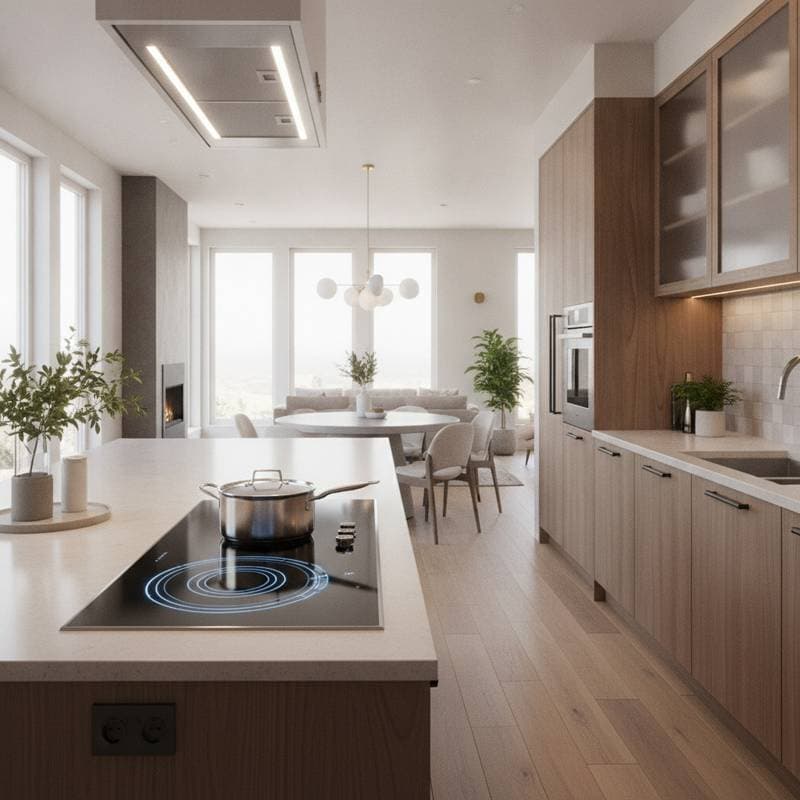
Designers gain new freedom when gas hookups and large ventilation hoods are no longer required. Islands no longer need complex ducting, which creates room for social seating arrangements.
Architect Daniel Reyes of Studio Parra notes that removing gas constraints turns the kitchen into a more open space. Cooks can face guests without concern for fumes or excess heat. This change supports layouts where the cooktop sits within the main conversation area.
Paired with downdraft ventilation or hidden ceiling vents, induction systems fit the trend toward kitchens that double as living spaces.
Sustainable Design Choices
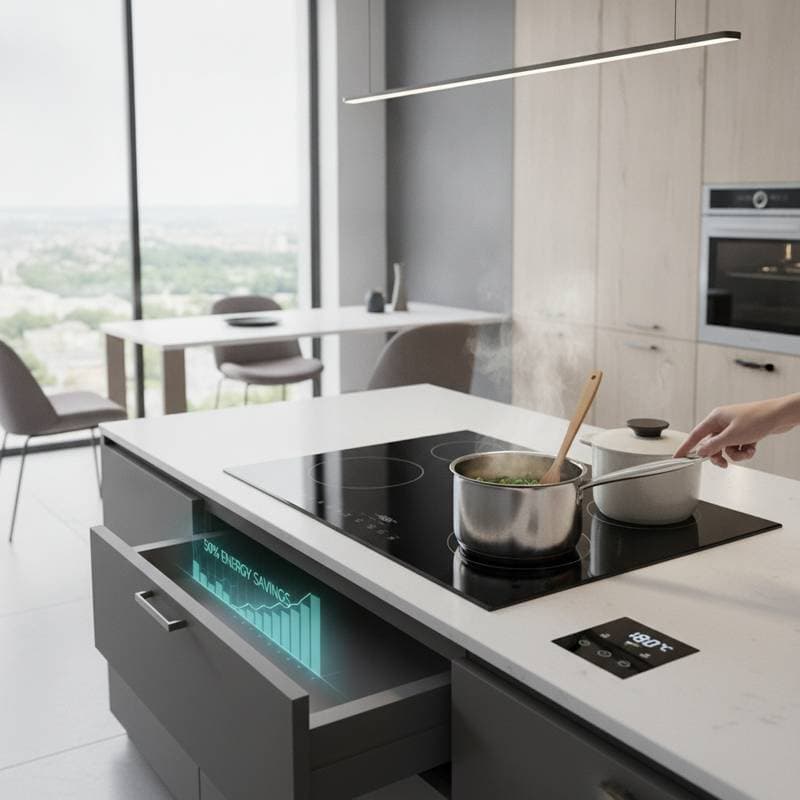
The environmental advantages of an all electric kitchen extend beyond energy savings. Removing gas lines simplifies construction and lowers future maintenance expenses.
Electric kitchens work well with solar panels and smart home systems. Designers coordinate efficient appliances with panel ready cabinetry and integrated power management to keep the space both functional and refined.
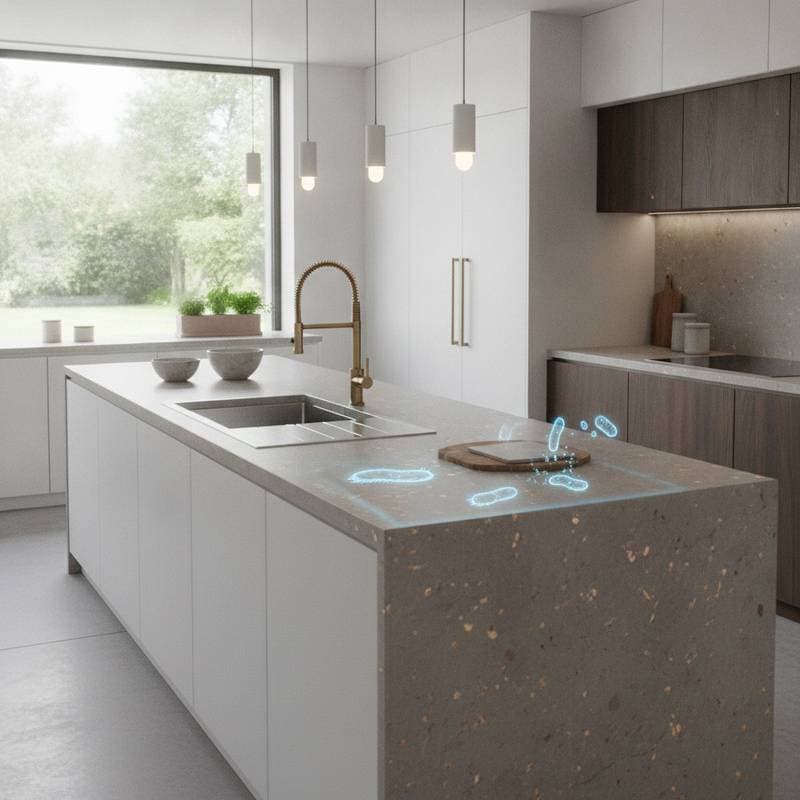
Material choices follow the same approach. Recycled terrazzo, Fenix NTM surfaces, and bamboo veneer add texture while supporting the sustainable story.
Minimalist Aesthetic Appeal
Induction cooktops blend into their surroundings when not in use. They appear as a single sheet of glass that stays reflective and understated. This quality of visual simplicity has become central to contemporary minimalism.
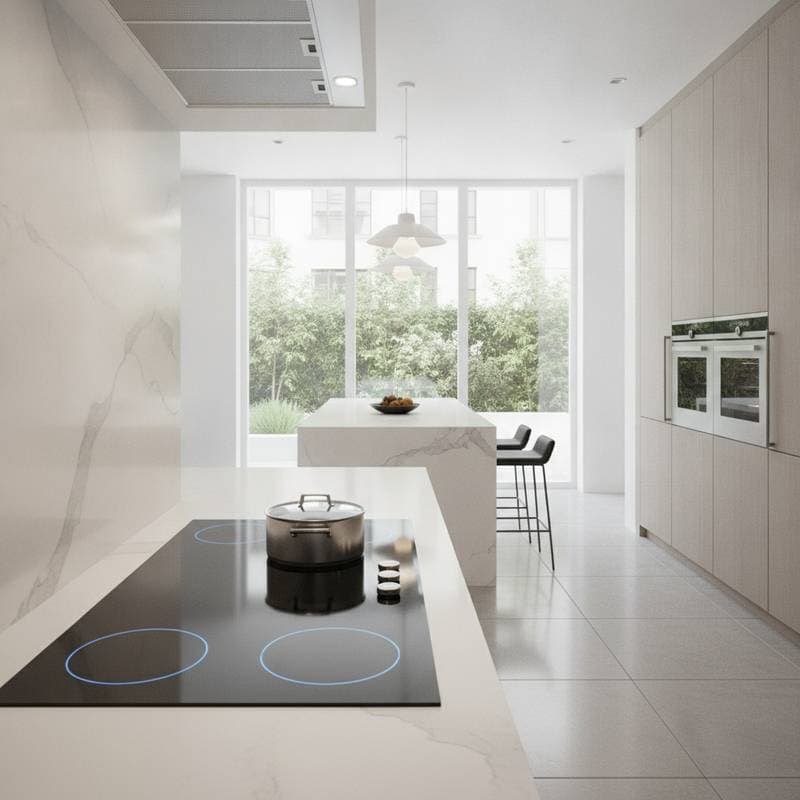
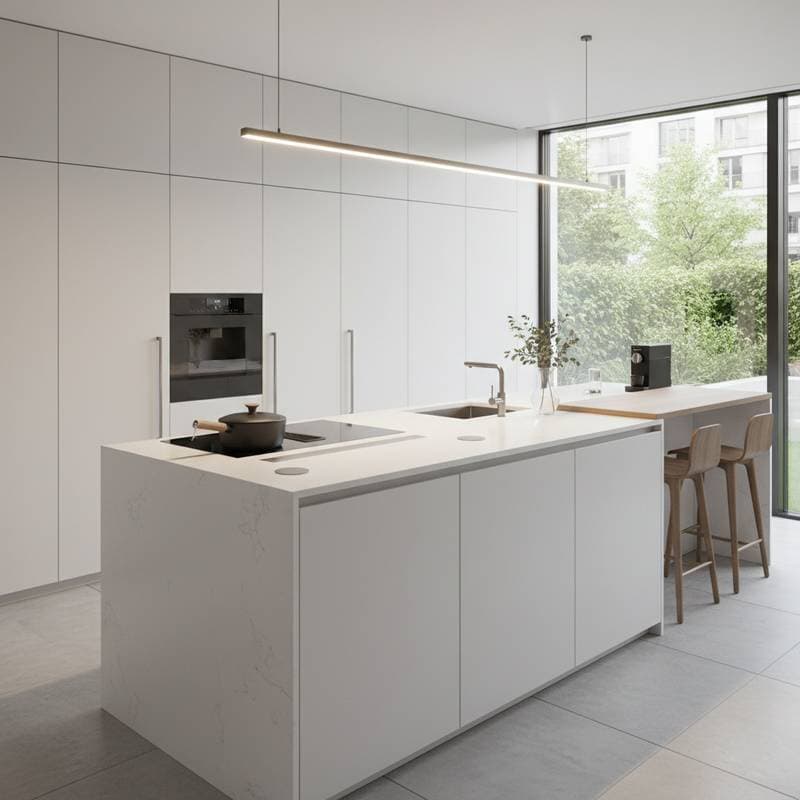
Designers often match the cooktop with Neolith Arctic White or Caesarstone Pure Black countertops to create one continuous surface. The result reads as architecture instead of equipment.
This method suits sculptural islands and cantilevered bars. It also lets lighting play a stronger role through LED strips placed under cabinets.
Harmonious Material Pairings
Without gas infrastructure, designers explore fresh material combinations. The smooth surface of induction cooktops contrasts well with warmer finishes.
European oak cabinets finished with natural oil provide an organic counterpoint to glossy black glass. Brushed nickel hardware, smoked mirrored backsplashes, and porcelain slab walls add depth while keeping the overall language minimal.
Soft grays, muted greens, and off white tones create a calm setting that matches the quiet operation of induction. Paint colors such as Farrow and Ball Pigeon or Benjamin Moore Thunder supply sophisticated warmth alongside stainless steel and glass.
Emotional Benefits of Induction Cooking
The deepest change in an all induction kitchen is emotional. Cooking without flame changes the atmosphere of the home. The space feels more open and connected.
Architectural psychologist Mara Ellison calls it a rebalancing of sensory priorities. Attention moves from spectacle to calm details such as the texture of a bowl or the scent of herbs.
The induction kitchen signals a willingness to prioritize health and sustainability. It shows that design can serve both beauty and responsibility at once.
Practical Steps for Transition
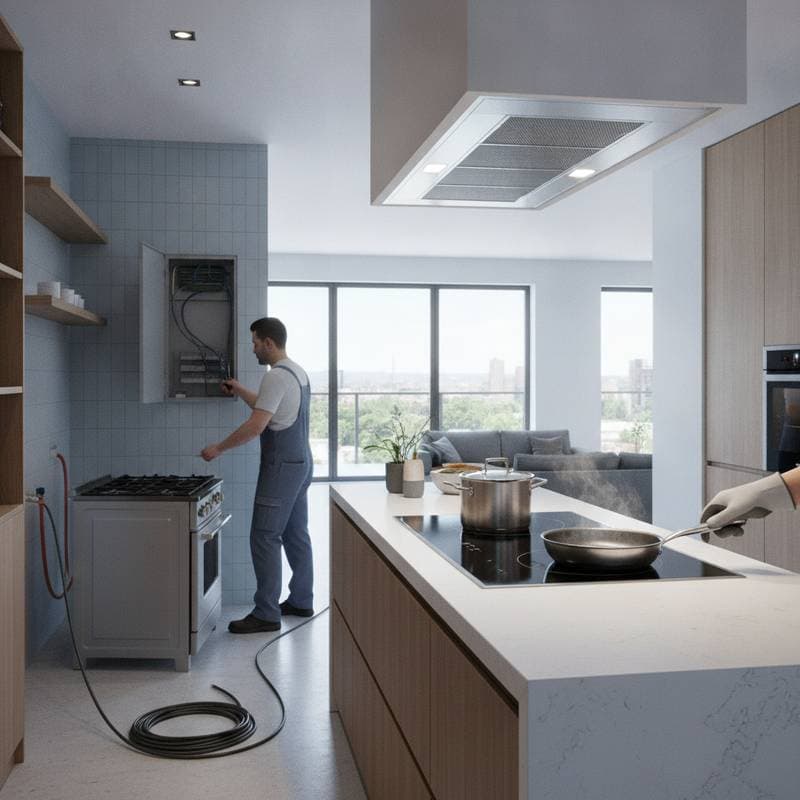
Homeowners planning a remodel start by checking electrical capacity. A licensed contractor can confirm that circuits will support the new appliances safely.
View induction as part of a full redesign rather than a single swap. Choose compatible cookware such as carbon steel or tri ply stainless. Add open shelving, concealed storage, and layered lighting to maintain a sense of order.
Many who complete the change report a renewed connection to their kitchen. Reduced noise and heat allow cooking to feel more deliberate and restorative.
Embracing Intentional Kitchen Living
The move toward all electric kitchens reflects a larger shift toward thoughtful living. Every detail, from silent surfaces to efficient performance, carries this intention forward. Designers and homeowners now share a vision of kitchens that combine technological intelligence with lasting visual grace.