Terrazzo's Comeback in Sustainable Kitchen and Bath Design
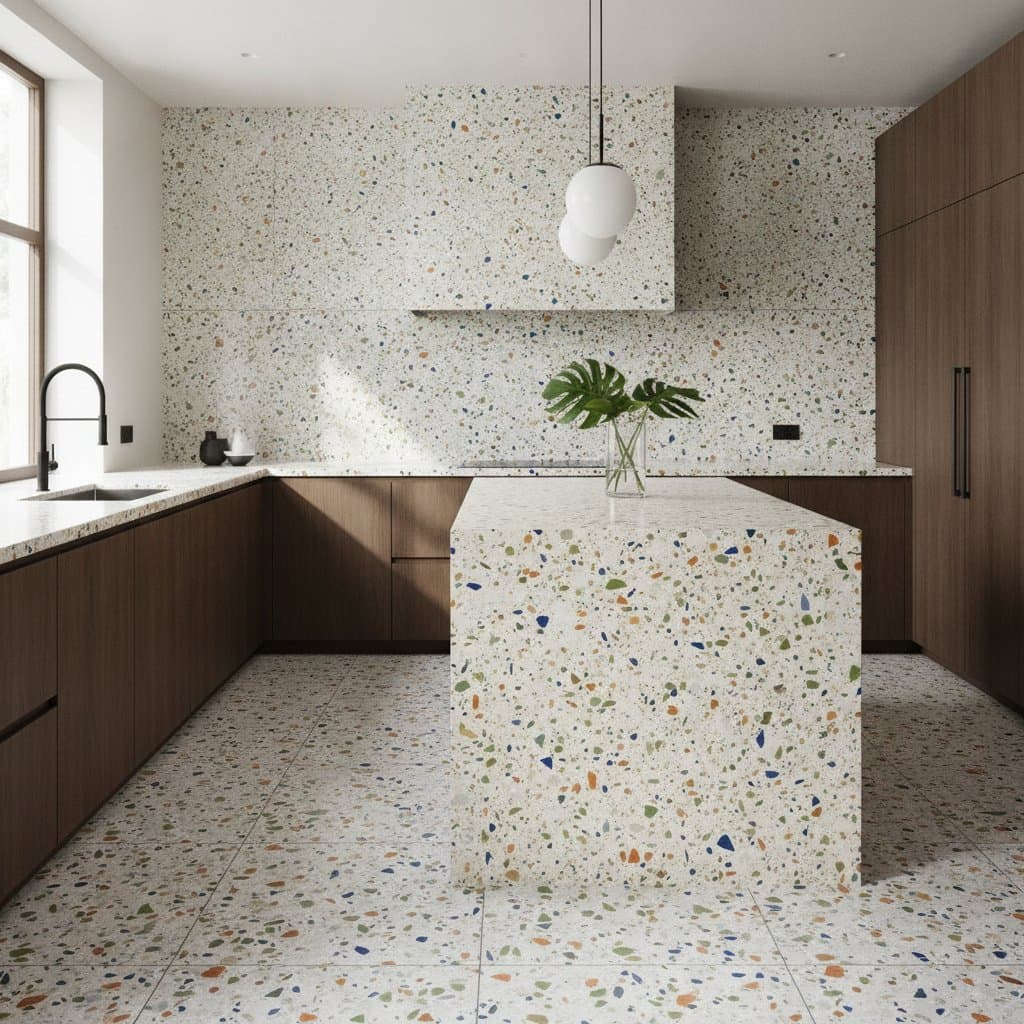
Terrazzo combines timeless appeal with modern sustainability. Produced from recycled aggregates in a cement or resin matrix, the material supports custom color, texture, and pattern choices suitable for floors, countertops, and walls. Its durability and low maintenance profile make it a practical selection for kitchens and bathrooms that experience frequent use.
Core Advantages of Contemporary Terrazzo
Manufacturers embed marble, quartz, glass, or reclaimed chips within a binding base. Each finished surface therefore contains reused content while delivering unique visual character. The resulting material resists stains, scratches, and moisture when properly sealed.
Designers value the range of finishes available. A high-polish resin surface creates a reflective, contemporary appearance. A honed cement surface yields a matte, organic quality. Both options accommodate subtle neutrals or saturated accent chips according to project requirements.
Performance in Daily Use
Longevity reduces replacement cycles and associated waste. Properly installed terrazzo withstands heat, water, and abrasion in high-traffic zones. Cement-based formulations require periodic sealing to maintain stain resistance. Resin-based formulations offer lower porosity and greater color vibrancy for busy households.
Budget-conscious projects can employ terrazzo-look porcelain tiles or vinyl planks. These alternatives start near fifteen dollars per square meter and install directly over existing substrates. Authentic terrazzo tiles range from forty to eighty dollars per square meter, while poured installations begin near one hundred dollars per square meter.
Material Pairings and Customization
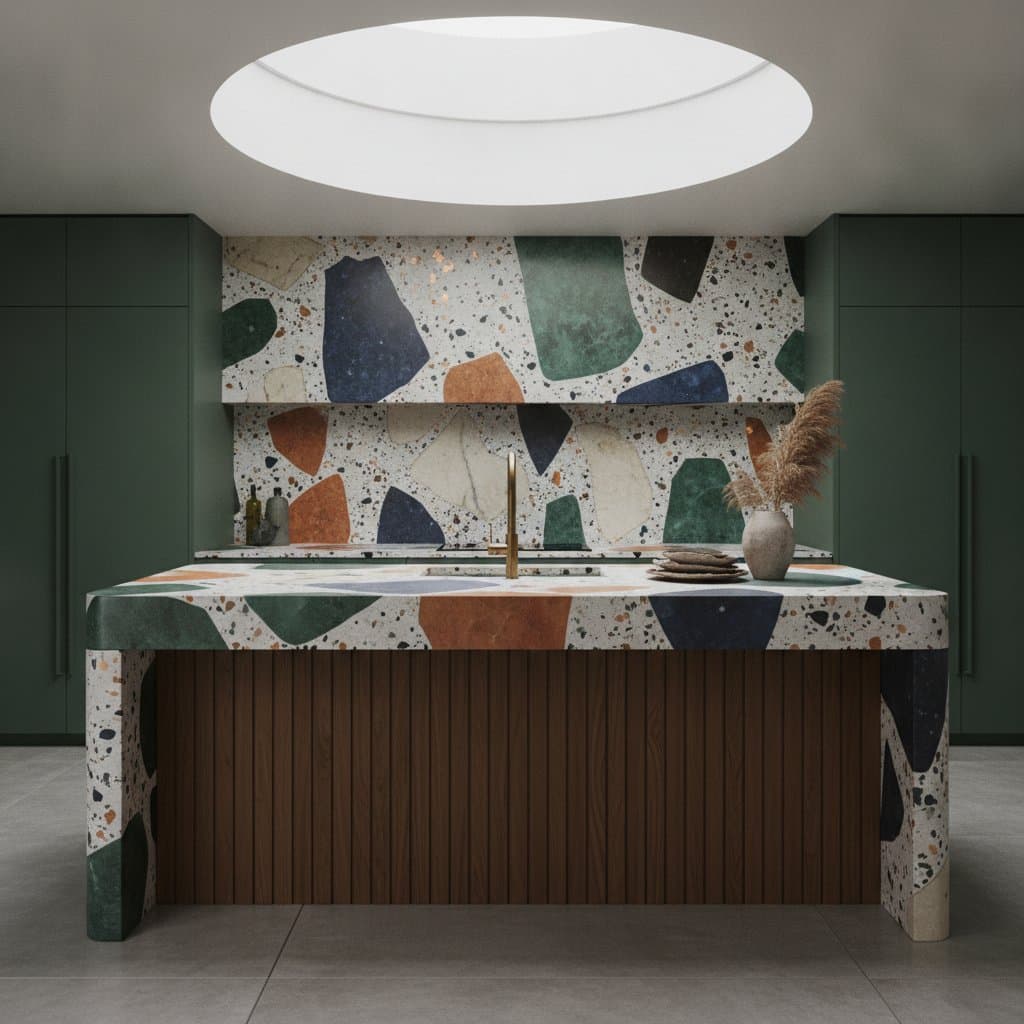
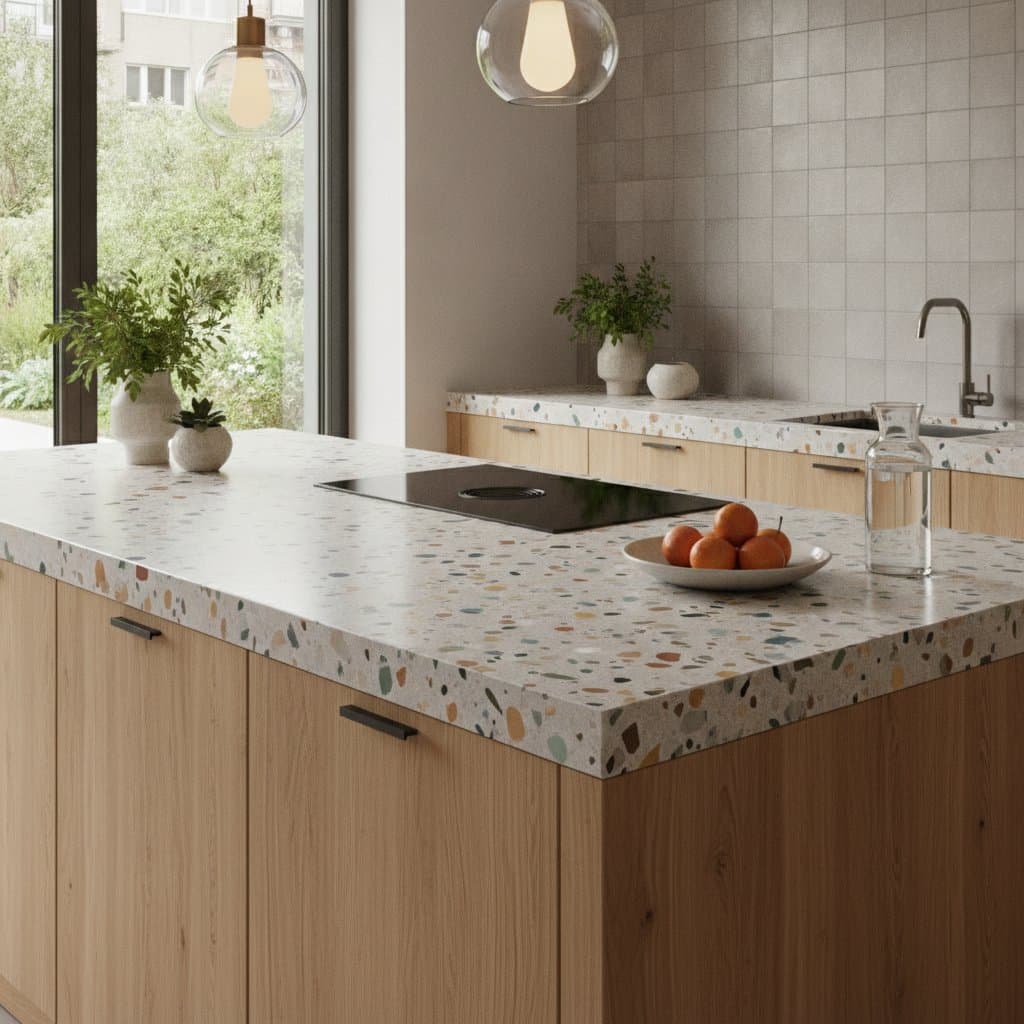
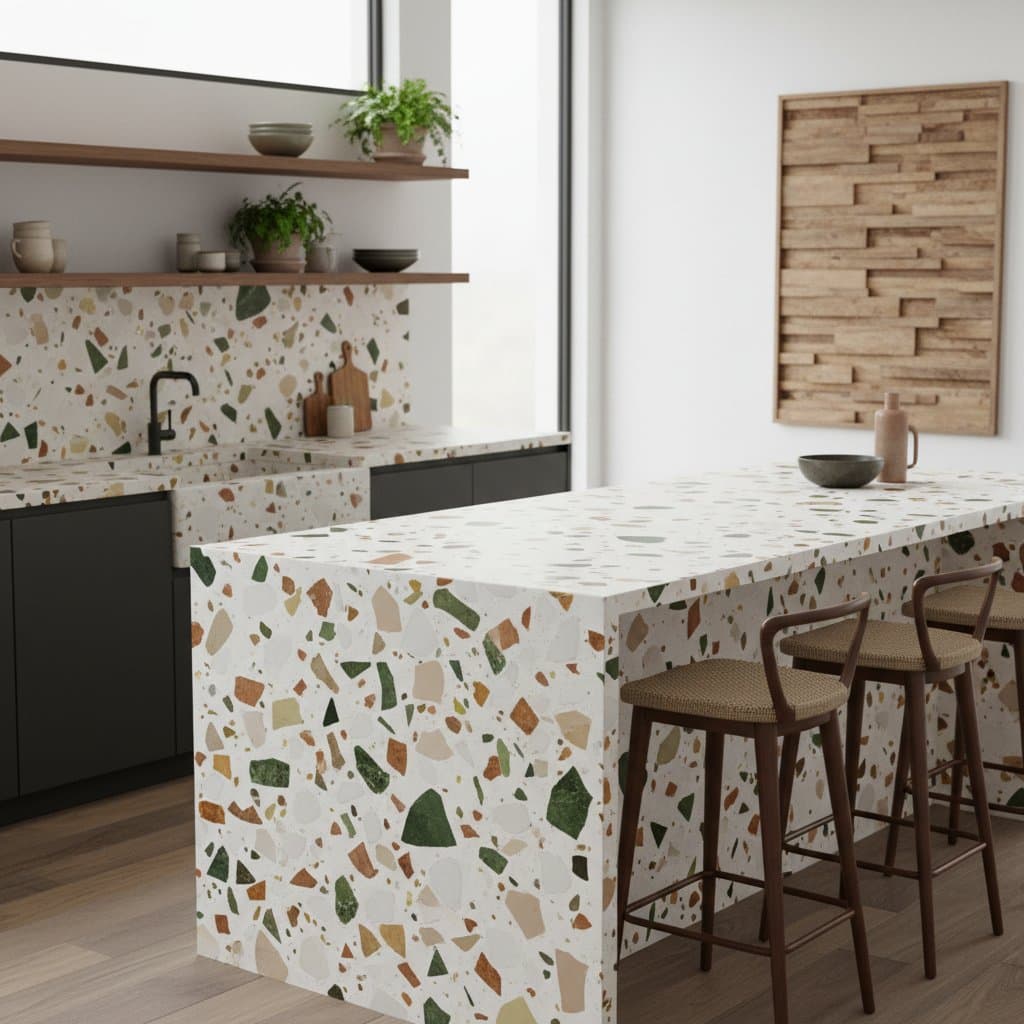
Terrazzo integrates with complementary surfaces. Natural wood introduces warmth for Scandinavian or mid-century schemes. Brass fixtures add refined contrast. Matte black hardware produces a crisp modern profile. Soft pastel chips suit playful powder rooms.
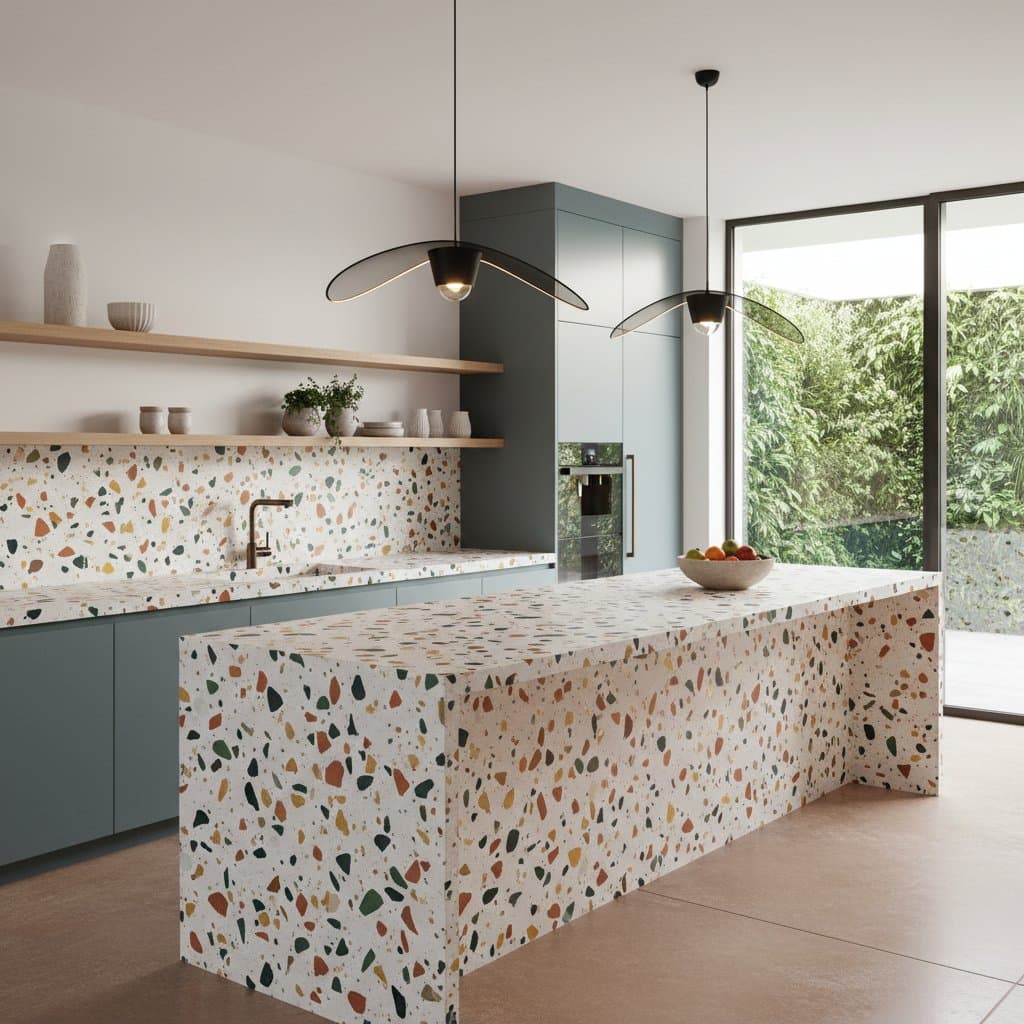
Chip size, binder color, and surface finish remain adjustable. Larger aggregates emphasize texture. Finer chips produce a quieter field. Local production of many terrazzo products further reduces transportation emissions.
Countertop Selection Guidance
Cement terrazzo suits clients seeking handcrafted depth and pairs effectively with rustic cabinetry. Resin terrazzo provides a nonporous work surface ideal for food preparation areas. Both types accept custom edge profiles and integrated sinks.
Install poured countertops with experienced fabricators to ensure uniform thickness and proper curing. Tile or slab versions require a level substrate and flexible adhesive. Clean surfaces regularly with pH-neutral solutions.
Flooring Applications
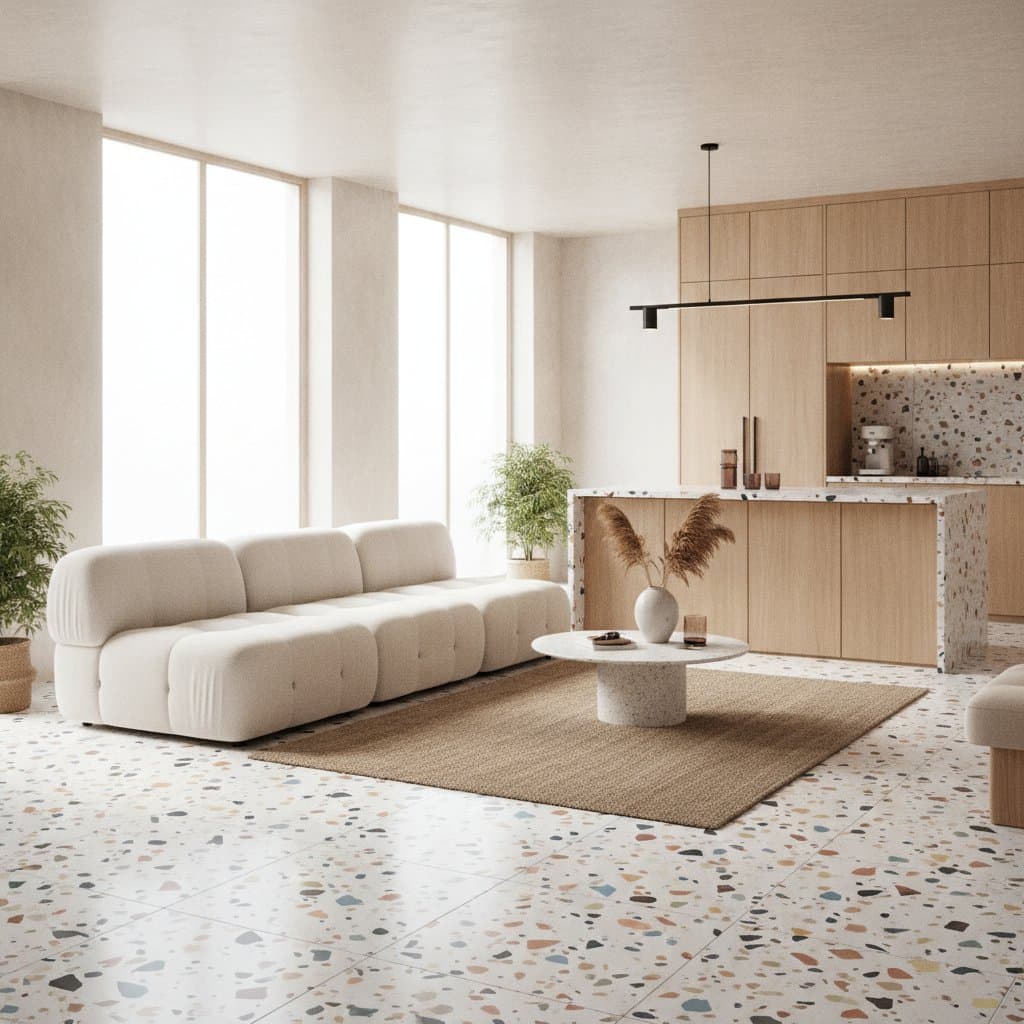
Large-format terrazzo flooring unifies open-plan kitchens and dining areas. Light-colored tiles with fine aggregates visually expand compact bathrooms. Recycled glass, mirror fragments, and stone offcuts serve as common aggregates, while some producers incorporate fly ash to lower embodied carbon.
Wet-Area Strategies
Terrazzo performs reliably on shower walls, vanity tops, and tub surrounds. Begin with modest applications such as a niche panel or accessory set when working within limited budgets. Select honed finishes on floors to maintain traction. Reapply sealer annually in humid environments.
Emerging Product Developments
Manufacturers now offer lightweight wall panels, sinks formed from stone dust, and small-scale accessories cast from eco-resin. These options extend terrazzo aesthetics to renters and accessory budgets while diverting additional waste streams from landfills.
Long-Term Value
A terrazzo surface acquires a subtle patina that enhances rather than detracts from its appearance. The combination of recycled content, extended service life, and design flexibility supports both environmental goals and daily function.