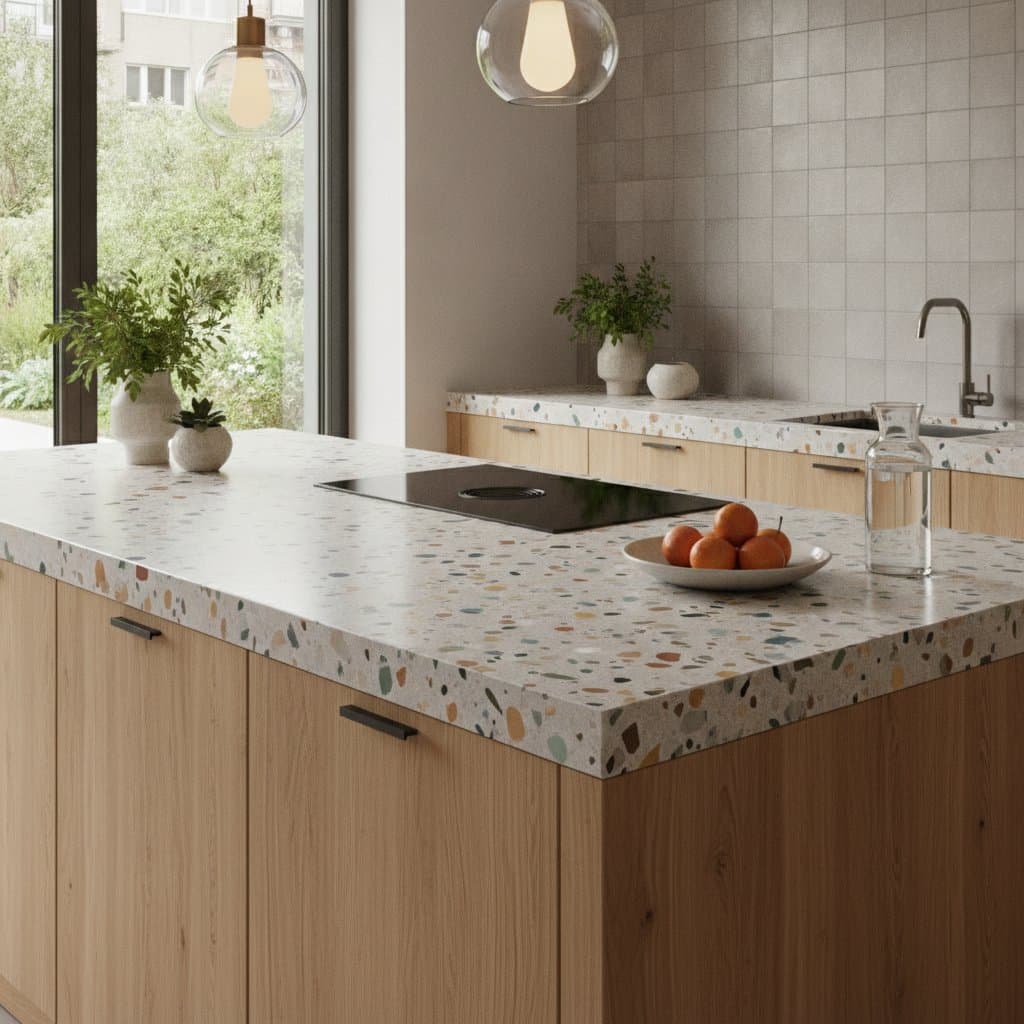
Terrazzo Countertops Return as a Sustainable Trend
Terrazzo once defined midcentury floors and institutional spaces with its distinctive mix of colorful chips. Today it appears in kitchens, bathrooms, and outdoor areas as homeowners seek materials that combine recycled content with long service life. This guide explains the practical advantages of terrazzo countertops and outlines the decisions required before installation.
Origins and Modern Composition
Italian artisans originally bound marble scraps in cement. Contemporary terrazzo follows the same principle yet substitutes epoxy resin or refined cement with chips of marble, glass, quartz, or metal. The result is a dense, nonporous surface that withstands daily kitchen use while incorporating high percentages of reclaimed material.
Sustainability Advantages
Four measurable attributes support environmental goals.
- Recycled content often exceeds 70 percent post-consumer or post-industrial waste, diverting stone and glass from landfills.
- Service life of 40 years or more reduces replacement cycles and associated resource consumption.
- Low-VOC epoxy binders limit indoor air pollutants during and after installation.
- Production energy remains lower than that required for fired ceramic or engineered quartz slabs.
These factors help projects accumulate credits toward green building certifications.
Material Comparison
The following table places terrazzo among common countertop options.
| Material | Cost per Square Foot | Durability | Maintenance Frequency | Recycled Content |
|---|---|---|---|---|
| Terrazzo | $80 to $150 | Very high | Low | High |
| Quartz | $70 to $120 | High | Low | Moderate |
| Granite | $60 to $100 | High | Moderate | Low |
| Concrete | $65 to $135 | High | Moderate | Moderate |
| Solid Surface | $50 to $90 | Moderate | Low | Moderate |
Higher initial cost is offset by decades of use without resurfacing or replacement.
Design Options
Color, chip size, and finish can be specified to match any interior.
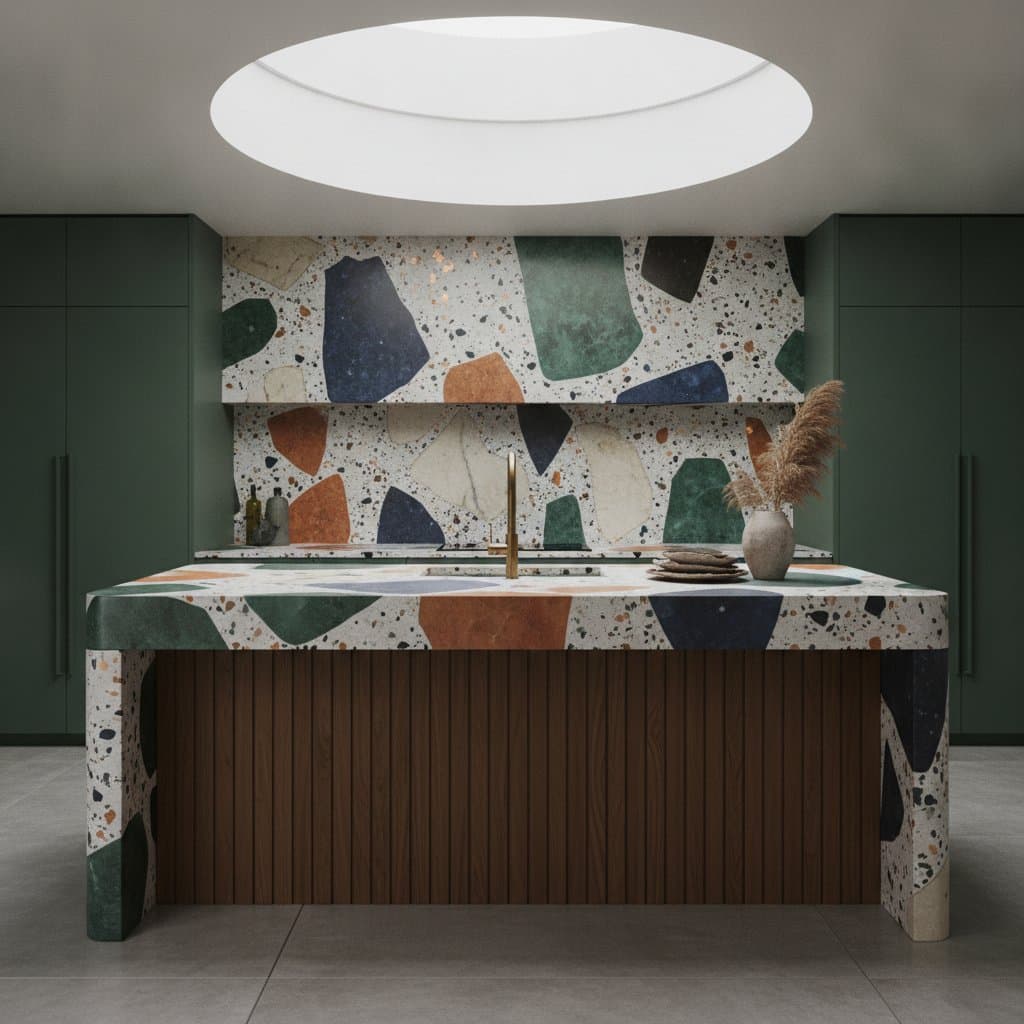
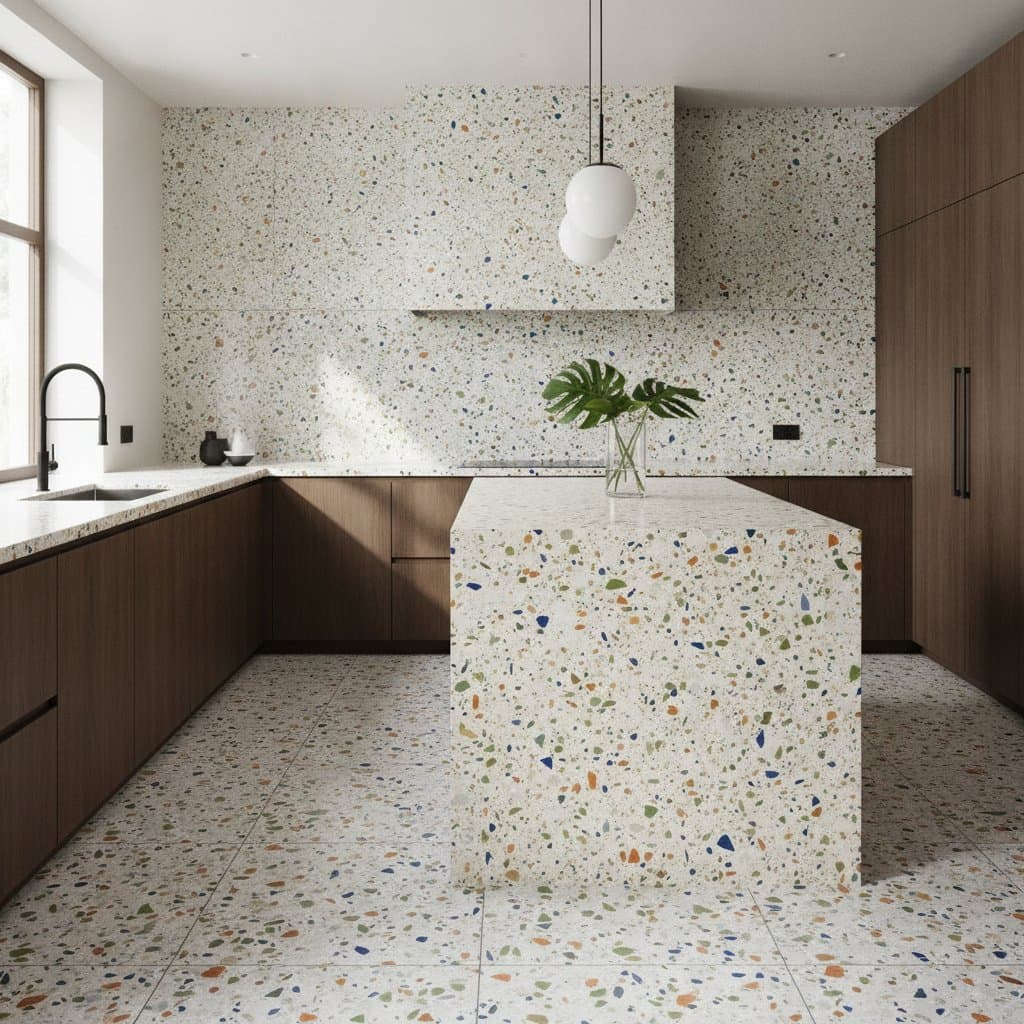
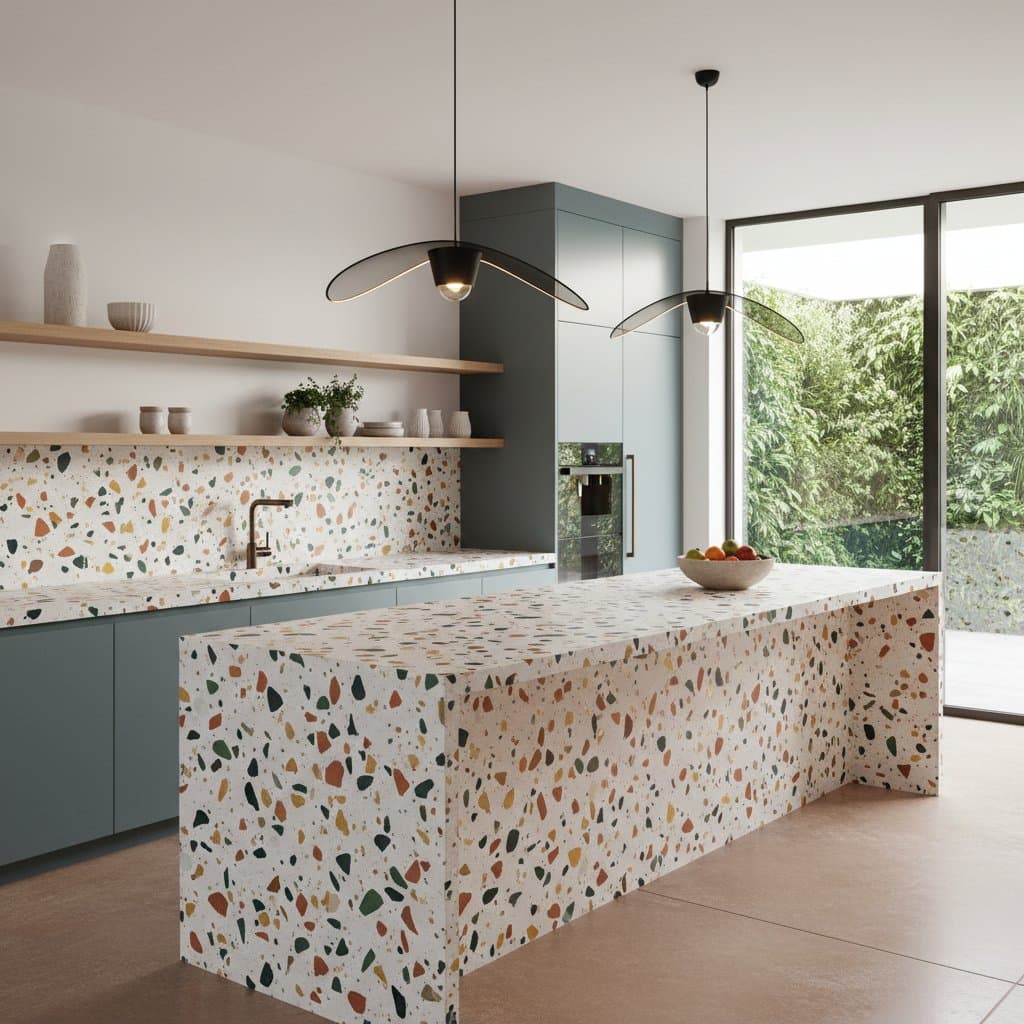
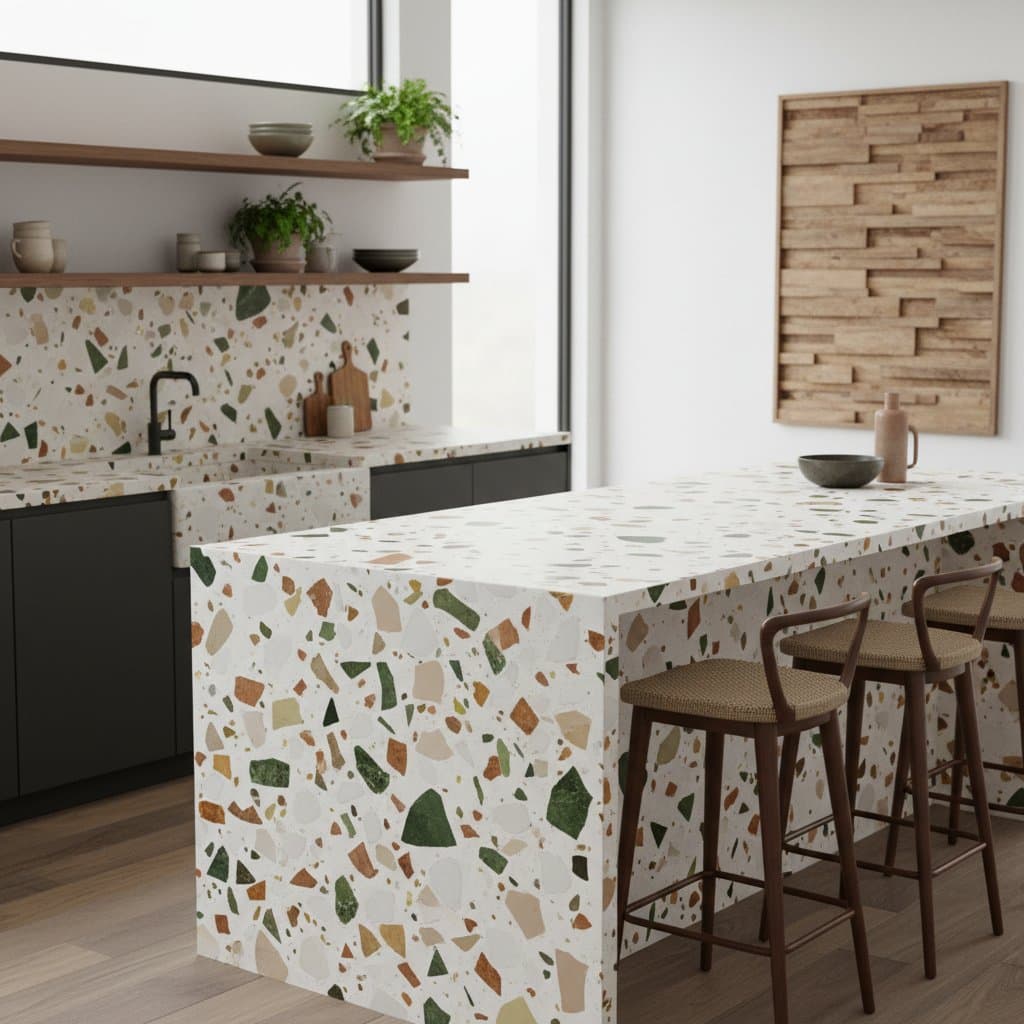
Color is achieved by tinting the binder and selecting chip types. Fine chips produce a quiet, uniform field suitable for minimalist kitchens, while larger fragments create bold patterns that complement wood cabinetry. Polished surfaces reflect light; honed finishes reduce glare and conceal fingerprints.
Installation Sequence
Professional installation follows four controlled steps.
- Substrate inspection confirms level concrete or cement board capable of supporting the weight.
- Mixed terrazzo is poured in place or delivered as precast slabs; epoxy systems cure within 24 hours.
- Successive diamond grinding exposes the aggregate, followed by progressive polishing.
- Penetrating sealer is applied and allowed to cure before use.
Most residential projects finish in three to five working days.
Budget Ranges
- Precast tiles or slabs for DIY installation start at $50 per square foot.
- Site-poured epoxy terrazzo by certified crews ranges from $90 to $150 per square foot.
- Custom mixes containing semiprecious stone exceed $160 per square foot.
Edge profiles, integrated sinks, and sealing add modest line items. Lower-cost visual alternatives include terrazzo-patterned quartz or high-pressure laminate.
Routine Care
Daily cleaning requires only pH-neutral soap and a soft cloth. Reseal every two to four years depending on water exposure. Use trivets for hot cookware and avoid abrasive pads. Small chips are repaired by filling and repolishing to restore a uniform surface.
Suitable Applications
Kitchens benefit from the material's resistance to stains and bacteria. Bathrooms accommodate seamless sinks and coved corners. Cement-based terrazzo performs outdoors when properly sealed; epoxy versions remain interior only. The same mix can continue across floors or walls for visual continuity.
Selection and Planning
Engage an installer with documented countertop experience and request physical samples viewed under the intended lighting. Specify rounded edges to reduce chipping risk. Verify cabinet load capacity before ordering. Schedule work after drywall finishing and painting to protect the new surface.
Daily Enjoyment
A finished terrazzo countertop offers a cool, smooth work surface that develops a subtle patina with use. Its combination of recycled content, proven longevity, and design flexibility delivers both environmental responsibility and lasting visual interest.