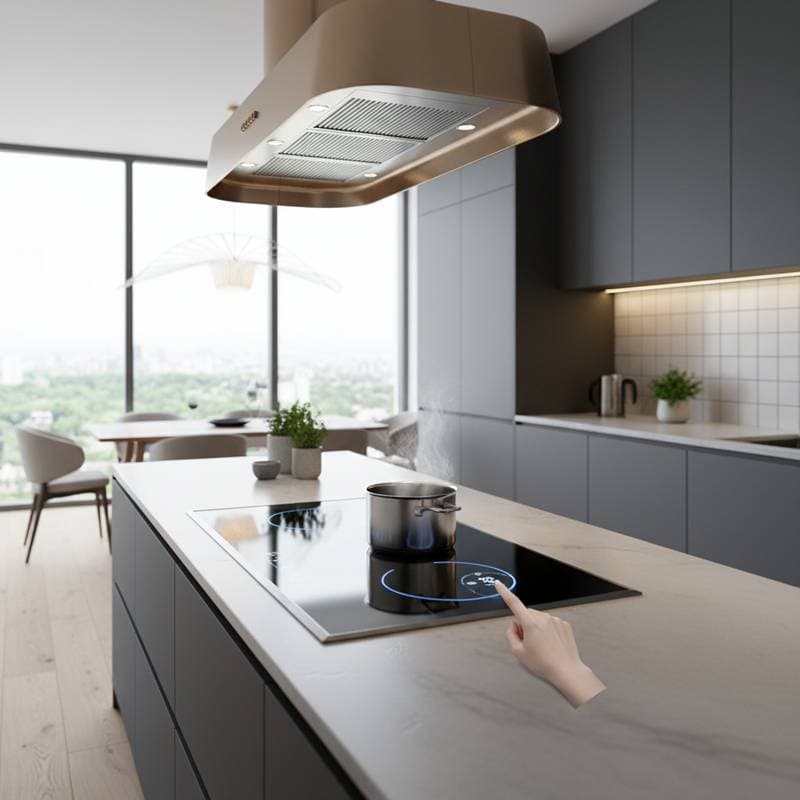
Induction Zones: Transition to Electric Kitchens in 2025
Modern kitchens prioritize clean energy, silent operation, and exact control. Households increasingly focus on reducing energy use, and induction cooking combines sustainability with sophisticated design and technology. This change from gas to electric redefines the cooking experience.
This guide outlines ten key reasons and design considerations driving the rise of induction kitchens. Each aspect covers aesthetic, practical, and ecological benefits, showing how professionals interpret this evolution with thoughtful elegance.
10. Redefining the Kitchen Core
Kitchens reflect the lives of those who inhabit them. Gas flames once set the tone with their steady flicker. Induction surfaces now bring a subtle hum that fosters focused interaction.
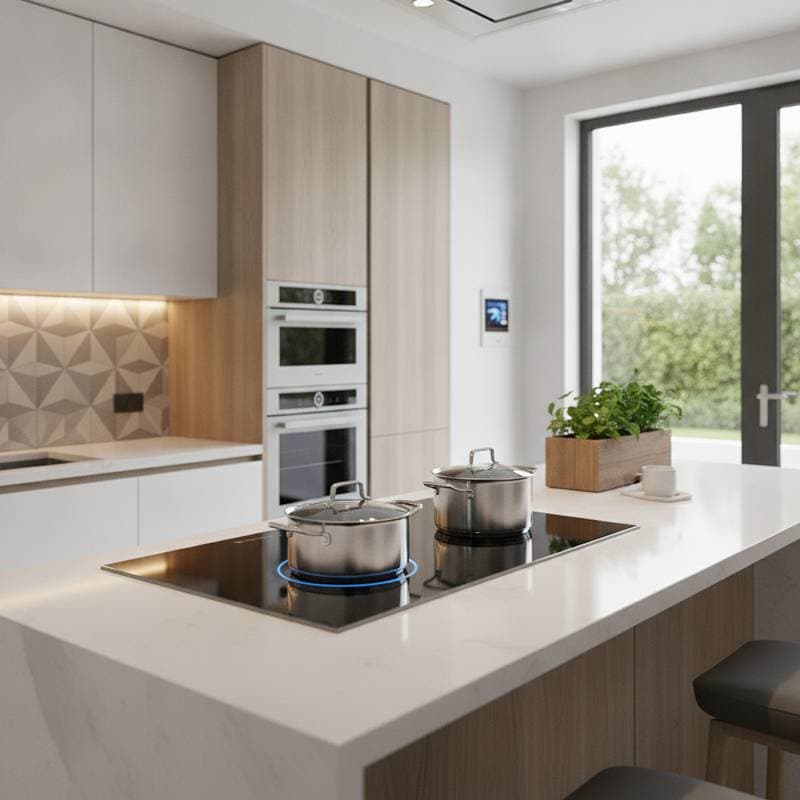
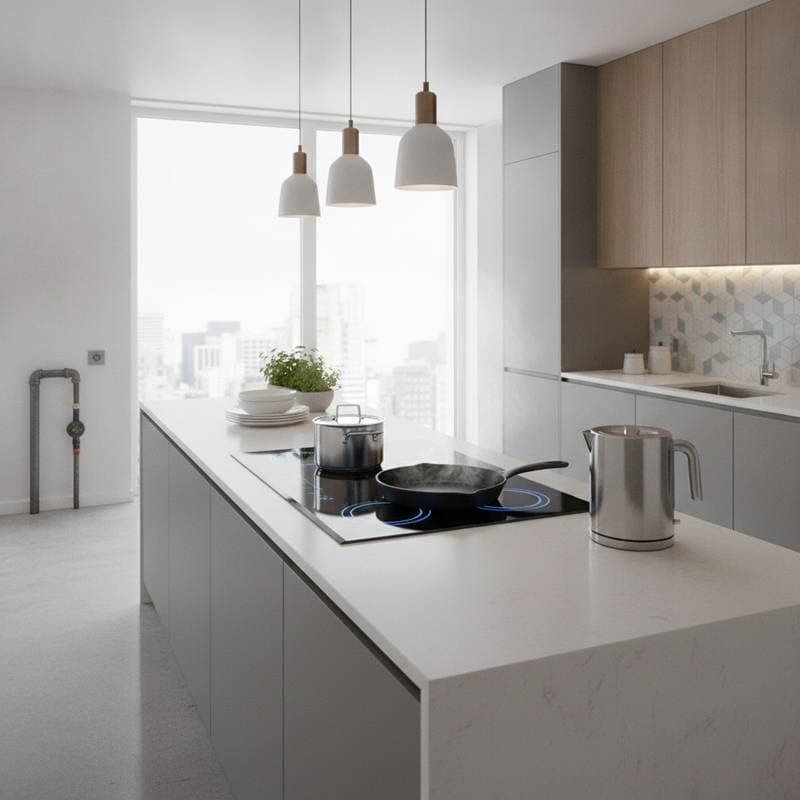
Professionals like Patricia Urquiola and Vincent Van Duysen incorporate induction into artistic islands that merge utility and form. Models such as Miele’s KM7897 FL or Gaggenau’s CX492 sit flush within quartzite or sintered stone, yielding a workspace that invites reflection.
This setup promotes serene accuracy. The cooking area evolves into a venue for everyday routines, emphasizing modern simplicity.
9. Magnetic Heating Explained
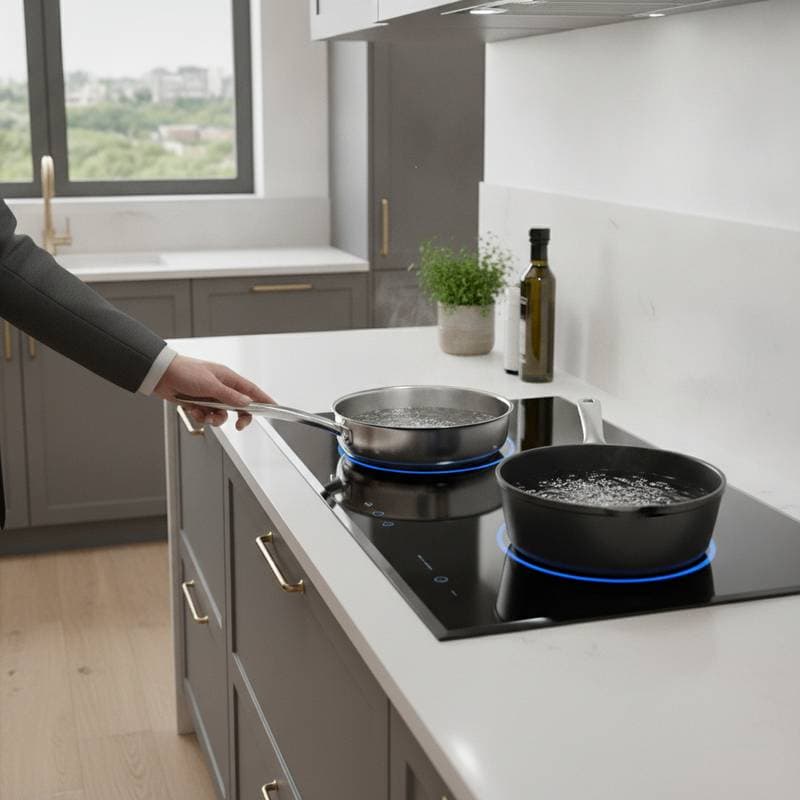
Induction uses electromagnetic fields to heat pots directly, bypassing the surface. The principle seems technical, but operation proves straightforward. Heat rises instantly within the vessel.
Architect John Pawson, who outfitted his minimalist retreat with induction, calls it a process of pure efficiency aligned with structure. No flames appear, and adjustments respond immediately, offering unmatched command.
Efficiency stands out for users. Nearly ninety percent of energy reaches the cookware, surpassing gas systems. Boiling speeds up, simmering refines, and ambient heat diminishes.
8. Enhancing Indoor Air Quality
Kitchen planning now addresses health alongside style and arrangement. Gas burning emits nitrogen dioxide and particulates that linger indoors. Induction removes these risks completely.
Designer Kelly Wearstler selects electric options for city residences with constrained airflow. Eliminating flames supports her layered schemes of stone, lacquer, and aged metals, yielding spaces that breathe easily.
Health and visuals harmonize. Pure air pairs with streamlined forms.
7. Seamless Blending in Open Spaces
Today’s kitchens extend into living areas rather than stand apart. Induction aids this with its unobtrusive profile. Powered down, the surface nearly vanishes.
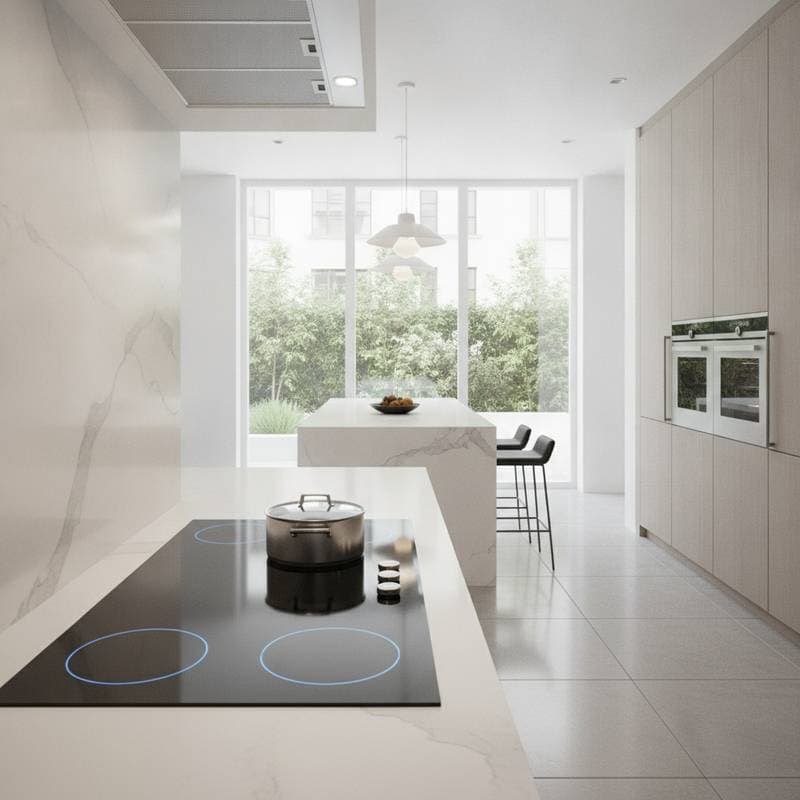
Materials from Dekton by Cosentino and Neolith hide induction zones under expansive slabs, linking prep to serving without breaks. Studios like Bulthaup and Boffi excel here, pairing smoked oak or matte finishes with tops that reflect like calm pools.
This method stresses continuity. Proportions and subtle gleams guide the eye across the room.
6. Exact Control for Culinary Mastery
Chefs demand reliable command. Gas provides quick cues through flame size, but induction matches that speed with steady output. Changes register in moments, ideal for nuanced sauces or crisp finishes.
Chef Clare Smyth likens the switch to analog-to-digital progression. Zones offer ten or more settings, and sensors detect pans automatically, fusing instinct with automation.
Compatible items like magnetic stainless or enameled iron yield uniform outcomes. Results feel advanced yet hands-on.
5. Sustainable Choices in Design
Kitchen electrification supports wider environmental goals. Paired with renewables, induction cuts emissions significantly. This principle also shapes style through deliberate, enduring selections.
Firms such as Studioilse and Norm Architects choose subdued tones like European oak, polished limestone, and reclaimed aluminum. No need for large hoods or gas pipes streamlines lines and spotlights quality.
Sustainability integrates as a core tenet, evident in every detail.
4. Straightforward Installation Process
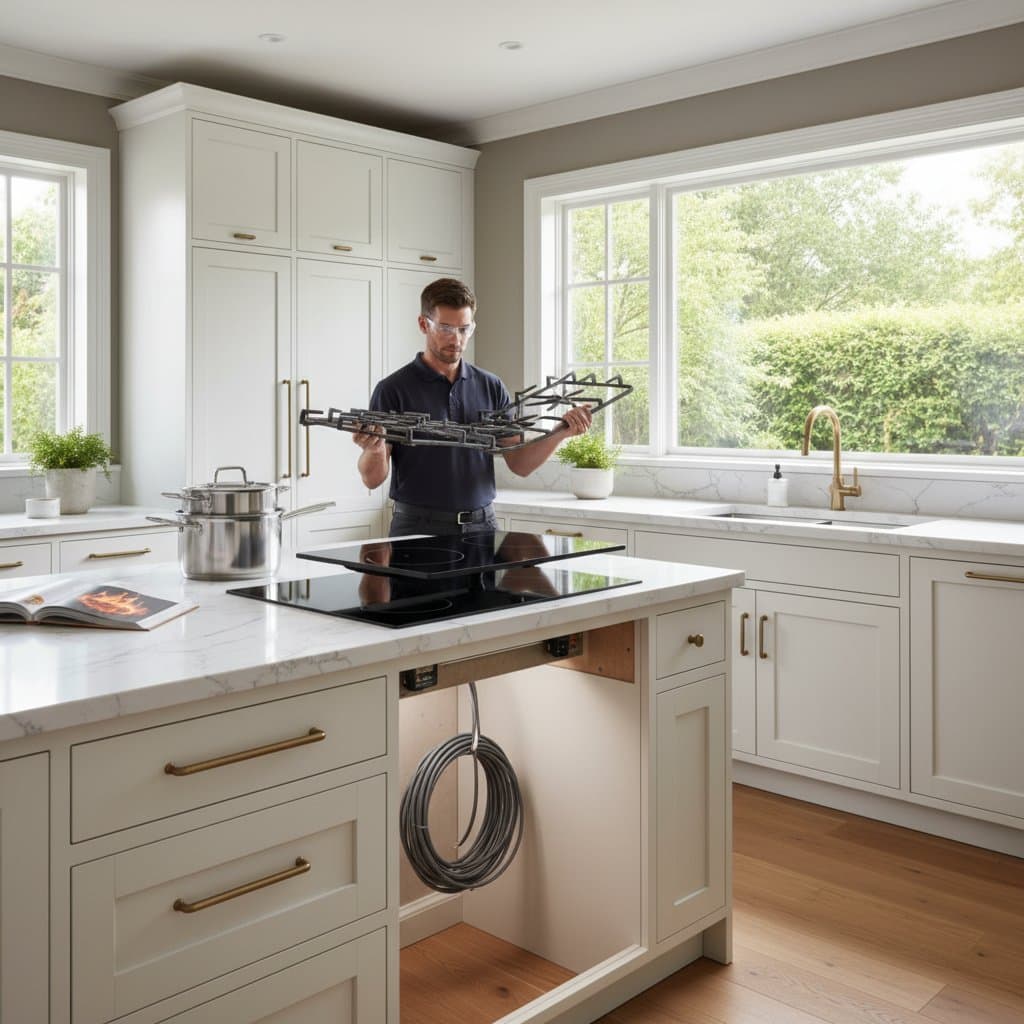
Moving to induction appears challenging, yet current options simplify it. Brands including Bosch, Samsung, and Fisher & Paykel provide units that fit standard openings. Setup needs a specific circuit and suitable pots.
Experts suggest refreshing surfaces during the change for cohesion. Options like Caesarstone’s Calacatta Maximus or Silestone’s Eternal Statuario offset the dark glass effectively.
The update signals forward-thinking priorities. It enhances both function and finesse.
3. Serene Surroundings for Cooking
Noise influences kitchen dynamics subtly. Gas hisses, fans whir, and utensils clang build tension over time. Induction quiets the scene with faint vibration, directing warmth precisely.
Designer Sebastian Cox, who works with sourced woods, prefers it for fluid layouts. Reduced sound strengthens bonds during meals. It allows dialogue to thrive amid activity.
Features like gentle drawers, ambient lights, and silent heat craft balanced settings that endure.
2. Playing with Light on Surfaces
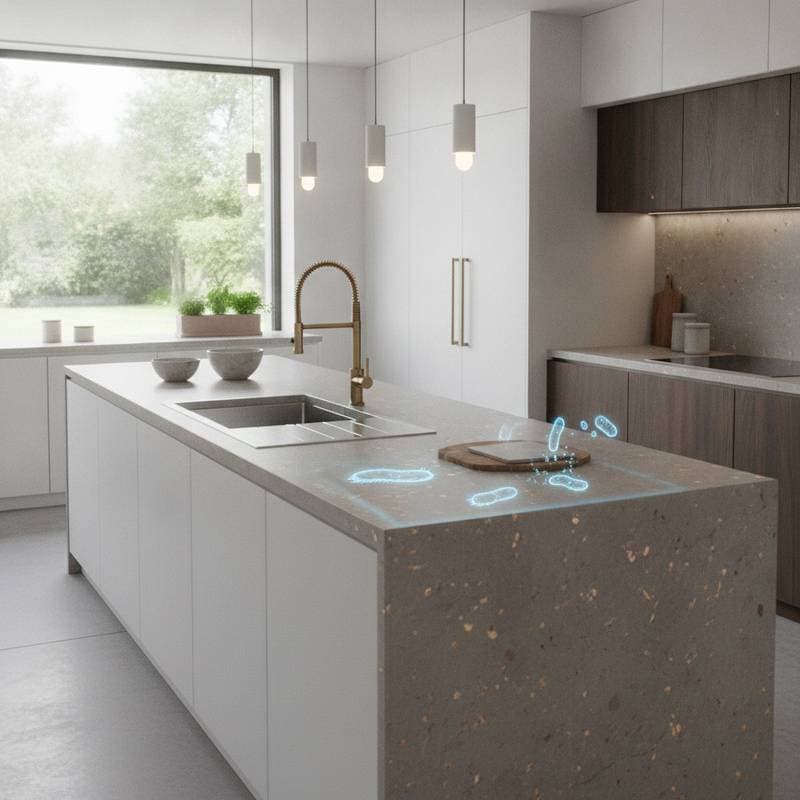
Ceramic-glass tops reflect illumination, enriching the kitchen’s visual layers. Embedded in marble, concrete, or metal, they deepen the overall scheme.
In spare designs, units like Smeg Dolce Stil Novo or Bertazzoni Professional Series ground textures with their gloss. Professionals leverage this to balance dull and lively elements, echoing lights from above or below.
Moderation defines the effect. The top recedes, allowing woods, metals, or plasters to shine.
1. Shaping Tomorrow’s Routines
Kitchens now serve as centers for bonding, invention, and nurturing. Induction aligns perfectly, streamlining tasks while ditching outdated drawbacks.
Advancements include flexible zones, portable models, and hidden setups under stone. These permit layout freedom, turning the cooktop into a versatile element.
Professionals challenge old configurations. Islands welcome all users equally. The even plane encourages shared involvement.
Embracing Induction in Daily Life
Adopting induction goes beyond mechanics. It alters the kitchen’s role in emotional and communal moments. The choice to disconnect gas opens vast creative avenues.
Care requires little effort. A damp cloth suffices for the flat top, and no parts protrude to collect debris. Areas away from pots stay temperate, suiting homes with children and enabling multipurpose use.
The direct response delights. Energy flows through the vessel to build taste. The top remains composed, echoing the user’s poise.
Designers explore fluid arrangements. Islands function as tables, edges reach lounges, and planes stay whole. The space joins a broader narrative of honest forms and mindful living.
Prospective users benefit from electrician and designer input on wiring and planning. Specialists in conversions blend expertise with style. This partnership reveals induction’s refined potential.
Electric designs bridge innovation and heritage. They nurture ties and imagination through efficient, peaceful methods.
Grasping induction’s details empowers tailored spaces that blend enduring appeal with progressive insight. Cooking’s essence persists, refined through poise and purpose.