Why Induction Cooktops Outperform Gas in Kitchen Remodels
Homeowners undertaking kitchen updates frequently confront a pivotal choice: retain gas cooking or transition to induction. Nostalgia for the visible flame of gas often initiates the discussion, yet practical considerations of expense, safety, efficiency, and upkeep ultimately prevail. For renovations aimed at contemporary enhancement without extensive disruption, induction cooktops emerge as the superior selection.
Upfront and Ongoing Costs of Gas Retention
Numerous homeowners presume that preserving a gas range minimizes retrofit expenses. Reality demonstrates the contrary. Gas infrastructure demands inspections, regulators, and potential upgrades to comply with prevailing safety standards. Layout alterations may necessitate rerouting lines, incurring costs from hundreds to thousands of dollars.
Contractors encounter corroded fittings or obsolete connectors upon wall openings. Such discoveries mandate full replacements without partial solutions. By completion, the financial gap between gas preservation and induction conversion narrows considerably. Induction installation eliminates combustion emissions, carbon monoxide monitoring linked to the appliance, and concealed leak hazards.
Safety Enhancements and Improved Air Quality
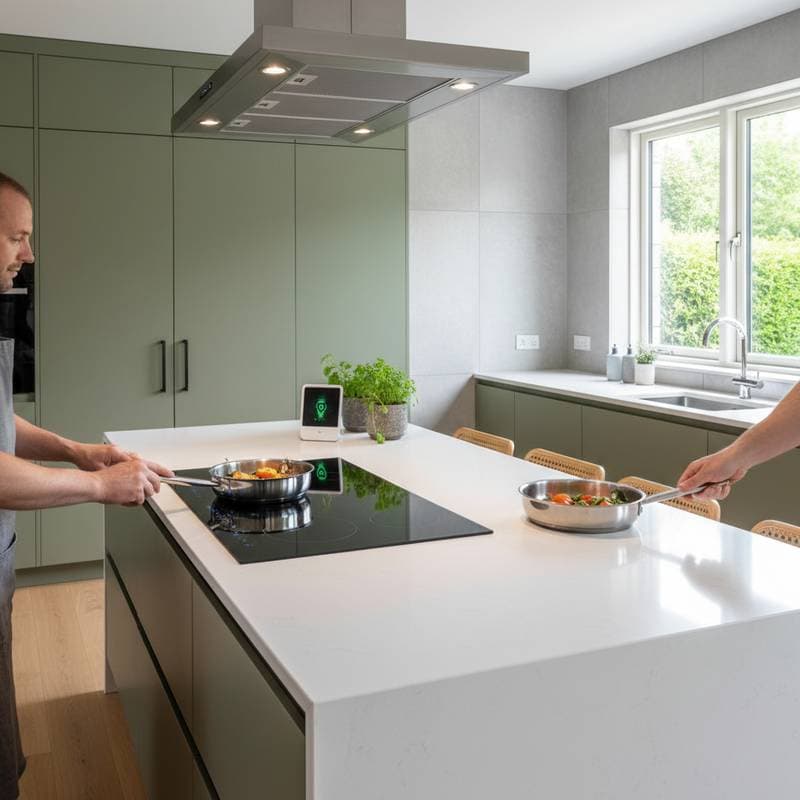
Safety represents an underappreciated benefit of induction cooking. Kitchens witness incidents where children grasp pot handles or adults overlook unextinguished burners. Gas introduces substantial risks in these scenarios. Flames ignite grease, clothing, or towels instantaneously. Induction heats solely the cookware; heat ceases upon pan removal. The surface retains mild warmth briefly but avoids the searing intensity of gas grates.
Air quality merits equal attention. Gas appliances emit nitrogen dioxide, carbon monoxide, and additional byproducts that persist indoors. Ventilation hoods mitigate but fail to eliminate diffusion throughout the residence. Individuals with respiratory conditions, sensitivities, or young family members face heightened concerns. Induction removes these emissions completely, ideal for airtight or energy-conscious homes with constrained airflow.
Energy Efficiency and Performance Benefits
Contractors evaluate efficiency through energy utilization and thermal management. Induction delivers 85 to 90 percent energy transfer to cookware. Gas achieves only 35 to 40 percent. This disparity manifests tangibly during operation. Gas environments heat rapidly; induction maintains ambient comfort with minimal dissipation.
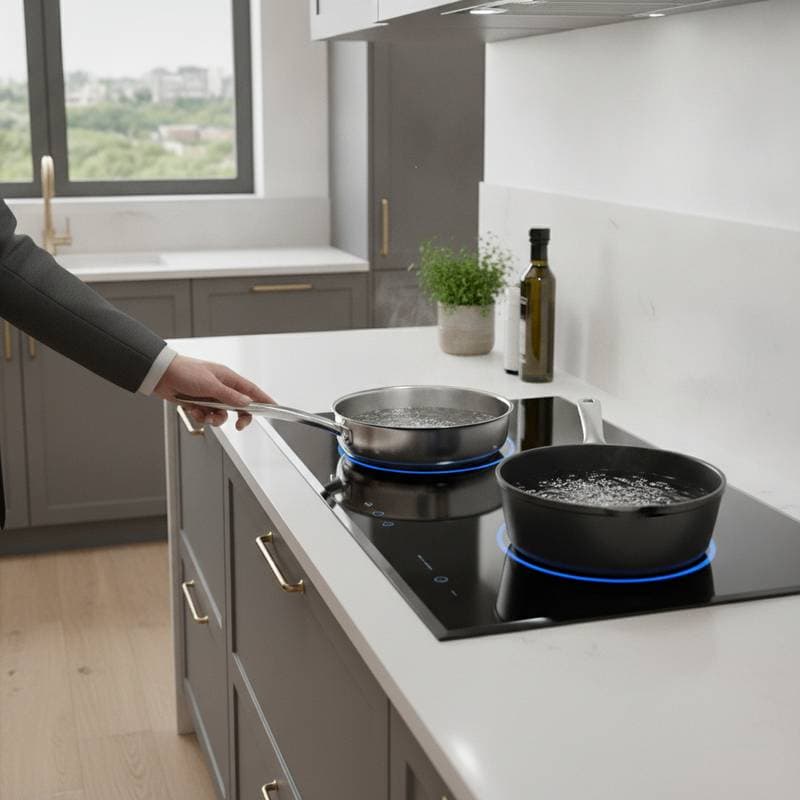
Efficiency extends to cooking velocity. Water reaches boil faster on induction, enhancing daily routines. Clients occasionally lament the absence of gas flame visuals, yet rapid preparation and simplified cleaning swiftly dispel reservations.
Precise Temperature Management for Daily Use
Gas has earned chef preference through instantaneous flame response and intuitive feedback. Induction rivals and surpasses this responsiveness. Adjustments yield immediate, accurate, and consistent temperatures. Reduction prompts swift cooling, averting burns on sensitive preparations like sauces or confections.
A recent professional baking remodel featured induction installation. The client reported reliable tempering, transforming a challenging task into dependable execution via sustained exact temperatures. Such precision elevates functionality, ensuring reproducible outcomes.
Practical Installation Considerations for Retrofits
Induction integration in established kitchens typically proceeds more cleanly and swiftly than gas line preservation or relocation. Electrical service forms the primary need. Most units require a 40 to 50 amp dedicated circuit. Sufficient panel capacity simplifies circuit addition. Even in aged structures, panel enhancements cost less than aggregated gas alterations and ventilation mandates.
Ventilation poses an unexpected challenge for many. Gas demands hoods calibrated for byproduct capture. Induction exempts this requirement. Steam and aroma venting persists, but hoods may adopt smaller, quieter, energy-saving profiles. This adaptability expands layout possibilities, particularly where oversized hoods overwhelm aesthetics.
Simplified Maintenance and Enhanced Durability
Gas appliances incorporate movable components, ignition systems, and burners prone to residue accumulation. Grates harbor grease; ports obstruct readily. Induction presents a seamless surface devoid of flames or ventilated elements. A simple wipe restores pristine condition. Units endure years of routine use while retaining factory appearance.
Component longevity further favors induction. Gas valves and igniters degrade progressively. Sealed induction electronics, when properly installed and shielded from dampness, exhibit extended service life. Combustion absence spares adjacent cabinetry from thermal stress and finish degradation.
Evolving Regulations and Environmental Alignment
Increasing jurisdictions impose curbs on fresh gas setups. Regulations differ, but electrification trends dominate. Anticipating shifts justifies induction adoption now, circumventing future conversion costs amid potential mandates.
Environmentally, induction leverages electricity from renewables. Gas remains fossil-dependent. Sustainability-oriented homeowners integrate induction seamlessly with solar or green grids. It curtails indoor pollutants and advances comprehensive home electrification.
Long-Term Financial Analysis
Comparative figures reveal induction advantages over ownership spans. Premium induction units exceed basic gas prices initially, yet energy, upkeep, and ventilation economies recoup investments. Indirect gains include reduced air conditioning demands from lower ambient heat and diminished surface residues on interiors.
View induction as systemic enhancement beyond appliance replacement. It alleviates stress on HVAC systems, filtration, and decor by withholding heat and particulates.
Addressing Prevalent Induction Myths
Cookware compatibility deters many. Induction demands magnetic bases like cast iron or specific stainless steel. Non-magnetic aluminum or copper fails without steel interfaces. Contemporary sets largely comply; a magnet test on preferred items confirms suitability.
Unfamiliarity concerns arise regarding operation. Adaptation to planar surfaces and interfaces occurs rapidly. Induction incorporates gas-unrivaled safeguards, including pan-detection auto-shutoff and zone-specific timers.
Design Versatility Through Induction
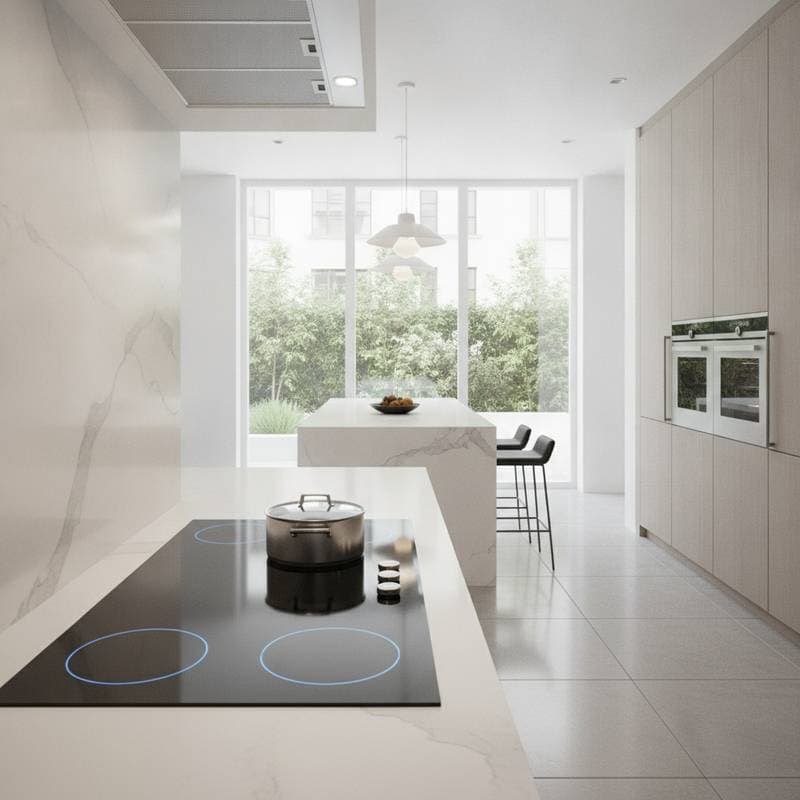
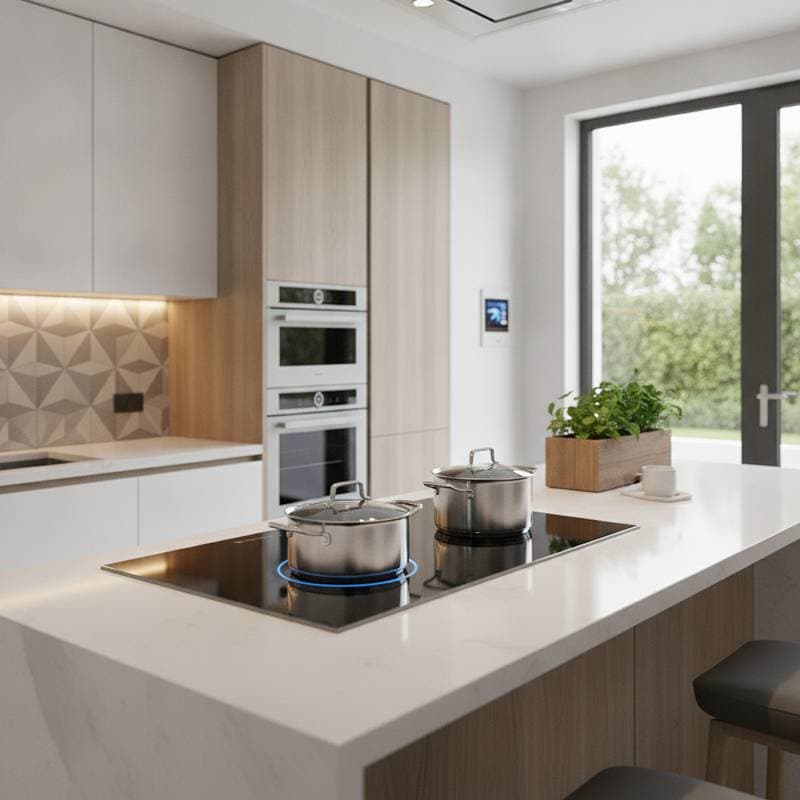
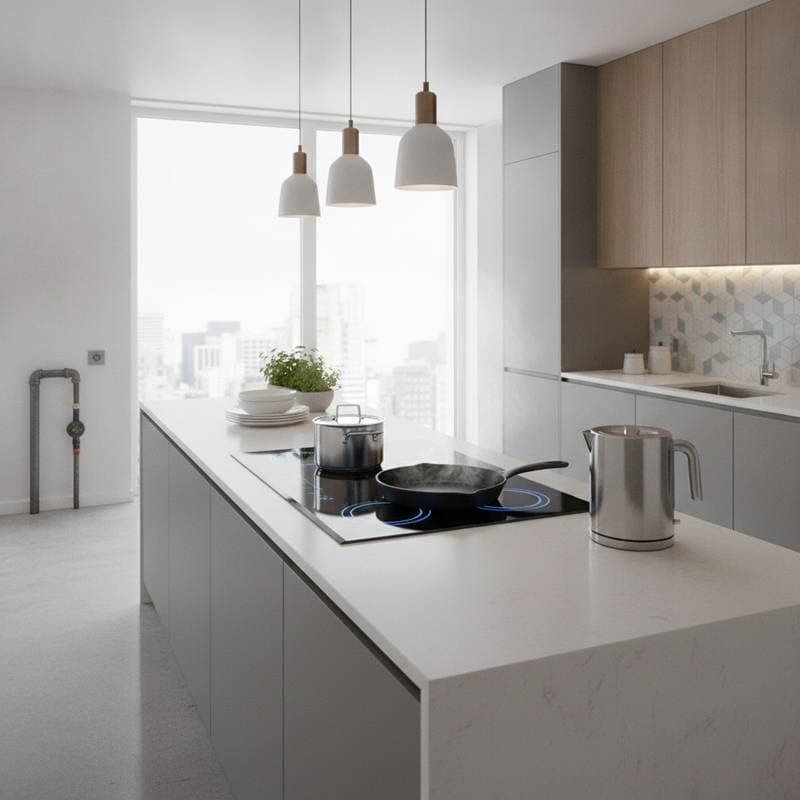
Induction liberates layout constraints absent gas connections or expansive hoods. Installations span islands, downdraft integrations, and compact studios infeasible for gas.
Low-profile designs maximize under-counter storage. This proves essential in space-limited areas. Seamless integration complements modern cabinetry and surfaces for streamlined aesthetics.
Steps in Gas-to-Induction Transition
Conversion commences with electrician assessment of panel capacity for added load. Deficiencies may require subpanels or upgrades. Plumbers then secure and cap gas lines. Existing hoods often suffice with airflow adjustments. Induction mounting and cookware testing verify uniform heating and controls.
Projects conclude efficiently. Electrical preparation enables same-day completion in typical retrofits. Minimal residue allows prompt usage resumption.
Safeguarding Your Kitchen Upgrade
Induction adoption in remodels transcends convenience; it fortifies investment through safety, purity, and efficiency. Enhanced air quality, curtailed expenses, and regulatory preparedness position the kitchen for enduring performance.