Why Soundproof Offices Lead 2026 Remodel Trends
The modern office, whether in a corporate high-rise or a home setting, serves as a personal haven for productivity and calm. Design now prioritizes wellbeing and acoustic balance, positioning soundproof offices at the forefront of remodel trends. This shift redefines workspaces as intentional environments that support focus and sensory harmony.
Silence as a Mark of Refinement
Luxury in office design once focused on expansive layouts and polished surfaces. Today, the depth of silence sets the standard for sophistication. Acoustic mastery acts as an understated emblem of thoughtful execution.
Designers such as Clara Jensen of Jensen Atelier describe silence as the unseen element that structures ideas. In a recent Copenhagen project, she incorporated Kvadrat Soft Cells panels in subtle graphite hues alongside walls in Benjamin Moore’s Silver Marlin. This combination yields a tranquil space where thoughts unfold without distraction.
Such designs promote clarity over seclusion. They allow concepts to develop fully and discussions to carry weight. Work rhythms emerge as deliberate and measured.
Navigating Hybrid Work Acoustics
Hybrid schedules introduce distinct sound challenges, from virtual call echoes to household noises and device alerts. Physical soundproofing establishes clear divides that technology alone cannot achieve, addressing both practical and emotional needs.
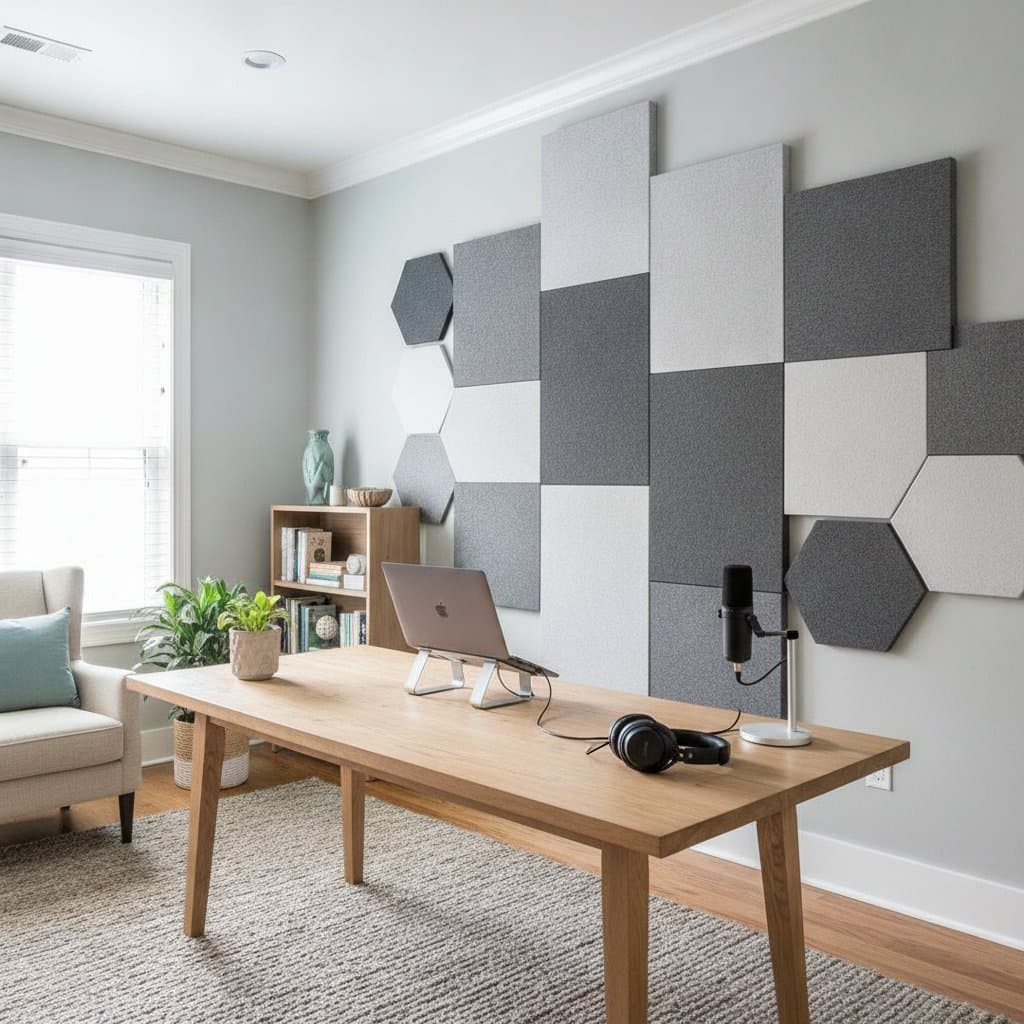
Architect Luis Romero of Studio Forma developed modular home offices with layered acoustic felt panels from Baux. These panels excel at dampening mid-range sounds. Romero notes that acoustics now anchor hybrid lifestyles, enabling smooth transitions between online tasks and home activities.
These setups deliver concentration that digital solutions lack. They create dedicated zones for deep work amid blended routines.
Innovations in Acoustic Materials
Soundproofing advances through smart material choices that influence both noise control and atmosphere. Texture, density, and makeup guide selections for optimal performance and feel.
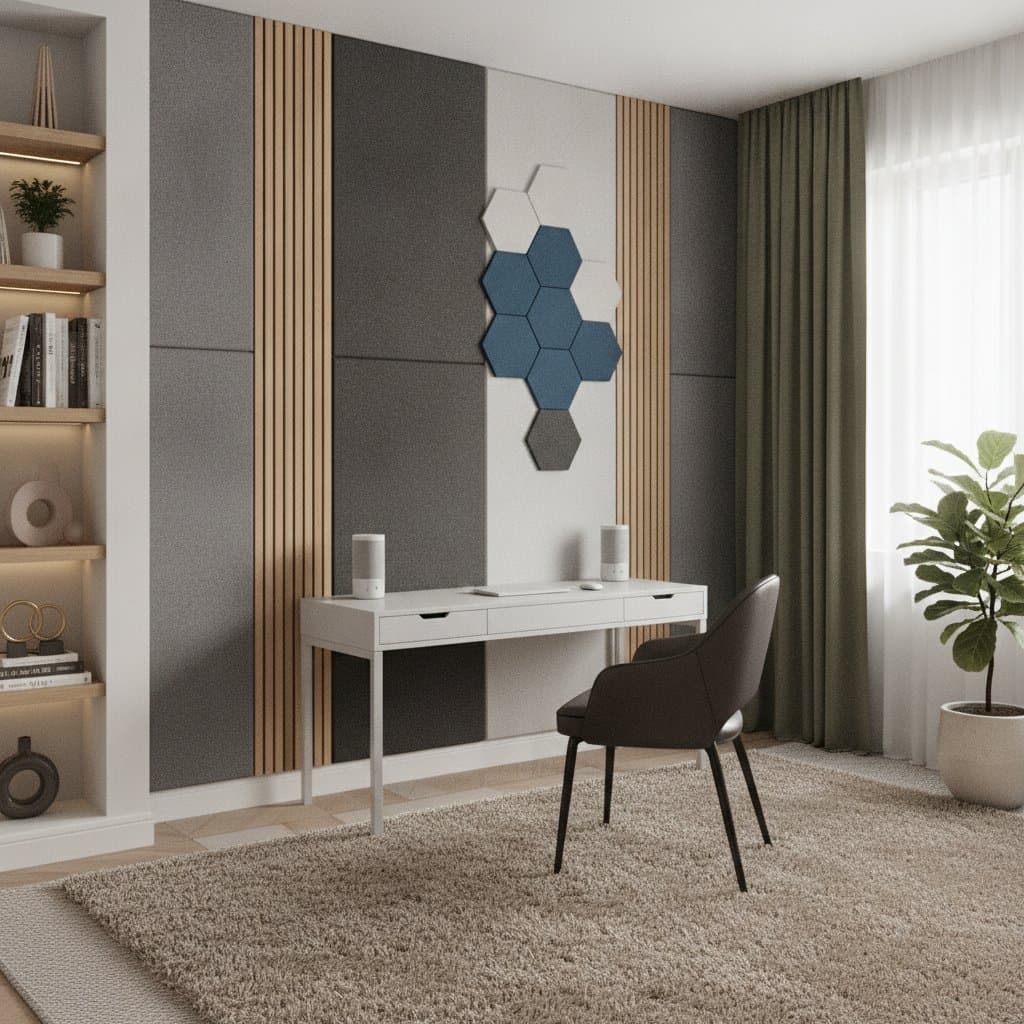
European oak slats often mask insulation, their patterns adding visual interest. Wool felt tiles on ceilings provide softness and echo reduction. Flooring options like cork composites or rubber-backed carpets further refine the sound profile.
Marina Holt of Atelier Holt stresses that materials must harmonize senses with function. Acoustics influence emotions, she observes, and surfaces convey that impact throughout the room.
Blending Technology with Elegant Design
Traditional soundproofing relied on bulky, plain elements. Current systems integrate high performance with refined aesthetics, treating acoustics as integral to style.
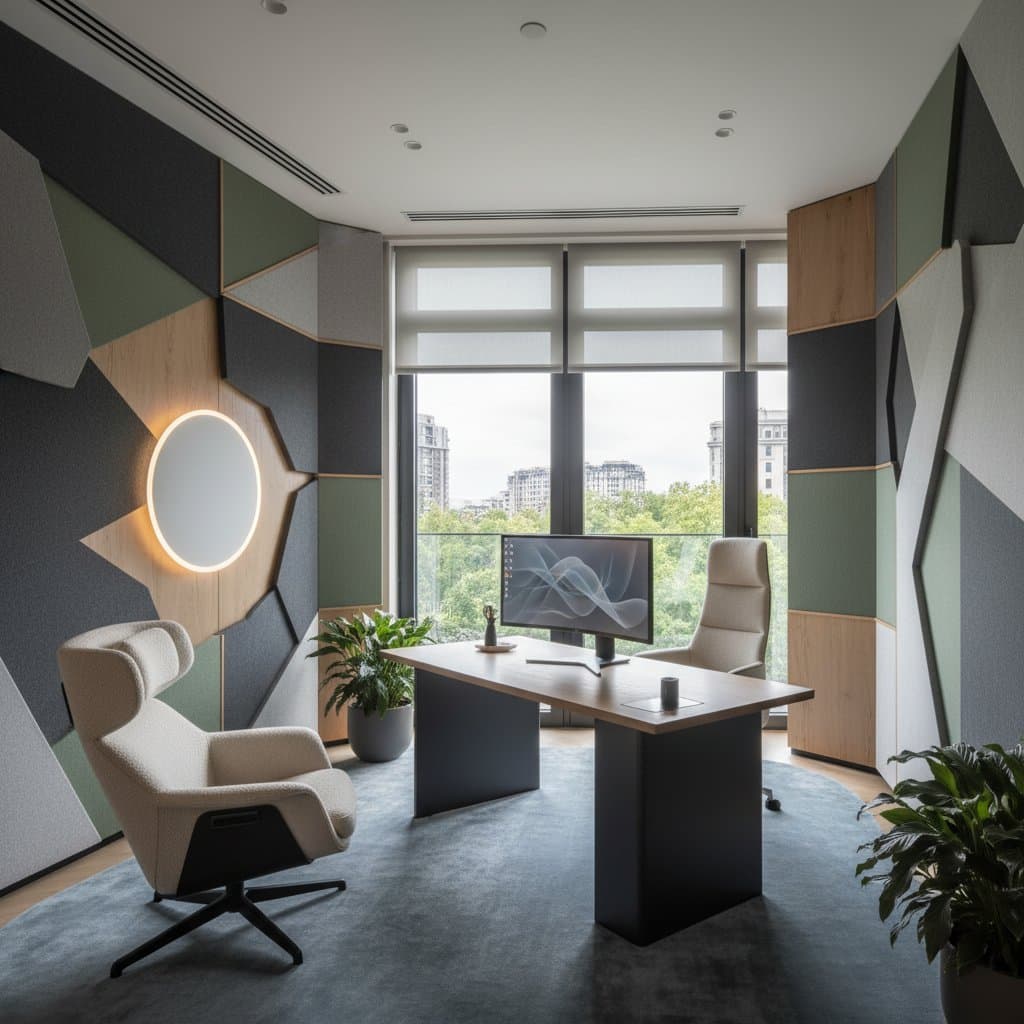
EchoPanel by Woven Image features geometric shapes in colors such as Dusty Coral and Onyx, serving as bold focal points. Architects position these as artistic elements, enhanced by embedded lighting and varied textures.
Future quiet offices avoid stark or padded appearances. They exhibit composure through layered details, with sound management embedded in the overall design narrative.
Sound's Role in Mental Performance
Research in design psychology highlights sound's effect on cognition. Effective soundproofing minimizes mental strain, stabilizes emotions, and promotes idea generation.
Field + Form, a London firm, analyzed acoustics in diverse office types. Their data links panels, thick rugs, and plush furnishings to improved attention and lower tension. Professionals apply these insights to craft warm, quiet havens.
Neutral palettes, varied textiles, and gentle illumination foster enclosed yet inviting atmospheres. These spaces attune to human needs for composed serenity.
Crafting Home Offices as Quiet Retreats
Home offices transcend basic utility to become tailored sanctuaries, with acoustics central to their appeal.
Rhea Donovan of Donovan Interiors installed Autex Cube Panels in earth tones like clay and linen, integrated with Farrow & Ball’s Drop Cloth walls. This layering produces reflective quiet that supports introspection.
Donovan views this as a nod to contemplative traditions, where silence aids personal renewal. Clients request areas for writing, planning, or contemplation, free from external pulls. The outcome prioritizes restoration alongside efficiency.
Architectural Strategies for Acoustic Control
Acoustic considerations now shape office geometry and flow with advanced precision, extending beyond specialized venues.
Micro-perforated panels adapt vaulted ceilings. Staggered framing in partitions blocks sound transmission. Laminated acoustic glass maintains views while muting noise.
Studio Keene employs acoustic zoning to organize spaces hierarchically. Casual areas absorb ambient hum, while conference rooms secure near-complete quiet. This approach guides users through subtle sound transitions.
Eco-Friendly Approaches to Quiet Design
Sustainability meets acoustics in materials derived from recycled or renewable sources, preserving efficacy and appeal.
GreenAcoustics Panels, made from PET fibers, deliver strong absorption with a smooth finish. Combined with limewash walls and FSC-certified timber, they support green yet upscale looks.
This alignment ties environmental care to sensory benefits. Materials that hush spaces also ease ethical concerns, enhancing overall comfort.
Enabling Focused Collaboration
Open layouts promised innovation but often bred noise and fatigue. Modern solutions retain connectivity while managing acoustics.
Jonas Klemens of Klemens Design Group introduced movable partitions in Camira Fabrics wool blends. These adapt quickly for solo or team use.
Klemens asserts that acoustics facilitate interaction without overload. Strategic zoning, multi-layer materials, and dividers achieve clarity in open views.
Integrating Quiet into Future Workspaces
Progressive designs position silence as core infrastructure from inception. Acoustics pair with biophilic elements, natural finishes, and flexible illumination.
Walls define more than boundaries; they curate sensory experiences. Remodels embed sound strategies early for cohesive results.
These environments resemble refuges, encouraging sustained attention, poised teamwork, and vibrant output. Soundproofing signals a move toward intentional work cultures.
Implementing Acoustic Enhancements
To build a soundproof office, select materials that address sound paths and user dynamics. Start with assessments of existing noise sources, then layer panels, fabrics, and barriers for comprehensive coverage.
Homeowners undertaking remodels gain from acoustic investments through sharper thinking and balanced living. Such spaces ease daily tensions and amplify presence.
Professionals regard quiet as comfort's next evolution. Wood-slatted overheads, fabric dividers, or fiber integrations all pursue attuned environments.
Quiet in remodels embodies deliberate design and attentiveness. Soundproof offices advance because they align with desires for protective, idea-nurturing spaces.