Terrazzo's 2025 Revival: Sustainable Chic for Every Room
Terrazzo appears increasingly in design publications and flooring displays. Individuals may recall it from older residences or educational facilities. Once viewed as passé, this material completes a resurgence, driven by its aesthetic appeal, environmental benefits, and resilience that align with current standards. For those considering renovations or sustainable enhancements, terrazzo warrants careful consideration.
Why Terrazzo Is Back in Demand
Homeowners seek materials that endure, minimize waste, and maintain elegance. Terrazzo satisfies these criteria. Composed of marble, quartz, glass, or other aggregate chips embedded in cement or resin, it produces a signature speckled appearance while repurposing recycled elements. The outcome yields a resilient and visually compelling surface.
Design professionals value terrazzo for its adaptability. Pour it seamlessly for floors, fabricate it into countertop slabs, or apply it in ornamental panels. Endless color and aggregate options accommodate diverse aesthetics, ranging from sleek minimalism to mid-century modern influences. Contemporary terrazzo formulations feature advanced binders and finishes that simplify installation and reduce upkeep compared to earlier versions.
Where You Can Use Terrazzo
Terrazzo suits virtually any interior space due to its robustness, resistance to stains, and straightforward cleaning. Consider these key applications:
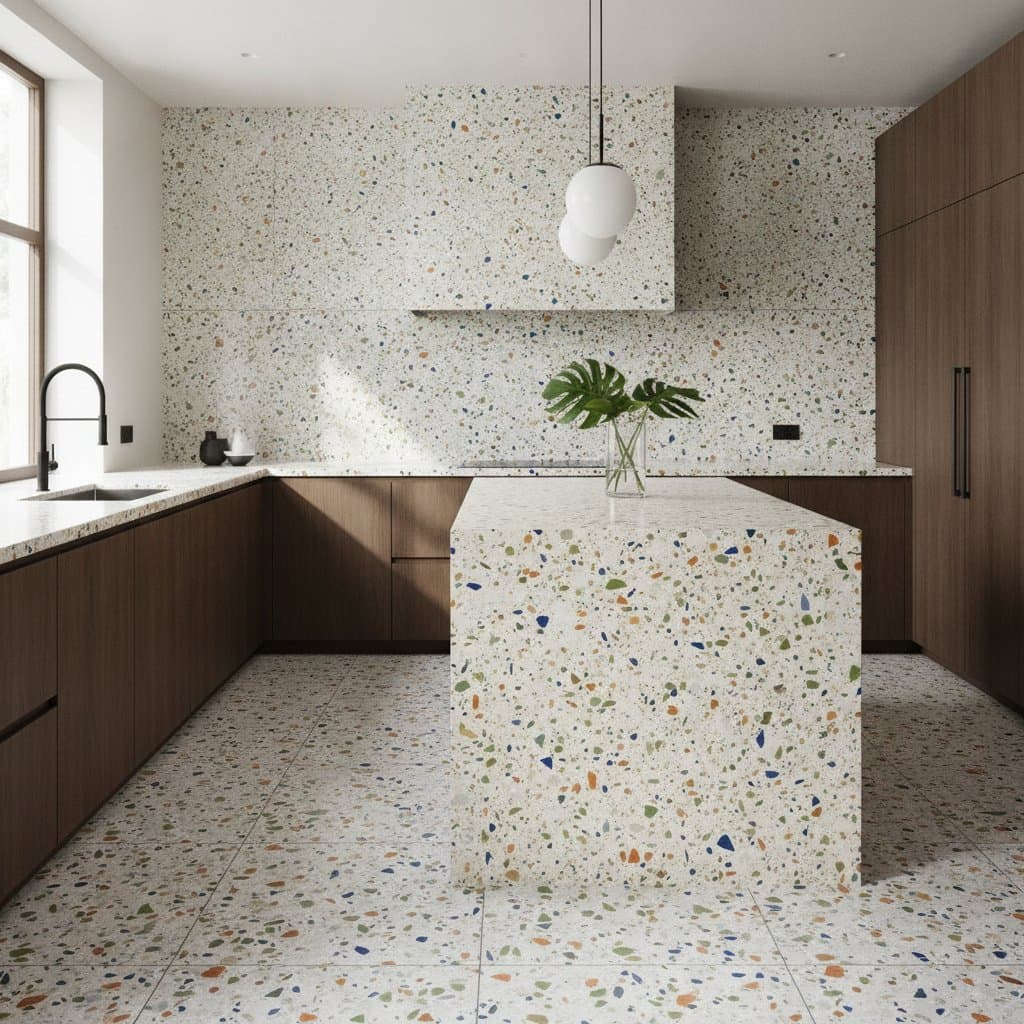
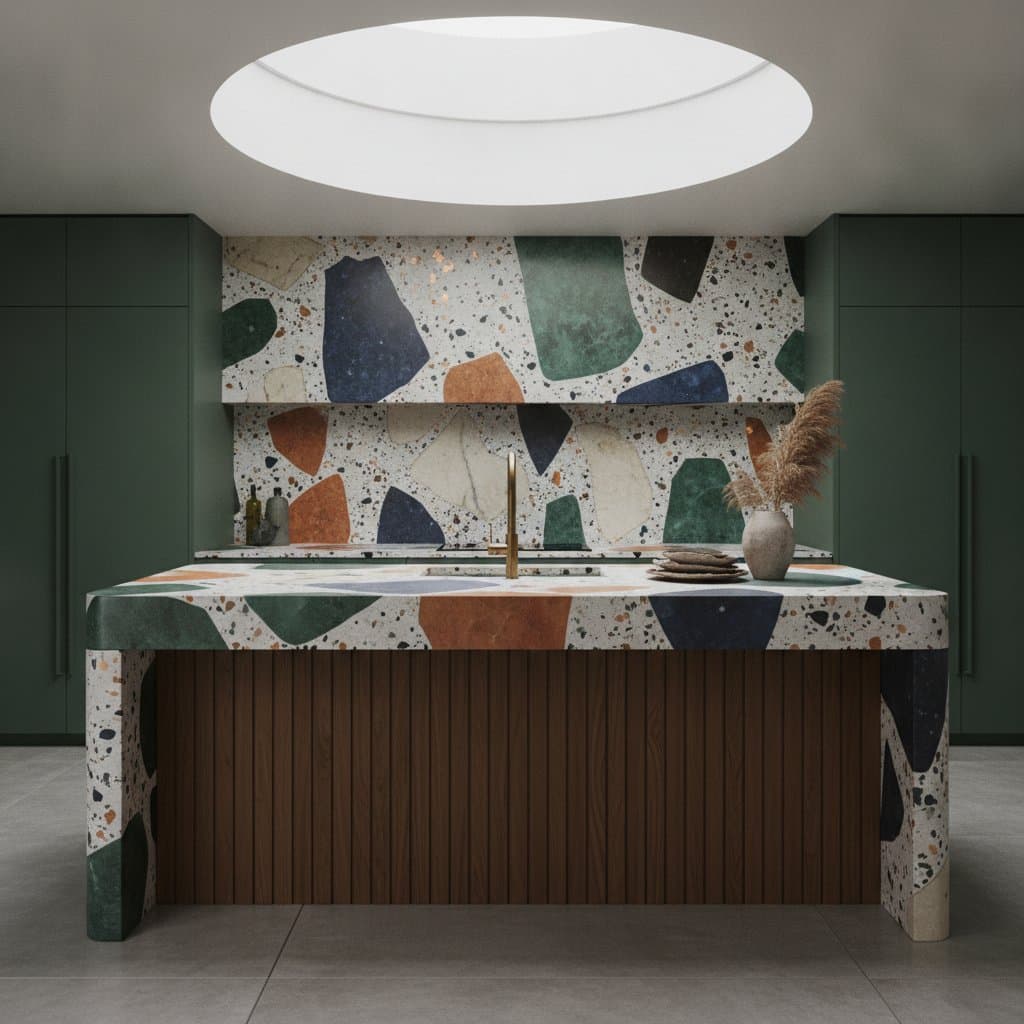
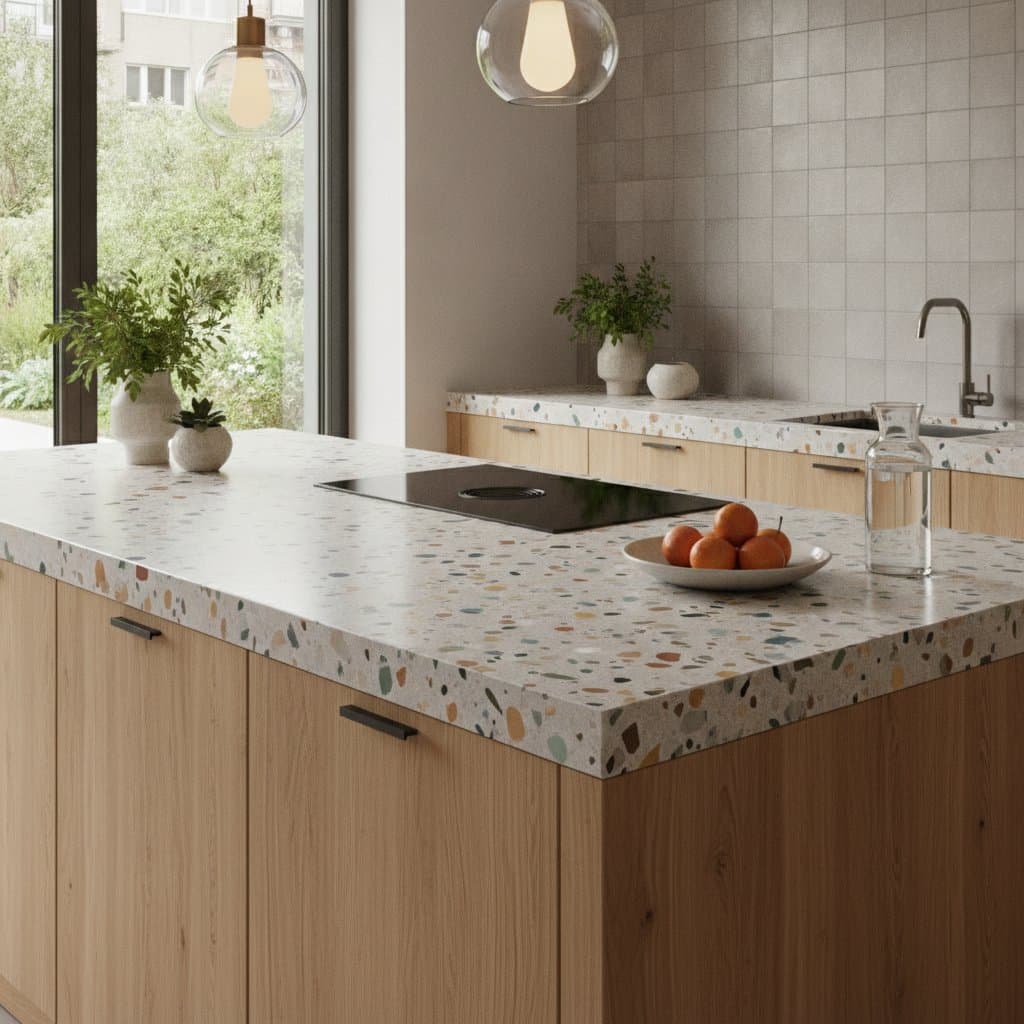
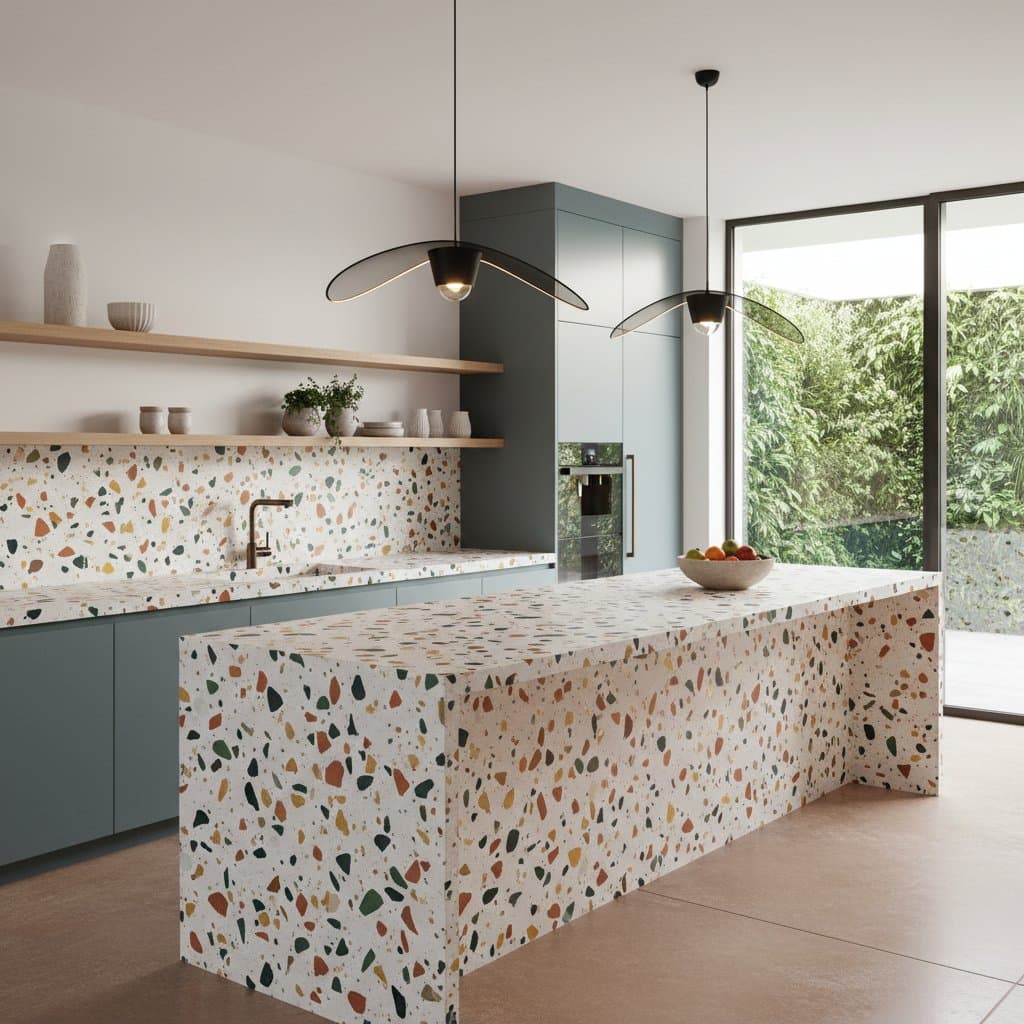
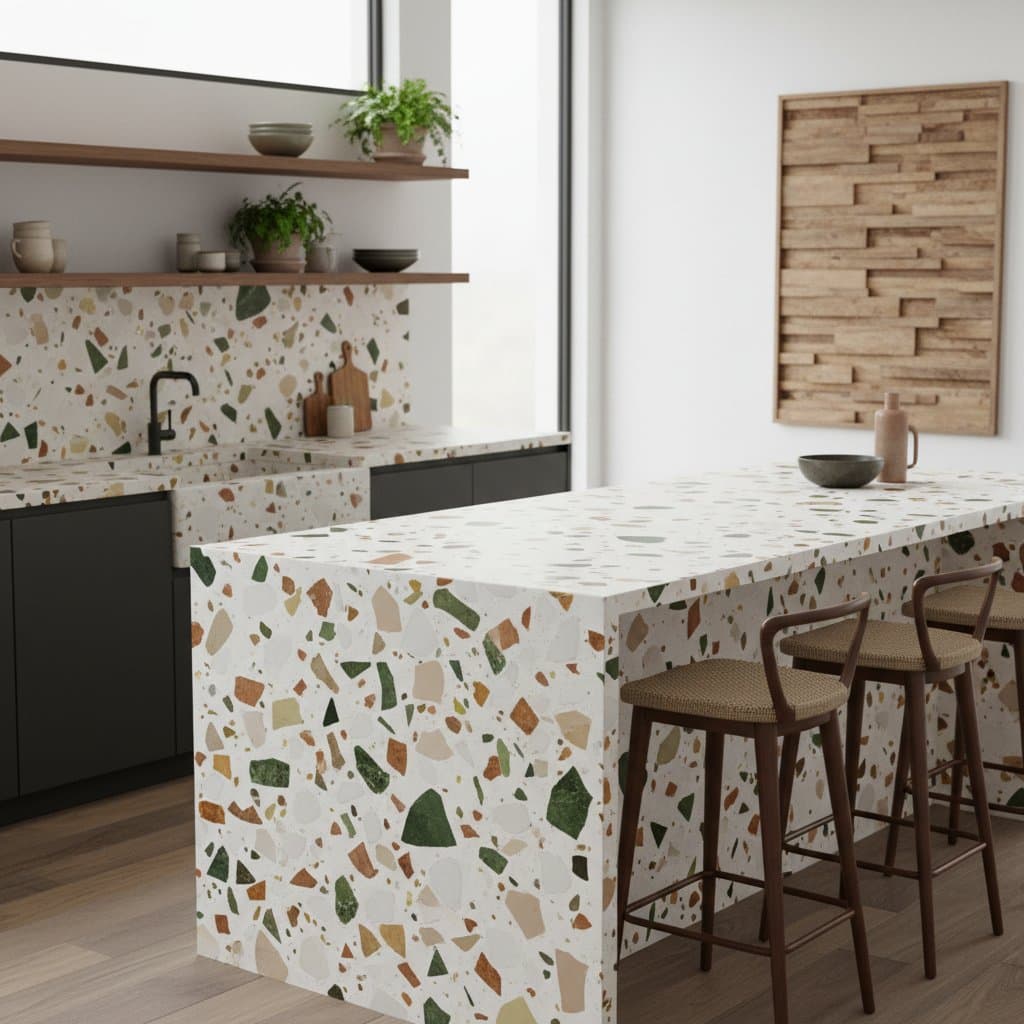
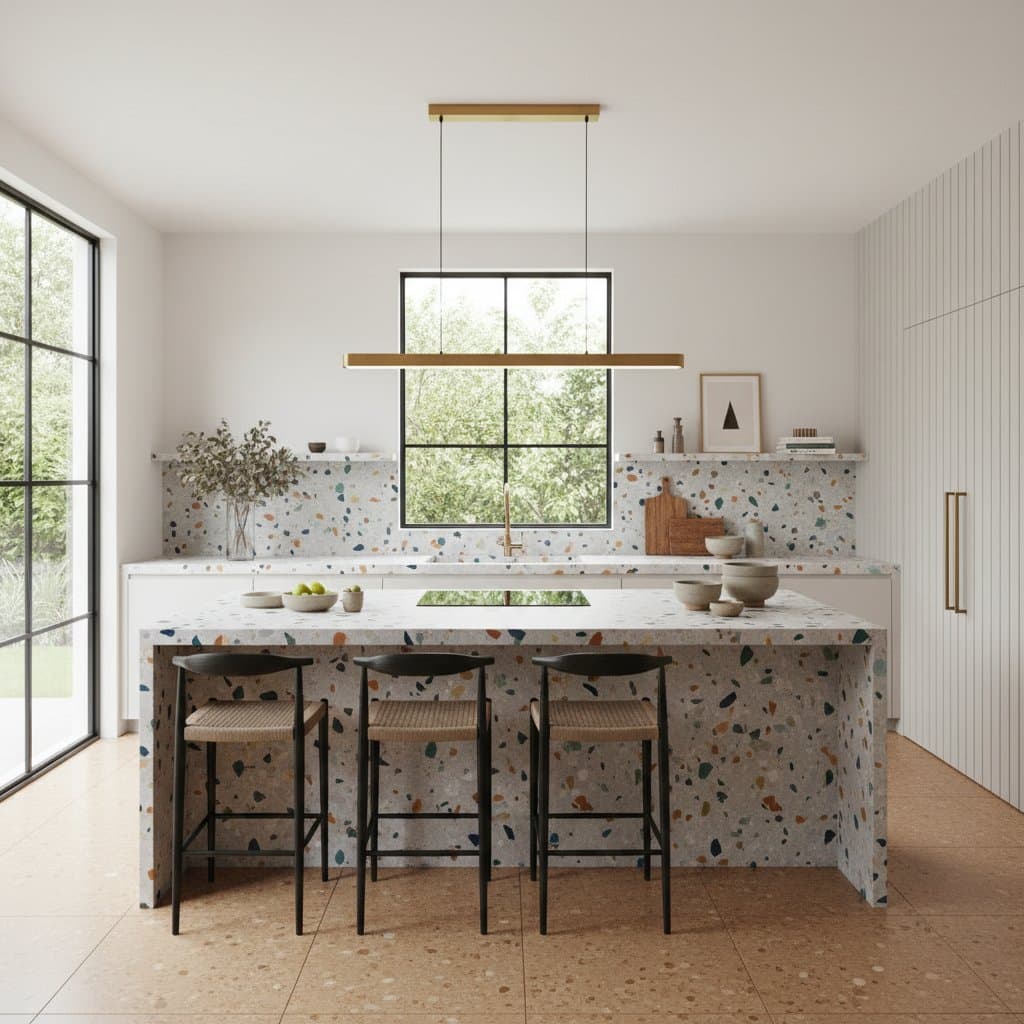
- Kitchen countertops: Terrazzo provides a distinctive substitute for quartz or granite. It withstands scratches and heat, and proper sealing ensures it manages routine culinary spills effectively.
- Bathroom floors and walls: Resin-based terrazzo, being impervious to water, excels in humid environments. It delivers texture and hue without the maintenance demands of tile grout lines.
- Entryways and mudrooms: Terrazzo's sturdiness copes with intense foot traffic, debris, and dampness superior to numerous alternatives.
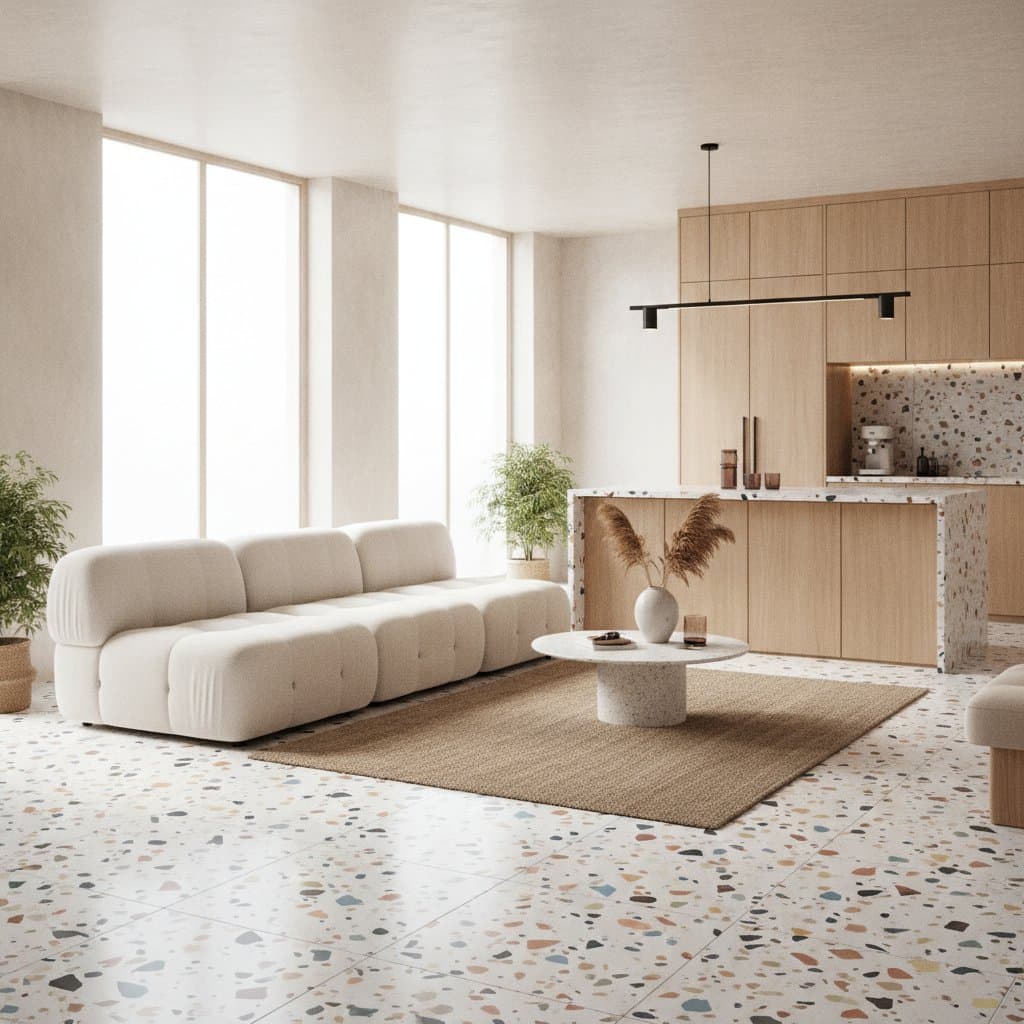
- Living areas: In-situ poured terrazzo flooring generates a smooth, unbroken expanse that bounces light and expands perceived room dimensions.
- Furniture accents: Compact terrazzo components enhance coffee tables, shelves, or lamp pedestals, introducing understated design elements.
To integrate terrazzo effectively, evaluate traffic levels and moisture exposure in each area. For high-use zones like kitchens, select epoxy resin variants for enhanced chemical resistance. In living spaces, opt for polished cement-based options to amplify natural light reflection.
The Cost Breakdown
Terrazzo qualifies as a premium material, yet its extended service life justifies the expenditure. Costs fluctuate based on composition, scale, and installation intricacies.
- DIY terrazzo tiles: Pre-manufactured tiles begin at $8 to $15 per square foot. These prove ideal for modest areas or feature walls.
- Mid-range poured terrazzo floors: Anticipate $25 to $50 per square foot, encompassing materials and professional labor.
- Premium custom terrazzo: Elaborate motifs or luxury aggregates may exceed $75 per square foot.
Although initial outlays appear substantial, terrazzo endures for generations with scant intervention. Contrast this durability against vinyl or laminate, which often require renewal within a decade, and terrazzo demonstrates clear economic advantages. Factor in energy savings from its thermal mass, which stabilizes indoor temperatures and reduces heating or cooling needs.
Sustainable Strength
Terrazzo's primary merit lies in its ecological profile. Numerous formulations incorporate up to 70 percent recycled content. Discarded glass containers, stone offcuts, and metal residues transform into functional surfaces, curtailing landfill contributions and diminishing renovation's carbon impact.
Cement-based terrazzo offers longevity but possesses greater weight and rigidity, whereas resin-based versions prove lighter and generate reduced emissions in manufacturing. Both varieties support certifications for green construction. To maximize sustainability, inquire with providers about regionally procured aggregates and binders with low volatile organic compounds.
Beyond material sourcing, terrazzo's permanence curtails frequent replacements, conserving resources over time. Select suppliers certified by organizations like the Green Building Initiative to verify eco-credentials.
Installation and Maintenance Tips
Terrazzo installation exceeds basic do-it-yourself projects, except for tile applications. Poured systems demand specialized tools and expert craftsmanship. The procedure entails blending aggregates with binder, casting the mixture, then grinding and buffing to achieve a flawless sheen. Professionals ensure precision, so engage certified installers for optimal results.
Maintenance remains uncomplicated:
- Vacuum or sweep routinely to eliminate abrasive particles that might mar the surface.
- Clean with a pH-neutral solution, steering clear of abrasives or acids.
- Apply sealant biennially to counters or every three to five years for floors to preserve luster and repellency.
Should damage occur, such as fissures or nicks, targeted repairs restore integrity without full replacement. This reparability enhances terrazzo's environmental superiority over disposable alternatives.
For best practices, test cleaners on inconspicuous areas first. In high-humidity settings, ensure adequate ventilation during sealing to promote even curing.
Style Options That Fit Any Home
Contemporary terrazzo transcends traditional monochrome flecks. Producers deliver palettes from muted tones to vivid azures and emeralds. Personalize blends with regional stones or recycled glass attuned to interior schemes.
Achieve minimalism through fine-grained aggregates with gentle tonal shifts. Create impact via coarse chips and bold contrasts. Harmonize terrazzo with timber, metallurgy, or poured concrete for cohesive, current ensembles.
Experiment with scale: Micro-aggregates suit serene bedrooms, while macro versions energize open-plan layouts. Lighting influences perception; daylight accentuates subtle veining, whereas warm bulbs highlight metallic inclusions.
Integrating Terrazzo into Your Project
To incorporate terrazzo, formulate a detailed strategy and financial outline. Examine physical samples in showrooms, as hues and textures vary under ambient illumination. Request specifics on recycled proportions and sealant specifications from vendors.
Identify priority zones where terrazzo's resilience and allure yield maximum benefit. Kitchens and bathrooms frequently benefit, yet entryways and utility spaces also receive stylish elevations. When assessing expenses, weigh terrazzo's protracted lifespan, reduced care, and green attributes against short-term options.
Through thoughtful selection, terrazzo unites aesthetic distinction with ethical considerations in home endeavors. This versatile material honors innovation and planetary stewardship, delivering an enduring patina that retains vitality across years.