Terrazzo's Sustainable Revival in 2025 Kitchens
Every surface in a home conveys a narrative, and terrazzo articulates this with particular eloquence. Originating in Italian palazzos and midcentury modern spaces, terrazzo now returns to contemporary kitchens with a focus on purpose. This material transcends nostalgia to embody a movement toward sustainability, skilled workmanship, and bold aesthetics. Today's terrazzo honors imperfection and resource efficiency, offering a blend of enduring appeal and progressive vision.
This examination of terrazzo's resurgence highlights how designers, craftspeople, and residents adopt its eco-friendly charm. From reclaimed aggregates to tailored hues, terrazzo stands as an emblem of mindful opulence.
The Roots and Renewal of Terrazzo
Terrazzo emerged centuries ago as a resourceful technique, where workers in Venice repurposed marble chips set in clay for resilient floors. This method evolved through the 20th century into a staple of modernist architecture, prized for its seamless durability and subtle patterns. In 2025, terrazzo revives not as a relic but as a responsive solution to contemporary demands for green materials and personalized design.
Homeowners and architects select terrazzo to infuse kitchens with historical depth while addressing modern challenges like resource depletion. Its revival aligns with broader trends in interior design, where authenticity and longevity replace fleeting fashions. By choosing terrazzo, spaces gain layers of meaning that evolve with daily life.
Sustainable Craftsmanship and Material Innovation
Terrazzo excels in sustainability through its composition of recycled aggregates, which curbs waste and promotes circular economies. These slabs boast lifespans that outlast many alternatives, diminishing the frequency of replacements. Fabricators such as Diespeker & Co. in London and Concreate Studio in New York deliver options containing up to 70 percent recycled elements, from crushed glass to industrial byproducts.
Epoxy formulations provide lightweight versatility for overhead installations, whereas cementitious versions deliver an authentic, earthy texture suited to grounded applications. Designers often specify low-VOC sealants and plant-derived binders to enhance environmental profiles without compromising refinement. This approach ensures surfaces that align with rigorous green building standards.
Beyond creation, terrazzo's robustness supports long-term stewardship. A sealed countertop withstands heavy use for generations, requiring only periodic maintenance like pH-neutral cleaning solutions. Such qualities position terrazzo as a strategic choice for reducing a home's ecological footprint over time.
The Rise of Bespoke Artistry
Custom terrazzo serves as a medium for unique storytelling, where artisans partner with clients to curate aggregate blends. These mixes incorporate fragments of reclaimed ceramics, mirrored shards, or natural elements like seashells, yielding slabs that capture personal histories. Each piece emerges as a singular artifact, tailored to reflect the resident's vision and values.
At Surface Matter in London, creative director Emily Skinner characterizes terrazzo as a material that remembers. Every inclusion holds a trace of origin, be it marble from razed structures or glass from regional workshops. This narrative essence imparts a profound resonance, appealing to those who prioritize genuine expression over uniformity.
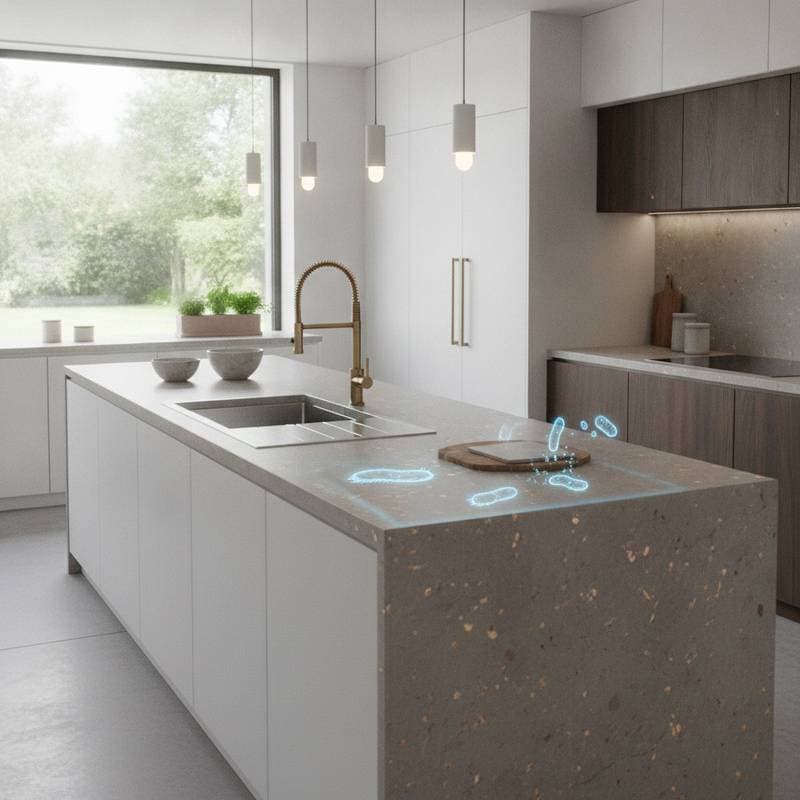
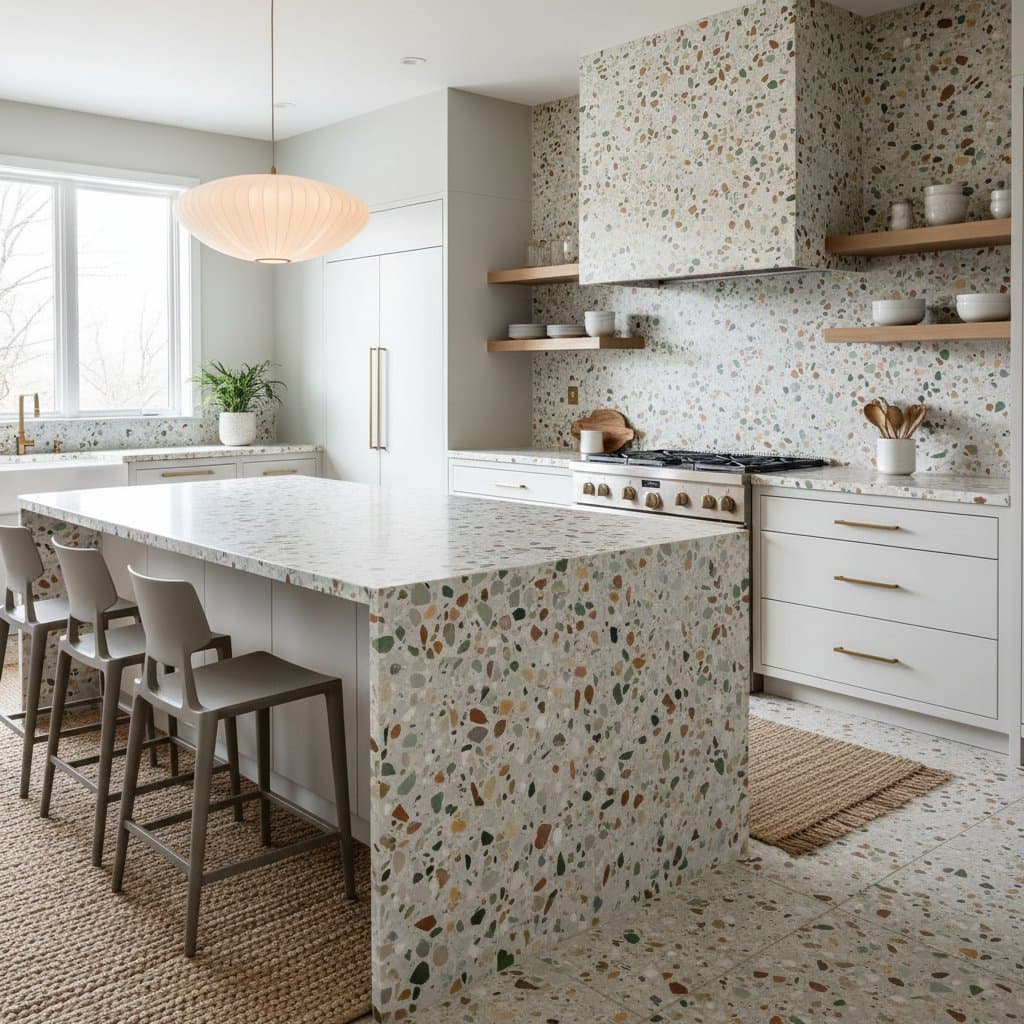
In kitchen settings, bespoke designs elevate central features like islands and backsplashes. Subtle embeds of brass flecks or mother-of-pearl catch ambient light, rendering the area a dynamic canvas. To pursue such customization, consult local fabricators early in the planning phase to align aggregates with the overall palette and theme.
Integrating Terrazzo into Modern Kitchen Architecture
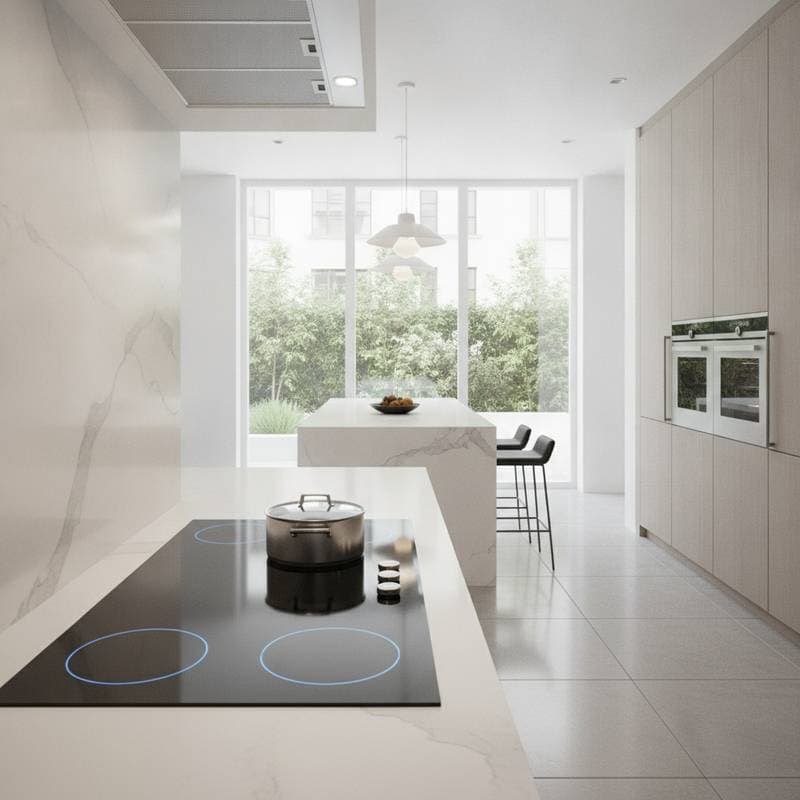
Modern kitchens thrive on unified elements, and terrazzo integrates fluidly to support this harmony. Apply it across countertops, backsplashes, flooring, and even sink basins for a cohesive, sculptural effect that remains inviting. This material's adaptability enables designers to forge continuous flows that enhance spatial rhythm without overwhelming the senses.
Architect Luciano Ghezzi of Studio Ghezzi frequently recommends terrazzo for its unifying power in open layouts. It connects the kitchen seamlessly to adjacent living zones, he notes. In spare environments, terrazzo introduces understated decoration that adds warmth and dimension.
For compact kitchens, opt for lighter terrazzo variants with quartz or glass inclusions to amplify natural illumination. These selections expand perceived volume while infusing tactile interest. Test samples under your lighting conditions to confirm how reflections interact with the room's scale and color scheme.
The Functional Beauty of Terrazzo Countertops
Practicality defines effective kitchen surfaces, and terrazzo delivers superior performance amid routine demands. Its compact structure, when sealed appropriately, repels scratches, stains, and heat effectively. The non-porous quality simplifies upkeep, often requiring just a damp cloth and mild cleaner for daily maintenance.
Cementitious terrazzo acquires a soft patina with age, which designers regard as an enhancement to its allure. This evolution mirrors the kitchen's own journey, adding character without detracting from utility. Resin variants maintain a uniform appearance and suit slimmer profiles for contemporary cabinet heights.
Companies like Terrazzo & Marble Supply Companies and Durat engineer eco-terrazzo that adheres to exacting durability benchmarks while preserving aesthetic grace. Select based on traffic levels: thicker slabs for high-use areas, thinner for accents. Pair with supportive underlays to optimize stability and comfort during food preparation.
The Future of Terrazzo in Kitchen Design
Terrazzo positions itself at the forefront of design as a conduit for narrative and ecological awareness. It fuses historical techniques with technological advances, adapting to shifting domestic needs. This duality ensures its place in forward-looking interiors that value both legacy and innovation.
New methods expand its horizons, such as computer-guided placement of aggregates for intricate motifs. Modular tiles facilitate easier retrofits in existing homes, while bio-resins lessen dependence on conventional cements. These developments promise terrazzo's ongoing evolution as a versatile, low-impact option.
Interior architect Clara Leung of Atelier C Studio views terrazzo as a link between artistic expression and structural form. In her projects, she combines it with bespoke metalwork and salvaged wood to weave tales of persistence. Every component, she explains, fosters a dialogue between tradition and ecological progress.
Embracing Terrazzo for Enduring Kitchen Living
Terrazzo's value shines in its capacity to foster intentional, unhurried design practices. These surfaces mature with poise, gaining nuance rather than showing signs of decline. Routine care, including resealing every few years and avoiding abrasive tools, preserves their vitality across decades.
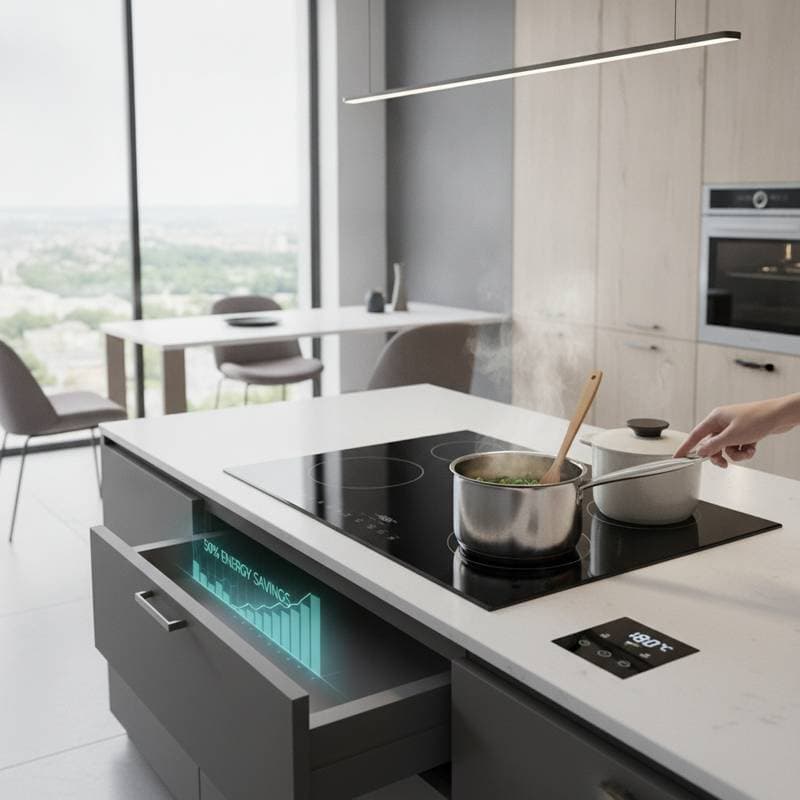
Enhance terrazzo installations by integrating them with efficient fixtures, sustainably sourced woods, and non-toxic coatings. This combination yields a comprehensive space where form and principle harmonize. For remodels, prioritize terrazzo to signal a dedication to lasting quality and aware habitation.
As kitchens expand into hubs for nourishment, connection, and invention, terrazzo imparts stability and creative spirit. A textured island, an artistic splash guard, or a flowing floor each contributes to this vision. Terrazzo ultimately affirms that eco-design can embody profound elegance, honoring the mosaic of fragments that shape our environments and experiences.