Terrazzo's Sustainable Revival: Elevating Modern Interiors in 2025
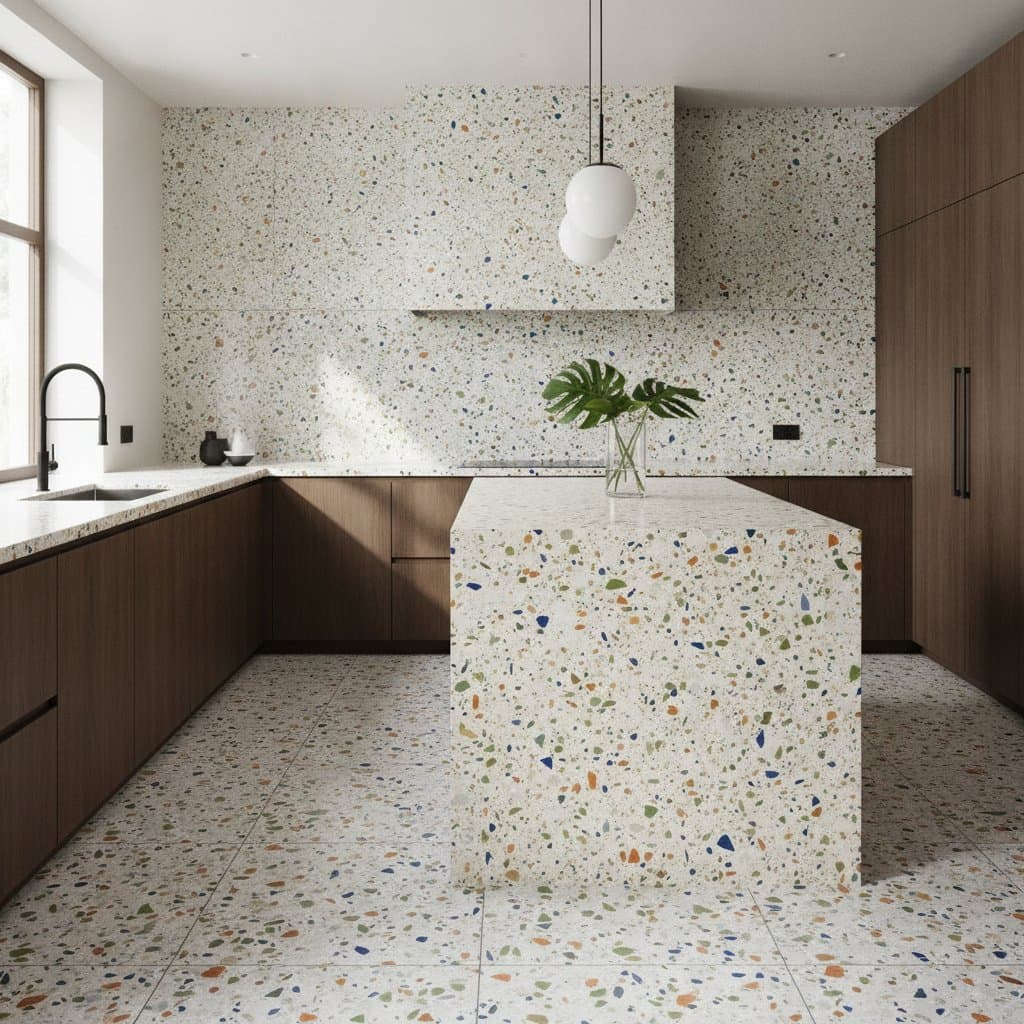
Terrazzo merges nostalgia with forward-thinking design, emerging as a key material for surfaces that demand both beauty and resilience. This composite of marble, quartz, glass chips, and a binding matrix once defined mid-century architecture. Today, it appears in homes and commercial spaces, where its speckled patterns add artistic flair to walls, counters, and floors.
Its appeal stems from versatility and environmental benefits. Modern versions prioritize recycled aggregates, reducing waste while maintaining durability. Designers select terrazzo for projects that require low-maintenance, high-impact surfaces capable of withstanding daily use.
Origins and Enduring Appeal of Terrazzo
Terrazzo traces its roots to 16th-century Venice, where workers crafted it from discarded stone fragments set in clay. This resourceful technique evolved into a polished art form, symbolizing craftsmanship. Contemporary interpreters like Patricia Urquiola and Kelly Wearstler draw on this heritage, incorporating geometric patterns and bold colors to create pieces that honor the past while fitting seamless into modern settings.
The material's revival signals a shift toward authentic, textured finishes. It counters the uniformity of minimalist trends by offering visual depth and tactile interest. Clients seek terrazzo for its ability to evoke warmth and history in otherwise sleek environments.
Sustainability at the Core
Environmental responsibility drives terrazzo's current popularity. Producers like Kaza Concrete and Diespeker & Co. integrate recycled glass and stone into mixes, minimizing the demand for new resources. These formulations achieve up to 90 percent recycled content, appealing to eco-aware architects and homeowners.
Customization enhances its green profile. Designers specify aggregate types and ratios to match project needs, ensuring efficient material use. This approach not only lowers the carbon footprint but also results in unique slabs that avoid mass-produced uniformity.
Color Palettes and Compositional Techniques
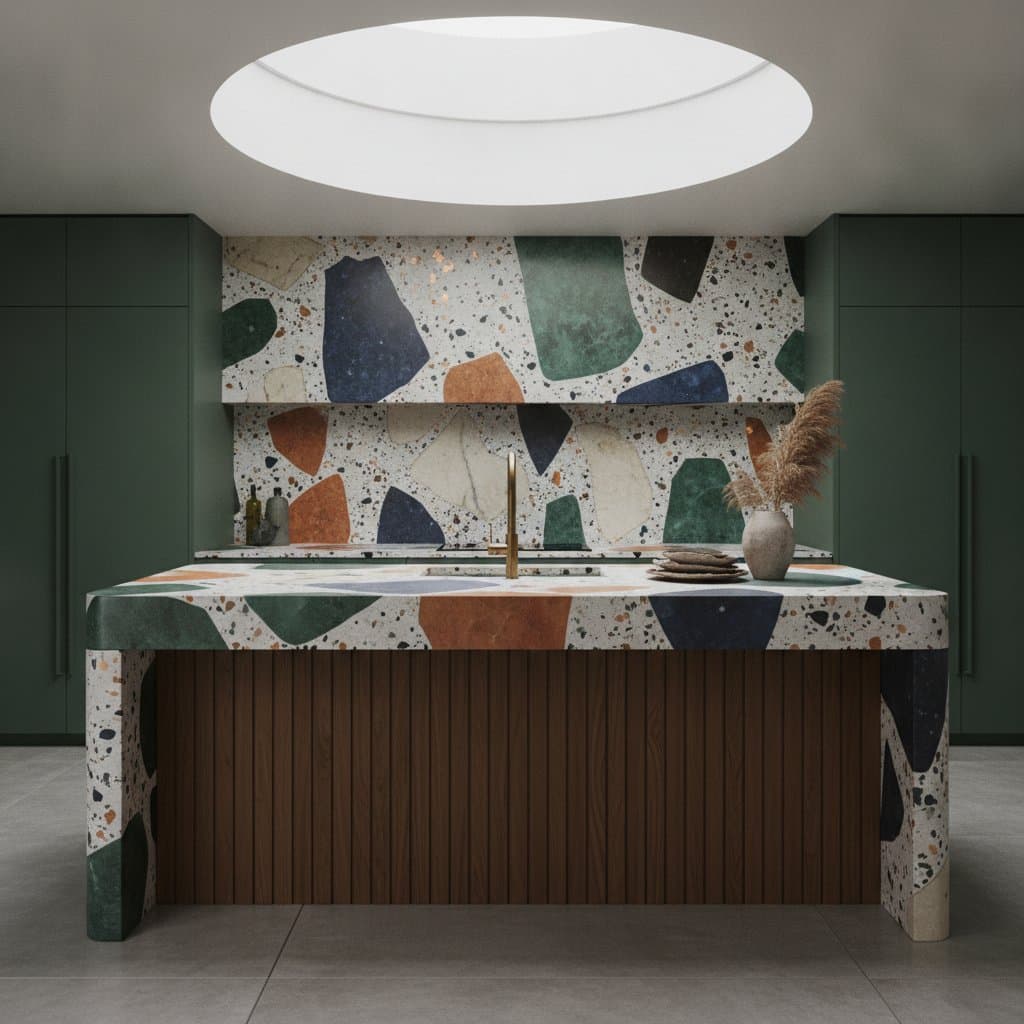
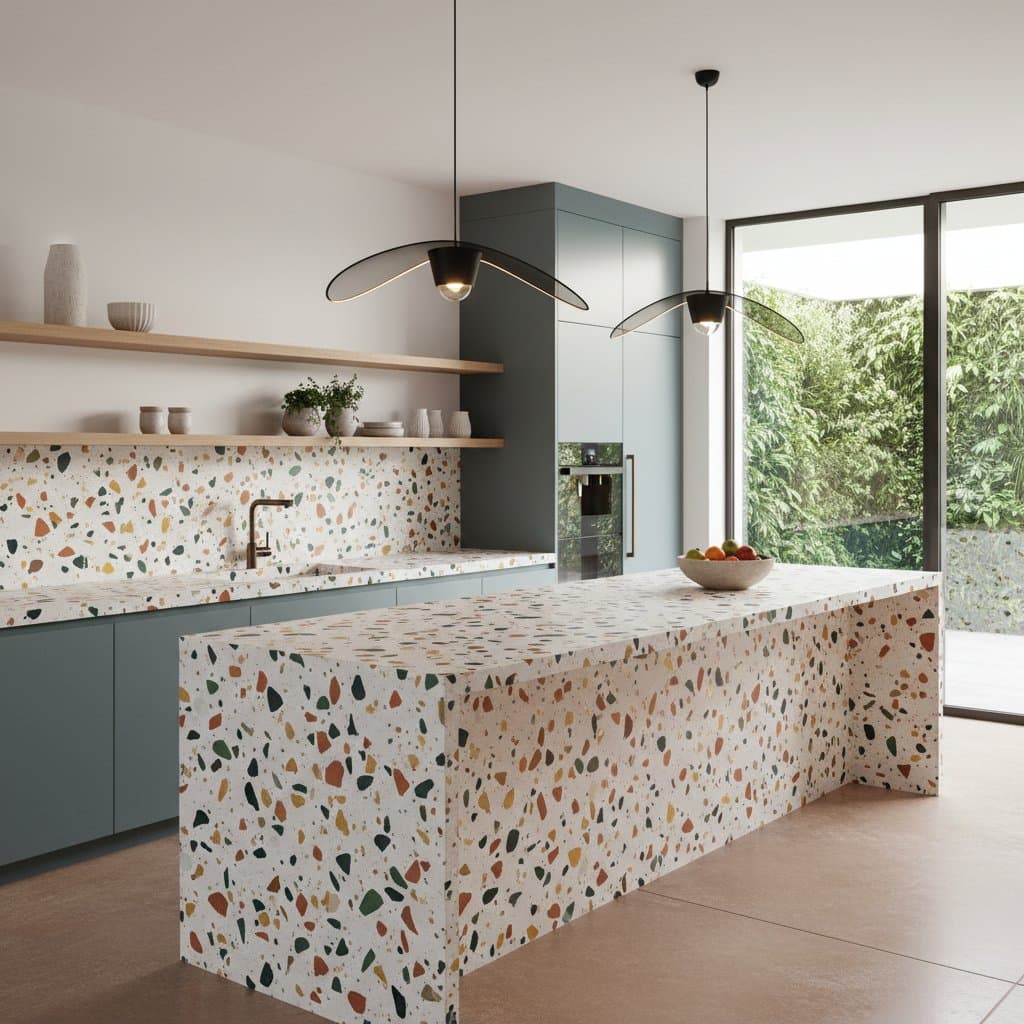
Terrazzo's vibrancy comes from thoughtful color selection. Neutral bases like Benjamin Moore's Pale Oak provide subtlety, while deeper shades such as Farrow & Ball's Hague Blue add drama. Artisans adjust chip sizes and binder tones to craft abstract-like effects, turning surfaces into focal points.
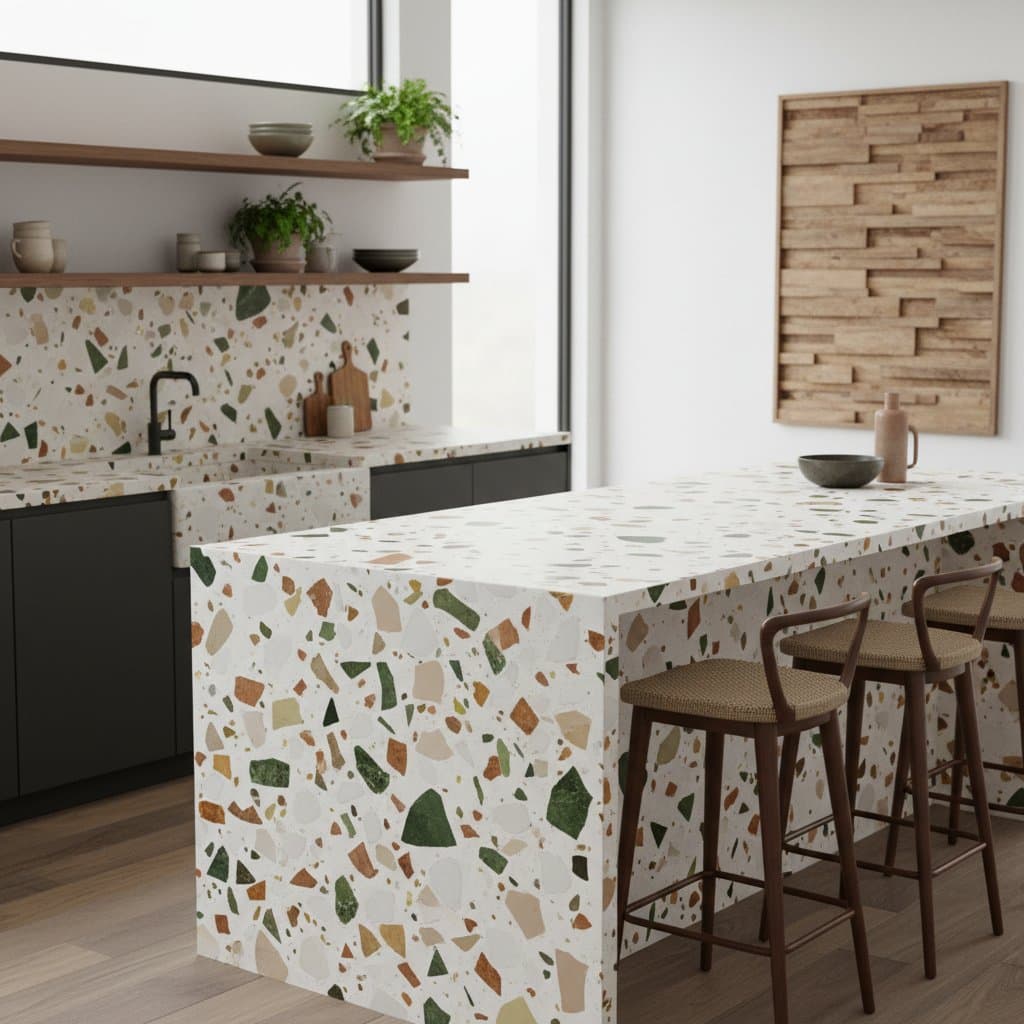
In Studio Ashby's recent kitchen design, large marble chips in soft pink and gray create a flowing pattern on an island. This method balances bold elements with functional scale. Experiment with sample boards to preview how light interacts with your chosen palette, ensuring harmony with surrounding decor.
Expanding Applications: From Floors to Walls
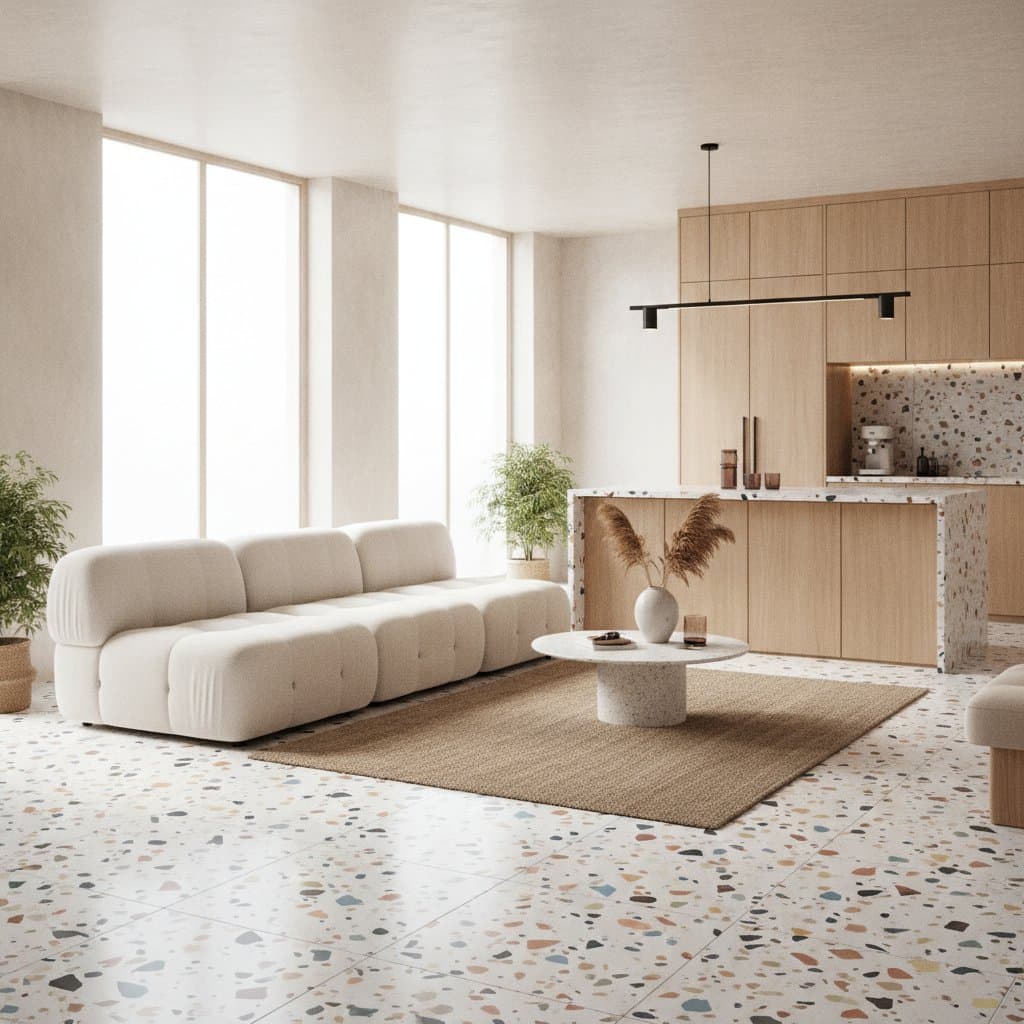
Traditionally used on floors, terrazzo now extends to vertical surfaces for dynamic impact. Materica Studio's panels introduce subtle gleam to accent walls, enhancing spatial depth without overwhelming the room. Their lightweight construction simplifies installation in renovations.
Bathrooms showcase terrazzo's practicality. It transitions smoothly from countertops to shower walls, leveraging natural water resistance. Apply sealant during installation to protect against moisture, creating a cohesive, spa-like atmosphere that combines luxury with ease of care.
Crafting Distinctive Countertops
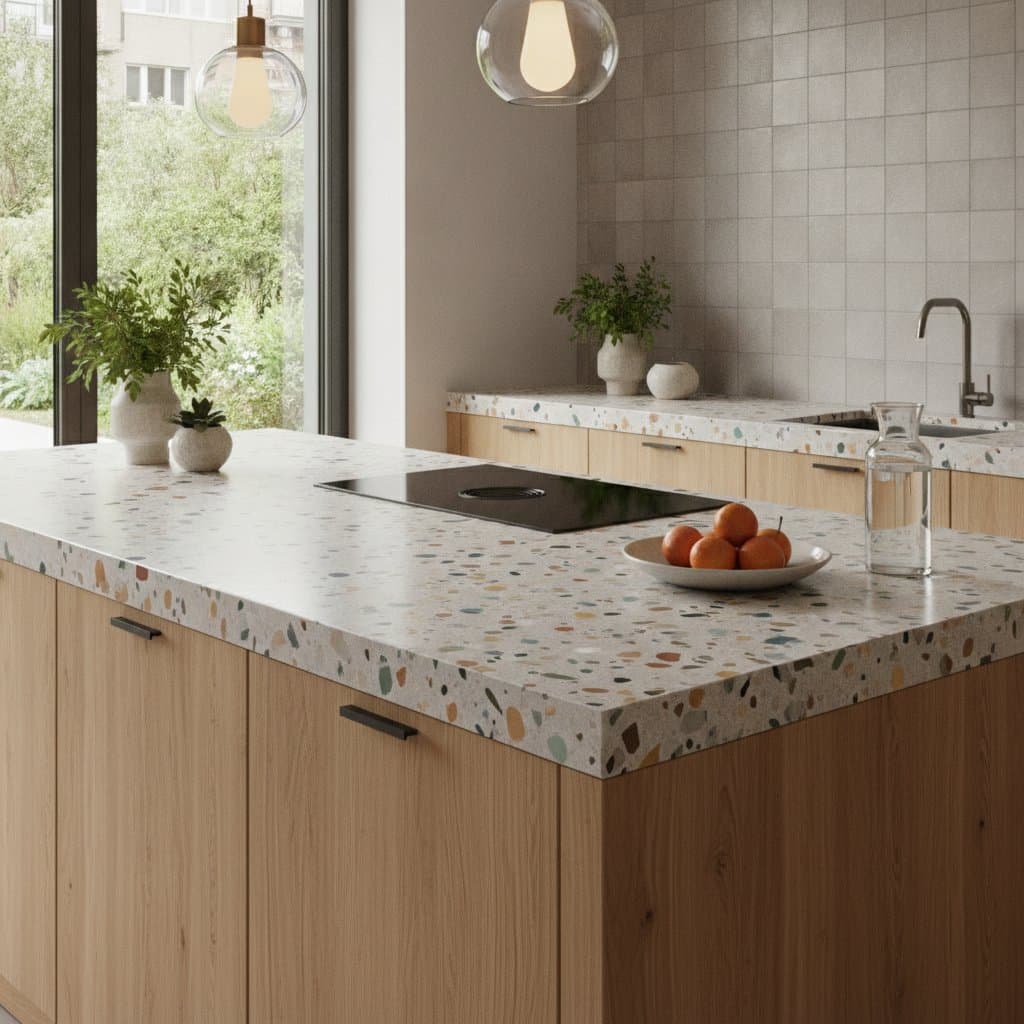
Terrazzo excels in kitchens, where individuality matters. DeVOL Kitchens paired a cream base with green serpentine aggregates in one installation, complementing oak cabinets and brass accents. The irregular patterns distribute wear evenly, developing a lived-in patina over time.
For maintenance, use products like Lithofin sealants to preserve the polish. Avoid abrasive cleaners to retain the surface's luster. This setup suits active households, offering beauty that improves with use rather than fading.
Incorporating Terrazzo in Secondary Spaces
Unexpected areas benefit from terrazzo's playful side. In powder rooms or staircases, small-scale versions add whimsy without dominating. Bespoke Surfaces London's micro-panels with coral chips in ivory resin suit high-traffic zones, providing gentle shimmer under ambient lighting.
Consider scale when selecting: finer aggregates work for intimate spaces, while larger ones suit open areas. This strategic placement turns overlooked spots into conversation starters, enriching the overall design narrative.
Textures and Finishes for Depth
Surface treatment defines terrazzo's mood. Polished options amplify sparkle and detail, ideal for statement pieces. Matte or honed finishes, as favored by Norm Architects, deliver a softer elegance, pairing well with natural materials like limestone or oak.
Mix textures for layered interest. A matte terrazzo floor under polished counters creates subtle contrast. Test samples in your lighting conditions to assess how finishes evolve, ensuring they align with the room's intended serenity or energy.
Harmonizing with Other Materials
Terrazzo adapts effortlessly to diverse pairings. Warm woods soften its sheen, and metals accentuate embedded flecks. In Humbert & Poyet's living room, a terrazzo surround with brass details offsets velvet and oak, blending glamour with comfort.
Start pairings by considering temperature: cool terrazzo balances warm textiles. Layer gradually, using mood boards to visualize cohesion. This method builds interiors that feel intentional and inviting.
The Art of Customization
Tailored fabrication sets modern terrazzo apart. Fabricators adjust aggregate density, color intensity, and binder clarity to meet specific visions. Diespeker's Design Lab provides digital simulations, enabling precise adjustments before pouring.
Collaborate early with suppliers to source aggregates that reflect your theme, such as metallics for industrial vibes or earth tones for organic feels. This process yields bespoke results, ensuring the material integrates as a signature element.
Embracing Terrazzo in Daily Life
Terrazzo's strength lies in its evolving presence. It captures shifting light, revealing fresh details daily, and develops character through gentle use. Low upkeep, involving occasional sweeping and resealing, makes it practical for busy lifestyles.
To integrate it effectively, assess your space's needs: opt for durable mixes in high-use areas and artistic ones for accents. Consult professionals for installation to maximize longevity. Ultimately, terrazzo fosters environments that celebrate creativity and sustainability, turning everyday surfaces into timeless assets.