Terrazzo Returns With Budget-Friendly Installation Trends
Terrazzo is back, and the fresh ways designers are using it deserve attention. The retro surface once associated with midcentury schools, hotels, and grand entry halls now feels wonderfully current. Colorful chips, soft neutrals, recycled glass, and clever installation methods are making terrazzo flooring approachable for renters, renovators, shop owners, and families working with modest budgets.
The best news is simple. You do not need a massive renovation budget to bring this material into your space. With the right format, preparation, and finish, terrazzo can deliver serious visual impact while supporting sustainable surfaces and practical daily living.
Why Terrazzo Feels Fresh Again
Traditional terrazzo combines cement or resin with pieces of marble, granite, glass, porcelain, or other aggregates. Once poured, the surface is ground smooth and sealed. The result is durable, customizable, and packed with personality.
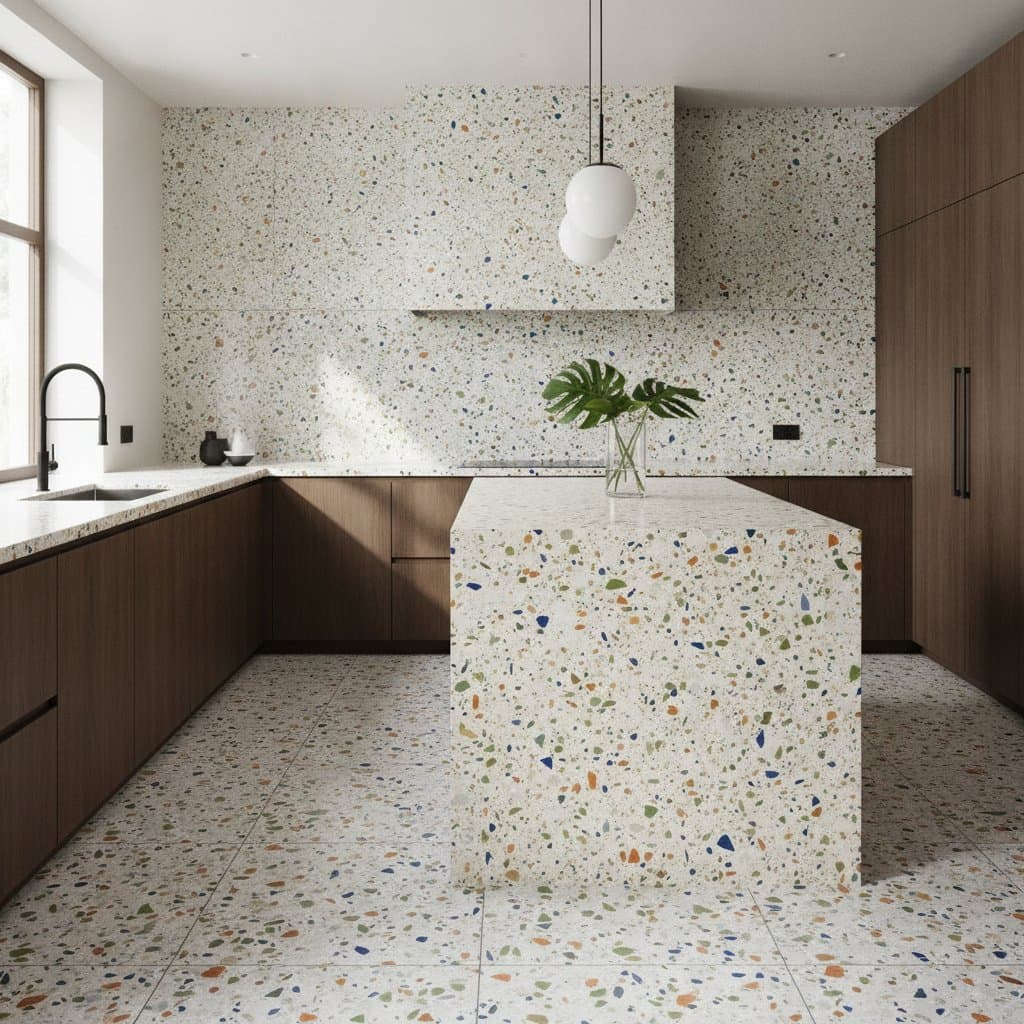
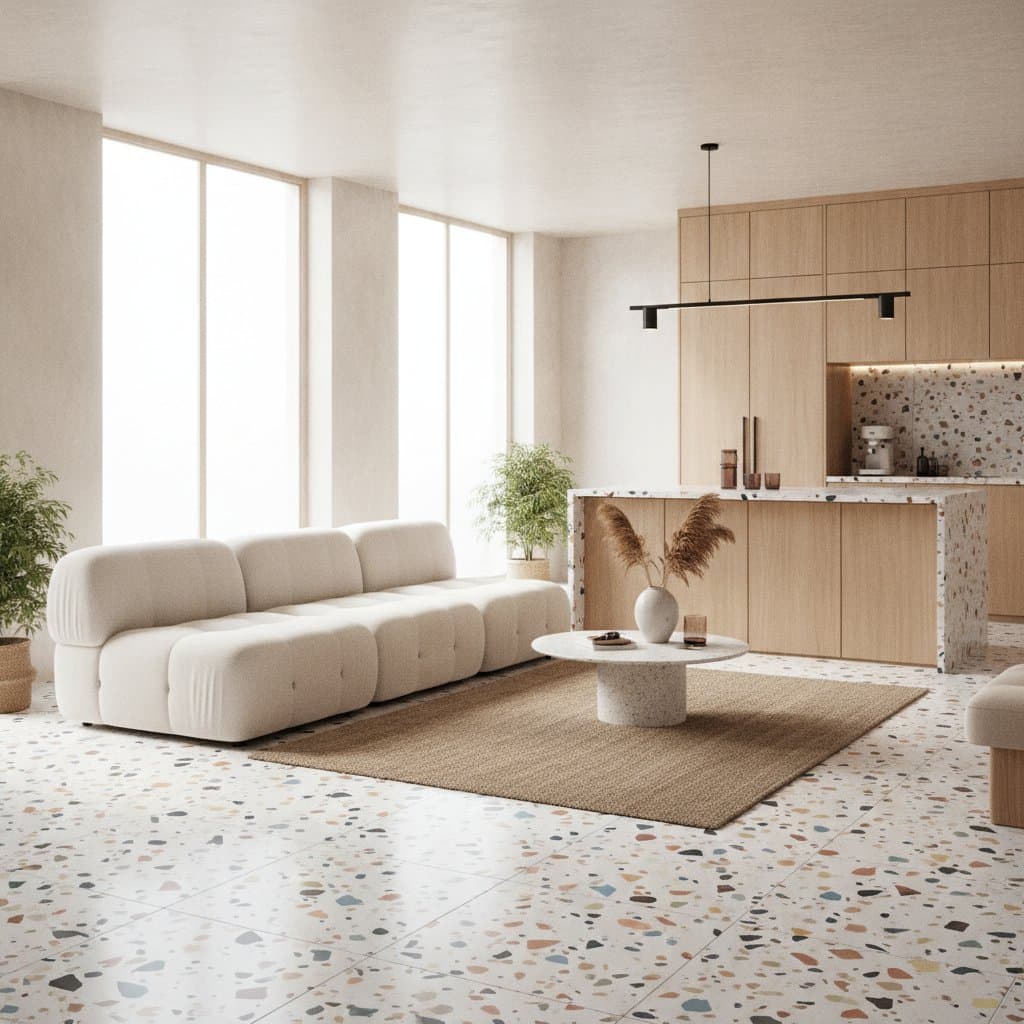
Designers are moving beyond predictable gray floors. Warm cream bases with terracotta chips feel relaxed and collected. Green glass creates a garden-inspired palette. Black backgrounds with pale stone fragments bring drama to kitchens and hospitality spaces. Tiny chips create a refined look, while larger fragments deliver a bold retro statement.
Television design taught me to respect surfaces that work hard and look fantastic on camera. Terrazzo reflects light gently, hides small marks, and creates a strong foundation for furniture and artwork. It gives a room that finished, intentional feeling without requiring a crowded styling scheme.
Choose the Right Terrazzo Format
Your format affects both the appearance and the installation cost. These options give you room to match the project to your budget.
Terrazzo Tile
Terrazzo tile offers the simplest route for many homeowners. Factory-made pieces arrive in consistent sizes and can be installed with standard tile methods. Expect material costs around $5 to $20 per square foot, with labor often adding $6 to $15 per square foot.
For a lower cost, search architectural salvage stores, tile liquidators, local reuse centers, and online overstock suppliers. Order samples before purchasing. Color can shift dramatically under natural and artificial light.
Large tiles create fewer grout lines and a calmer appearance. Smaller tiles can reduce cutting waste in compact rooms and support playful patterns. Use a contrasting grout for a graphic effect, or choose a close match for a quiet, poured look.
Terrazzo Look Porcelain
If authentic terrazzo falls outside your budget, porcelain tile with a terrazzo pattern offers excellent value. Many options cost $2 to $8 per square foot, and installation follows familiar ceramic tile practices.
Look for print variation across several tiles. Repeated patterns can make a floor feel artificial, while varied faces create a more convincing surface. Matte finishes tend to look more natural and provide better traction than highly polished options.
This solution works beautifully in bathrooms, laundry areas, kitchens, and rental upgrades. A removable rug, painted vanity, or colorful wall can help the floor feel personal rather than generic.
Poured and Thin Overlay Systems
Poured terrazzo creates the most seamless appearance, yet it usually carries the highest labor cost. A professional installation can range from $20 to $60 per square foot after surface preparation. The floor must be level, stable, clean, and properly primed.
A thin cementitious overlay can offer a similar visual direction at a lower price, often around $8 to $25 per square foot installed. These systems require skilled application, since cracks, moisture, and poor bonding can ruin the finish.
For a small entry, powder room, or cafe counter, the concentrated visual effect may justify the investment. You can enjoy the custom appearance without covering an entire home.
Budget Moves That Make a Big Difference
A smart terrazzo project begins with scope control. Covering every room is not required. Use terrazzo where it creates the strongest design moment.
- Install terrazzo tile only in an entry zone, then transition to affordable wood-look porcelain.
- Use terrazzo on a kitchen backsplash instead of the floor.
- Add a terrazzo threshold between rooms for a custom detail.
- Select a standard base color and add personality through furniture, paint, and lighting.
- Ask installers about leftover slabs or partial boxes from completed jobs.
- Keep the existing floor if it is sound, then use terrazzo on a raised platform or built-in bench surface.
Small applications can cost under $500 for materials, while a compact bathroom may land between $1,500 and $4,000 depending on preparation and labor. Always request a written quote that separates demolition, leveling, tile, setting materials, sealing, and installation.
Sustainable Surfaces With Style
Terrazzo supports thoughtful material choices. Recycled glass can replace some newly quarried aggregate. Local stone fragments may reduce transportation demands. Long service life also matters, since a floor that lasts for decades can avoid repeated replacement waste.
Ask suppliers where the aggregate comes from and what binders they use. Cement terrazzo often has a different maintenance profile from resin terrazzo. Resin can offer thinner applications and vivid color, while cement provides a mineral appearance and may suit a more traditional palette.
Do not assume a recycled label tells the whole story. Request product information, maintenance instructions, and indoor air quality details. A durable surface becomes a better investment when it also supports healthy interiors.
Installation Tips From the Design Floor
Preparation determines the final result. Before ordering material, inspect the subfloor for movement, moisture, cracks, and height changes at doorways. A beautiful tile installed over an unstable base will not perform well.
For tile installation, use a qualified installer who understands the product specification. Follow the manufacturer adhesive, grout, expansion joint, and sealing instructions. Terrazzo often needs sealing after installation and periodic resealing based on traffic and product guidance.
Plan transitions early. Terrazzo tile may sit higher than existing flooring, creating a trip edge. A metal, stone, or wood transition can solve the change while adding a deliberate design detail.
Order extra material for future repairs, especially when choosing a limited production color. Store it in a dry location and label the room where it belongs.
Camera-Ready Styling Without Overspending
On television sets, we often create drama with a few high-impact choices rather than filling every surface. Use that strategy at home. Pair a patterned terrazzo floor with simple cabinetry, one oversized pendant, and a strong piece of art.
Repeat one chip color elsewhere in the room. A rust-colored fleck can connect to a vase, stool, or painted wall. A blue glass fragment might inspire textiles or hardware. This repetition makes the design feel collected.
Keep grout clean and refresh tired sealant when needed. Use pH-neutral cleaning products, soft tools, and protective pads under heavy furniture. Avoid harsh abrasives that can dull the surface.
Building a Better Terrazzo Business
For designers and makers, terrazzo offers exciting product opportunities. Consider custom side tables, trays, shelves, fireplace surrounds, or sample boards made with local waste materials. Partner with countertop fabricators, tile setters, glass recyclers, and stone yards.
Start with a small collection of repeatable sizes and a focused color palette. Photograph each piece in real interiors, document care instructions, and price labor honestly. A clear process helps clients understand why custom work costs more, while standard sizes make the idea easier to scale.
Making Terrazzo Work for Your Space
Terrazzo rewards thoughtful planning and measured application. Focus on the areas where the material will have the greatest visual and functional impact. Choose the format that matches your budget and skill level. Prepare the surface properly and maintain it consistently. The result is a distinctive floor that performs well, looks intentional, and stays within reach.