Induction Zones Simplify Gas-Free Kitchen Retrofits
You enjoy the instant response of a gas cooktop when you adjust the flame. At the same time your city may phase out gas lines in new or remodeled homes. Many homeowners face the same question when planning a kitchen update. Induction zones allow a switch to electric cooking while preserving layout and control.
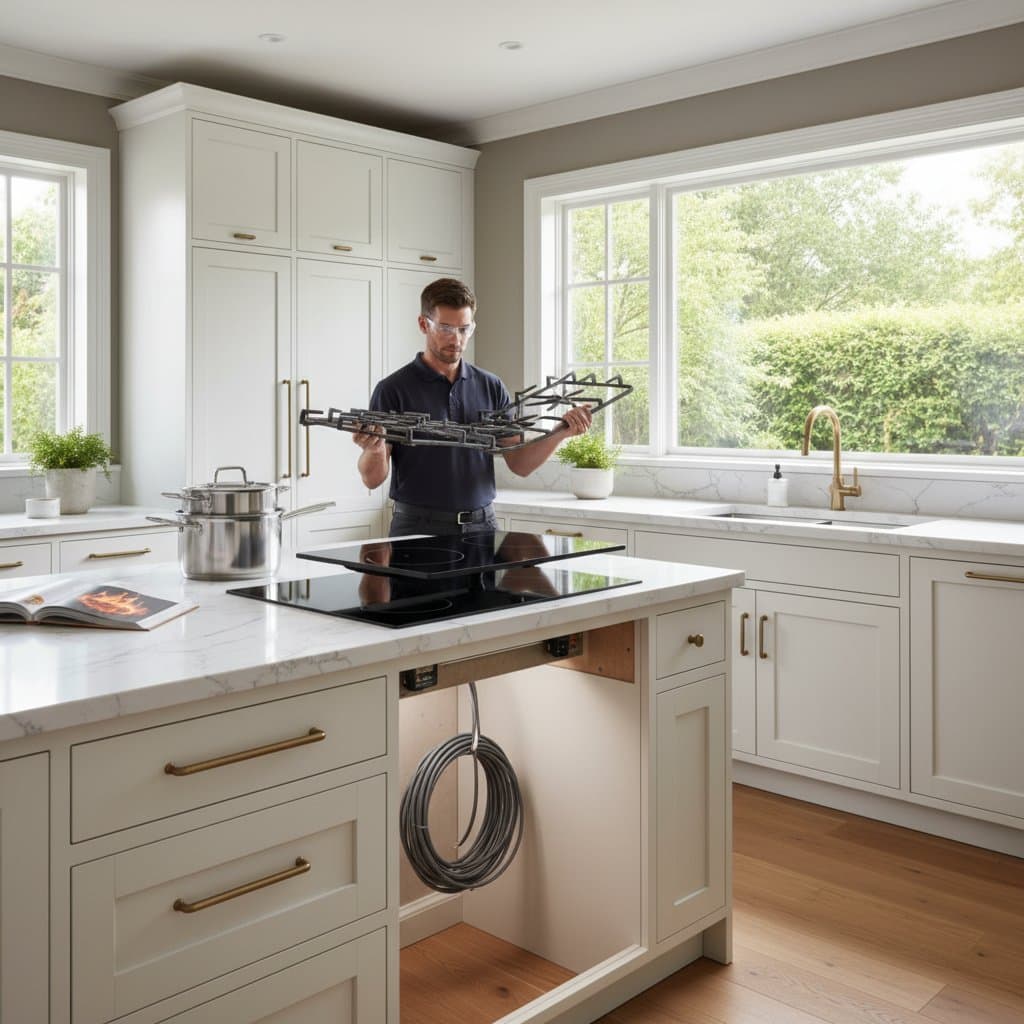
Replacing a gas cooktop with induction no longer requires extensive demolition or complete rewiring. Proper planning delivers faster heating, simpler cleanup, and safer operation. The kitchen layout stays intact throughout the process.
The sections below explain how induction zones support gas-free retrofits. They cover expected costs, installation steps, and ways to confirm the new setup performs efficiently.
How Induction Zones Work
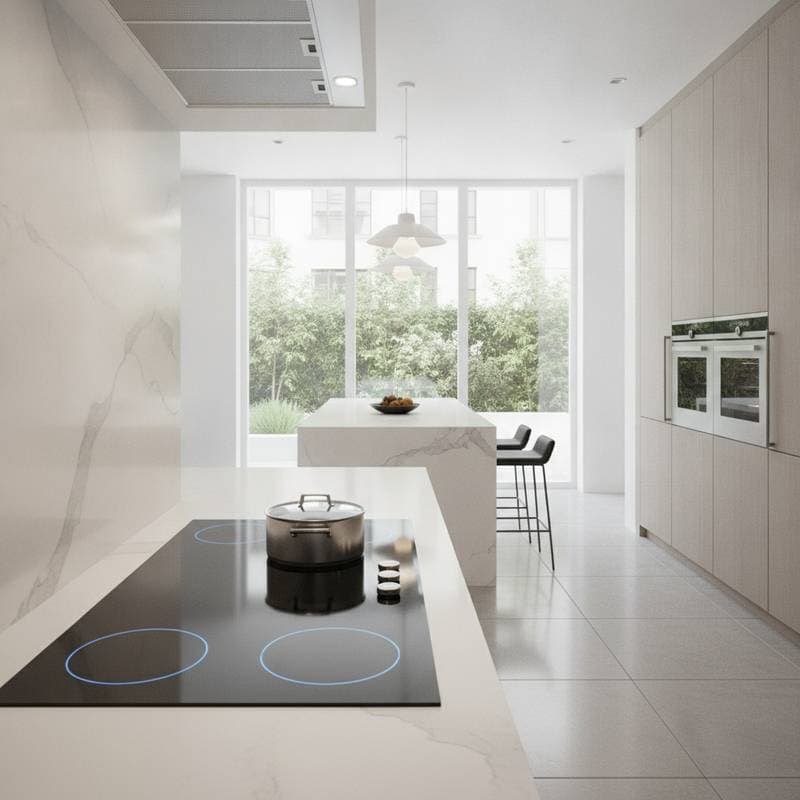
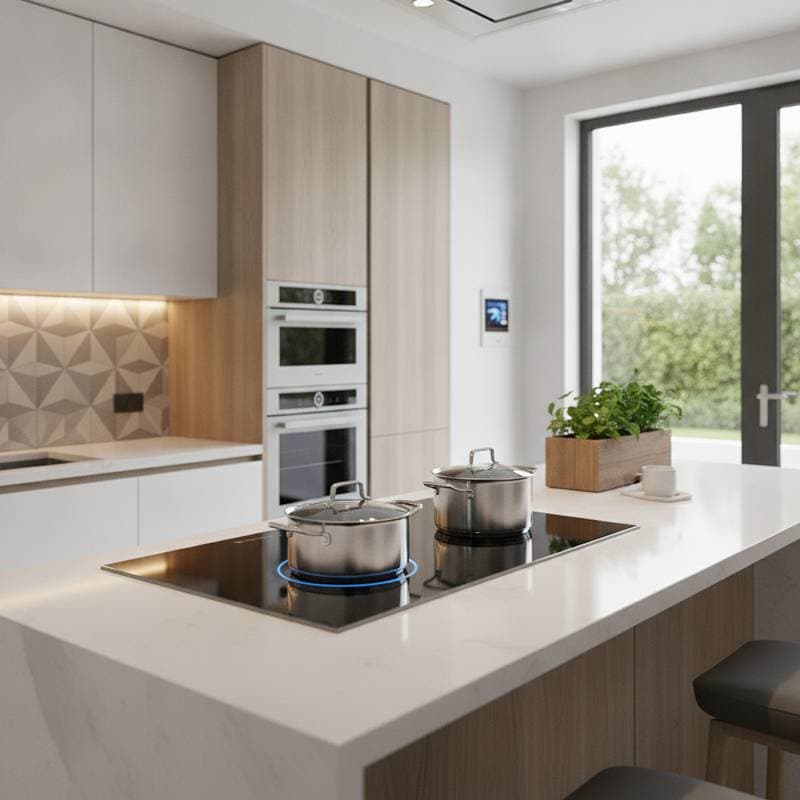
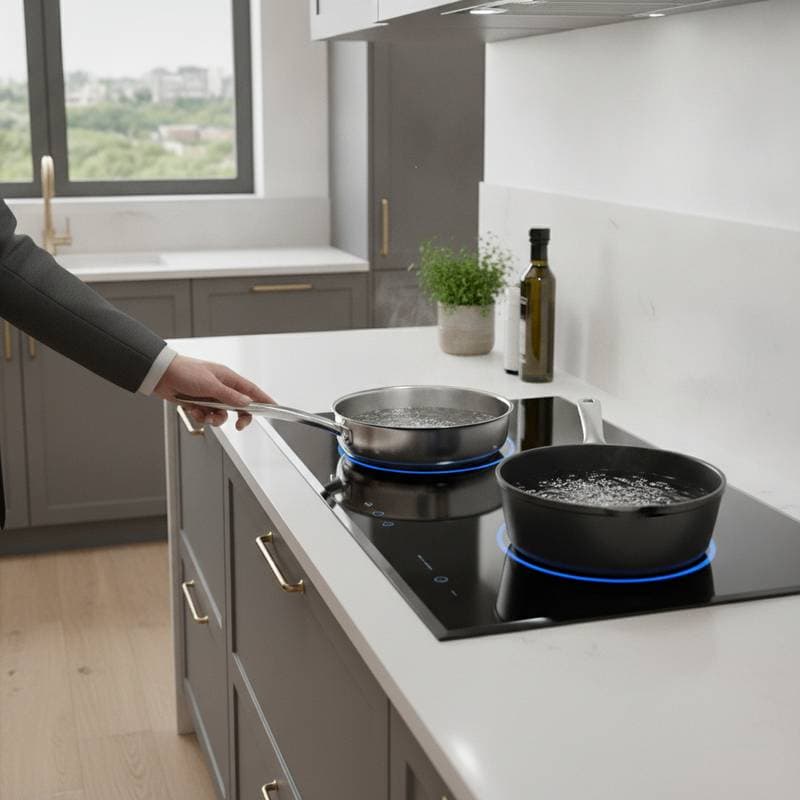
Each induction zone contains a circular magnetic coil beneath a glass surface. When a magnetic pan sits on the zone, the coil generates an electromagnetic field. This field excites the metal in the pan and produces heat directly inside the cookware. The cooktop surface remains relatively cool, and heating stops the moment the pan lifts away.
Each zone functions as an independent burner under digital control. Many models include bridging features that combine zones for larger pans or griddles. This arrangement provides flexibility comparable to gas while adding greater precision.
Costs and Timelines
A basic induction retrofit usually requires one to two days, including electrical work. The table below shows typical ranges.
| Type of Upgrade | Typical Cost Range | Timeline | Difficulty |
|---|---|---|---|
| Portable or single-zone | $100–$300 | Same day | Easy DIY |
| Two-zone plug-in cooktop | $400–$800 | 1 day | Moderate DIY |
| Four-zone built-in cooktop | $700–$2,000 | 1–2 days | Hire electrician |
| Full induction range | $1,500–$4,000 | 1–2 days | Hire electrician |
These figures include standard labor but exclude major panel upgrades or countertop changes. An older or undersized electrical panel may require an upgrade that adds $1,000 to $2,000.
Safety and Efficiency Advantages
Induction cooking ranks among the safest household options. The surface never reaches extreme temperatures, which reduces burn risk. No open flames or gas leaks exist. Many units shut off automatically when a pan is removed, and temperature sensors prevent overheating.
Induction converts more than 85 percent of its power into cooking heat, compared with roughly 40 percent for gas. The result includes faster boiling, lower utility bills, and reduced excess heat in the kitchen. Ventilation requirements decrease because combustion byproducts no longer need management.
Design and Lifestyle Benefits
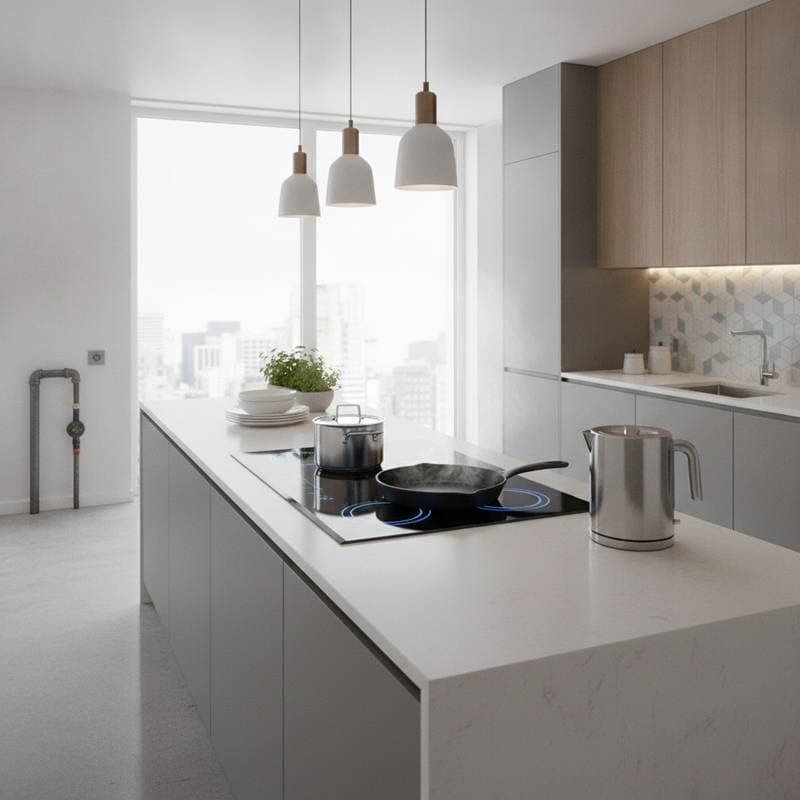
Induction zones create a cleaner, more modern appearance. The flat glass surface wipes clean with one pass and doubles as counter space when the cooktop is off. Temperature control responds instantly, allowing many cooks to match or surpass the responsiveness of gas. Chocolate melts directly in a pot without a double boiler, and meat sears evenly without hotspots.
Households that entertain frequently can arrange modular induction zones across an island or cooking wall. This flexibility exceeds what fixed gas lines permit.
Steps to Complete Your Retrofit
Verify that your electrical panel supports the required amperage before ordering equipment. Test existing cookware with a magnet; only ferrous pans will work on induction. Schedule an electrician for final wiring and confirm ventilation meets local codes. These steps produce a reliable, efficient kitchen that operates cleanly and responds precisely.