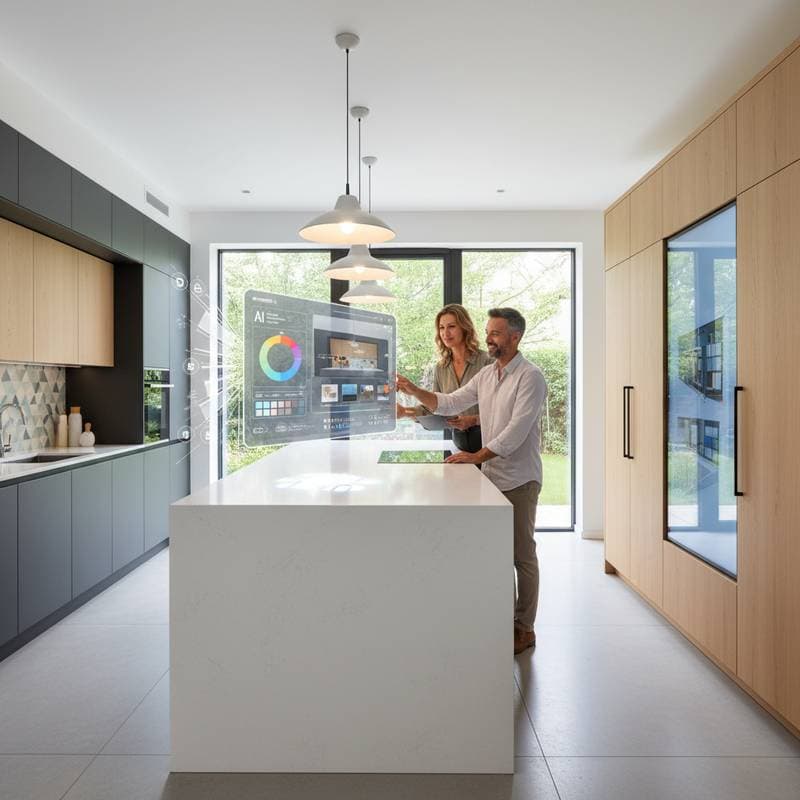
AI Tools for Achieving Kitchen Color Harmony
Kitchens serve as the core of many homes, where colors shape the atmosphere through cabinet shades, countertop tones, and lighting interactions. Creating balanced color schemes traditionally demands skilled judgment and trial and error. Intelligent design tools now provide exact guidance, blending technology with human creativity to produce unified and inviting spaces.
How AI Enhances Color Selection
Artificial intelligence supports designers rather than supplanting them. These applications go beyond basic samples by modeling complete kitchen settings. They evaluate room layout, light sources, and surface properties to propose harmonious color combinations tailored to specific environments.
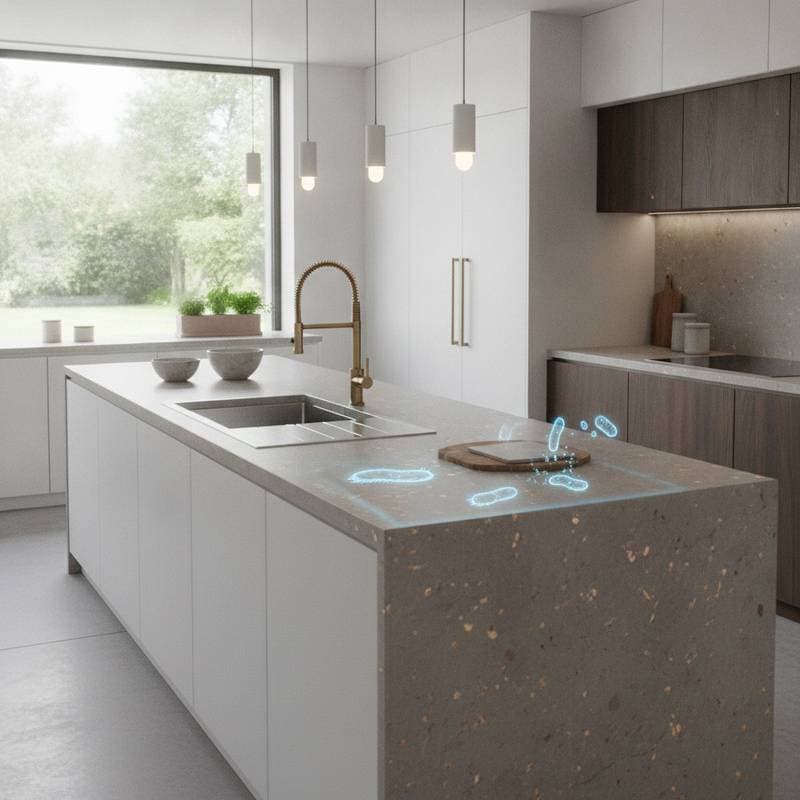
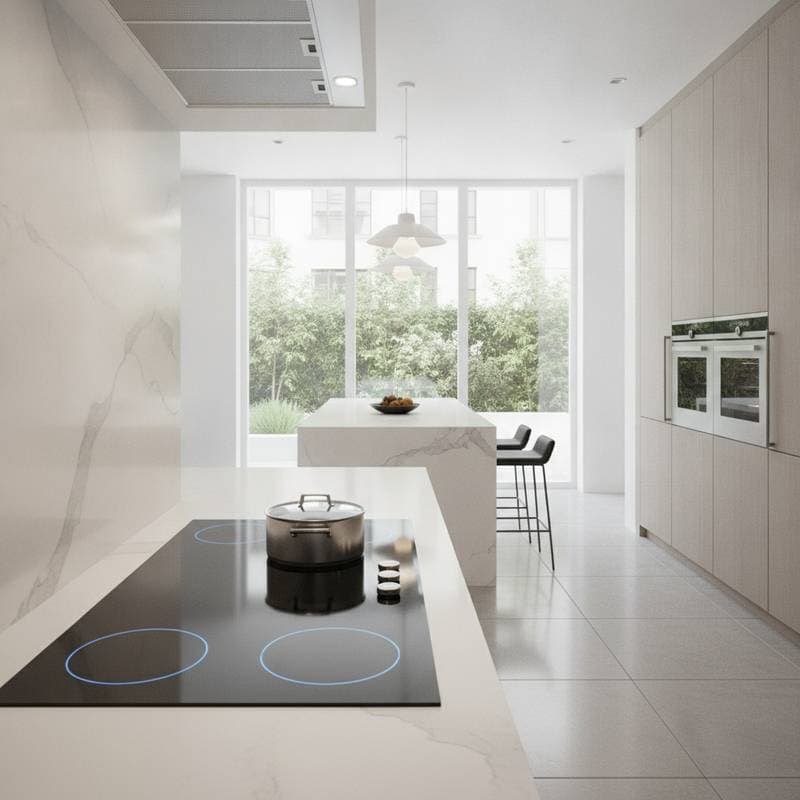
Tools such as Backdroppers Color Intelligence and Benjamin Moore Color Portfolio employ image analysis to assess materials like quartz surfaces, oak floors, or metal accents. The software identifies subtle undertones and how light affects them, then suggests matching paints. For instance, uploading a photo of Calacatta marble might yield recommendations for Benjamin Moore Chantilly Lace, Farrow and Ball Cornforth White, or Sherwin-Williams Pewter Green, each chosen to align with the marble veins and room illumination.
Key Ways AI Tools Advance Kitchen Color Design
1. Precision Analysis
AI processes vast amounts of image data to spot details overlooked by the eye, including light temperature changes, texture differences, and reflective effects. This leads to color choices that perform consistently, such as Farrow and Ball Hague Blue maintaining its depth from noon to evening.
2. Instant Visualization
Platforms like RoomVO and Morpholio Board enable uploading kitchen photos for immediate color testing. Users apply virtual layers to see interactions between hues and existing elements, replacing uncertainty with clear exploration.
3. Tailored Suggestions
These systems adapt to user patterns; frequent selections of neutrals or greens refine future options. Recommendations align with both style preferences and practical needs, like ease of cleaning.
4. Light Effect Modeling
Light influences color dramatically; LEDs can shift grays cooler, while window orientations dull vibrant shades. AI simulates these variations, showing how Benjamin Moore Revere Pewter or Behr Swiss Coffee appears throughout the day to avoid surprises.
5. Material Database Links
Software integrates with catalogs from suppliers like Caesarstone, Cosentino, and Daltile. This ensures wall colors coordinate exactly with counters, tiles, and floors for unbroken visual flow.
6. Mood-Based Color Guidance
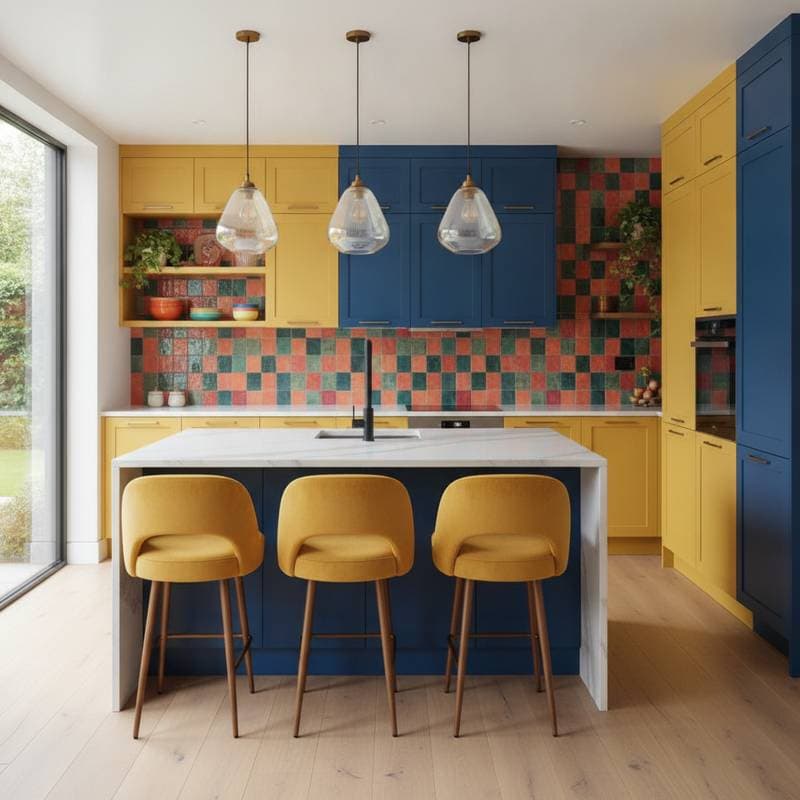
Drawing on color psychology, AI matches hues to desired emotions. Serene kitchens might feature Sherwin-Williams Sea Salt alongside Farrow and Ball Pigeon, while energetic ones pair Benjamin Moore Caliente with Backdroppers Golden Hour.
7. Team Collaboration Features
Shared digital boards facilitate input from designers, clients, and specialists. Real-time adjustments clarify visions and align contributions from lighting experts or fabricators.
8. Eco-Friendly Options
AI assesses paint formulas for environmental benefits, favoring low-VOC products that preserve color quality. Selections like Clare Paint Whipped or Backdrop Moonstone support aesthetics and sustainability.
9. Style and Era Insights
Accessing historical images, tools suggest period-appropriate palettes. A mid-century update could include Sherwin-Williams Avocado or Benjamin Moore Palladian Blue, refreshed with modern elements.
10. Future Trend Predictions
By reviewing design images, fashion, and online trends, AI forecasts color shifts. This equips designers to incorporate rising preferences while prioritizing enduring appeal.
Insights from Design Professionals
Interior designer Sophie Langford of Studio Langford Design views AI as an intuitive aid. She notes that it validates choices, such as confirming a graphite island pairs well with white oak and brass under various lights.
Architect David Han of Han and Co. Architects highlights improved client interactions. Full 3D models with precise colors streamline decisions and eliminate reliance on static samples.
Blending Technology with Creative Vision
AI excels at revealing color dynamics, like how taupe tempers a bold counter or blush tile adds warmth to gray walls. It quantifies these links, allowing bolder experiments without physical costs.
Homeowners gain expert access, moving from hesitation to assured selections. The focus remains on contextual depth, ensuring choices suit daily use.
Steps to Implement AI in Your Kitchen Project
Begin by photographing your current space and uploading to a tool for initial palette ideas. Test simulations against lighting conditions and material samples. Refine based on mood goals and sustainability, then consult professionals for final validation. This method builds confidence and results in a kitchen that harmonizes visually and emotionally over time.