Effortless AI Color Matching for 2026 Kitchen Trends
Kitchens serve as more than functional spaces; they function as hubs of creativity, technology, and personal style. Digital tools now streamline color selection, allowing designers, homeowners, and manufacturers to achieve visual harmony with unprecedented accuracy. AI-driven technologies lead this shift, offering precision that blends artistry with data-informed decisions.
1. The Rise of Digital Color Scanning
Accuracy forms the foundation of modern color selection. Devices like the Datacolor ColorReader and Nix Mini 2 capture hues from any surface, converting them into exact digital codes. Users point the scanner at a ceramic tile, fabric swatch, or stone sample to receive matches or complements from brands such as Benjamin Moore or Farrow & Ball. This method removes uncertainty, linking physical inspirations directly to professional paint options.
Homeowners start by scanning key elements in their existing space, such as countertops or upholstery. The device then generates a list of viable paints, complete with RGB values and application tips. Designers appreciate how this tool speeds up consultations, ensuring clients visualize results before committing to purchases.
2. Warm Neutrals with Intelligent Depth
AI analysis highlights a preference for warm, layered neutrals over stark whites. Shades like Sherwin-Williams Accessible Beige and Farrow & Ball Skimming Stone provide subtle warmth that complements cabinet finishes and quartz surfaces. These platforms evaluate undertones in wood or stone, suggesting colors that amplify rather than clash with natural textures.
To apply this, scan cabinetry and countertops first, then let AI propose neutrals with matching warmth levels. Pair these with materials like European oak flooring or honed travertine backsplashes for a serene atmosphere. The result fosters calm environments where textures take center stage without overwhelming the palette.
3. The Return of Moody Greens
Deep greens emerge as emblems of refined comfort in 2026 designs. Algorithms assess light interactions with pigments, recommending shades that shift gracefully from morning to evening. Options such as Benjamin Moore Essex Green or Little Greene Puck deliver richness without density, especially when combined with brass accents and matte finishes.
Avoid oversaturation by using AI to balance green intensity against adjacent elements. Scan hardware and flooring to ensure the green enhances metallic sheens and wood grains. This approach creates timeless kitchens that feel inviting and contemporary.
4. Soft Terracotta and Earth-Derived Palettes
Earthy tones inspired by clay and sun-warmed stone gain prominence through AI mapping. Colors like Dulux Tuscan Terracotta or Behr Clay Pot integrate seamlessly with open shelving and artisanal tiles. By analyzing scanned surfaces, AI generates variations that mimic natural gradients, promoting unity across walls, cabinets, and fabrics.
Begin with scans of existing earth elements, such as pottery or rugs, to build a cohesive scheme. These palettes evoke organic warmth, ideal for kitchens emphasizing handmade details. The refined outcome balances nature's raw appeal with polished execution.
5. Intelligent Contrast through AI Harmony Tools
Effective designs rely on balanced tension between light and dark elements. Software like Adobe Color or Coolors Pro calculates contrast ratios mathematically, producing palettes that sustain equilibrium. This prevents a dark graphite island from dominating lighter creamy cabinets, while ensuring transitions appear intentional.
Input base colors from scans, then generate options with AI-guided ratios for accessibility and aesthetics. Test virtual applications to confirm harmony under different lights. Such tools elevate spaces, making them feel curated yet intuitive.
6. The Precision of Material Integration
AI bridges color and material choices by simulating pigment behavior under varied lighting. This prediction pairs painted surfaces with marble patterns and metal details accurately. For instance, Benjamin Moore Revere Pewter on cabinets harmonizes with brushed nickel fixtures, adding layered depth.
Scan all materials involved, from wood grains to stone veins, for comprehensive analysis. Fabricators use these insights to adjust finishes pre-installation, minimizing errors. The process honors skilled workmanship while streamlining choices for optimal results.
7. Sustainable Pigments and Smart Selection
Sustainability drives AI applications by curbing waste from trial-and-error painting. Digital previews reduce the purchase of excess samples, supporting eco-friendly practices. Tools forecast coverage and longevity, aligning selections with low-VOC paints and recycled materials.
Evaluate options for environmental impact ratings within the software. This method not only conserves resources but also ensures durable, health-conscious kitchens. Designers guide clients toward choices that reflect both style and responsibility.
8. Emotional Intelligence in Color Choice
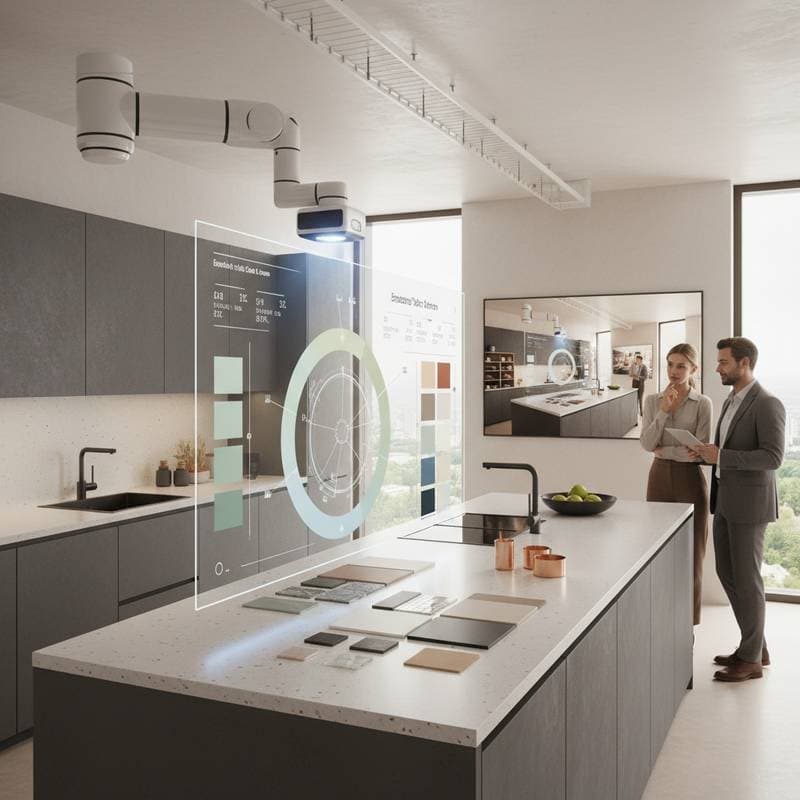
AI extends beyond mechanics to understand user preferences. Systems track selections to discern inclinations toward soothing, vibrant, or reminiscent tones. This insight enables personalized palettes that align with emotional needs, enhancing the kitchen's role in daily well-being.
During consultations, input past choices or mood descriptors for tailored recommendations. The result crafts spaces that evoke desired feelings, from energizing mornings to relaxing evenings. Such empathy transforms technical tools into intuitive partners.
9. Adaptive Lighting and Digital Visualization
Lighting alters color perception dramatically, and AI addresses this through simulations. Tools model how shades like Farrow & Ball De Nimes on walls or Sherwin-Williams Iron Ore on islands perform across light sources. Users adjust variables to preview outcomes in real-time.
Incorporate room-specific lighting data, such as LED temperatures, into the visualization. This step confirms selections remain true to intent, avoiding surprises post-installation. Kitchens thus adapt fluidly to daily light changes, maintaining consistent appeal.
10. Integrating AI for Enduring Kitchen Harmony
AI color tools foster a synergy between intuition and innovation, turning kitchens into personalized sanctuaries. Homeowners combine scanning, palette generation, and visualization for cohesive designs that endure. These technologies empower confident decisions, resulting in spaces that blend functionality, beauty, and sustainability seamlessly.