Acoustic Innovations for Tranquil Interiors in 2026
Sound permeates daily life in subtle yet persistent ways. The drone of a neighbor's lawn mower, intermittent barking from a nearby dog, or the steady hum of a refrigerator can erode the sense of relaxation within a home. Homeowners increasingly examine how sound interacts with interior spaces. The objective extends beyond mere noise blocking; it involves sculpting auditory environments that promote calm, privacy, and comfort.
Individuals seeking to quiet their homes without undertaking full renovations have viable options. This guide details recent acoustic advancements, installation techniques, and economical approaches. These methods reshape the auditory experience of living spaces effectively.
Core Principles of Acoustic Design
Grasping the primary mechanisms of sound behavior in residential settings proves essential before selecting treatments. Sound interacts through distinct processes that influence room acoustics.
- Reflection: Sound waves encounter rigid surfaces and rebound, creating echoes in areas such as kitchens or corridors.
- Absorption: Porous, soft materials capture sound energy, preventing reflection. Examples include fabric-covered panels, thick rugs, and specialized ceiling tiles.
- Transmission: Sound travels through structures like walls or floors. Mitigating transmission requires increasing mass or ensuring airtight barriers.
Effective design integrates these elements. For instance, install absorptive wall panels to curb echoes while applying seals around doors to limit inter-room sound leakage.
Innovative Acoustic Treatments for Contemporary Residences
Traditional soundproofing relied on cumbersome materials like dense drywall. Current developments prioritize both efficacy and visual appeal. These solutions enhance auditory quality while preserving interior aesthetics.
Acoustic Panels as Artistic Elements
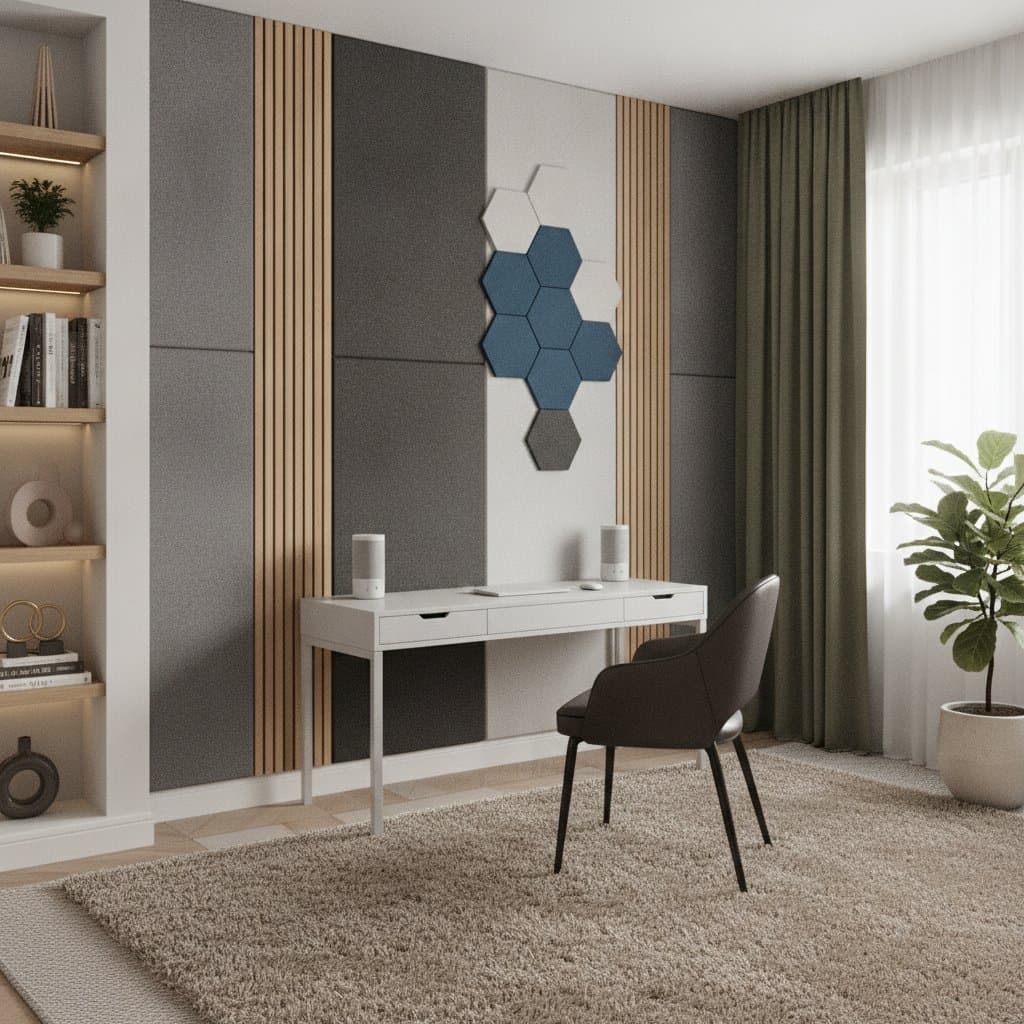
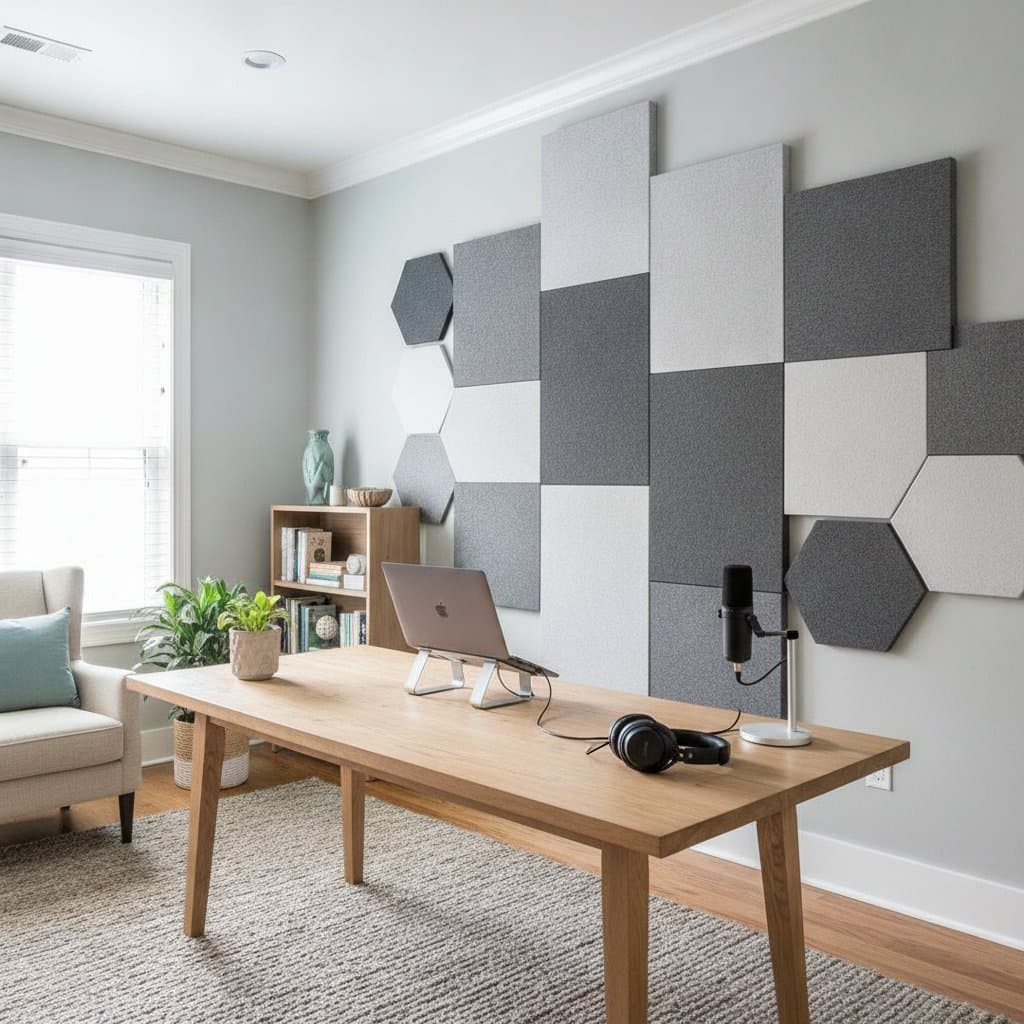
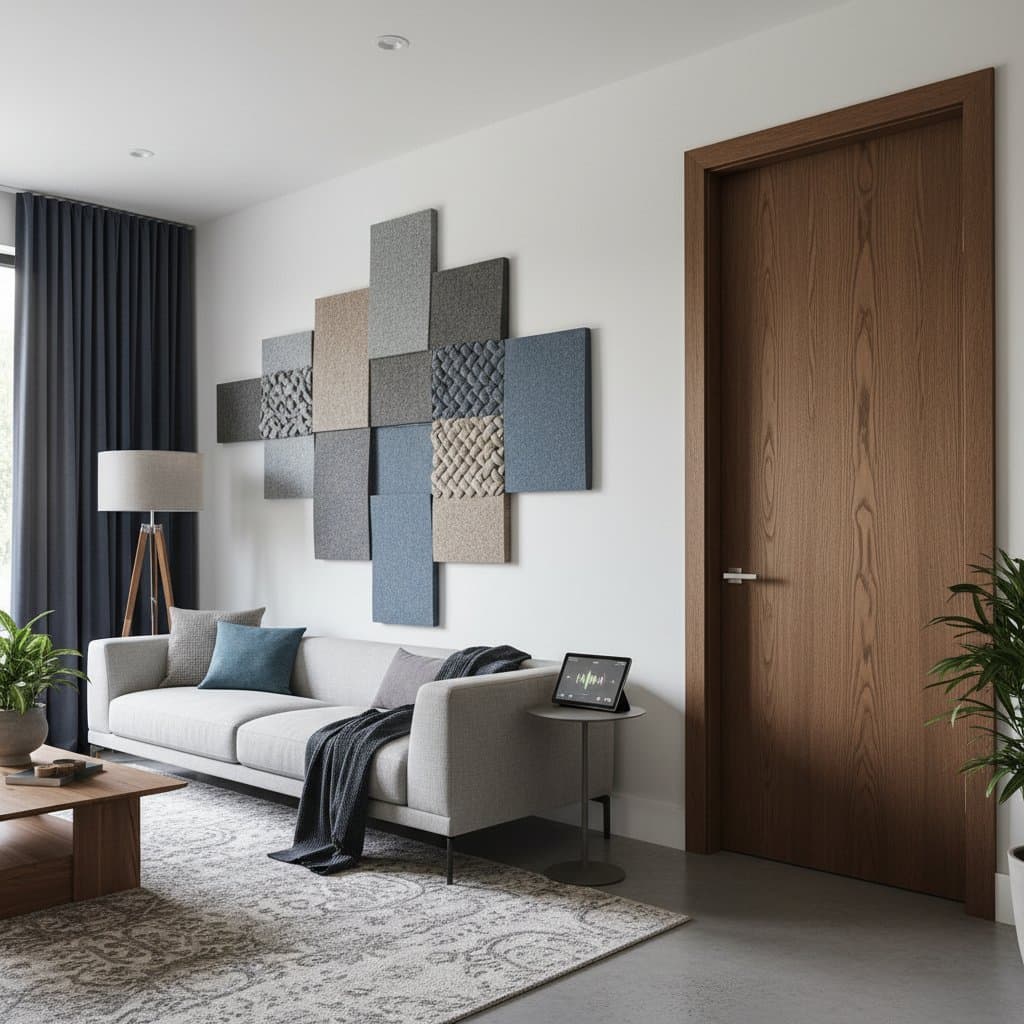
Contemporary panels feature diverse fabrics, textures, and custom prints. They effectively dampen mid- to high-frequency sounds, which contribute to perceived sharpness and reverberation. Mount panels as wall art, embed them in cabinetry, or incorporate them into headboards for seamless integration.
Cost estimates:
- DIY options using felt or fabric: $40 to $100 per panel
- Premium designer panels: $150 to $400 per panel
Begin placement on opposing walls to evenly distribute absorption. In expansive, open layouts, suspend panels from ceilings to reduce sound bounce without compromising spatial flow.
Ceiling Baffles and Acoustic Clouds
Ceiling interventions rank among the most impactful for taming large areas. Suspended baffles or cloud-like structures intercept sound waves before reflection occurs. Such treatments suit home offices, living areas, and kitchens featuring vaulted ceilings.
Cost estimates:
- Standard tiles or baffles with installation: $6 to $15 per square foot
- Bespoke suspended arrays: $20 to $35 per square foot
These elements also attenuate HVAC noises, providing dual benefits in mechanically active zones.
Enhanced Drywall and Insulation for Sound Barriers
To prevent noise migration between rooms, consider sound-rated drywall or high-density insulation. These add substantial mass, impeding sound passage through partitions.
Cost estimates:
- Soundproof drywall sheets: $50 to $80 each
- Mineral wool insulation: $1.50 to $2.50 per square foot
Professionals recommend installation during construction or renovations. However, targeting a single partition yields significant improvements in sleeping quarters or entertainment areas.
Upgrades for Doors and Windows
Entry points like doors and windows often represent vulnerabilities in sound isolation. Hollow doors permit easy transmission; solid-core alternatives can halve noise penetration.
Cost estimates:
- Solid-core interior doors: $150 to $400 per unit
- Sound-rated window replacements: $800 to $1,200 per unit
For budget constraints, apply weatherstripping and perimeter seals. Even minor gaps allow substantial sound infiltration, so thorough sealing proves crucial.
Sound-Mitigating Flooring Options
Rigid surfaces such as tile, stone, or engineered wood amplify reflections and conduct impact noises. Layer underlayments or deploy area rugs to dampen vibrations and footfall.
Cost estimates:
- Underlayment for laminate or vinyl: $0.75 to $2 per square foot
- Dense carpet underpadding: $1.50 to $3 per square foot
During flooring renewals, select underlayments with a sound transmission class (STC) rating of 50 or higher. This threshold benefits multi-story dwellings or apartment settings.
Key Factors: Budget, Safety, and Long-Term Value
Financial Planning
Acoustic enhancements vary widely in expense based on scope and materials.
- Entry-level DIY projects: Panels, rugs, and seals total $300 to $1,000
- Moderate interventions: Door replacements, underlayments, and targeted walls range from $2,000 to $5,000
- Comprehensive systems: Full drywall, window, and ceiling upgrades span $8,000 to $20,000
While direct resale boosts remain limited, enhanced quietude elevates perceived luxury. Properties with superior acoustics often appeal more to discerning buyers, as noted by real estate professionals.
Adhering to Safety Standards
Consult local regulations prior to altering walls or ceilings. Certain insulations demand reinforced fixtures due to weight. Deactivate power sources and engage certified electricians for work near wiring.
Prioritize fire-rated materials over inexpensive foams. Opt for Class A certified products, which undergo rigorous testing for indoor applications.
Project Duration and Minimal Disruption
Simple additions like panels or seals complete over a weekend. Extensive efforts, such as drywall or insulation work, extend one to two weeks, contingent on scale and labor.
Schedule to restrict room access during these periods, minimizing household inconvenience.
Emerging Trends in Acoustic Comfort
Advancements in acoustic engineering emphasize eco-friendly and intelligent designs. Recycled PET felts and cork blends deliver robust performance alongside sustainability. Smart panels now incorporate electronics for dynamic noise adjustment, such as generating counter-waves to neutralize disturbances.
Future offerings will further blend form and function. Expect upholstered partitions, adaptable ceiling modules, and decorative dividers to normalize acoustic optimization in everyday interiors.