Antimicrobial Surfaces: Advancing Kitchen Hygiene
Clean kitchens support efficient cooking and family health. Antimicrobial surfaces provide an active defense against contaminants, reducing the need for constant manual cleaning. These materials integrate protective agents that inhibit bacterial growth, transforming standard countertops into reliable hygiene allies.
The Importance of Antimicrobial Protection
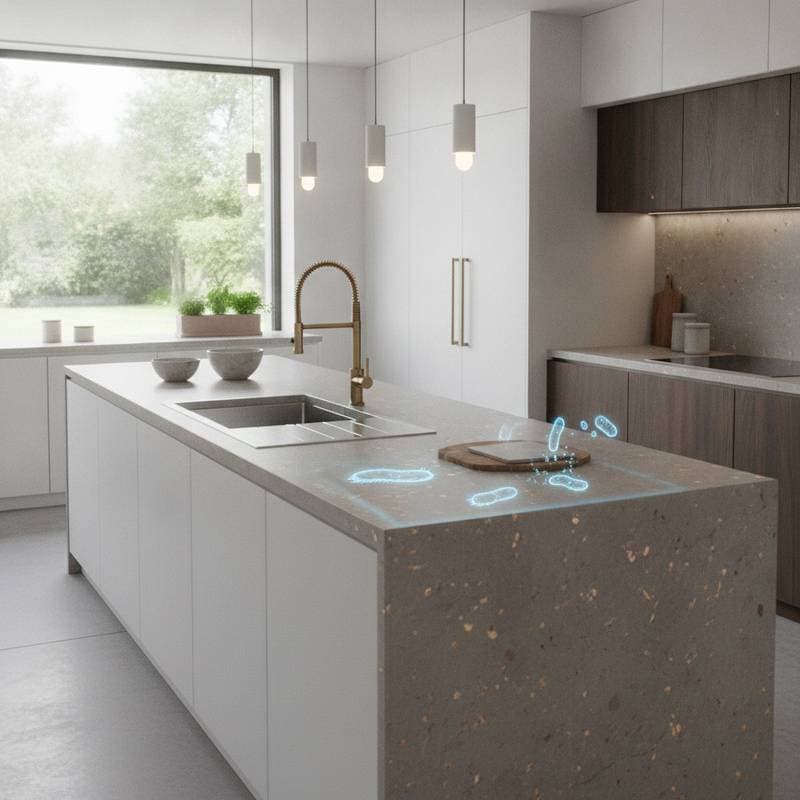
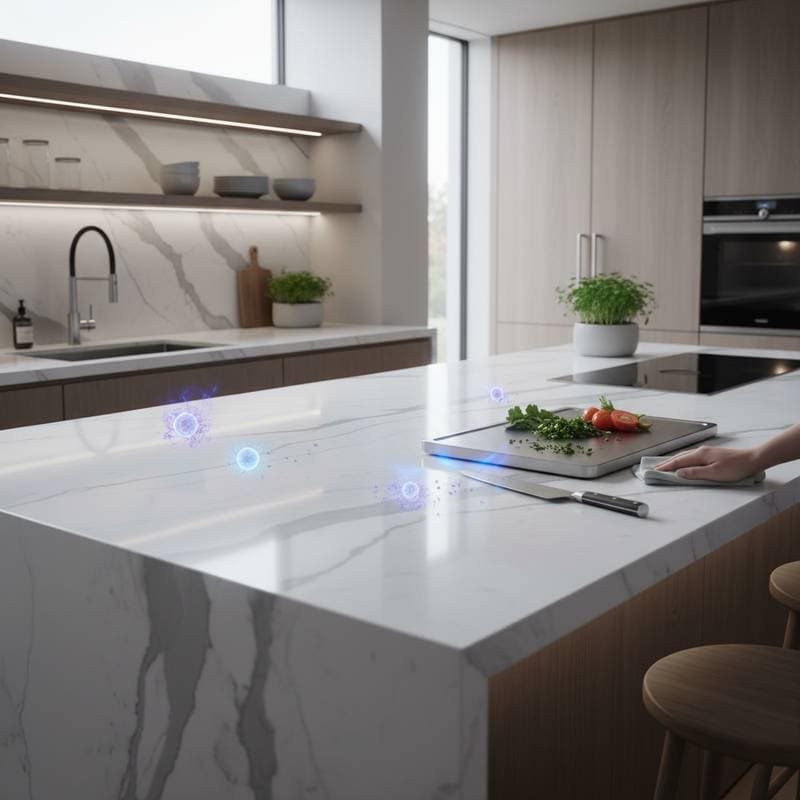
Antimicrobial surfaces resist the proliferation of bacteria, mold, and mildew through embedded agents that target microbes upon contact. For instance, placing a cutting board used for raw meat on such a surface limits bacterial transfer. This feature adds a proactive layer to traditional cleaning methods, benefiting households with frequent meal preparation or guests.
In high-use environments, these surfaces minimize health risks from cross-contamination. They promote confidence in kitchen spaces, particularly for families or those with compromised immune systems. The result is a more sanitary area with reduced reliance on chemical disinfectants.
Origins and Adaptation for Homes
Antimicrobial technology originated in healthcare settings, where it protects operating rooms and equipment from infections. Now, manufacturers apply similar principles to residential materials such as quartz, laminate, and stainless steel. This adaptation brings hospital-grade hygiene to everyday use without compromising design versatility.
Early introductions in design showcased seamless integration, yielding surfaces that appear conventional yet perform exceptionally. Homeowners gain both visual appeal and functional durability, aligning with modern expectations for practical innovation.
Mechanism of Antimicrobial Action
These surfaces incorporate additives like silver ions or copper compounds during production. These elements disrupt microbial cell structures, preventing reproduction and colony formation. Infused at the molecular level, the protection endures without fading from regular use or washing.
Silver ions, for example, penetrate bacterial walls to inhibit metabolic processes. This process addresses not only visible stains but also odor sources and potential pathogens. The outcome is a countertop that maintains hygiene over time, supporting overall kitchen safety.
Selecting Suitable Countertop Materials
Various materials suit different preferences and budgets. Consider factors like durability, aesthetics, and installation ease when choosing.
Quartz Countertops
Quartz offers strength and a premium finish, with many brands providing antimicrobial variants. These maintain the same veined patterns as standard quartz while adding microbial resistance. Expect mid-to-high pricing based on size and customization.
Solid Surface Materials
Seamless and customizable, solid surfaces from brands like Corian include antimicrobial formulations. They repair easily with sanding and suit contemporary designs. Mid-range costs make them viable for most renovations.
Laminate Countertops
Affordable and versatile, modern laminates feature antimicrobial layers for bacterial resistance. Ideal for budget updates or rentals, they mimic higher-end looks at lower expense. Installation requires minimal tools, enhancing accessibility.
Stainless Steel and Copper
Stainless steel inherently repels bacteria, common in commercial settings. Copper provides natural antimicrobial properties, developing a patina that enhances character. Both demand higher investment but deliver longevity and style.
Ceramic and Porcelain Slabs
These heat-tolerant options now include antimicrobial treatments. They replicate natural stone appearances with reduced porosity. Suitable for expansive installations, they balance maintenance with visual impact.
Affordable Enhancements for Existing Kitchens
Full replacements may not suit every situation. Targeted additions introduce antimicrobial benefits economically.
Protective Coatings
Apply food-safe sprays or films to current surfaces, including handles and appliances. These create a barrier lasting months, available at home improvement retailers.
Adhesive Films
Self-adhesive sheets with embedded agents cover high-contact zones like backsplashes. Removable designs accommodate temporary use, such as in leased properties.
Infused Accessories
Incorporate copper trays or silver-lined mats for prep areas. These items elevate hygiene in specific tasks without major alterations.
Routine Maintenance Practices
Combine materials with prompt spill removal and mild cleaners. Avoid abrasives to preserve integrity, ensuring optimal performance.
Case Studies in Application
In a family kitchen renovation, antimicrobial quartz replaced worn surfaces, paired with antimicrobial hardware. The update reduced cleaning time and contamination concerns, allowing focus on shared activities. Similar projects demonstrate measurable improvements in usability and satisfaction.
Blending Science with Design Aesthetics
Antimicrobial features extend beyond function to influence texture and color choices. Designers select from matte finishes to intricate patterns, ensuring hygiene aligns with personal style. This fusion creates environments that feel intuitive and secure.
Environmental and Health Benefits
These surfaces reduce chemical cleaner use, lowering household toxin exposure and waste. Seek products with recycled content or low-VOC components for enhanced sustainability. The dual focus on ecology and hygiene supports long-term wellness.
Extending Protection Across Kitchen Elements
Incorporate antimicrobial properties in complementary areas for comprehensive coverage.
- Hardware: Copper pulls resist microbial buildup on frequently touched items.
- Backsplashes: Glazed tiles prevent adhesion in splash zones.
- Appliances: Models with treated panels minimize surface germs.
- Sinks: Composite basins facilitate quick sanitation.
- Flooring: Treated vinyl withstands traffic and moisture.
This layered approach fortifies the entire space against contaminants.
Emerging Trends in Kitchen Surfaces
Advancements promise broader accessibility, with expanded options in affordability and variety. Future integrations may include self-cleaning fabrics or adaptive materials. Homeowners benefit from evolving choices that prioritize health alongside design.
Everyday Care for Lasting Performance
Non-porous natures prevent absorption, simplifying upkeep with soap and water. Opt for natural solutions like diluted vinegar for eco-conscious routines. Families with children or pets appreciate the resilience against messes, fostering a consistently fresh atmosphere.
Steps to Implement Antimicrobial Upgrades
Evaluate current setup by noting usage patterns and problem areas. Prioritize based on budget: start with accessories or progress to full surfaces. Consult professionals for installations to maximize effectiveness. These enhancements deliver enduring value, merging protection with practical beauty for healthier homes.