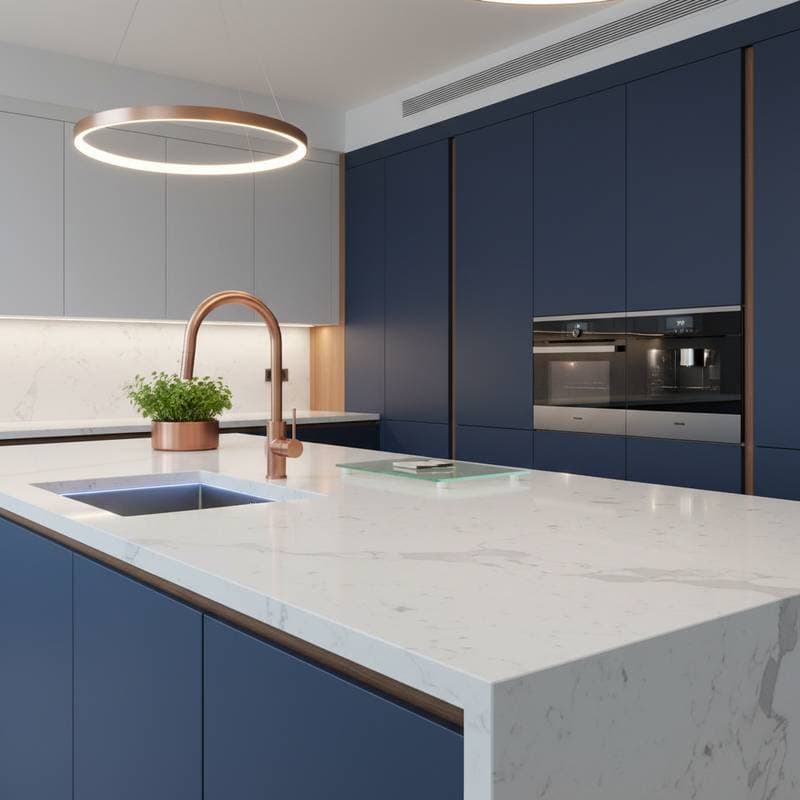
Antimicrobial Surfaces: Essential for 2026 Kitchens
Homeowners wipe kitchen counters multiple times daily, yet these surfaces often harbor unseen bacteria. Meal preparation, grocery handling, and household activity deposit microbes that thrive in warm, moist environments. Antimicrobial materials address this challenge by inhibiting bacterial growth, resulting in cleaner spaces with reduced maintenance demands.
Advancements in surface technology now enable effective bacteria control without reliance on aggressive cleaners. These innovations suit full kitchen remodels or targeted updates, ensuring prolonged freshness across high-use areas.
The Importance of Antimicrobial Surfaces in Kitchens
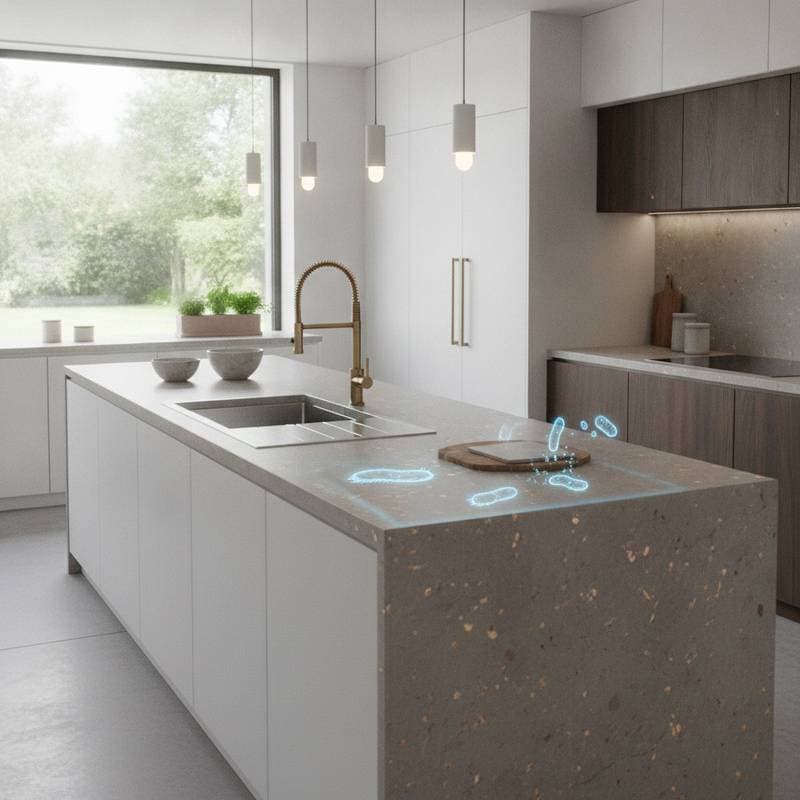
Kitchens rank among the busiest home spaces, providing optimal conditions for bacterial proliferation through heat, humidity, and organic residues. Routine cleaning removes visible dirt, but microbes persist in seams, pores, and overlooked spots. Antimicrobial surfaces mitigate this by slowing the development of bacteria, fungi, and molds, offering supplementary defense that extends cleanliness intervals.
These materials complement standard hygiene practices rather than replace them. By integrating protective elements, kitchens achieve enhanced sanitation with minimal additional effort.
Mechanisms of Antimicrobial Technology
Antimicrobial surfaces incorporate agents or treatments that disrupt microbial processes, preventing adhesion, reproduction, or survival. This proactive approach targets common kitchen pathogens at the source.
Key methods include:
- Silver ions, which penetrate and dismantle bacterial cell structures to halt multiplication.
- Copper integrations, which eliminate microbes through direct contact and oxidative action.
- Photocatalytic layers, which activate under light exposure to decompose organic contaminants.
- Specialized polymers, which form barriers that deter microbial attachment and proliferation.
Producers embed these features into countertops, cabinetry, hardware, and fixtures, yielding kitchens that resist contamination more effectively.
Strategic Placement of Antimicrobial Surfaces
Prioritize antimicrobial treatments in zones prone to frequent contact and dampness to maximize impact. Selective application yields significant hygiene gains without overhauling every element.
Recommended focus areas include:
- Countertops: Primary sites for bacteria transfer from uncooked proteins, vegetables, and skin.
- Sinks and faucets: Persistent wetness fosters mold and bacterial colonies.
- Cabinet hardware: Daily handling by multiple users spreads contaminants.
- Appliance interfaces: Handles on refrigerators, controls on microwaves, and dials on ovens accumulate residues.
- Backsplashes and panels: These capture splatters and vapors, benefiting from grease-repelling, microbe-resistant compositions.
Leading Antimicrobial Countertop Choices
Countertops serve as the cornerstone for antimicrobial upgrades, given their central role in food handling. The following selections highlight market frontrunners, balancing aesthetics, functionality, and cost.
Quartz
Engineered quartz excels in durability and stain resistance, with recent formulations incorporating antimicrobial enhancers. Its dense, nonporous nature blocks bacterial penetration, while additives provide ongoing suppression.
- Cost range: $60 to $120 per square foot installed
- Maintenance: Wipe with soap and water; no periodic sealing needed
- Ideal for: High-volume kitchens requiring robust, effortless care
Solid Surface Materials (Acrylic or Composite)
Materials like those in Corian lines integrate antimicrobial particles during production, creating seamless installs that eliminate bacterial hideouts. Repairability adds to their appeal for long-term use.
- Cost range: $45 to $90 per square foot installed
- Maintenance: Clean easily; sand out light scratches
- Ideal for: Modern setups prioritizing seamless, sanitary finishes
Copper or Copper Alloys
Copper's inherent properties destroy bacteria upon exposure, with alloys extending this benefit to practical applications. A natural patina emerges over time, which protective sealants can mitigate if desired.
- Cost range: $100 to $150 per square foot installed
- Maintenance: Polish periodically for shine retention
- Ideal for: Industrial or vintage designs where aging enhances visual interest
Stainless Steel
This metal inherently repels microbes and withstands sanitization, with enhanced variants featuring textures that amplify germ-killing efficiency.
- Cost range: $75 to $140 per square foot installed
- Maintenance: Wipe regularly to avoid smudges
- Ideal for: Sleek, professional environments
Ceramic and Porcelain Slabs
Modern slabs receive antimicrobial glazes during firing, combining resilience against heat and scratches with microbial resistance.
- Cost range: $70 to $130 per square foot installed
- Maintenance: Use mild detergent for routine care
- Ideal for: Contemporary spaces blending form and function
Applications Beyond Countertops
Antimicrobial enhancements extend to various kitchen components, amplifying overall cleanliness.
Flooring
Coated vinyl or ceramic options deter mold and retain freshness in pet-friendly or active homes.
Cabinets and Fixtures
Bacterial-resistant finishes on cabinetry reduce fingerprints, while coated pulls offer simple, impactful swaps.
Sinks and Dispensing Systems
Antimicrobial-treated composites or steels pair with sensor-based faucets to limit touch-related spread.
Built-in Appliances
Protective gaskets and grips on units like refrigerators curb cross-contamination in routine operations.
Key Factors for Informed Purchases
Antimicrobial options enhance hygiene but demand realistic expectations alongside proper upkeep. Evaluate these aspects to align selections with needs.
Budget Implications
Premium features increase costs by 10 to 25 percent over conventional alternatives. A standard laminate project at $2,500 might escalate to $3,200 with quartz upgrades, offset by time savings in cleaning.
Care Protocols
Most require basic wiping, though metals like copper benefit from gentle polishing. Review guidelines to avoid coating degradation from abrasives.
Longevity and Resilience
Embedded protections endure without fading, but surface integrity matters; employ trivets and soft cloths to sustain efficacy.
Verification Standards
Seek NSF or EPA endorsements to confirm tested antimicrobial efficacy.
Sustainability Aspects
Opt for low-emission, ethically sourced products with eco-certifications for health-aligned choices.
Installation Expertise
Professional fitting ensures tight seals; amateur efforts risk moisture traps that undermine benefits.
Project Timelines and Minimal Disruption
Countertop replacements typically span three to five days, covering demo, custom cutting, and setup. Hardware or finish updates fit into one day, while full remodels integrate these with utility adjustments for efficiency.
Value of Antimicrobial Investments
These upgrades enhance marketability through superior hygiene, appealing to discerning buyers. For long-term residents, the core advantages lie in streamlined routines and assured sanitation.
Steps to Implement Antimicrobial Upgrades
Begin by pinpointing problem zones, such as persistently damp sinks or residue-prone counters.
- Assess existing surfaces for moisture retention or degradation signs.
- Define financial parameters covering materials and labor.
- Review warranties and lab validations from trusted suppliers.
- Engage fabricators or designers for layout-specific advice.
- Schedule work alongside broader renovations to streamline progress.
Such integrations yield kitchens that maintain cleanliness effortlessly, embodying forward-thinking hygiene and design.