2026's Leading Trend: Accessible Bathrooms for Aging in Place
Imagine entering a bathroom where safety, comfort, and ease of use define every element. The flooring resists slips, the shower includes a stable seat, and the lighting provides clear illumination without harsh glare. For numerous homeowners, such a space transitions from an optional enhancement to an essential feature. As individuals increasingly opt to remain in their residences through later years, accessible design emerges as a prudent investment.
Homeowners often face the task of balancing aesthetic appeal with long-term functionality and security. Contemporary accessible design integrates safety seamlessly with elegance, eliminating the need for compromise. Through thoughtful planning, one can develop a bathroom suited to all life stages.
This guide outlines practical steps, estimated expenses, and impactful features to achieve this balance.
Fundamental Principles of Universal Bathroom Design
Universal design focuses on spaces usable by all individuals, irrespective of age or physical ability. These principles extend beyond seniors to accommodate families with infants, visitors facing temporary limitations, and anyone seeking intuitive, efficient environments.
Key components of accessible and universal bathroom design include:
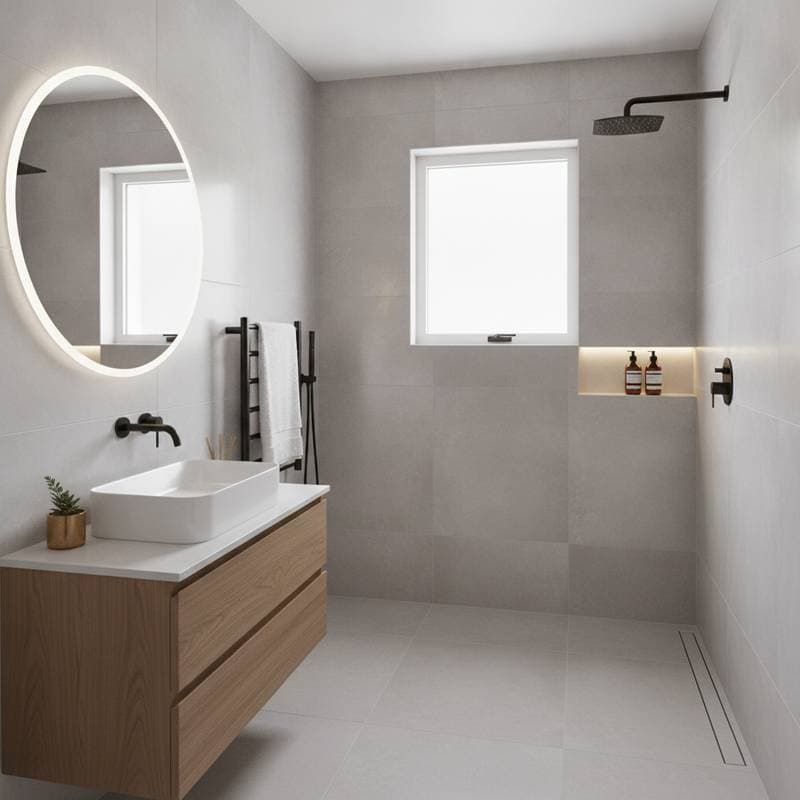
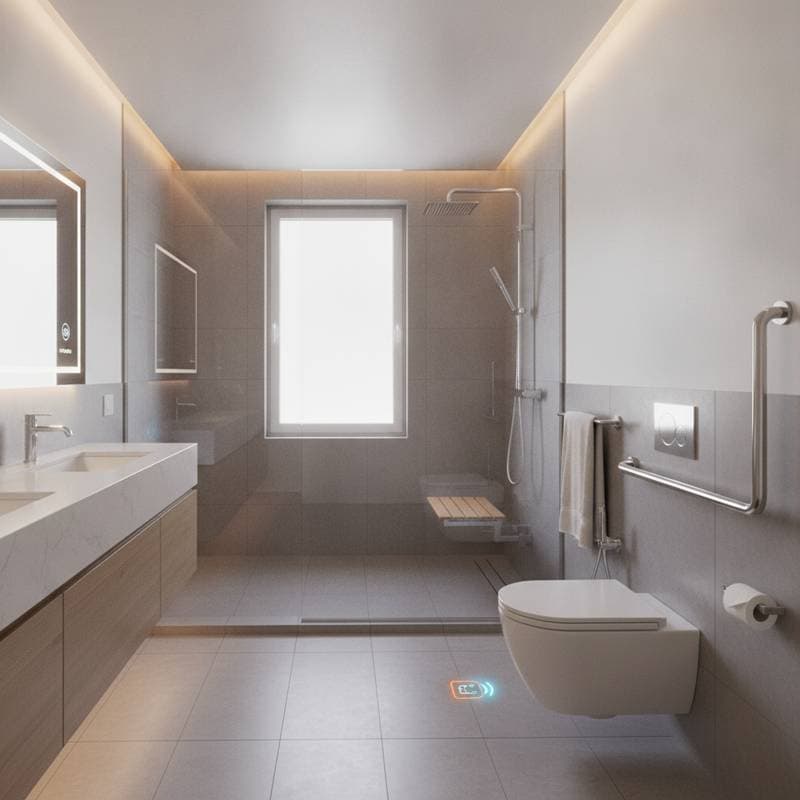
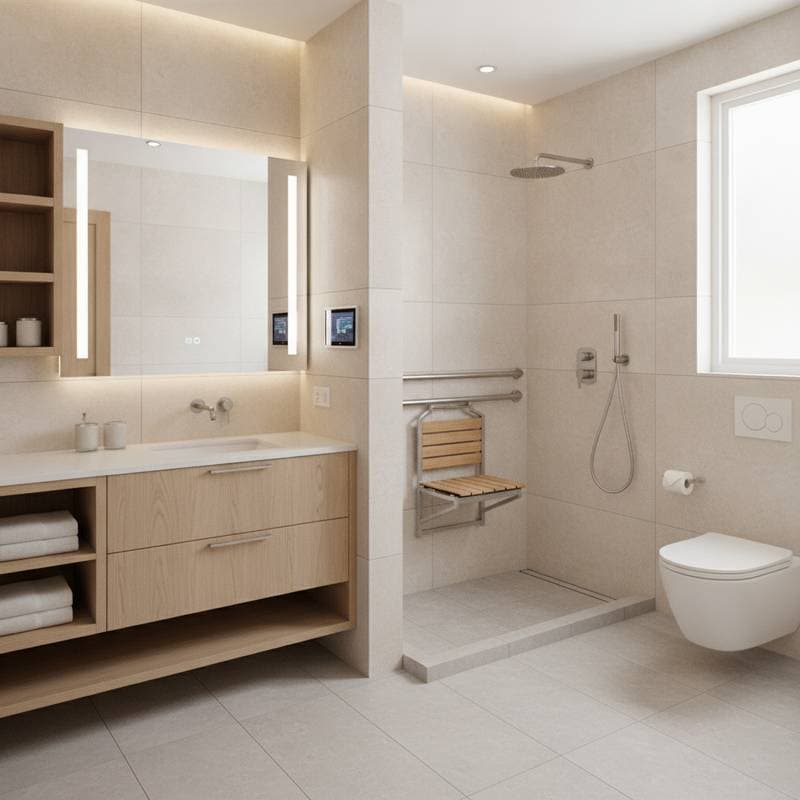
- Zero-threshold showers: These eliminate raised barriers, permitting direct entry by foot or wheelchair. They enhance safety and simplify maintenance compared to conventional setups.
- Slip-resistant flooring: Options such as textured tiles, rubber surfaces, or matte-finish vinyl significantly lower fall risks.
- Grab bars and handrails: Available in coordinating finishes, these resemble decorative towel bars or accents while delivering essential support.
- Comfort-height toilets: Positioned two to three inches above standard heights, they facilitate easier sitting and rising.
- Adjustable shower heads: Handheld units on sliding rails offer versatility for standing or seated positions.
- Lever-style faucets and handles: These require less grip strength than traditional knobs, benefiting those with arthritis or limited dexterity.
- Comprehensive lighting: Dimmable overhead lights paired with motion-activated sensors ensure optimal visibility and accessibility.
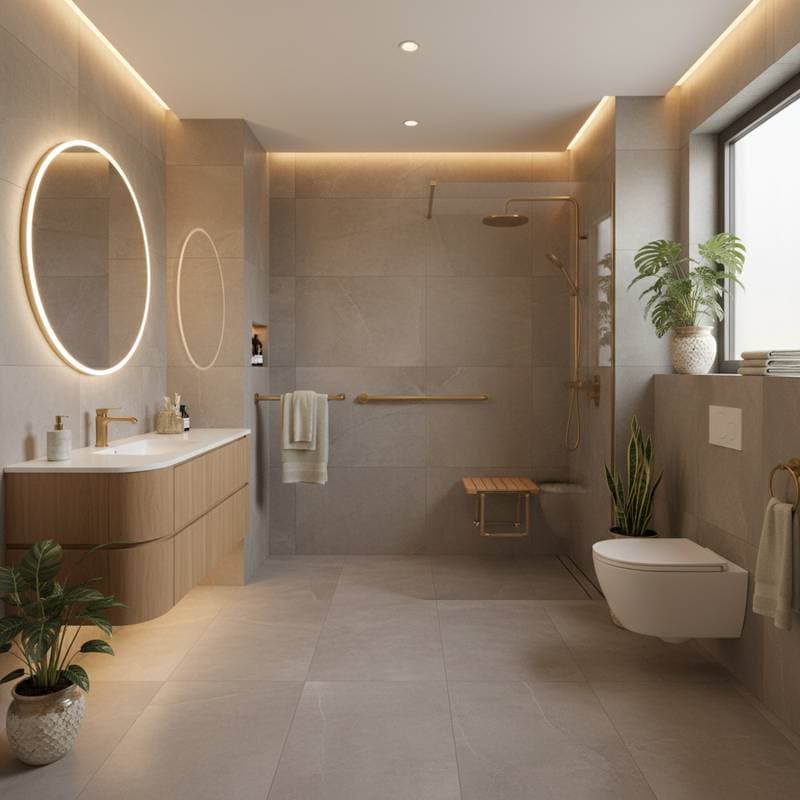
Integration of these elements maintains an inviting appearance, prioritizing harmony between utility and aesthetics.
Essential Design Considerations
An effective accessible bathroom extends beyond basic installations. It requires coordinated details that promote security and ease throughout the space.
Flooring Choices
While glossy tiles offer visual sophistication, they pose hazards when wet. Select materials with superior slip resistance, such as porcelain tiles featuring subtle textures, resilient rubber, or durable waterproof vinyl planks. Material costs range from $4 to $10 per square foot, with installation adding $5 to $8 per square foot depending on the surface preparation needed.
Shower Configurations
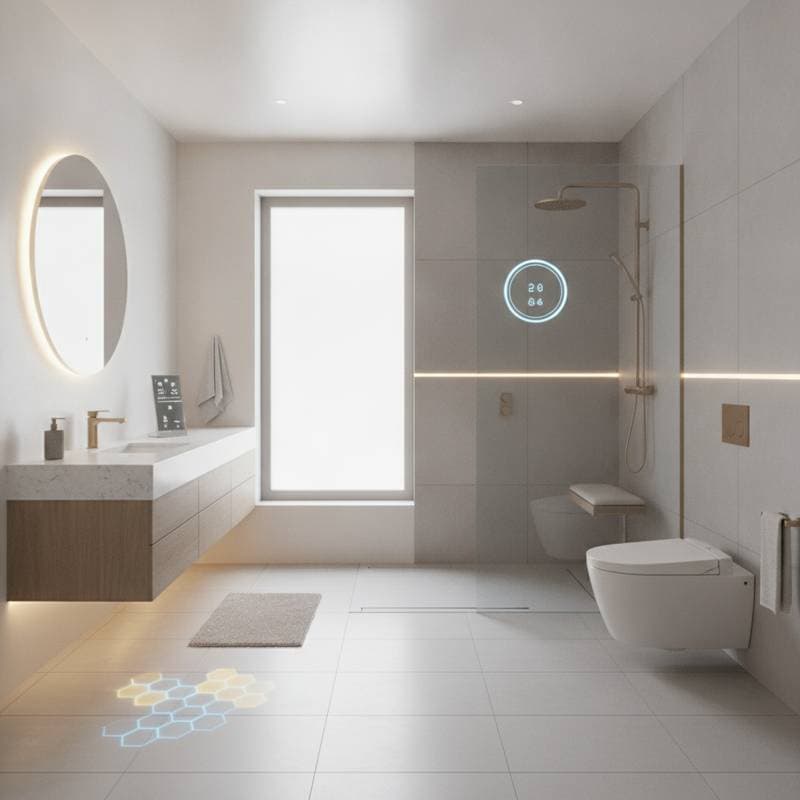
Opt for a curbless design incorporating a fixed bench to support safe bathing. Pair it with a handheld shower head mounted on an adjustable rail for user adaptability. A linear drain effectively manages water flow. Entry-level installations begin at $2,500, whereas bespoke tiled enclosures may exceed $6,000, factoring in custom sizing and premium finishes.
Toilet Selections
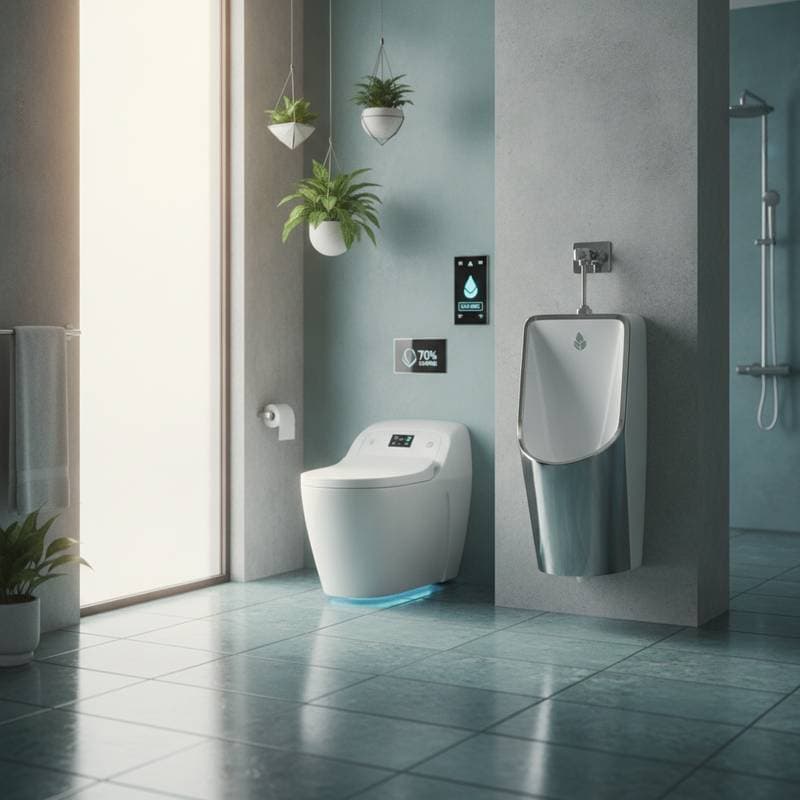
Comfort-height models, priced between $200 and $600, substantially aid mobility. For added functionality, integrate a bidet attachment with remote operation, which enhances hygiene without physical effort and costs an additional $400 to $1,000.
Sink and Vanity Options
Wall-hung sinks or vanities with open undersides allow legroom for wheelchair users. Incorporate lever-operated or sensor-based faucets to minimize physical strain. Vanity replacements typically range from $1,200 to $3,500, influenced by wood species, stone countertops, and hardware quality.
Lighting Strategies
Illumination plays a critical role in preventing accidents. Layer ambient ceiling fixtures with focused mirror task lights and low-level pathway illumination. Energy-efficient LED systems endure longer and reduce utility expenses. Full upgrades, including wiring and fixtures, generally total $800 to $2,000.
Prioritizing Safety Measures
Minor oversights can undermine accessibility efforts. Consider these precautions to maintain a secure environment:
- Secure all floor coverings to prevent shifting; favor integrated drainage solutions over loose mats.
- Maintain unobstructed walkways by limiting bulky decor or fixtures that impede movement.
- Verify grab bar specifications: Anchor them to studs capable of supporting at least 250 pounds.
- Regulate water flow with thermostatic valves to avoid scalding from sudden temperature changes.
Professional assessment proves invaluable for evaluating load-bearing capacities or plumbing modifications.
Evaluating Financial Benefits
Bathroom accessibility investments yield multiple advantages. They enable prolonged independent living, potentially offsetting assisted care expenses that average $4,000 monthly. Additionally, these enhancements broaden market appeal upon resale, attracting buyers planning for multigenerational households or accessibility needs.
Recovery rates vary by location, yet many recoup 60 to 70 percent of expenditures at sale. Beyond monetary gains, the enhanced daily security and autonomy provide enduring value.
Steps to Implement Accessible Upgrades
Developing an accessible bathroom safeguards comfort and self-reliance while representing a strategic choice. Begin with a thorough assessment of current requirements and future needs. Incremental changes, from faucet replacements to comprehensive renovations, progressively align the space with universal standards.
Engage a specialist in universal design for your project. Review portfolios of completed works and secure detailed, itemized proposals. This approach ensures your residence adapts supportively to evolving circumstances.