The Rise of All-Electric Kitchens in 2026
Homeowners often pause in their kitchens to consider whether a transition from gas to electric cooking holds value. Local regulations may restrict new gas connections, or reports of induction ranges boiling water more rapidly than gas might spark curiosity. Numerous individuals face this dilemma: does an all-electric kitchen justify the effort?
The answer affirms its worth, extending well past mere energy savings. Induction cooking alters the aesthetics, comfort, and utility of kitchen environments. The following details provide essential insights for any upcoming renovation.
Why Induction Replaces Gas
Gas stoves dominated professional cooking for years, prized for their visible flames and quick response. Induction technology now matches that responsiveness with greater accuracy and reduced energy loss.
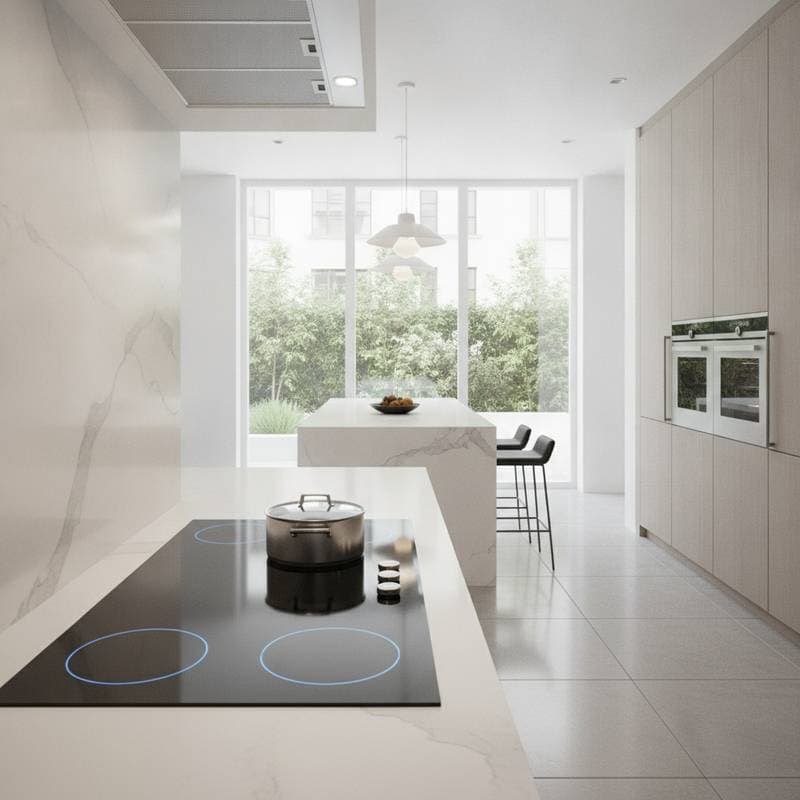
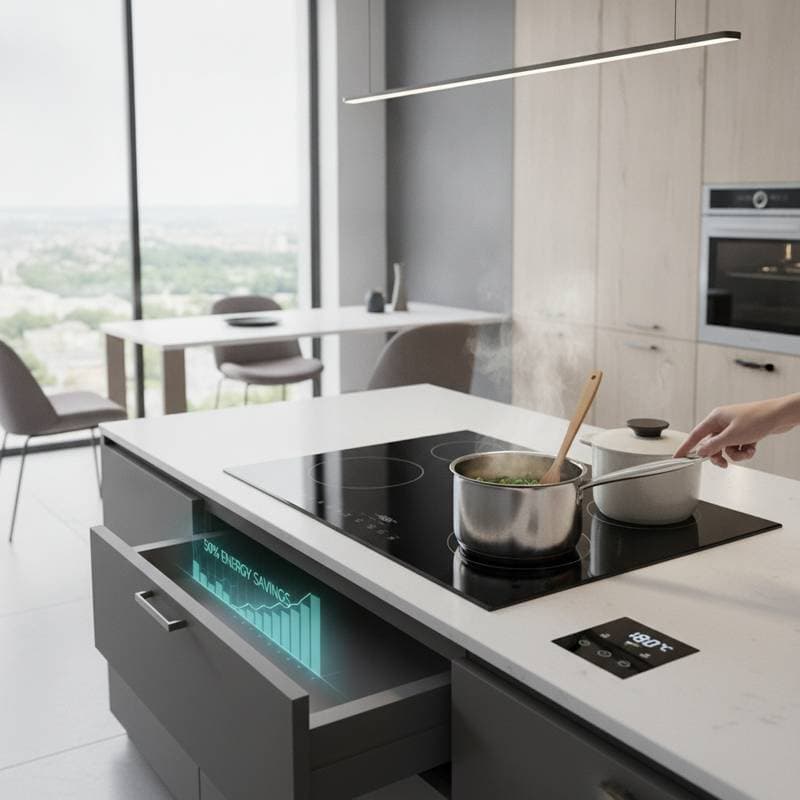
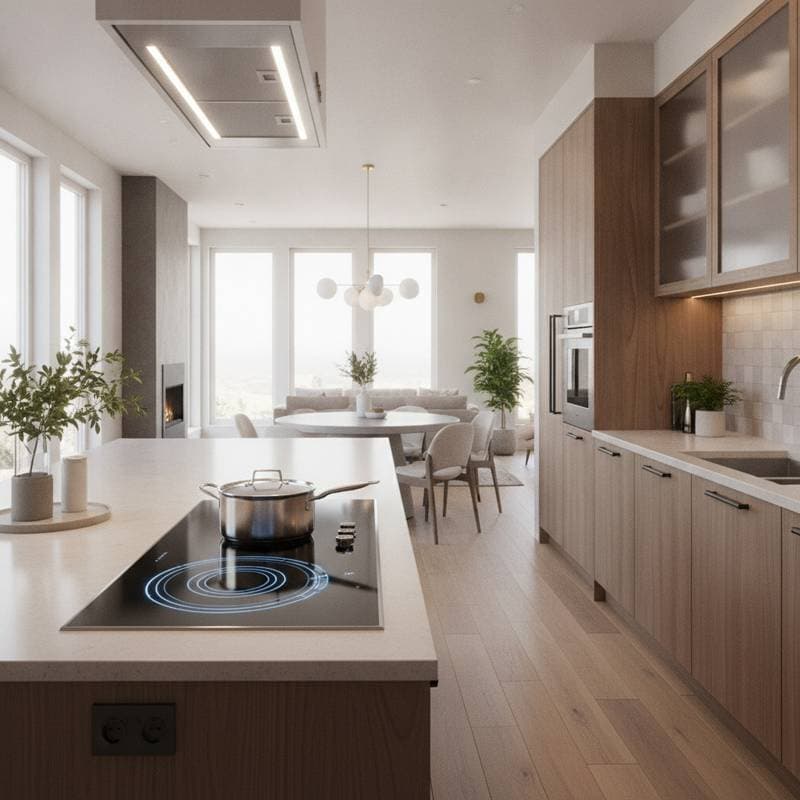
This method employs electromagnetic fields to heat cookware directly, bypassing initial burner warming. Cooking accelerates, and ambient temperatures remain lower. For instance, water boils in approximately half the duration required on gas, while the cooktop surface stays below 150 degrees Fahrenheit, minimizing burn risks around families or animals.
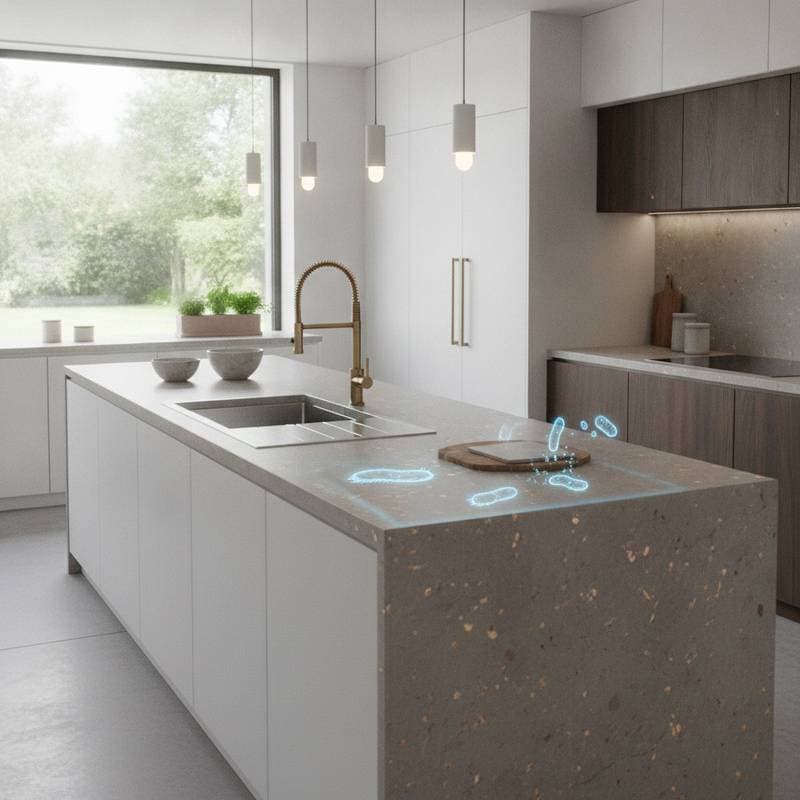
Efforts to curb indoor pollutants further favor induction. Research indicates gas combustion emits nitrogen dioxide and particulates that aggravate respiratory health. Induction produces no such byproducts, as no fuel combusts. The result includes purer indoor air, simplified maintenance, and reliable operation free from flame instability.
Costs Associated with All-Electric Transitions
Adopting an all-electric system involves initial investments, particularly if electrical infrastructure requires enhancement. Below is a practical cost overview.
- Induction range or cooktop: Ranges from $1,200 to $3,500, varying by manufacturer and capabilities such as smart controls or multiple zones.
- Electric convection oven: Typically $800 to $2,000, with models featuring self-cleaning or air-fry functions adding value.
- Electrical upgrades or panel modifications: $500 to $2,500, depending on home age and existing capacity.
- Professional installation: $300 to $800, covering connections and safety checks.
A full renovation incorporating wiring updates, ventilation tweaks, and cabinet adjustments may total $8,000 to $20,000. Over time, reduced utility expenses and minimal repairs recoup portions of this outlay. For budget-conscious starts, a portable induction burner under $150 connects to standard outlets, allowing experimentation prior to major changes.
Planning Steps for an All-Electric Kitchen Remodel
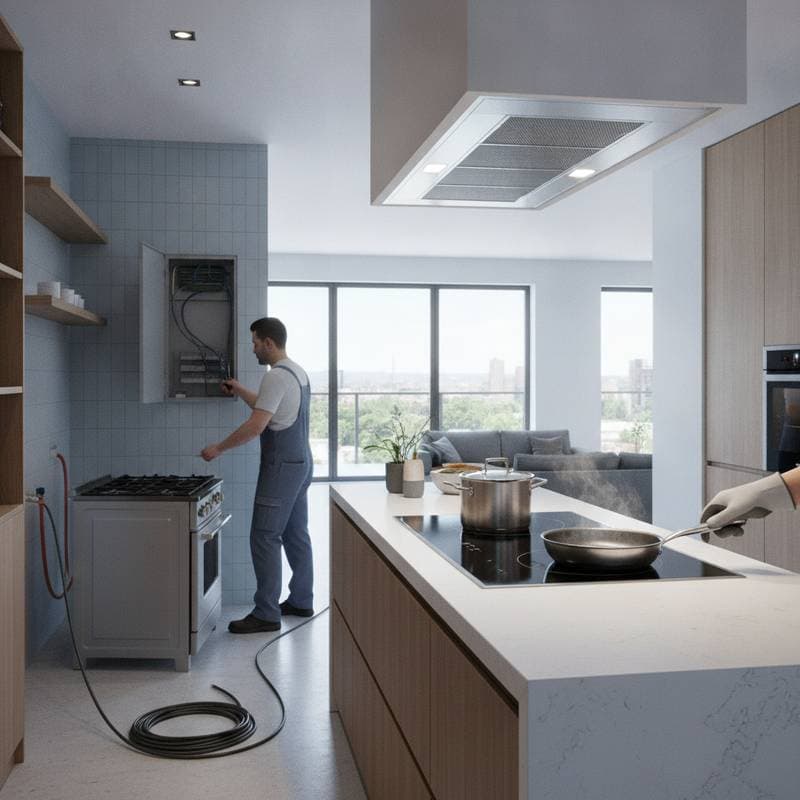
- Evaluate electrical capacity. Inspect the main service panel for sufficient amperage; induction units generally require a 240-volt dedicated circuit with at least 40 amps.
- Select compatible cookware. Only ferromagnetic materials respond to induction; test by attaching a magnet to the pan base—if it adheres strongly, compatibility is assured.
- Determine layout adjustments upfront. Induction setups enable streamlined designs, as they eliminate needs for extensive gas venting systems.
- Engage a licensed electrician. High-voltage work demands expertise to meet safety standards and building codes.
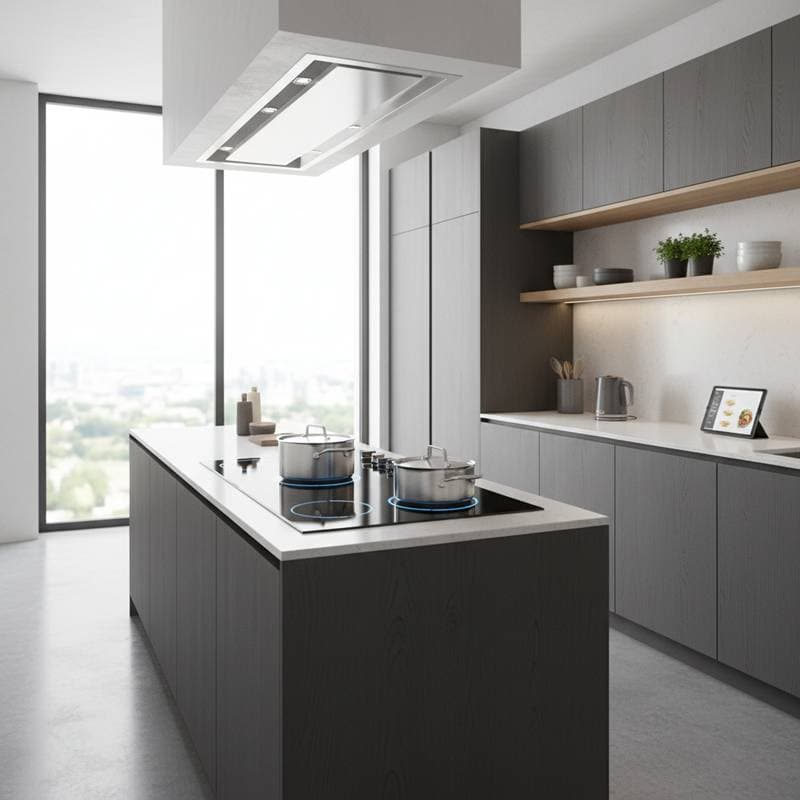
- Incorporate ventilation planning. Although gas exhaust is absent, range hoods remain vital for capturing moisture, oils, and cooking vapors.
- Incorporate future-proof elements. Install additional outlets and circuits for appliances like slow cookers, facilitating seamless expansion.
Insights from Everyday Cooking with Induction
Cooks frequently express concern that induction sacrifices precision or taste development. Experience reveals enhanced command instead. Adjustments to heat levels occur within seconds, simplifying tasks like maintaining delicate simmers for sauces or precise melting for chocolate.
The smooth glass tops facilitate effortless cleaning, as spills evaporate without adhering since the surface heats only through contact. Users value the subdued hum of operation, absent the gas ignition clicks or burner noise. After adaptation, traditional gas methods appear less refined and more cumbersome.
Executing Your All-Electric Kitchen Upgrade
All-electric kitchens have transitioned from conceptual to practical realities. They promote health, efficiency, and intelligence in daily use. Begin modestly with a single induction unit or pursue comprehensive installation to cut emissions, trim upkeep expenses, and secure a hygienic cooking area.
Consult a certified electrician and experienced designer to verify infrastructure readiness. This evolution transcends trends; it constructs a superior-performing kitchen equipped for evolving culinary demands and enduring family needs.