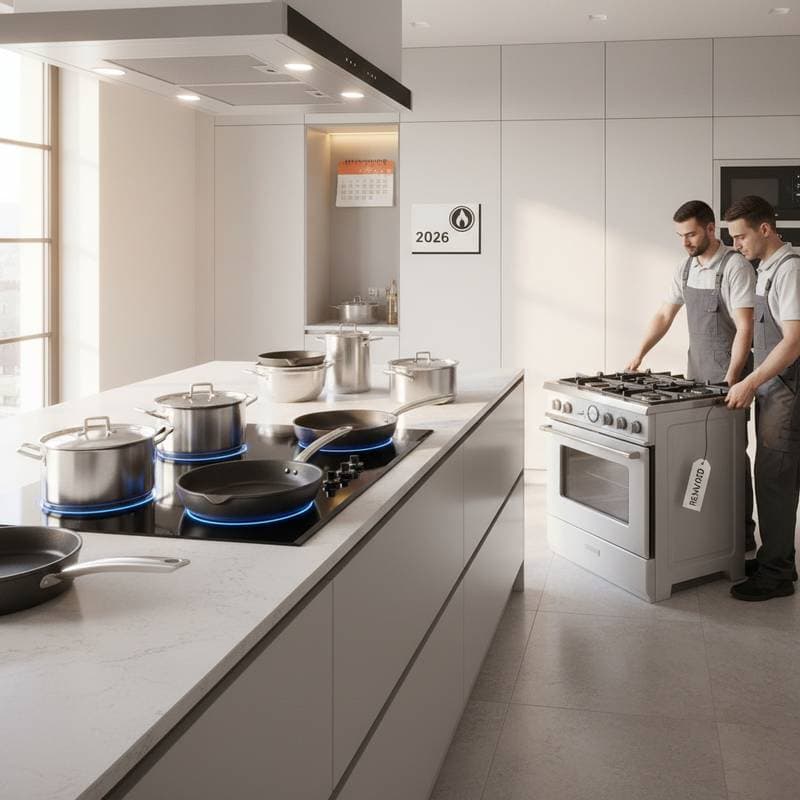
Why Induction Cooktops Outperform Gas Following the 2026 Ban
Home cooks appreciate the responsive flame of gas stoves, yet restrictions on gas appliances loom in many regions. Local codes may already prohibit new gas connections, and retailers might indicate that replacements will become scarce. If uncertainty surrounds the future of your kitchen setup, rest assured that a superior option exists: induction cooking offers enhanced cleanliness, speed, and cost-effectiveness.
Induction technology prepares homes for this transition seamlessly. The following sections explain its mechanics, financial implications, and practical advantages, along with guidance for a smooth upgrade.
Understanding Induction Cooking Mechanics
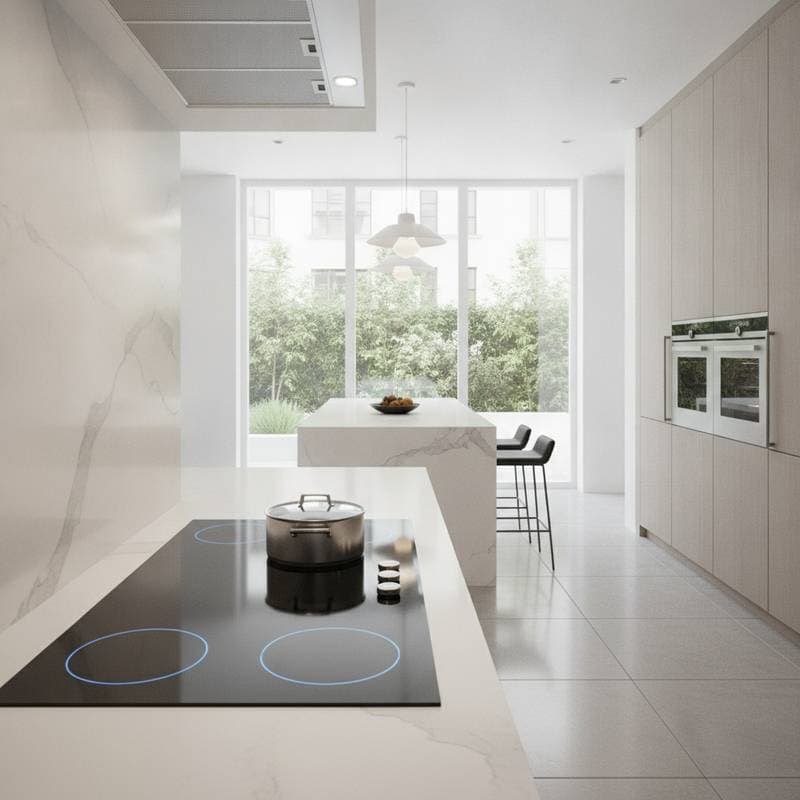
Conventional electric cooktops rely on heating an element that then warms the cookware. Induction systems bypass this inefficiency. Beneath each cooking zone, a copper coil generates a magnetic field upon activation. Placement of a ferromagnetic pan on the surface induces the field to agitate iron particles within the pan, producing heat directly in the vessel.
This direct heating method keeps the cooktop surface relatively cool. Adjacent areas remain safe to touch, and spills evaporate without burning. Removing the pan disrupts the magnetic field immediately, halting heat production. Such precision and safety features prove invaluable for households with young children or pets.
Evaluating the Costs of Transition
Appliance Acquisition Expenses
Induction range prices have declined significantly in recent years. Basic models begin at $900 to $1,200, while mid-tier options span $1,500 to $2,500. High-end units with advanced features and multiple zones exceed $4,000. For compact spaces or rental properties, portable induction burners range from $60 to $150 and connect to standard outlets.
When replacing an aging gas range, the price gap narrows compared to premium gas models. Long-term savings from lower energy consumption and minimal upkeep often offset initial investments, yielding comparable overall expenses.
Electrical Infrastructure Modifications
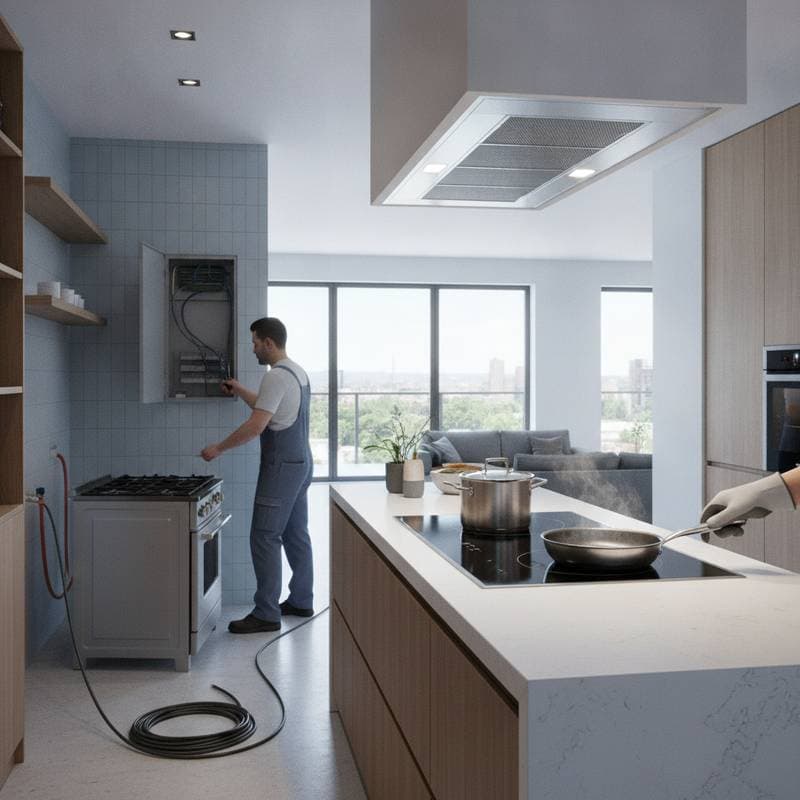
Full-sized induction ranges demand a 240-volt outlet supported by a 40- or 50-amp circuit. Kitchens with existing electric wiring facilitate straightforward installation. Properties limited to gas service require new circuitry from the electrical panel, with costs typically between $250 and $750 based on cable length and configuration.
In older structures with constrained capacity, panel enhancements may add $1,000 to $2,500. Engage a certified electrician to assess your system and propose secure solutions tailored to your needs.
Ensuring Cookware Compatibility
Induction requires cookware with magnetic properties. Materials such as stainless steel, cast iron, and enameled cast iron perform effectively, whereas pure aluminum, copper, or glass fail unless equipped with a magnetic layer. Verify compatibility by attracting a magnet to the pan base; strong adhesion confirms suitability.
For necessary replacements, an essential induction-compatible set for daily tasks costs $100 to $300. Proceed incrementally: acquire a skillet and saucepan initially, then build your collection based on frequent usage patterns.
Induction Versus Alternative Electric Cooktops
When considering radiant or coil electric alternatives, induction distinguishes itself through key attributes:
- Heat Adjustment Speed: Induction responds instantaneously, unlike radiant surfaces that delay by seconds.
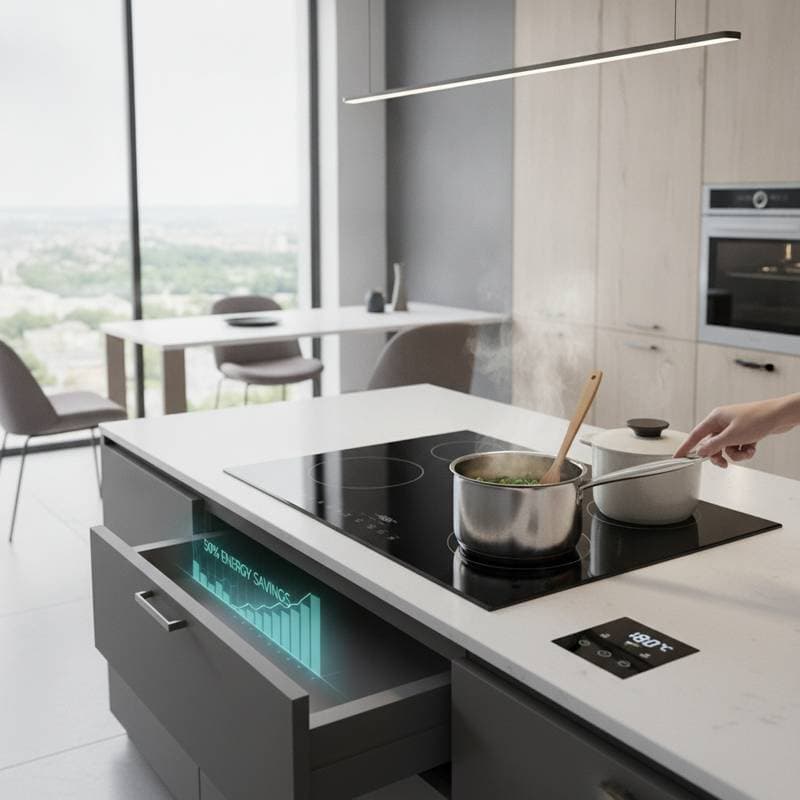
- Energy Utilization: Induction achieves equivalent results with reduced electricity.
- Safety Profile: Cooler surfaces minimize burn hazards.
- Upkeep Simplicity: Smooth tops clean effortlessly with a damp cloth.
- Economic Considerations: Entry-level radiant units cost less upfront, yet induction recoups through sustained energy efficiencies.
Dedicated home chefs find induction mirrors gas performance while eliminating its environmental and health drawbacks.
Environmental Impacts and Regional Considerations
Induction shines in areas with renewable-heavy electricity grids, slashing emissions compared to gas combustion. Coal-dependent regions experience smaller initial gains, though renewable integration by utilities amplifies benefits over time.
Numerous local governments provide rebates or incentives for electric conversions, valued at $100 to $500 per installation. Consult utility providers or energy programs for eligibility details prior to purchase.
Building regulations increasingly mandate electric-compatible outlets in new constructions. During renovations, incorporate such preparations proactively, even if retaining gas temporarily.
Addressing Frequent Misconceptions
Audible Operation
Certain induction models produce a subtle hum at peak settings due to magnetic vibrations. This noise diminishes with thicker cookware. Select heavier pots to mitigate sounds during intensive cooking.
Adaptation Period
Induction's rapid heat changes demand minor adjustments from gas habits. Experiment with reduced settings initially to gauge cooking times accurately. Proficiency develops within a few sessions.
Dependence on Power Supply
Electricity dependency poses challenges in outage-prone locales. Maintain a compact generator or outdoor grill as contingency options for essential meal preparation.
Surface Preservation
Opt for cookware with flat bases and lift rather than drag vessels across the glass. Protective silicone liners or baking parchment beneath pots safeguard against scratches during vigorous use.
Steps to Implement Your Induction Upgrade
Begin by inventorying your current cookware and electrical setup. Schedule an electrician consultation to identify required modifications and estimate expenses. Research models that align with your cooking style, prioritizing features like zone flexibility and power levels.
Apply for available incentives to offset costs, then select compatible pots as needed. Installation typically completes in a day, ushering in efficient, eco-friendly cooking. This shift not only complies with impending regulations but elevates daily meal preparation with precision and ease.