2025 Trends for Aging-Friendly Universal Bathrooms
Homeowners consider how their spaces will serve them over the next several decades. Bathroom design highlights this shift. As a contractor who remodels homes for individuals planning to remain in place, I observe that aging-friendly designs avoid clinical appearances. Current universal bathroom trends integrate safety, accessibility, and style. These elements support independence while preserving comfort and dignity.
Decisions in a universal bathroom remodel safeguard health and finances. Inadequate planning frequently results in expensive corrections or hazardous conditions. A strategic approach mitigates such risks from the outset.
Why Universal Bathroom Design Matters
A universal bathroom accommodates individuals of any age or ability. It adapts to evolving needs without frequent alterations. Essential features include wider clearances, straightforward entry, slip-resistant surfaces, and intuitive elements that avert accidents.
Homeowners often delay changes until mobility issues arise. Retrofitting proves more challenging and costly. Incorporating universal elements during a remodel sustains functionality and comfort for years.
1. Zero-Threshold Showers as the New Standard
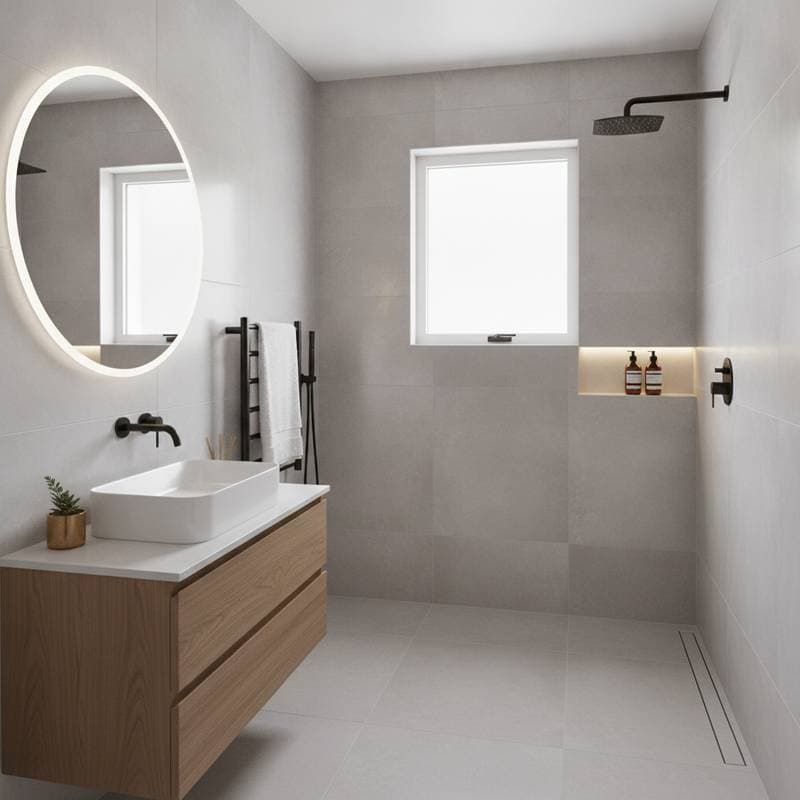
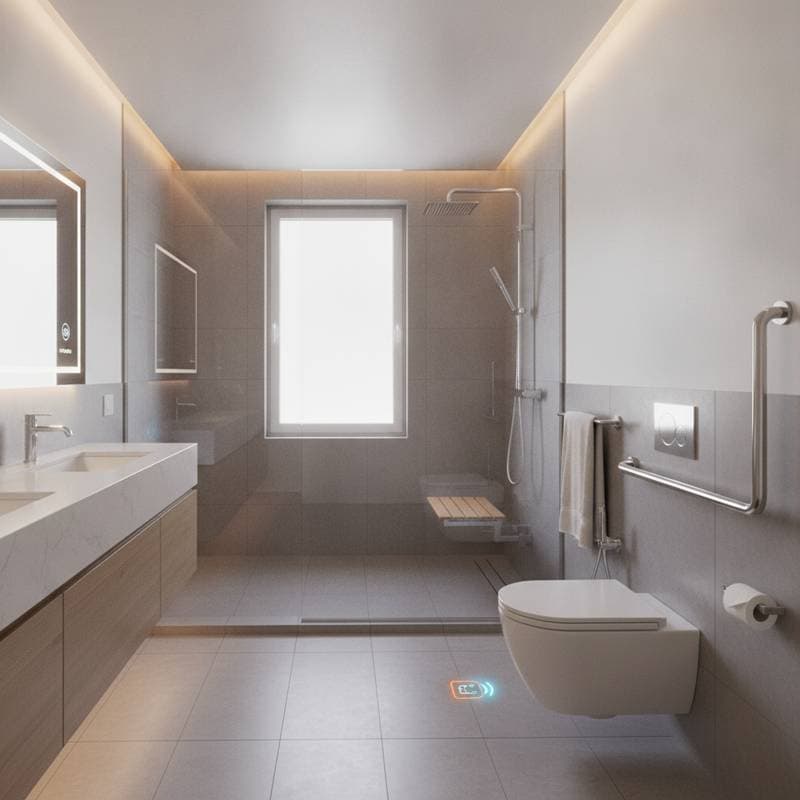
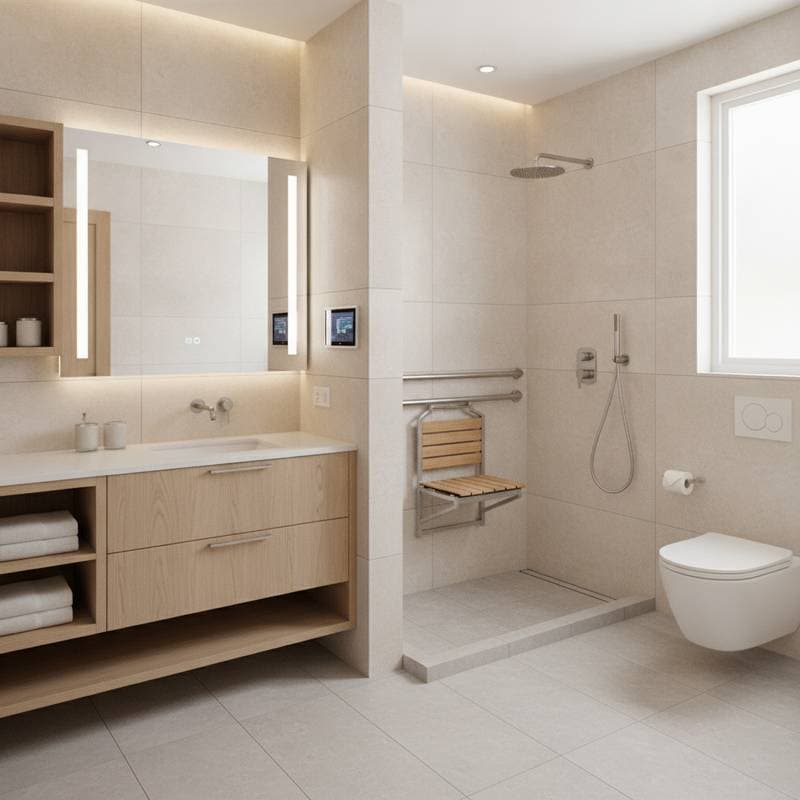
Zero-threshold showers rank among the most sought-after updates. They eliminate the entry ledge for seamless access. This modification reduces fall risks, a leading hazard in bathrooms.
Proper installation involves correct sloping and drainage. Professional waterproofing prevents issues. Pairing with a linear drain enhances aesthetics and supports wheelchair maneuverability.
2. Strategic Grab Bar Integration
Grab bars once evoked medical settings. Modern versions integrate as towel bars or shelves, maintaining functionality without drawing attention. Install blocking, or solid wood reinforcement, behind walls during remodels, even if bars are not added immediately.
This preparation incurs minimal cost yet avoids future expenses. Position bars near the shower entrance, within the shower, and by the toilet. Such placements align with accessible design standards to counter slips and falls.
3. Comfort-Height Fixtures and Adjustable Features
Comfort-height toilets sit two inches above standard models. They ease use for those with knee or hip limitations. This upgrade fits seamlessly into universal designs.
Adjustable showerheads on vertical bars allow height customization. Thermostatic mixing valves ensure steady temperatures and prevent scalds. These features adapt to changing physical requirements.
4. Slip-Resistant Flooring with Warmth and Texture
Tile dominates bathroom flooring choices, though safety varies. Select slip-resistant options with matte textures. Large-format tiles minimize grout lines, simplifying maintenance while providing grip.
Radiant heat mats under flooring add warmth, reducing stiffness in cold weather. They also accelerate drying, lowering slip risks. This combination enhances both safety and comfort.
5. Smart Technology for Independence
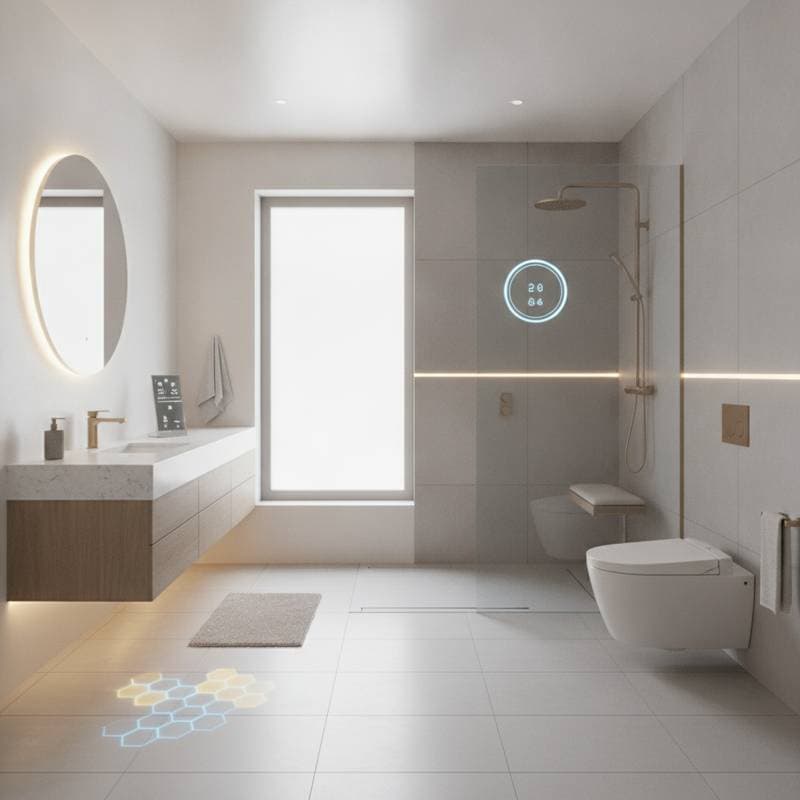
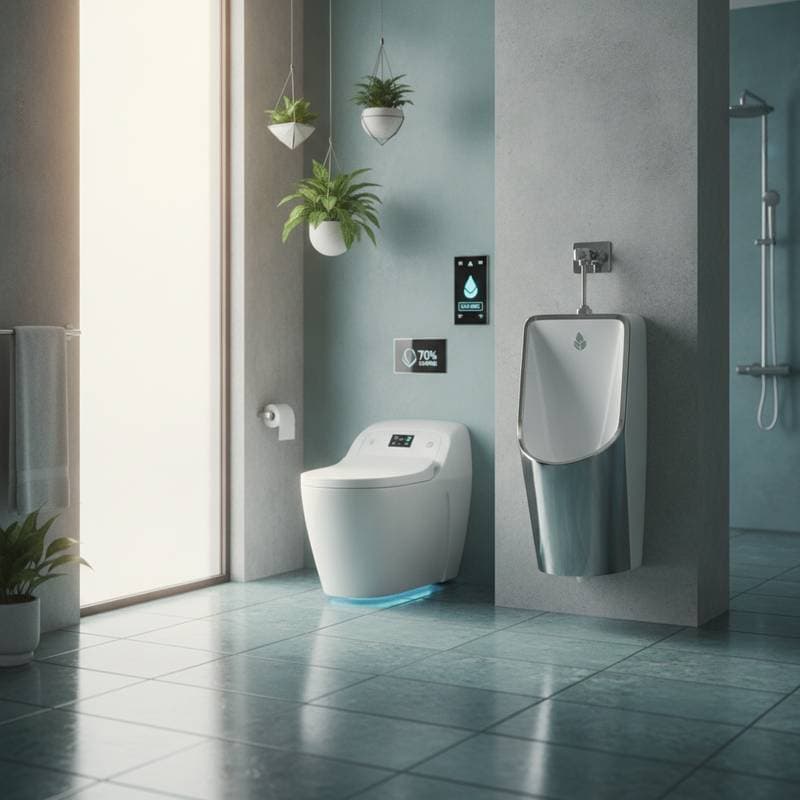
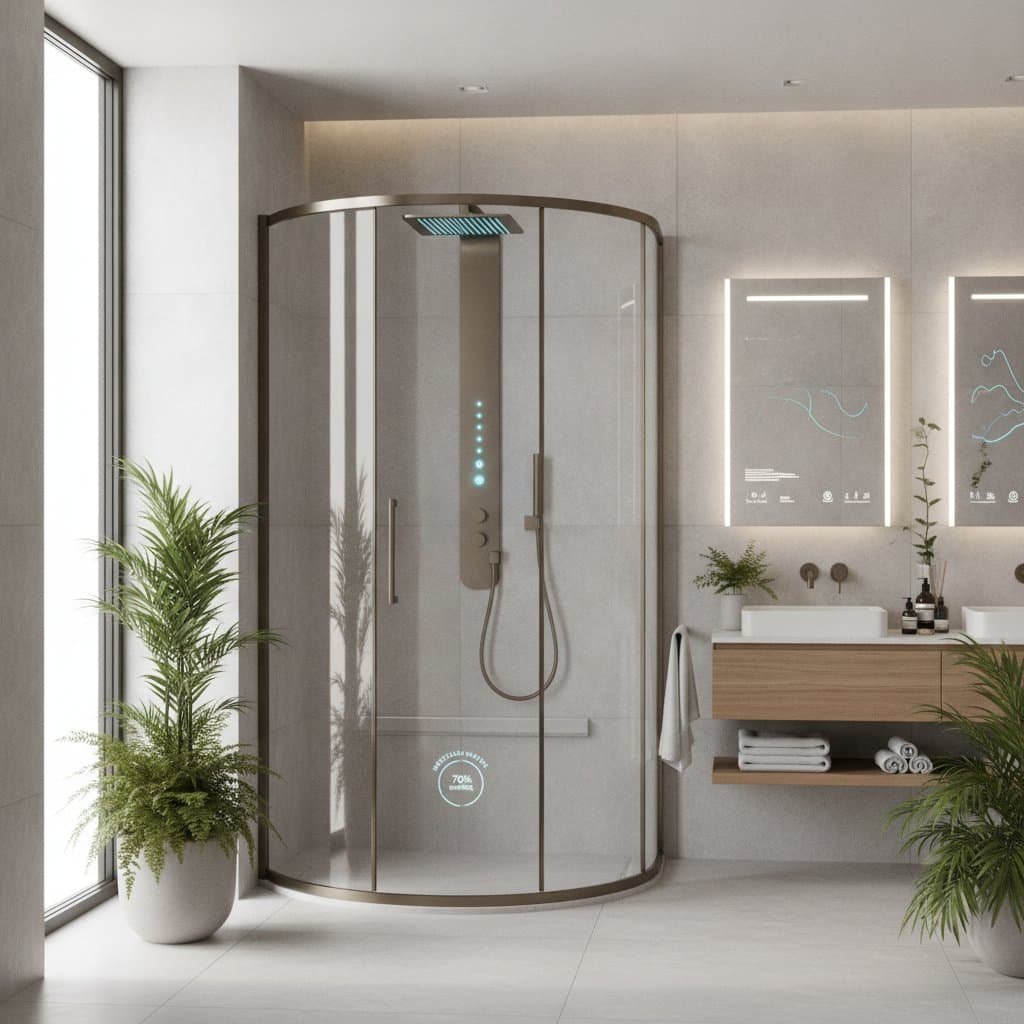
Technology now addresses accessibility effectively. Motion-activated faucets, voice-controlled lights, and smart mirrors demand less manual effort and boost safety.
Smart shower systems permit preset temperatures and flows via control panels. Predictability fosters confidence. These innovations support aging homeowners in maintaining autonomy.
6. Improved Lighting Layers and Contrast
Lighting profoundly influences bathroom safety. Shadows and glare pose risks comparable to wet floors. Incorporate three layers: ambient overhead lights, mirror task lighting, and nighttime navigation accents.
Color contrast clarifies boundaries. Pair light walls with darker floors and trim. This aids those with diminished vision and balances the room's appearance.
7. Wider Doorways and Clear Floor Space
Universal bathrooms prioritize mobility. Ensure doorways measure at least 32 inches wide. Provide a five-foot turning radius for potential wheelchair use.
Pocket or barn doors suit compact areas. Opt for solid-core models with reliable glides to ensure durability and privacy.
8. Floating Vanities and Open Storage
Conventional cabinets hinder movement. Floating vanities free up floor space and allow height adjustments. They facilitate cleaning as well.
Open shelves and pull-out drawers surpass deep cabinets for accessibility. Items remain visible and reachable. Clients value this organization after dealing with cluttered storage.
9. Durable, Low-Maintenance Materials
Choose materials that resist wear and simplify care. Quartz, solid-surface composites, and porcelain withstand stains effectively. Steer clear of grout-intensive or porous options needing frequent sealing.
Single-panel shower walls replace tiled surrounds. They avoid grout buildup and install swiftly. The result appears premium with minimal upkeep.
10. Proper Ventilation and Air Quality Control
Excess moisture invites mold, harming respiratory health. Equip with ventilation fans featuring humidity sensors for automatic operation. Select quiet models that incorporate lighting.
Direct vents to the exterior to prevent concealed damage. Proper airflow averts costly repairs from poor installation.
11. Emergency Access and Communication Options
Universal design extends to crisis response. Integrate call buttons or motion sensors linked to alerts. Connect these to home automation or emergency services.
Lever-style door handles outperform knobs for those with arthritis. These subtle enhancements improve daily usability and security.
12. Style That Respects Dignity
Universal bathrooms merit personal touches, not institutional vibes. Select finishes like matte black fixtures, wood accents, and neutral palettes to match preferences.
Aging-friendly elements represent sound design principles. Focus on balance, proportion, and enduring practicality. Each component contributes intentionally to the space.
13. Planning and Budgeting for Long-Term Value
Incorporate upgrades progressively, yet plan comprehensively upfront. Pre-install blocking, wiring, and rough-ins for future needs. These steps yield savings over time.
Allocate budgets wisely for quality fixtures, reinforcements, and waterproofing. Initial investments prevent expenses from injuries or leaks.
14. Communication Between Homeowner and Contractor
Clear dialogue prevents remodeling pitfalls. Discuss accessibility objectives, routines, and tastes thoroughly.
Site visits reveal practical insights, such as shower entry methods or storage preferences. These conversations yield tailored, regret-free results.
Sustaining Universal Bathroom Features
These designs deliver lasting enhancements. Regular cleaning preserves surfaces. Periodically check grab bar security and seal integrity.
Adapt as needs change with minor tweaks, like adding benches or adjusting fixtures. This flexibility ensures the space supports you throughout life.