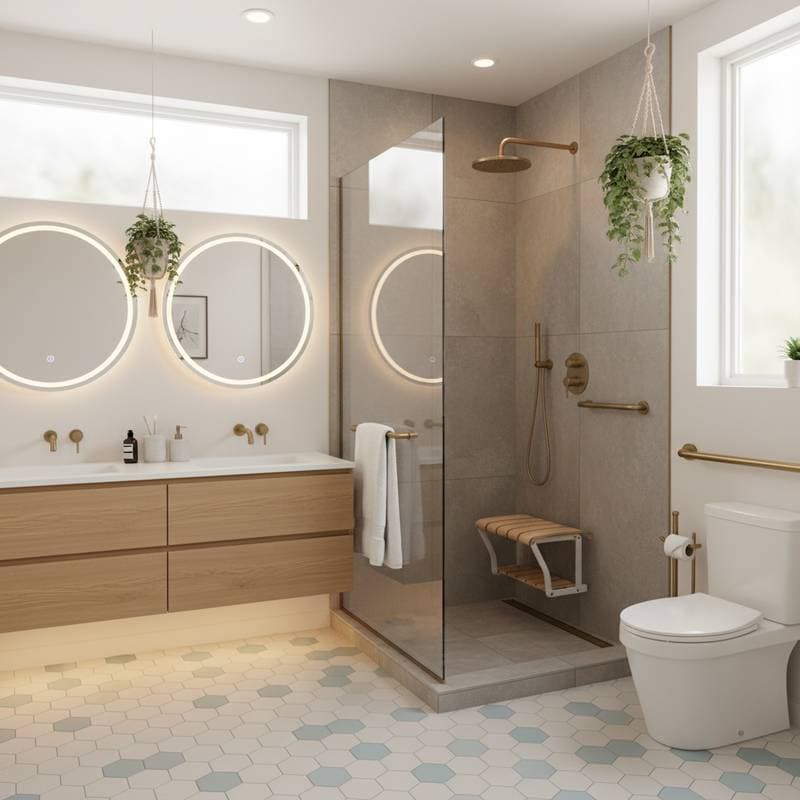
Universal Designs for Aging-in-Place Bathrooms in 2026
Homeowners committed to long-term residence often prioritize the bathroom during renovations. This space accounts for a significant portion of household injuries, yet many prove preventable through strategic design. As a remodeling contractor with years of experience, I frequently advise clients against delaying updates until a fall or medical condition demands hasty changes. Proactive universal design safeguards independence, enhances property value, and maintains daily comfort.
Universal design creates environments suitable for all ages and abilities while preserving aesthetic appeal. It focuses on intelligent layouts and resilient materials that simplify routines now and later, without an institutional appearance.
Why Universal Design Matters in Bathroom Remodeling
Aging in place emphasizes safety, ease, and respect for personal needs. Traditional bathrooms, with their narrow entries, elevated tubs, glossy surfaces, and inadequate illumination, pose substantial risks. Addressing these during a remodel proves more economical than post-mobility adjustments.
In my projects, clients who overlook early accessibility often face doubled expenses and extended disruptions from retrofits. Forward-thinking planning minimizes such issues and accommodates evolving requirements seamlessly.
Key Features of a Universal Design Bathroom
Effective aging-in-place bathrooms harmonize security, entry, and visual appeal. Consider these essential components for optimal results.
1. Zero-Threshold Showers
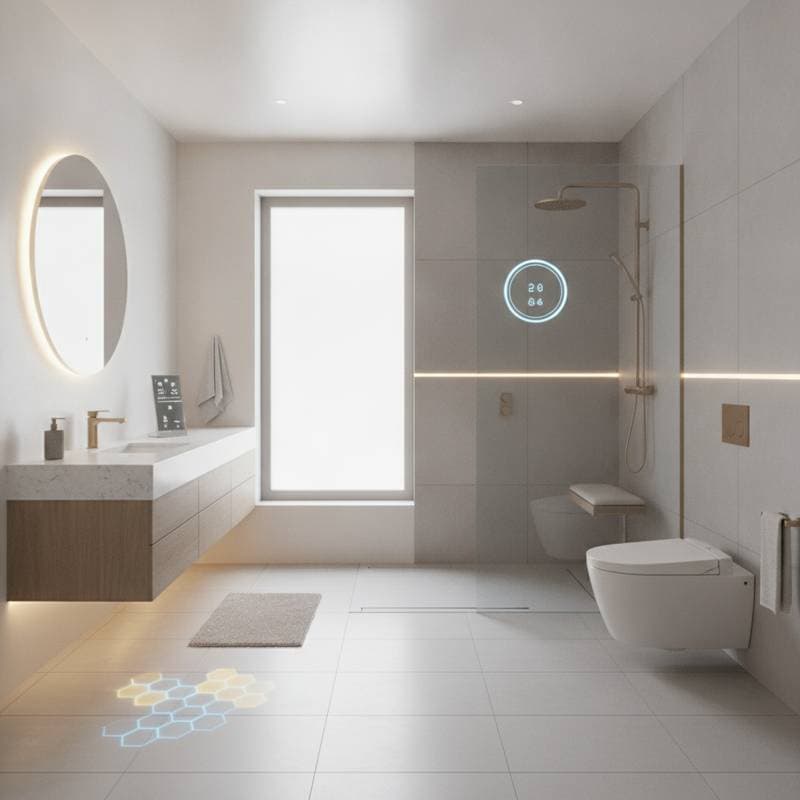
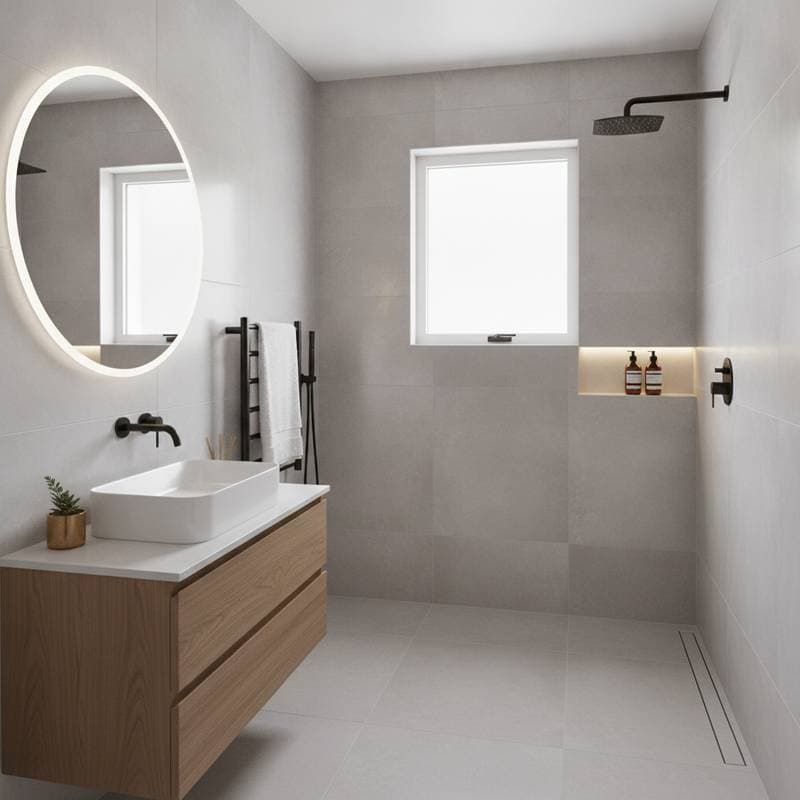
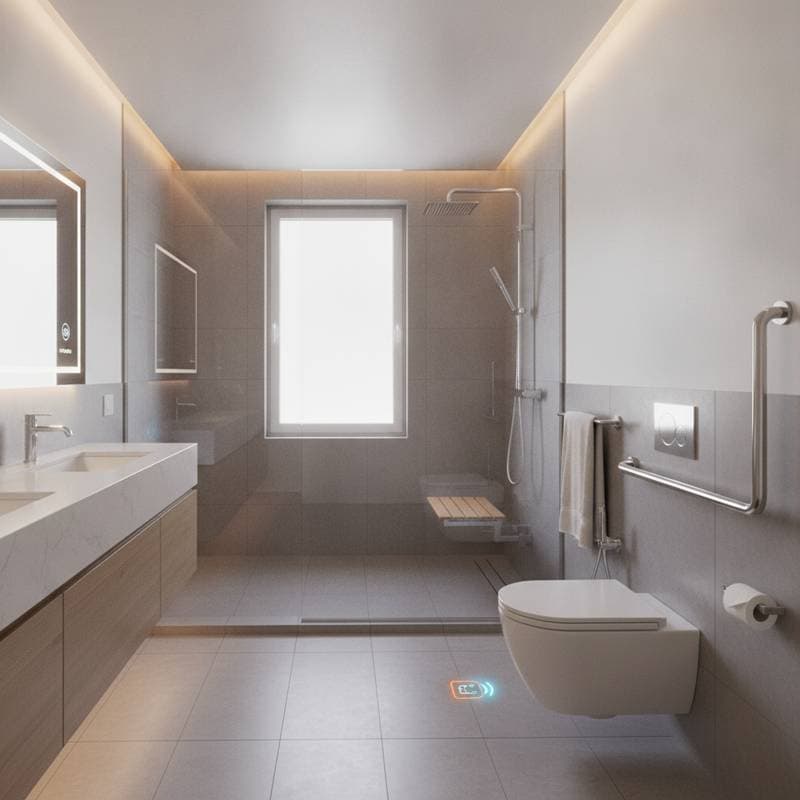
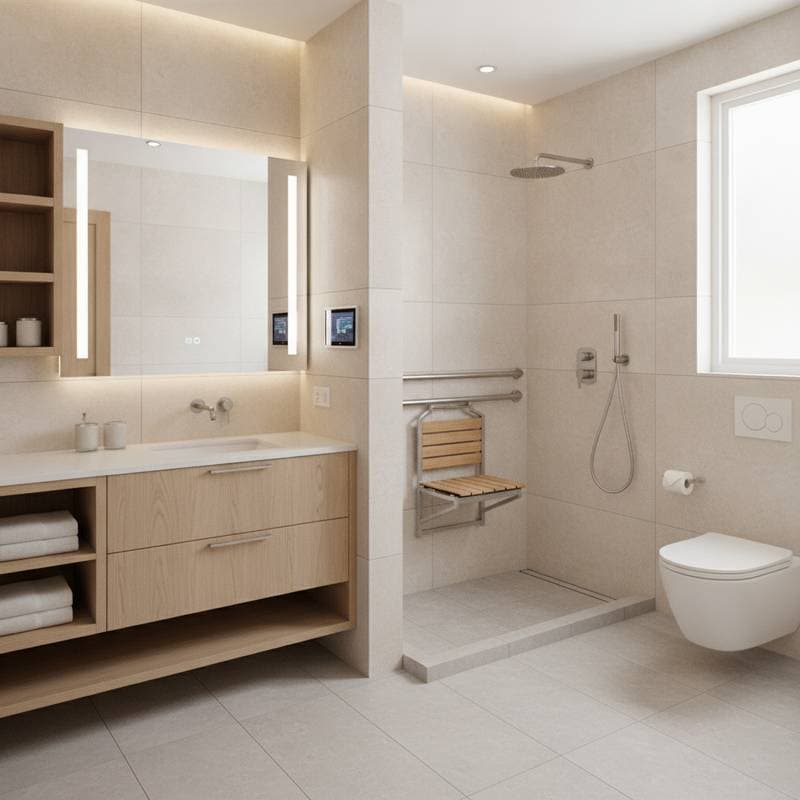
Walk-in or roll-in showers remove barriers by aligning the floor level with the surrounding space, facilitating entry for walkers or wheelchairs. Incorporate a gentle 1/4-inch-per-foot slope toward a linear drain to contain water effectively. Opt for textured, non-slip porcelain tiles and install a handheld showerhead on a 48-inch slide bar for customizable height and angle adjustments.
2. Comfort-Height Fixtures
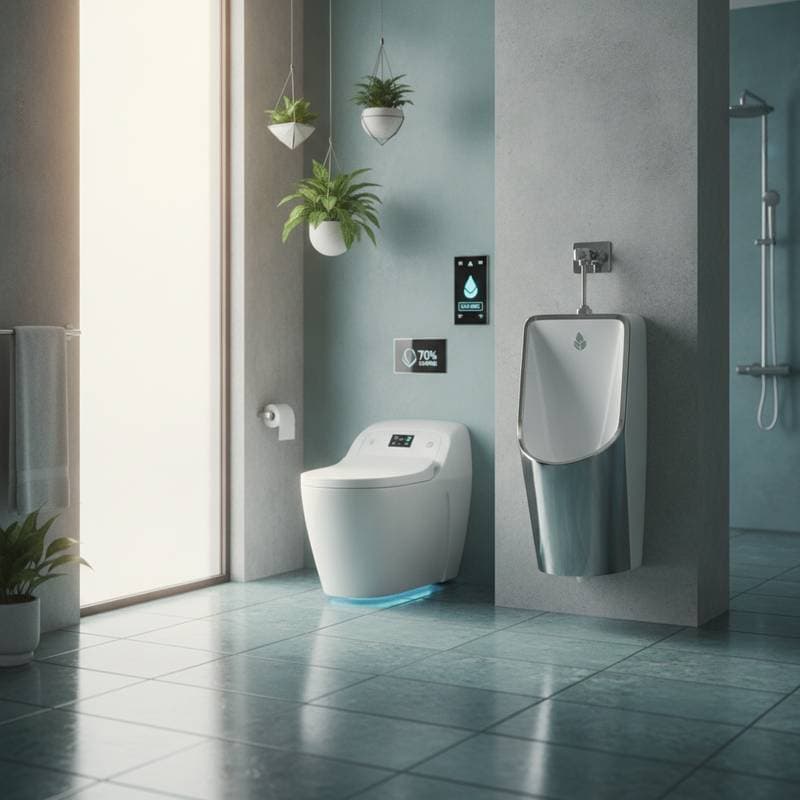
Comfort-height toilets, positioned 17 to 19 inches from the floor, ease sitting and rising motions. Install 1.5-inch diameter grab bars at 33 to 36 inches high adjacent to the fixture for reliable support. Apply this approach to vanities: wall-mounted sinks at 34 inches provide 27-inch knee clearance for wheelchair access, and adjustable models simplify maintenance.
3. Stylish Grab Bars
Contemporary grab bars feature finishes like brushed nickel or oil-rubbed bronze to coordinate with hardware. During initial framing, add 2x6 blocking in walls at toilet, shower, and vanity locations to support future installations without structural alterations. This preparation ensures adaptability without compromising the design.
4. Non-Slip Flooring
Porcelain tiles with a wet dynamic coefficient of friction above 0.6 offer superior traction in damp conditions. Vinyl composites with similar ratings provide durable, water-resistant alternatives. Steer clear of polished surfaces; instead, select matte textures that maintain elegance while prioritizing grip.
5. Layered Lighting and Visual Contrast
Combine recessed ceiling fixtures for general illumination, sconces at 60 inches above the vanity for precise tasks, and motion-activated nightlights at floor level for nighttime use. Use color contrasts, such as dark floors against light walls, to aid depth perception for those with visual impairments. Select 2700K LED bulbs for warm, efficient lighting that reduces eye strain.
6. Expanded Doorways and Maneuvering Space
Widen doorways to a minimum of 32 inches clear width, ideally 36 inches, to permit mobility aid passage. Maintain a 60-inch turning radius in front of the toilet and shower, with at least 30 inches on each side of fixtures. Pocket doors save space in compact layouts, while outward-swinging options prevent inward obstruction.
7. Ergonomic Controls
Lever faucets and door handles demand minimal force, accommodating reduced dexterity from conditions like arthritis. Touchless sensor faucets at the sink and shower activate with a wave, promoting hygiene and convenience for limited hand function.
Strategies for Built-In Flexibility
Universal design excels in adaptability, allowing modifications without extensive rework. Implement these methods to future-proof your bathroom.
1. Wall Reinforcement for Adaptations
Position 2x8 blocking horizontally in walls at 32 to 36 inches high near high-use areas, even if grab bars remain unnecessary initially. This reinforcement supports up to 250-pound loads and avoids drywall removal for later additions, typically costing under $200 per site.
2. Modular and Adjustable Elements
Choose vanities with height-adjustable legs spanning 30 to 36 inches, or install floating designs with removable brackets. Fold-down shower benches, rated for 300 pounds, fold away when not in use to preserve openness.
3. User-Friendly Storage
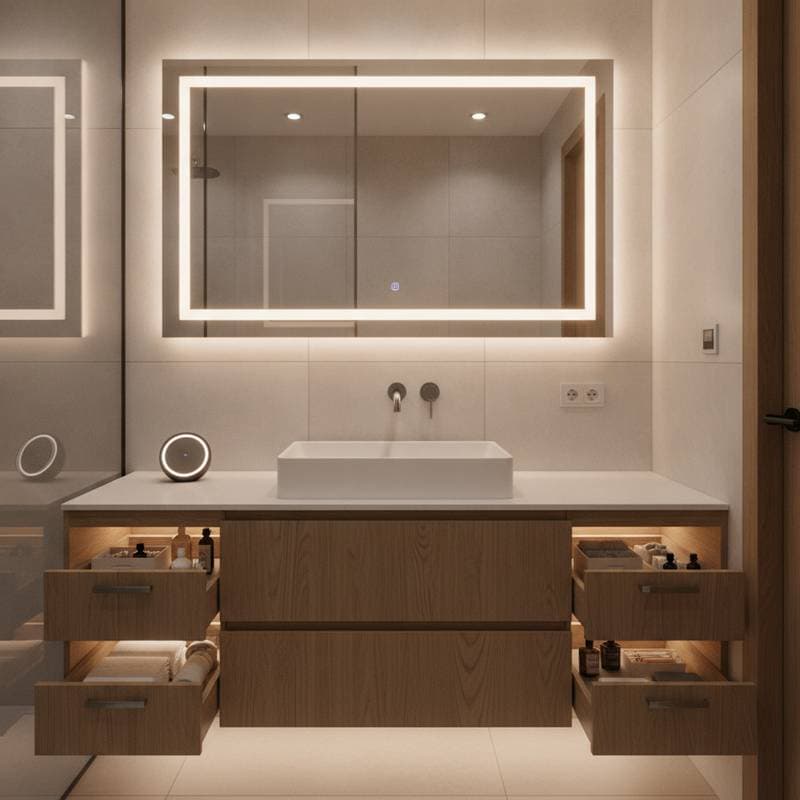
Incorporate full-extension drawer glides in lower cabinets to eliminate deep reaches, and install pull-down rods in upper shelves at 48 to 54 inches for easy access. Open shelving with rounded edges reduces injury risk while keeping essentials within arm's reach.
Pitfalls to Sidestep in Accessibility Remodels
Well-intentioned choices sometimes undermine functionality. Dodge these frequent oversights.
- Favoring Aesthetics Over Function. Elegant glossy tiles or raised tubs may impress visually but invite slips; integrate safety without visual sacrifice.
- Overlooking Multi-Level Lighting. Relying on one fixture creates shadows; layer sources for uniform visibility.
- Bypassing Expert Input. Select contractors certified in accessibility standards, familiar with ADA guidelines and local regulations.
- Neglecting Clearance Calculations. Verify 5-foot-diameter circles in layouts to ensure unhindered movement.
- Failing to Anticipate Changes. Design for potential mobility shifts, as proactive measures cut retrofit costs by 50 percent or more.
Fostering Collaboration in Universal Design Remodels
Clear dialogue between contractors and clients drives successful outcomes. Homeowners may understate health considerations, so initiate discussions on present and anticipated needs to tailor recommendations precisely. Review material specs, bar positions, and spatial plans together.
Clients benefit from inspecting portfolios of completed accessible projects that balance form and function. Insist on written contracts detailing fixtures, dimensions, and methods to align expectations and mitigate disputes.
Safeguarding Your Renovation Investment
Beyond safety, universal design upholds autonomy and marketability. Accessible bathrooms broaden buyer appeal, with agents highlighting features like lever controls and wide entries. Energy-efficient elements, such as low-flow fixtures under 1.28 gallons per flush, lower utility bills over time.
Preserve longevity through routine care:
- Clean and Seal Regularly. Wipe floors weekly and reseal grout annually to avert moisture buildup.
- Check Fixtures Routinely. Inspect grab bars quarterly for secure mounting and adjust as required.
- Monitor Seals Yearly. Examine caulk around fixtures to prevent leaks that lead to structural issues.
- Upgrade Illumination Periodically. Transition to dimmable LEDs for enhanced control and savings.
Steps to Implement Your Vision
Universal bathroom updates suit all ages, prioritizing enduring usability and comfort. Integrate safety seamlessly with style through expert guidance and quality selections. View each decision as a step toward sustained independence and enhanced living quality.