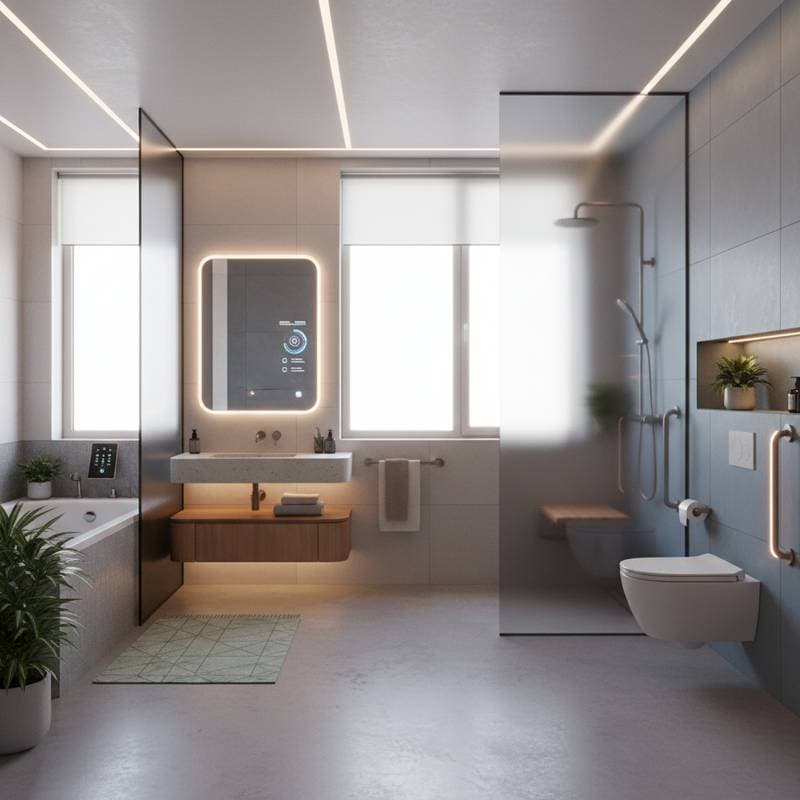
Universal Bathrooms in 2026: Enabling Lifelong Comfort
Homes reflect the lives of their occupants, and bathrooms capture the subtle shifts in everyday routines. As technology integrates more seamlessly with design, bathrooms evolve beyond basic functionality into havens of wellness, accessibility, and sustained comfort. The concept of a universal bathroom embodies this progression, offering environments that adjust effortlessly to the changing needs across a lifetime. Universal design principles, previously viewed as specialized for accessibility, now represent the benchmark for homes intended for long-term habitation, harmonizing utility, visual appeal, and forward-thinking features.
Future-oriented bathrooms draw from empathy and smart systems. They merge sensory appeal with proactive technology, environments that foresee requirements rather than merely reacting. The following outlines five essential innovations and design approaches that characterize the emerging era of universal bathrooms.
1. Level-Entry Showers and Seamless Transitions
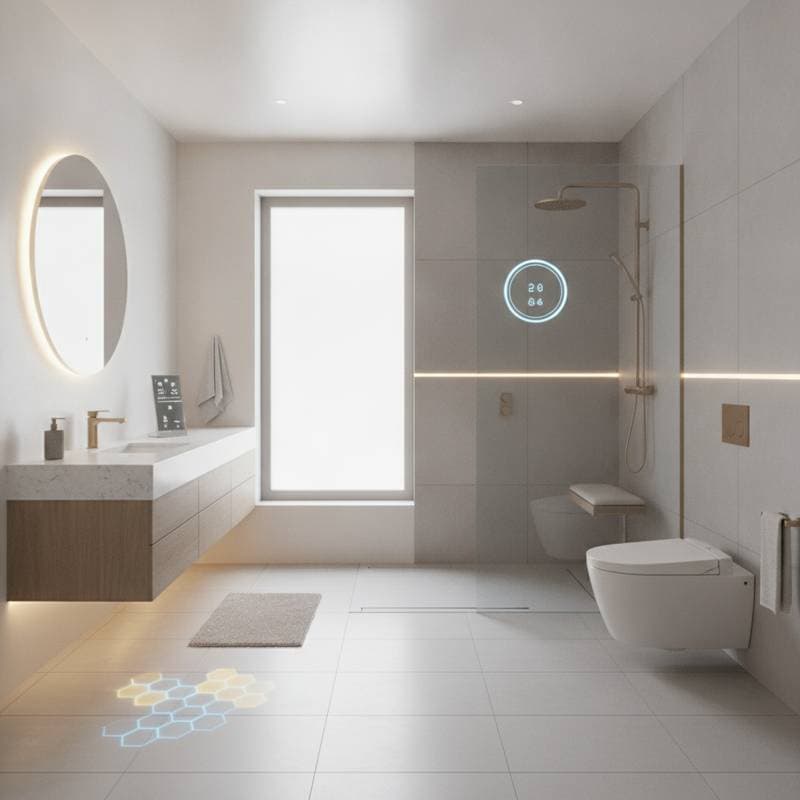
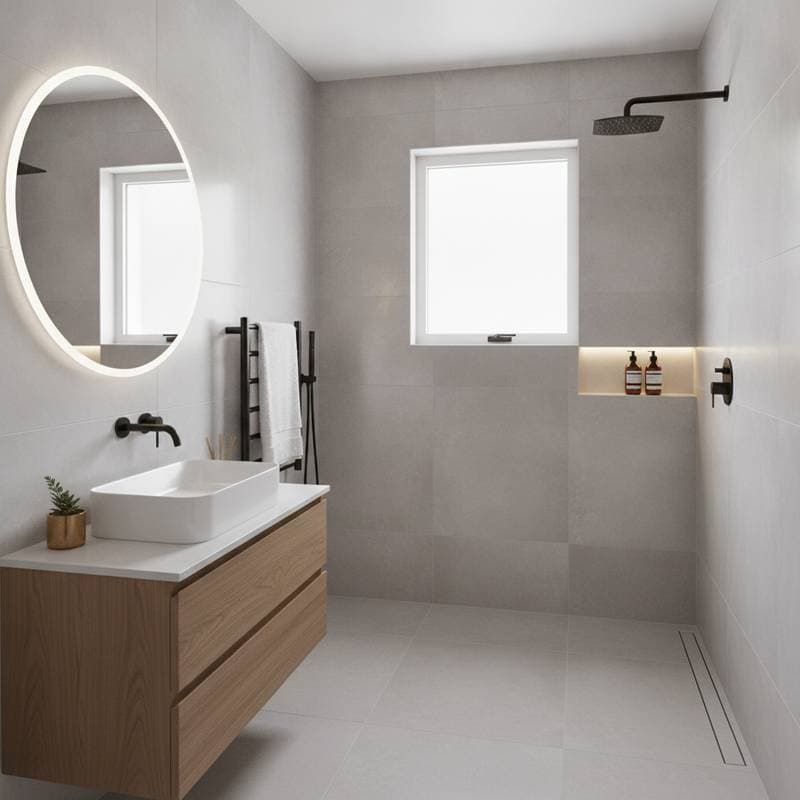
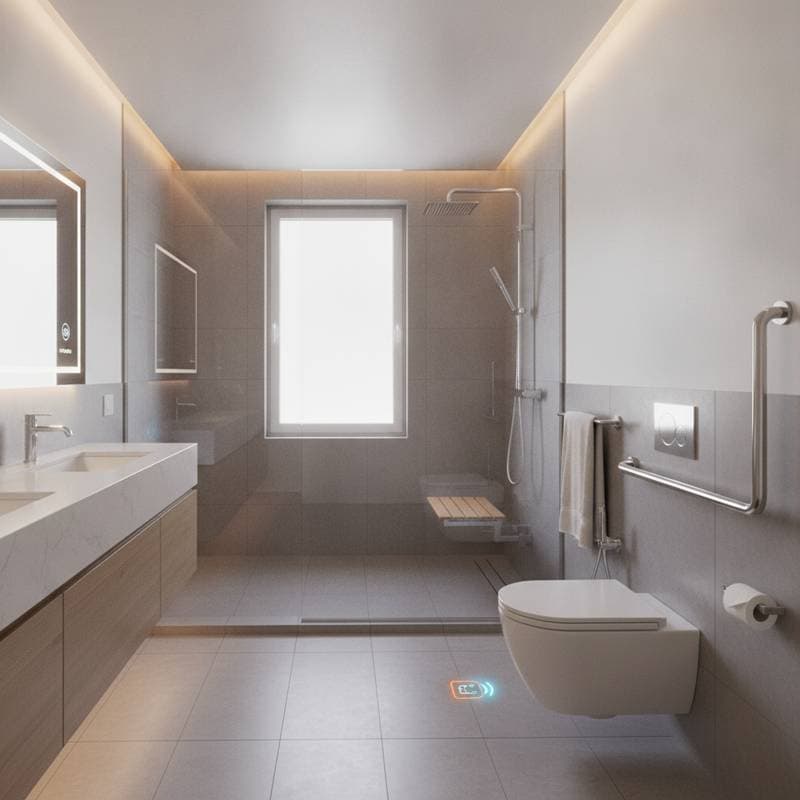
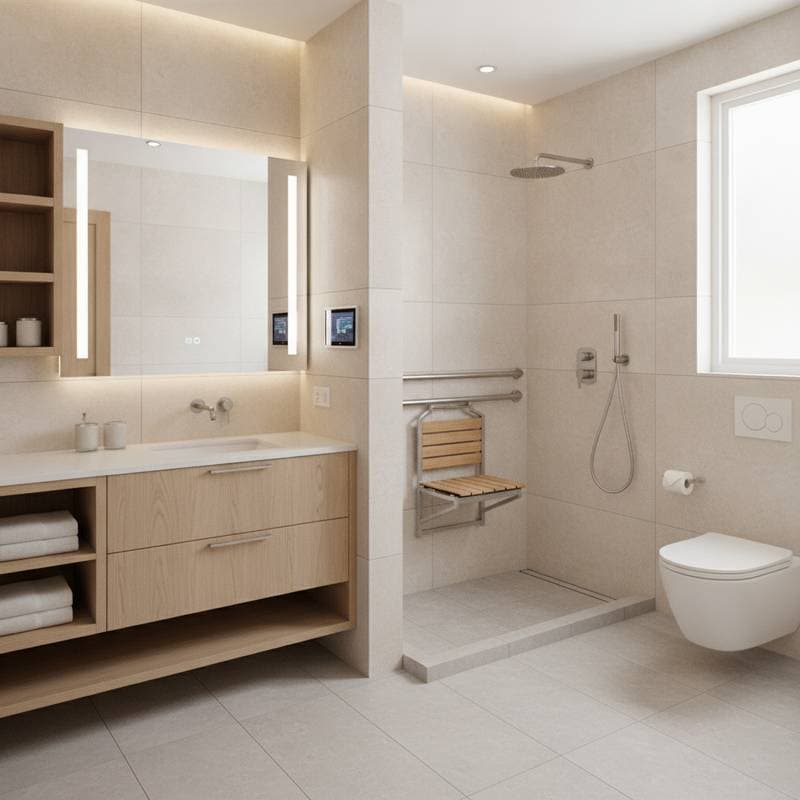
Universal bathrooms remove physical obstacles at their core. Level-entry showers, previously limited to targeted accessibility updates, now define modern sophistication. Designers extend the same flooring material throughout the area to establish unbroken visual and functional flow. Pairing a walk-in shower with a linear drain from Infinity Drain and slip-resistant porcelain tiles from Porcelanosa Noken delivers both refinement and security.
Architect Luis Marín of Studio Forma frequently incorporates extra-large format tiles in subdued hues, such as Benjamin Moore Silver Marlin, a gentle gray-blue that promotes a sense of spacious serenity. Eliminating thresholds eases navigation and maintenance, while integrated benches crafted from teak or sealed limestone provide support and inviting texture. Homeowners achieve this by selecting materials with consistent coefficients of friction and consulting local codes for drain placement to ensure optimal performance.
2. Ergonomic Hardware and Strategic Placement
Universal design relies on anticipation of user needs. Features like vanities adjustable in height, lever-operated handles, and reachable storage solutions enhance routine tasks. Häfele iMove pull-down shelving brings upper cabinets into easy access, and Grohe Essence faucets with elongated levers support users with reduced grip strength while preserving a sleek appearance.
Designer Marco Pellegrini stresses aligning hardware with instinctive motions. Towel bars that also serve as grab bars, positioned at ergonomic angles, offer stability without drawing attention. To implement these elements, measure clearances around fixtures during planning and opt for corrosion-resistant finishes like brushed nickel for durability in humid conditions. This method embeds utility discreetly, preserving the room calm while guaranteeing prolonged practicality.
3. Temperature Control and Wellness Features
Precise temperature management establishes the foundation of comfort. Systems including radiant floor heating, towel warmers, and intelligent thermostats convert the universal bathroom into a refuge for sensory equilibrium. The Warmup DCM-PRO system schedules heat levels for multiple users, activating based on motion sensors for efficient operation.
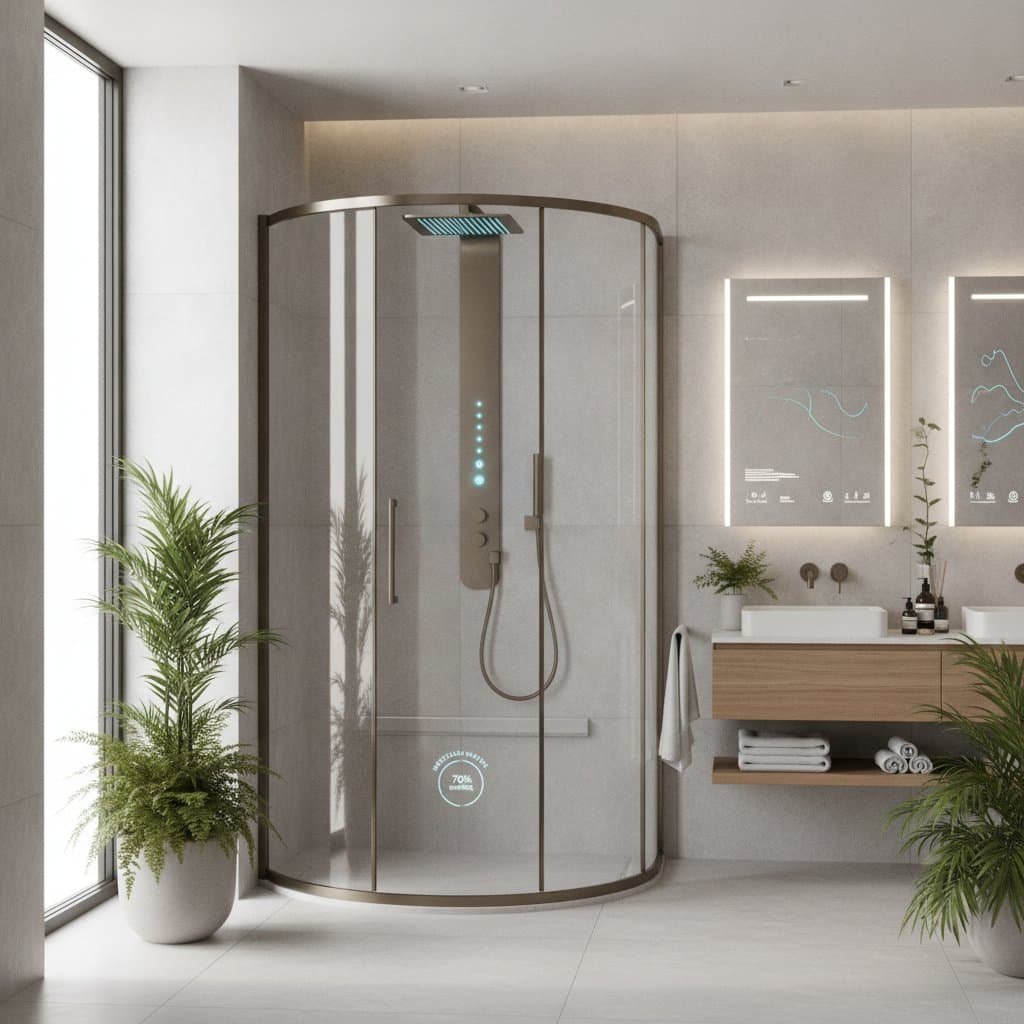
Wellness enhancements, such as chromotherapy lighting and steam functions, adapt for broader accessibility. ThermaSol Smart Shower systems enable voice commands for steam, aromatherapy diffusion, and sound integration. Designer Elliot Tanaka views these as the convergence of health and gracious hosting, providing therapeutic sessions that evolve with individual requirements. Installers recommend pairing these with low-flow valves to balance indulgence and water conservation.
4. Inclusive Spatial Planning for Multigenerational Households
Effective universal bathrooms accommodate diverse users. Professionals reconfigure layouts to support multigenerational dynamics, incorporating broader doorways, ample turning spaces for wheeled devices, and modifiable fixtures without sacrificing harmony. The arrangement emphasizes circulation, permitting shared use, such as a parent aiding a young child or a caregiver supporting an elder.
Architect Nina Duarte routinely specifies floating vanities with height adjustments and mirrors angled for seated visibility. She characterizes universal design as an empathetic spatial arrangement, where every dimension accounts for varied human conditions. Her designs convey expansiveness alongside intimacy, merging scale with intent. Begin planning by mapping traffic patterns and allocating at least 30 inches of clear space beside key fixtures to facilitate smooth interactions.
5. Emotional Design and Psychological Comfort
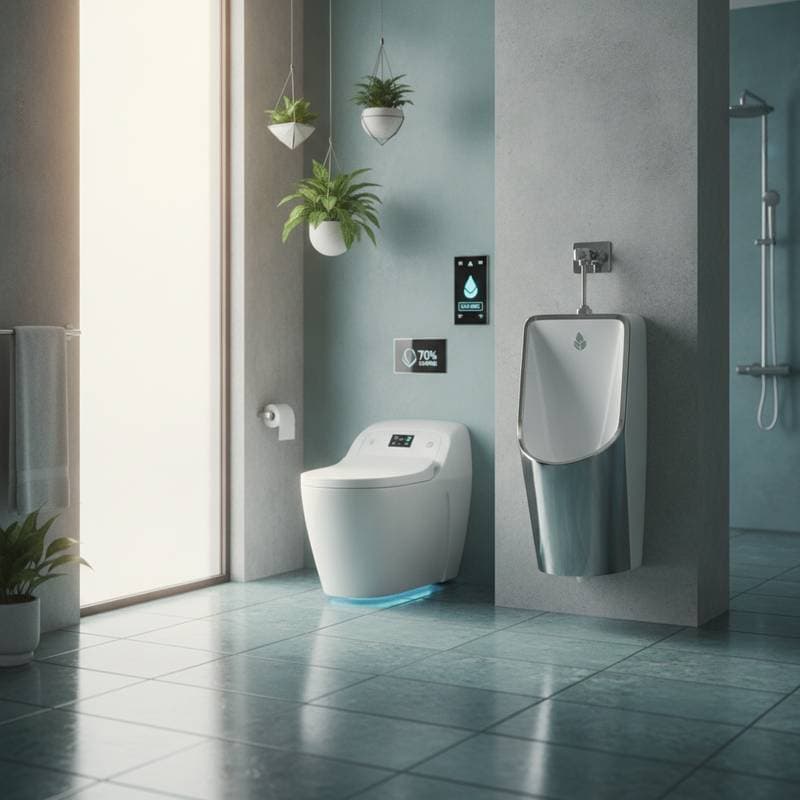
The essence of universal bathroom design centers on emotional resonance. The ambiance profoundly influences user experience, especially as circumstances change. Experts apply color theory, nature-inspired patterns, and acoustic elements to cultivate tranquility and assurance. Neutral palettes, including Sherwin-Williams Accessible Beige or Benjamin Moore Edgecomb Gray, complement natural stone surfaces and brushed metal accents.
Acoustic softening via fabric-covered panels or cork flooring reduces echoes for a more soothing environment. Incorporating subtle biophilic touches, like a compact indoor plant or a skylight diffusing natural light over textured walls, strengthens ties to the outdoors. The objective remains attainable serenity, a setting that embraces fragility and affirms strength. Select lighting layers, from ambient to task-oriented, to modulate mood and visibility throughout the day.
Applying Universal Design Principles
Universal bathrooms represent an immediate opportunity for enhancing home functionality. They provide a structure for security, respect, and ease that matures alongside residents. As dwellings adapt, bathrooms mirror evolving personal health, embodying autonomy and thoughtful support. For those undertaking renovations focused on aging in place, these guidelines offer pathways to enduring worth, both sentimental and structural.
Experts advise commencing with essentials: even surfaces, navigable configurations, and resilient materials. Subsequently, introduce technology judiciously to amplify rather than complicate the experience. The strength of universal bathrooms resides in their unobtrusive flexibility. Inclusivity and grace emerge as allies in creating spaces that serve fully.
When elements from illumination to arrangement stem from compassion and proficiency, the outcome surpasses mere purpose. It forms a regular sanctuary that respects life progression, where innovation and aesthetics unite to elevate human moments.