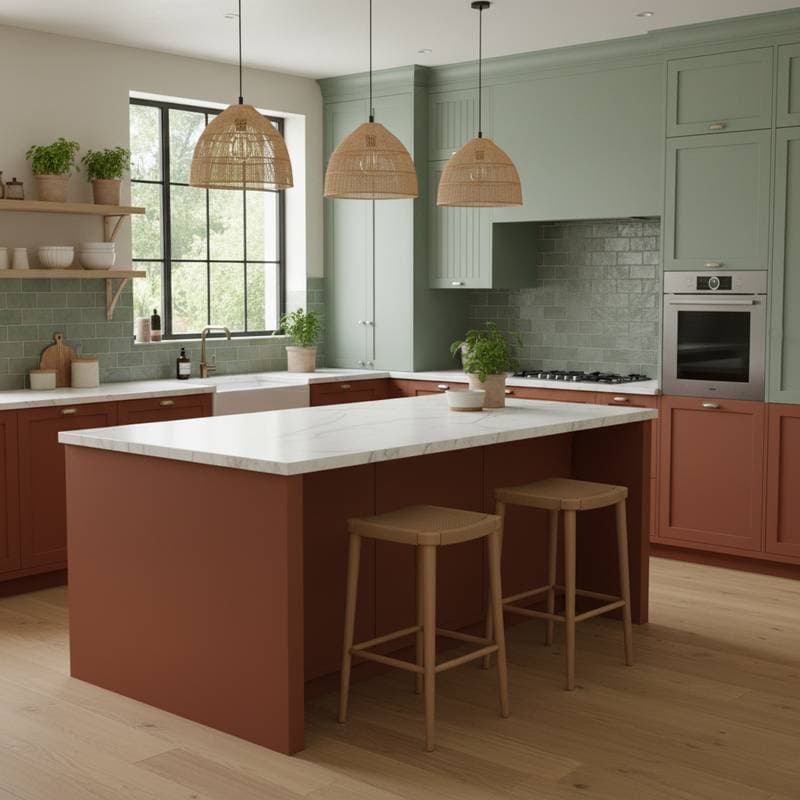
Terracotta and Sage: 2025's Top Kitchen Color Trends
Imagine standing in your kitchen, where white cabinets that once appeared crisp now seem plain. Gray tones that felt modern a few years back suddenly look cold. Homeowners seek warmer, more natural options that remain timeless. The solution lies in two earthy shades: terracotta and sage green.
These colors emerge as leading trends for 2025 kitchens. They introduce warmth, balance, and a link to nature, fostering calm and grounded spaces over sterile or fleeting designs. This guide explores implementation strategies, cost estimates, maintenance needs, and integration tips to refresh your kitchen confidently.
Why Terracotta and Sage Gain Popularity
Neutral palettes dominated kitchens for years, yet many now desire personality alongside serenity. Terracotta and sage provide subtle, livable color that satisfies this need.
Terracotta offers a rich, clay-inspired depth that blends rustic charm with contemporary appeal. It enhances natural light, delivering warmth and dimension without dominating the room. Sage, a muted green with gray undertones, soothes and coordinates seamlessly with wood, stone, or brass elements.
These shades attract users through their blend of familiarity and novelty. Terracotta evokes sun-baked pottery and traditional tiles, while sage draws from restorative natural landscapes. Combined, they form a palette that endures while feeling innovative.
The Look: Earthy, Grounded, and Calm
Terracotta and sage kitchens prioritize harmony over bold declarations. Consider terracotta on lower cabinets matched with sage uppers, or sage walls accenting shelves stocked with clay vessels. Their shared muted, organic essence prevents clashes.
Homeowners realize this aesthetic through several approaches:
- Two-tone cabinets: Terracotta lowers paired with sage uppers create layered balance.
- Accent islands: Apply terracotta solely to the island for targeted warmth without full commitment.
- Sage walls with warm neutrals: Combine with cream, beige, or soft taupe to maintain airiness.
- Natural materials: Incorporate wood countertops, stone backsplashes, and woven elements for cohesion.
This scheme suits traditional and modern kitchens alike. Success hinges on moderation; allow textures and subtle tones to collaborate rather than overwhelming surfaces with color.
Choosing the Right Terracotta
Terracotta spans soft peach to deep rust variations. Selection hinges on lighting conditions and desired ambiance.
Light terracotta suits compact kitchens, infusing warmth without heaviness. Mid-tone versions complement oak or walnut cabinetry alongside brass hardware. Deep terracotta suits expansive areas abundant in natural light, adding dramatic flair.
Opt for muted or dusty iterations in most settings for everyday livability. Steer clear of vivid orange hues, which may appear dated or overpowering under artificial illumination.
Paint brands label terracotta options as Clay, Brick, or Canyon. Apply samples of at least two shades directly on walls prior to final selection. Observe shifts influenced by daylight and adjacent countertop surfaces.
Selecting the Perfect Sage
Sage green ranges from gray-dominant to olive-inflected tones. Cooler grays yield sleek results, whereas warmer variants appear more organic.
Cool sage aligns with marble or quartz counters for crisp elegance. Warm sage enhances butcher block surfaces and brass fixtures. Dusty sage provides versatility, functioning as a neutral with distinct color presence.
Lighter sage opens small kitchens visually. Deeper shades foster intimacy in larger volumes. To test, apply to one wall or open shelf interiors before full application.
Balancing Terracotta and Sage
Proportions guide effective use of both colors to avoid overload. Employ the 60-30-10 design principle for equilibrium:
- 60 percent main color on walls or primary cabinets.
- 30 percent secondary color on islands, backsplashes, or shelves.
- 10 percent accents via hardware, accessories, or minor decor.
For instance, designate sage for cabinets (60 percent), terracotta for backsplash tiles (30 percent), and brass pulls or cream items (10 percent). This approach ensures unity over disorder.
Reverse the balance for intensified warmth: terracotta-dominant setups evoke Mediterranean influences, while sage-led designs convey modern restraint.
Material Pairings That Enhance the Palette
Terracotta and sage excel with natural materials that reinforce their earthy character. Integrate textures mirroring these origins for authenticity.
Wood options like oak, walnut, or birch deliver contrasting warmth. Stone selections such as soapstone, limestone, or marble contribute tactile depth to counters. Metals including brass or brushed gold amplify the inherent glow of both hues.
Ceramic tiles or clay pottery introduce handmade authenticity and nuance. Favor matte or satin finishes on cabinets and tiles to harmonize with organic vibes. For contrast, white quartz counters inject modernity without disrupting freshness.
Cost and Practical Considerations
Kitchen color transformations span budgets based on scope. Review typical estimates for informed planning.
-
DIY paint refresh: Allocate $200 to $600 for paint, primer, tools, and supplies on existing cabinets. Select durable satin or semi-gloss formulas for wipeable durability. Completion requires three to five days, accounting for drying intervals.
-
Professional refinishing: Professionals spraying cabinets yield smooth, enduring results at $3,000 to $6,000, scaled to kitchen dimensions and existing state. This suits structurally sound units needing only color renewal.
-
New custom cabinets: Full overhauls range from $10,000 to $25,000 for tailored pieces in specified shades. Mixed finishes, like painted terracotta bases with wood uppers, adjust costs per hardware and treatment.
-
Targeted updates: Introduce terracotta via tiles, stools, or vessels and sage through fabrics or accents for $300 to $700. Such changes yield significant atmospheric shifts with minimal investment.
Verify moisture-resistant, kitchen-safe paints and finishes throughout. Oil-based primers or dedicated cabinet formulas withstand proximity to water and heat sources.
Lighting and Color Performance
Illumination profoundly influences color perception. Terracotta flourishes under warm natural rays, while sage alters notably beneath cool LEDs. Evaluate samples across daily light variations.
Warm bulbs accentuate terracotta's vibrancy. Neutral sources preserve sage's equilibrium. Cool tones risk dulling either shade to grayish casts.
In low-natural-light spaces, install adjustable under-cabinet LEDs to modulate warmth. This enhancement optimizes color expression from morning through evening.
Safety and Preparation Tips
Kitchen painting demands thorough preparation for durability and health.
Ventilate areas generously during application with fans or open windows to disperse vapors. Label doors pre-removal for straightforward reinstallation. Degrease surfaces prior to sanding or coating to ensure adhesion.
Permit complete curing before hardware attachment or active use. Engage certified experts for lead-paint removal in older homes. Prioritize safety to complement aesthetic goals.
Regional and Style Adaptations
Terracotta and sage flex across locales and aesthetics. Coastal settings pair sage with white oak and pale quartz for airy relaxation. Desert or mountain homes align terracotta with stone and rich woods for enveloping comfort.
Urban designs merge sage cabinets with matte black hardware for sleek sophistication. Farmhouse styles embrace terracotta flooring and gentle green cabinetry for heritage warmth. This adaptability mirrors surroundings while upholding style and utility.
Sustaining the Fresh Appeal
Routine care preserves the vibrancy of updated colors.
Clean cabinets weekly using a soft cloth and mild soap solution. Shun abrasive chemicals or pads that erode sheen. Address chips swiftly to avert water ingress.
Re-seal unglazed terracotta tiles every few years. Consistent practices safeguard finishes, ensuring enduring newness through quality application and vigilance.
Steps to Implement Your Vision
Begin by assessing your kitchen's light and scale to select shades. Gather samples and test in situ. Consult professionals for structural changes, or tackle DIY elements with preparation.
Budget wisely, starting small if needed. These earthy tones promise a kitchen that nurtures daily life with timeless warmth and natural poise.