Transforming Home Offices into Soundproof Sanctuaries
Remote work integrates professional demands into personal spaces, often amplifying household distractions. Soundproofing emerges as a crucial upgrade, converting home offices into zones of concentration and calm. This approach combines acoustic science with thoughtful design to foster productivity without sacrificing comfort.
Effective soundproofing requires addressing noise at its sources. Designers prioritize both airborne sounds, such as voices or traffic, and structural vibrations from footsteps or appliances. By layering materials and planning layouts intentionally, these spaces achieve a balanced acoustic environment that supports mental clarity.
Understanding the Basics of Acoustic Design
Silence in a home office means controlled sound, not complete absence. Acoustic performance influences focus as much as lighting or ergonomics. Professionals now apply principles of absorption, reflection, and diffusion to residential settings.
Airborne noise travels freely through air, while structural noise conducts via building elements. A comprehensive strategy targets both to form an effective sound barrier. Interior designer Laura Kemper of Kemper Studio notes, "It is a balance between absorption, reflection, and diffusion. Each surface contributes to how sound behaves, and the goal is harmony, not total silence."
Start with an assessment of your space's vulnerabilities. Identify thin walls, hollow doors, or echo-prone ceilings. This foundational step guides material selections and modifications for optimal results.
Strengthening Walls for Noise Isolation
Walls serve as primary barriers against external sounds. Standard drywall allows vibrations to pass easily, reducing privacy. Upgrade to resilient channels, acoustic insulation, and double-stud framing to minimize transmission.
Incorporate specialized products like QuietRock 545 drywall or Roxul Safe’n’Sound mineral wool. These options absorb and block waves effectively, creating a more insulated room. The enhanced solidity promotes a sense of seclusion.
Finish walls with matte paints such as Farrow & Ball’s Ammonite No. 274. This choice diffuses light and complements the subdued acoustics, avoiding stark reflections that can disrupt serenity.
Securing Doors and Windows Against Leaks
Even robust walls falter if doors or windows permit sound entry. Hollow-core doors amplify noises like resonators. Opt for solid-core alternatives, including White Oak slabs from TruStile Doors, to seal gaps and dampen vibrations.
For windows, install laminated glass with polyvinyl butyral interlayers. This material reduces rattling and transmission. Pair it with wool or velvet drapery for added absorption of mid-range frequencies, such as speech.
Designer Erin Holt of Studio Holt emphasizes layering: "It is not just about stopping sound; it is about controlling how it moves in the space." Heavy fabrics provide warmth and further soften the acoustic profile.
Choosing Flooring for Impact Reduction
Floors channel impact noises, particularly in multi-level homes. Acoustic underlayments like cork or recycled rubber mitigate these effectively. Combine them with wide-plank European oak for a stable, quiet surface.
Layer rugs over felt pads to enhance absorption. Dense wool options soften footsteps and anchor the room visually. This setup adds depth to both design and sound control.
Mateo Rivela of Rivela Interiors selects gray-toned rugs for their calming effect. He observes, "Soundproofing is as visual as it is technical. When a space looks serene, it tends to feel quieter."
Elevating Ceilings with Acoustic Treatments
Ceilings reflect sounds downward, often amplifying echoes. Acoustic panels integrated as decorative elements address this issue discreetly. Materials from Arktura or BuzziSpace, using felt and recycled PET fibers, offer performance in artistic forms.
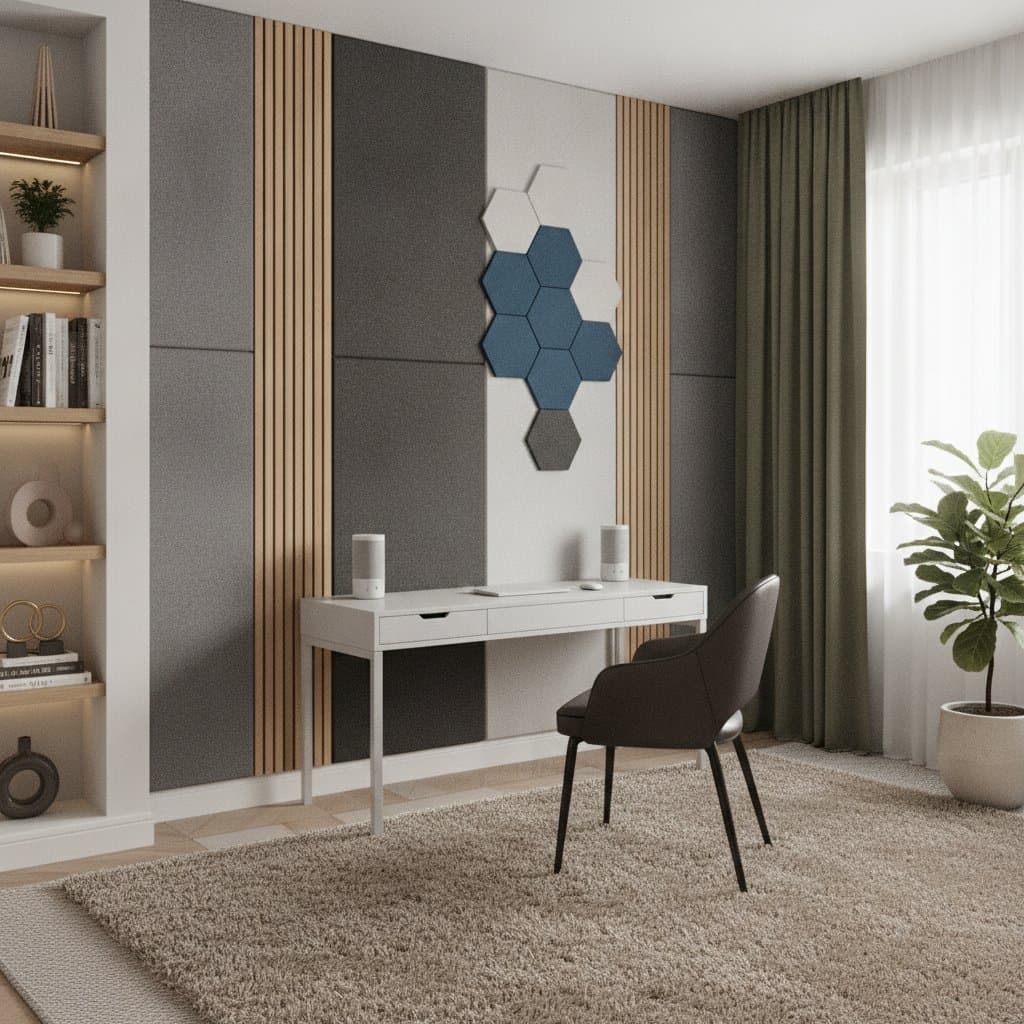
These geometric designs serve dual purposes: sound management and aesthetic enhancement. Embed recessed LED strips between panels for even lighting that preserves absorption qualities. The result evokes a modern, studio-like tranquility.
Consider the ceiling's role in overall flow. Align treatments with room proportions to avoid visual clutter while maximizing acoustic benefits.
Incorporating Furniture for Sound Modulation
Furniture shapes acoustics through placement and materials. Upholstered items with soft textiles diffuse waves naturally. Position a tufted velvet armchair near windows to capture reflections and add comfort.
Bookshelves filled irregularly act as diffusers, scattering sound to reduce echoes. Nina Valdez employs built-in shelving strategically: "Books scatter sound just enough to soften echoes. It is an old studio trick that feels at home in residential design."
Balance with solid desks in walnut or ash. This mix of textures maintains a dynamic soundscape, preventing overly muffled or reverberant conditions.
Layering Materials Strategically
Acoustic success relies on intentional layering rather than isolated fixes. Begin with structural elements like double-stud framing filled with mineral wool. Add surface layers such as Decoustics Claro paneling.
Incorporate soft elements: heavyweight linen or mohair velvet drapery. Finish with wool- or felt-wrapped acoustic art panels for targeted absorption.
Select colors like Benjamin Moore’s October Mist in muted greens or warm grays. These hues promote visual calm, aligning with the auditory quietude.
- Structural base: Double-stud framing with mineral wool insulation
- Surface layer: Acoustic drywall or paneling
- Soft finishes: Heavyweight drapery
- Decorative accents: Wall-mounted acoustic panels
Exploring the Benefits for Mind and Mood
Beyond technical barriers, soundproofing influences psychology. Reduced noise lowers cognitive strain and enhances creativity. Quiet environments facilitate smoother transitions between work and rest.
Acoustician Dr. Lila Garrison states, "Our brains interpret certain frequencies as intrusion. When those are reduced, cognitive fatigue drops dramatically." She compares such rooms to intentional compositions where every element serves clarity.
Daily interactions benefit too. Muffled sounds from doors and rugs create rituals that reinforce focus, turning the office into a mental refuge.
Integrating Technology for Adaptive Control
Technology enhances passive soundproofing with active solutions. Sound-masking systems from Cambridge Sound Management emit subtle frequencies to mask distractions. These create privacy without overpowering the space.
Pair with sensors for real-time adjustments. Built-in speakers can provide low-level ambient audio to aid concentration. Calibrate carefully to harmonize with physical acoustics.
Extend to lighting: dimmable LEDs with warm tones reinforce serenity. This integration ensures technology supports, rather than disrupts, the design.
Achieving Cohesive Design and Practical Maintenance
Cohesion ties soundproofing to lifestyle seamlessly. Materials like reclaimed oak beams and limewashed plaster, as in Haven Architecture projects, blend function with warmth. Extend subtle elements into adjacent areas for home-wide harmony.
Maintain by inspecting door and window seals regularly. Clean textiles to sustain absorption. Recalibrate electronic systems periodically.
Consult specialists like AcoustiTech Consulting for assessments. Begin small: add a solid door or drapery for noticeable improvements. These steps build toward comprehensive acoustic wellness.
Embracing Acoustic Wellness in Daily Life
Soundproof offices redefine remote work by prioritizing peace alongside productivity. They acknowledge that clear minds thrive in controlled environments. Invest in these upgrades to experience a home where focus and tranquility coexist effortlessly.