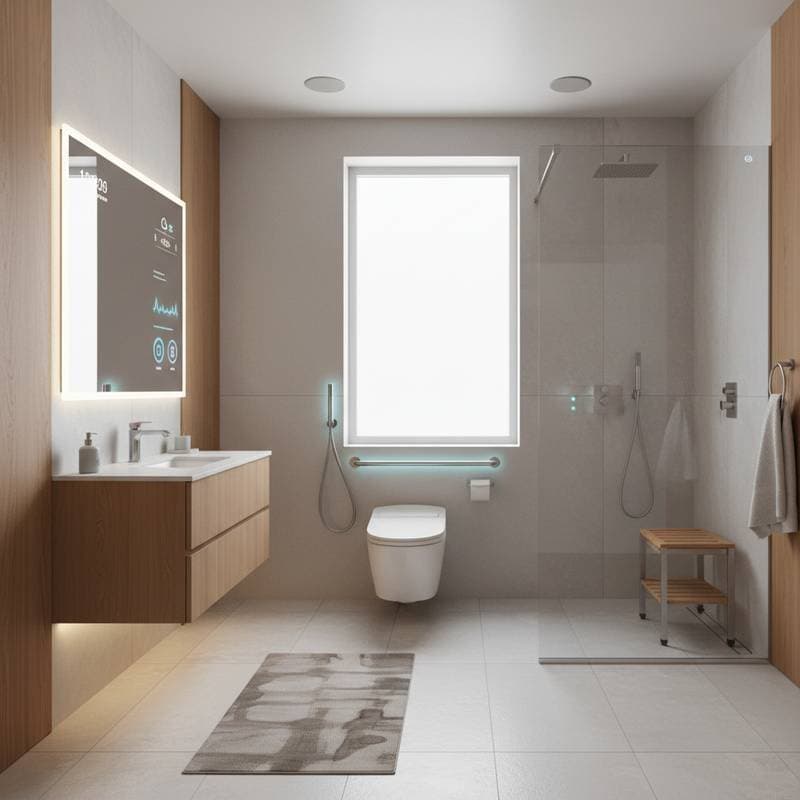
Future Bathroom Tech: Enabling Aging in Place
A well-designed bathroom serves as both a sanctuary and a safeguard. As populations age, the principle of aging in place influences designers, architects, and homeowners in their approach to bathing, grooming, and self-care routines. Future bathrooms combine beauty with intelligence, anticipating needs, preventing accidents, and promoting independence while preserving style.
This article examines ten innovations that position the bathroom as a responsive space. These selections integrate advanced technology with careful design. They illustrate how aesthetics, accessibility, and adaptability align, showing that universal design enhances rather than restricts.
10. Intelligent Lighting That Learns Patterns
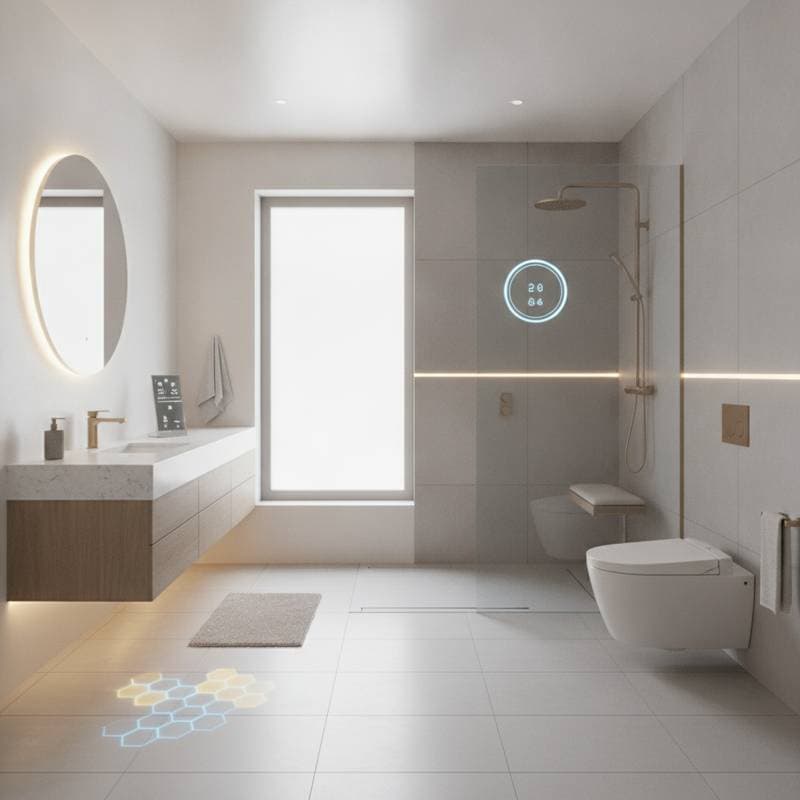
Lighting transforms interiors, and in bathrooms, it determines safety levels. Designers such as Samantha Lee of Lumina Studio incorporate adaptive systems that react to movement and circadian rhythms. Motion sensors gently light the floor and vanity upon entry, avoiding disorientation in dim conditions.
Fixtures like Ketra's adaptive LED system adjust color temperature daily to align with wake and rest cycles. For aging-in-place designs, this adjustment minimizes glare on surfaces such as polished nickel or glazed ceramic tile. The space feels dynamic, attentive, and supportive.
9. Voice-Controlled Fixtures That Simplify Routines
Hands-free technology now integrates fully with plumbing and lighting. Voice commands manage water temperature, shower duration, and mirror demisting, enhancing independence for those with mobility limitations. Design Collective Studio completed a project where one interface handled these functions.
Brands including Kohler and Moen produce smart faucets that deliver precise water volumes at set temperatures. This reduces scalding risks and eliminates difficult knobs or levers. Ease defines the luxury here.
8. Non-Slip Surfaces That Balance Safety and Style
Bathroom floors affect comfort and security through their texture. Materials like porcelain with micro-etched surfaces or engineered quartz composites offer slip resistance without an institutional appearance. Architect Miguel Cortés of Forma Habitat selects large-format tiles with few grout lines to minimize tripping while ensuring a smooth look.
Some flooring includes thermal features for warmth underfoot, preventing muscle tension or imbalance. Colors such as soft dove gray or misty taupe contrast with white fixtures, aiding navigation for those with vision challenges. These choices enhance both function and appeal.
7. Smart Mirrors That Monitor Wellness
Mirrors now function as diagnostic tools beyond reflection. Next-generation smart mirrors embed sensors to track heart rate, hydration, and skin condition. Reflex Technologies offers a model that links with wearables for daily wellness overviews, shown subtly on the display.
In spaces for older adults, these mirrors issue reminders for medication or fluids. They also tweak lighting to suit skin tones, boosting practicality and ease. The mirror acts as a discreet guardian within daily habits.
6. Adjustable Vanities and Countertops
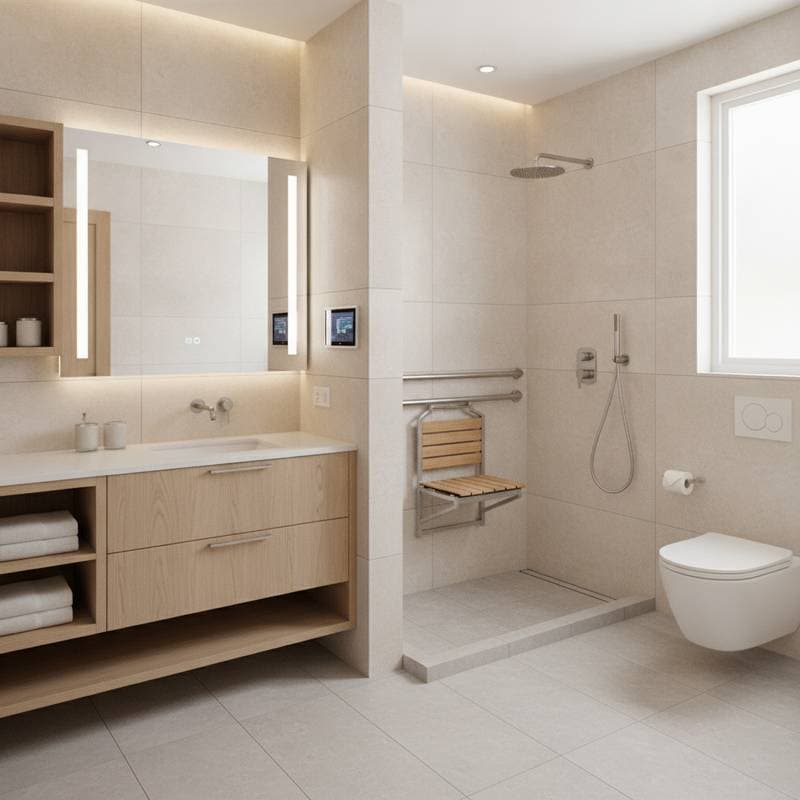
Height and reach flexibility turns accessibility into a premium feature. Motorized vanities from Häfele adjust countertops vertically via button, suiting standing or seated positions. Elena Navarro of Studio E Interiors highlights how this supports multigenerational households.
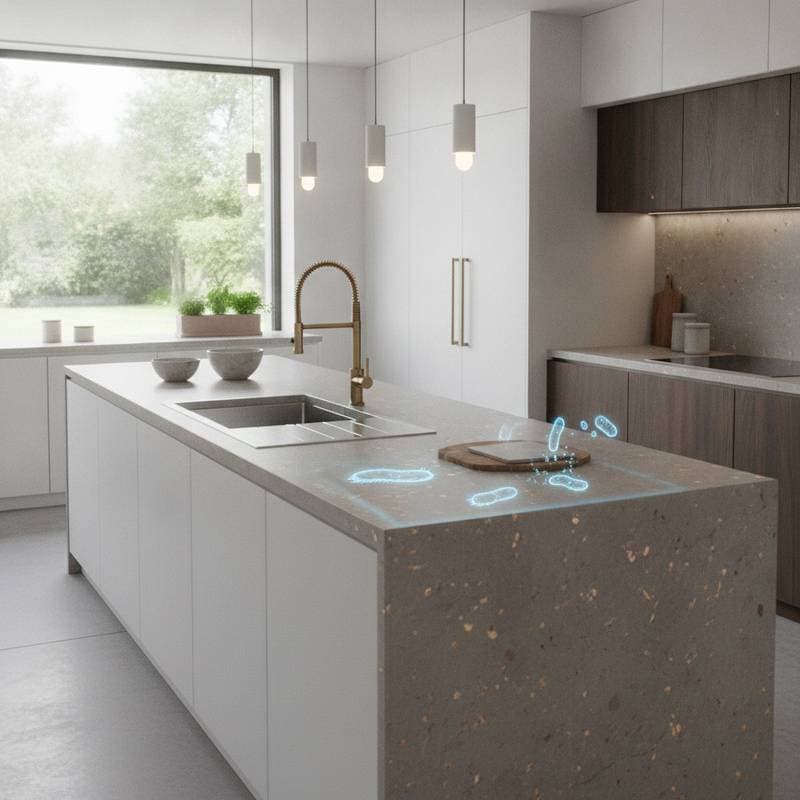
Countertops in Caesarstone's Cloudburst Concrete or Corian Glacier White resist stains with a nonporous, matte finish. Under-cabinet lighting improves task visibility and expands perceived space, vital in compact areas. These elements promote usability across ages.
5. Curbless Showers with Integrated Drainage
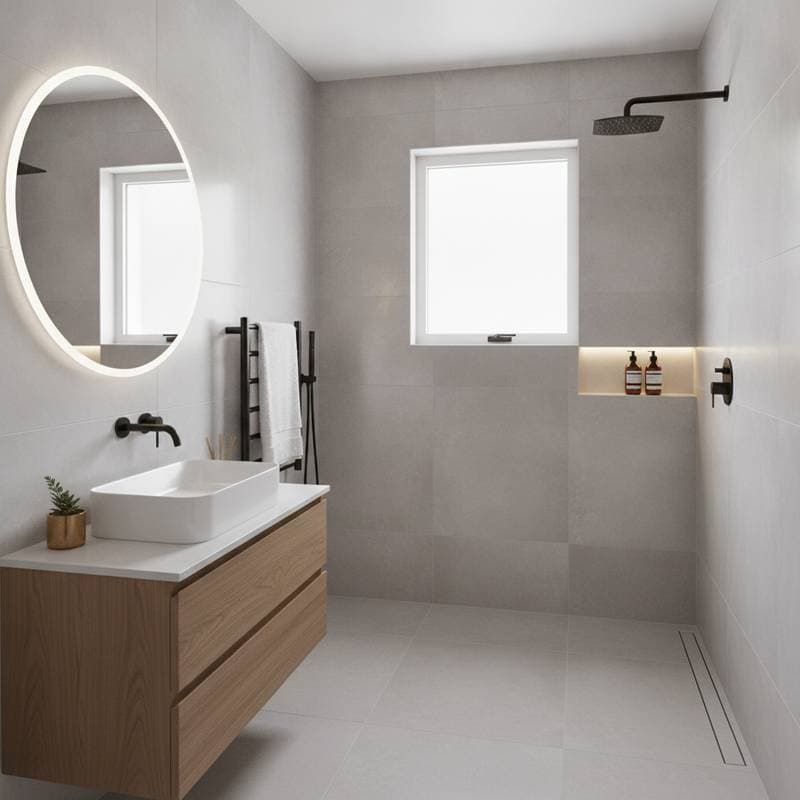
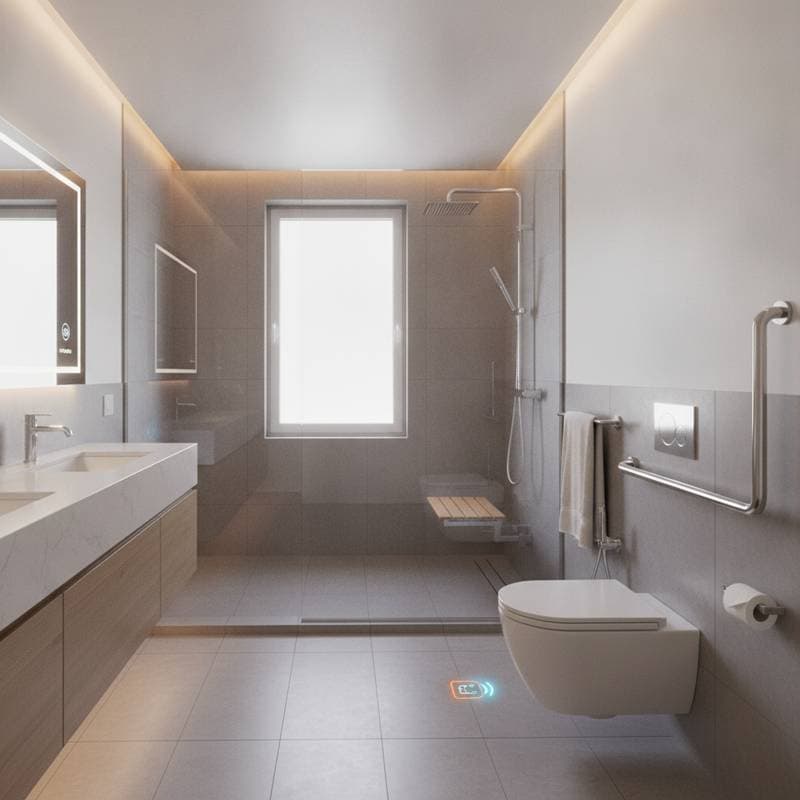
Curbless showers define universal design by providing seamless access and reducing barriers. Without thresholds, they facilitate wheelchair entry and eliminate trip risks. Studio Forma Architects employs Infinity Drain's linear systems that blend into tile patterns for a flat surface.
Hydrophobic coatings on glass panels ease cleaning, while large-format tiles in European oak porcelain or graphite terrazzo add warmth. This setup makes accessibility an elegant feature rather than a concession.
4. Heated Grab Bars and Support Systems
Grab bars shed their basic image through innovative designs that integrate as artful components. ThermaTouch Rail Systems pair heating with stainless steel forms for stability and comfort. Haruko Tanaka of Atelier Nami incorporates them in spa-like bathrooms without disrupting tile flows.
Available in brushed brass or matte black, these rails coordinate with hardware. Some serve as towel holders, combining safety with utility. Subtlety ensures function complements design.
3. Sensor-Based Water Management and Leak Detection
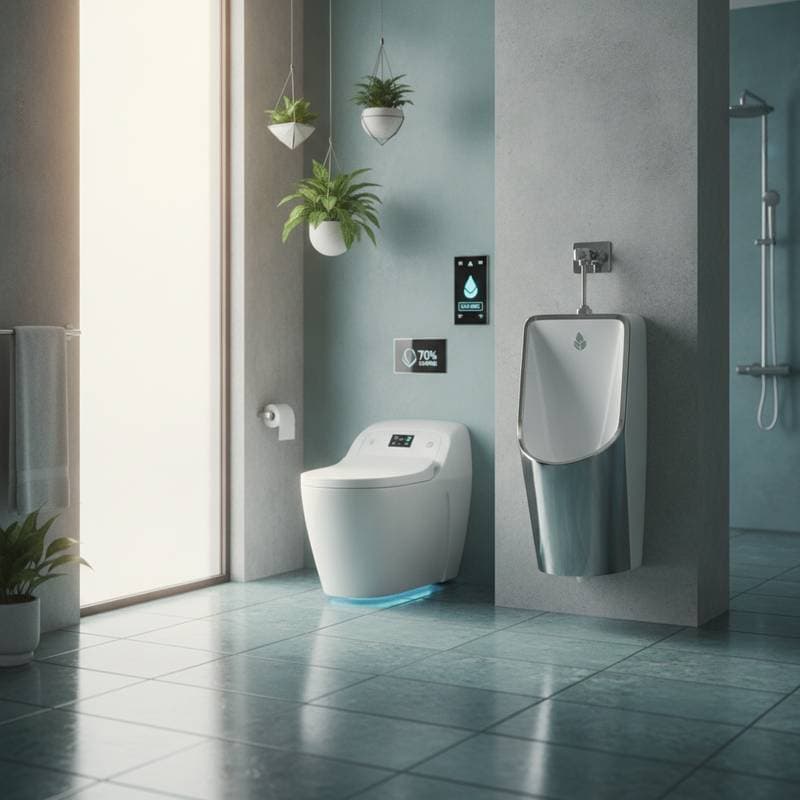
Sensors manage water effectively in bathrooms. Systems from Phyn and Grohe Sense Guard identify pressure or moisture shifts, halting flow to avert leaks. For older homeowners facing mobility or cognitive issues, this delivers reassurance.
Usage tracking reveals health patterns; unusual changes trigger notifications. Mobile app integration lets caregivers monitor remotely, balancing independence with oversight. Proactive measures safeguard daily life.
2. Wellness-Oriented Tub Design
Bathing supports therapy, and modern tubs enhance this with targeted features. Walk-in models include hydrotherapy jets, chromotherapy lights, and supportive shapes for circulation and calm. Jacqueline Ortiz of Casa Form Studio featured an MTI Baths tub with microbubble therapy for joint ease.
Slip-resistant interiors, broad doors, and controlled filling maintain safety alongside sophistication. Curved lines and finishes like Benjamin Moore's Silver Marlin or Farrow & Ball's Light Blue foster tranquility. Tubs evolve into therapeutic focal points.
1. Integrated Environmental Controls and Predictive Assistance
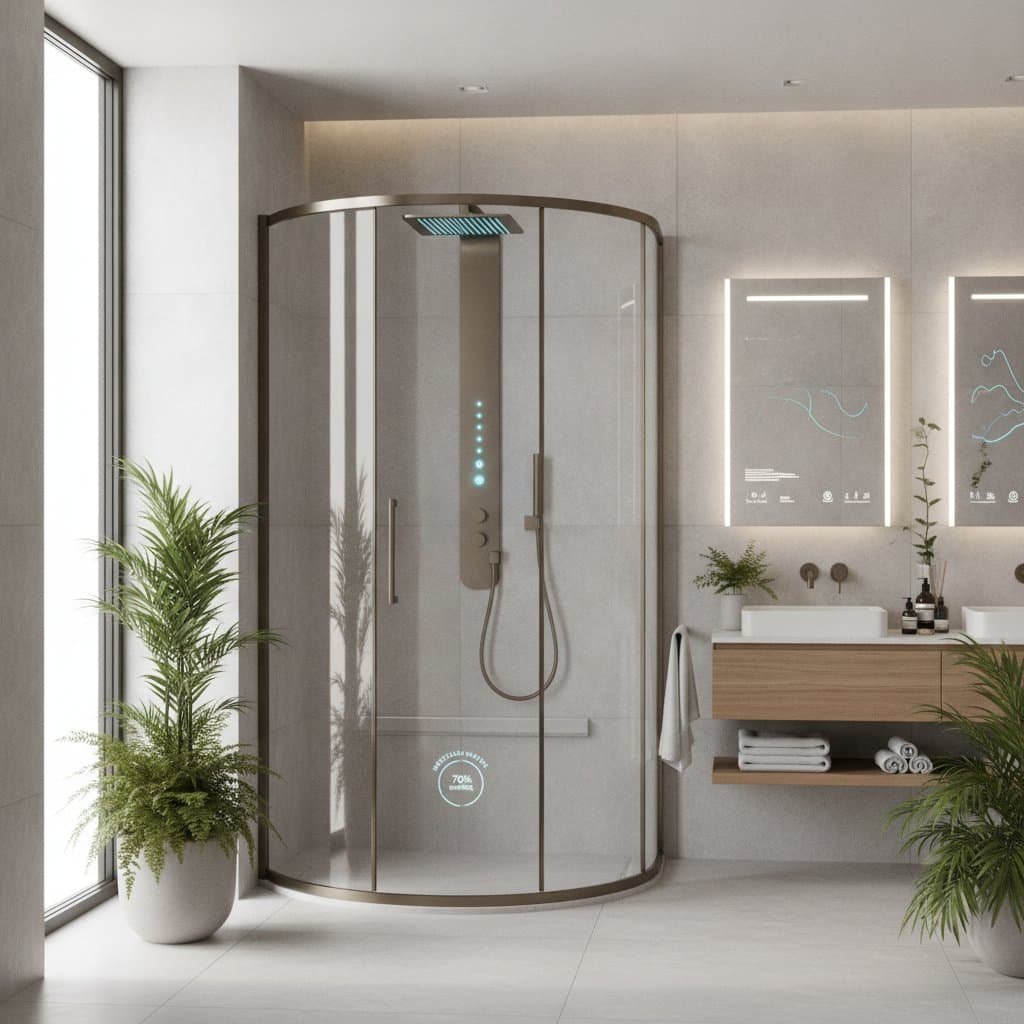
Holistic systems unify lighting, temperature, ventilation, and aromatherapy. Architectural technologist Lucas Meyer calls this a responsive envelope that learns preferences and anticipates actions. Upon entry, it warms towel bars, regulates humidity, or sets shower temperatures.
Predictive sensors spot imbalances or inactivity, issuing alerts as required. The bathroom functions as an unobtrusive ally, providing aid seamlessly. This integration elevates the entire experience.
Integrating Technology Thoughtfully
Aging in place involves environments that adapt to users with compassion and progress. Future bathrooms embody this by upholding dignity, autonomy, and health through smart design. Homeowners benefit from renovations that prioritize personal needs over showy elements.
Start by mapping routines, then choose systems that streamline tasks. Partner with designers, architects, occupational therapists, or accessibility experts to cover present and emerging requirements. Select materials like non-slip porcelain, matte quartz, or vinyl for grip and visibility.
Warm neutrals and gentle lighting ease eye strain. Faucet placements and tile choices build overall assurance and command.
Incorporating Personal Elements
Advanced tech thrives when paired with individual flair. Place cherished artwork above the tub, position a woven stool by the vanity, or infuse scents of cedar and lavender. These touches turn functional spaces into personal retreats.
Artisans craft custom cabinetry, hardware, and lights to echo tastes. Moderation keeps innovation in service to the user. Bathrooms gain depth, weaving utility with personal narrative.
Ensuring Long-Term Adaptability
Shifting needs demand bathrooms that evolve without disruption. Modular fixtures, adjustable lighting, and sensors allow updates as capabilities change. This flexibility safeguards value and relevance over time.
Regular assessments refine settings for ongoing suitability. Such foresight creates enduring, supportive havens that align with life's progression.