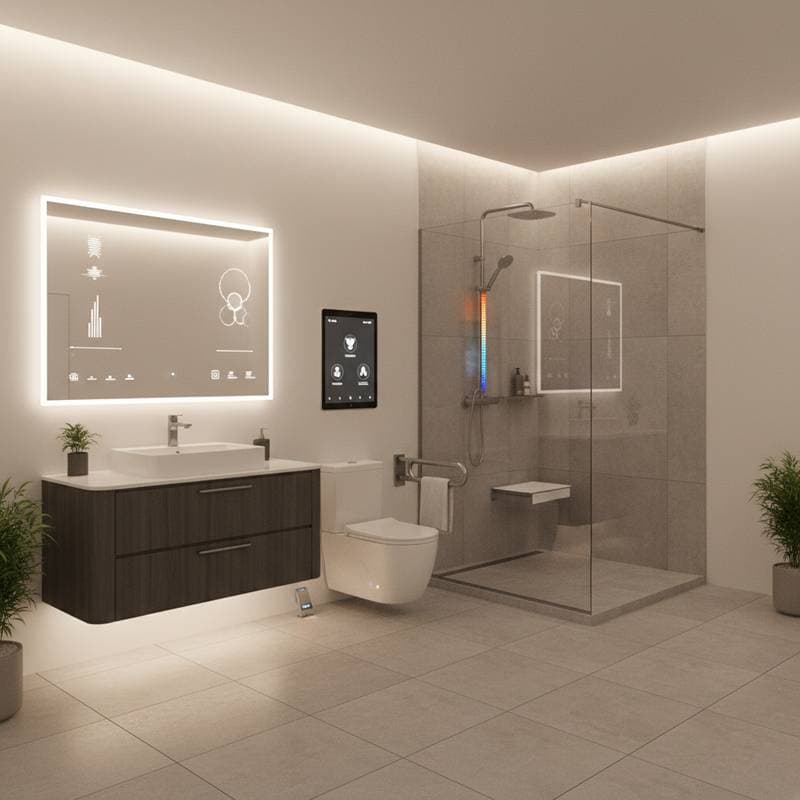
Essential 2026 Bathroom Technologies for Safe Aging in Place
As a contractor specializing in home remodels that support long-term independence, I have witnessed firsthand how targeted bathroom technologies safeguard both physical well-being and personal dignity. These upgrades focus on practical integration rather than extravagant features. Proper selection and installation ensure they meet evolving needs without introducing unnecessary complexity or ongoing repair demands.
The Critical Role of Bathroom Technology in Fall Prevention
Bathrooms rank as the primary sites for in-home falls due to slick surfaces, inadequate illumination, and challenging layouts. Integrating technology addresses these hazards effectively while prioritizing ease of use. The emphasis lies on automated responses that simplify routines and minimize manual interactions, allowing users to navigate spaces with greater assurance.
1. Automated Smart Lighting Solutions
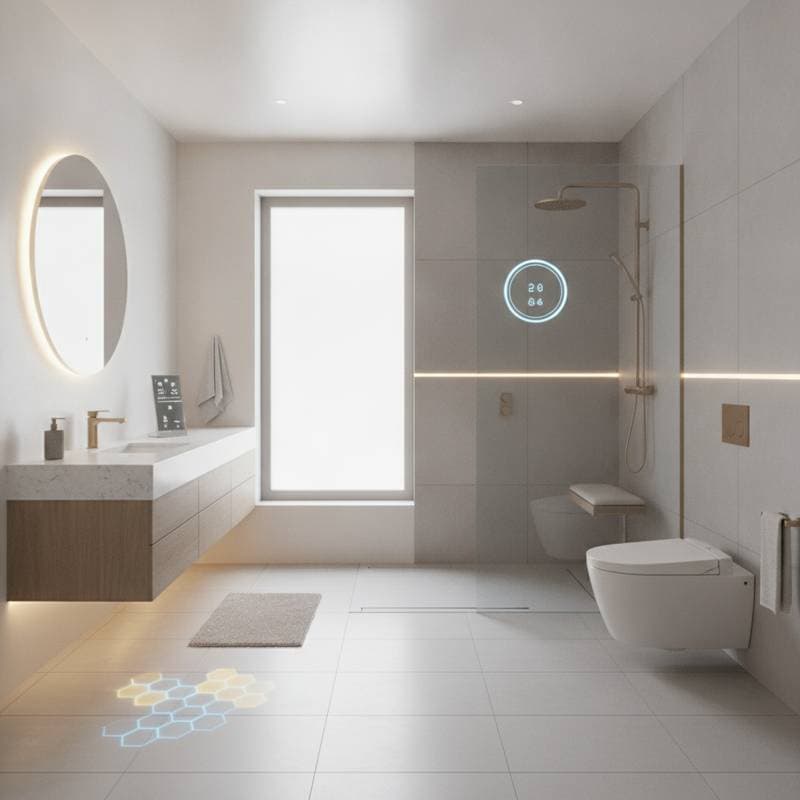
Adequate illumination serves as a foundational defense against mishaps. Motion-activated LED lights activate upon entry and gradually dim upon exit, removing the need to search for switches in low visibility. Advanced models modulate intensity according to ambient conditions or time, easing visual adaptation for those with reduced acuity.
Contractors should select fixtures certified for humid settings and connect them to isolated circuits for reliability. Opt for durable sensors to avoid malfunctions that could compromise safety during critical moments. During installation, position lights to cover all pathways and task areas comprehensively.
2. Precision Temperature Management in Showers and Faucets
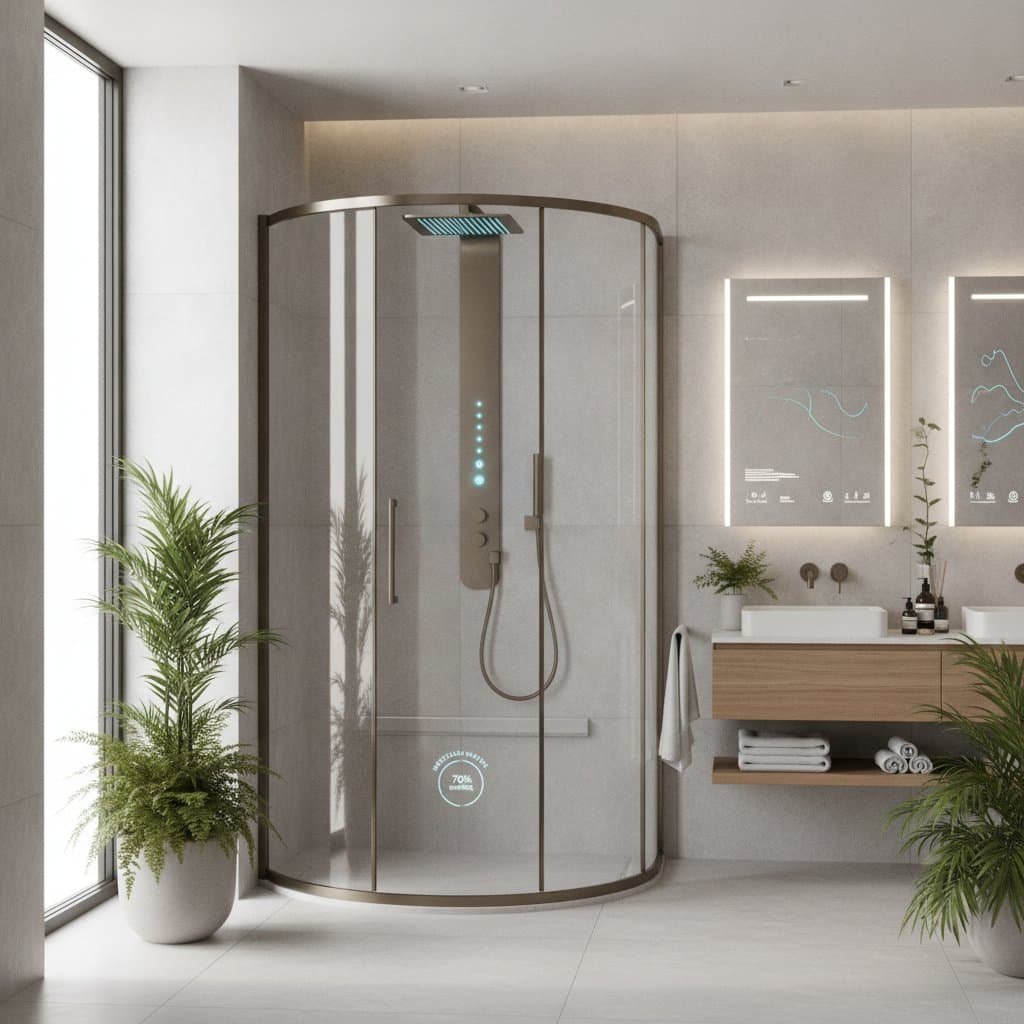
Burn risks from fluctuating water temperatures demand reliable controls. Thermostatic digital valves maintain consistent output at user-defined levels, accessible via voice activation or mobile applications for remote oversight by caregivers. Incorporate tactile override mechanisms to accommodate potential electronic glitches, alongside visible temperature indicators for pre-use verification.
In a recent project, we fitted a shower system with an automatic cutoff that halts flow if temperatures surpass safe thresholds. This addition provided the client with tangible security, demonstrating how such features integrate seamlessly without overwhelming the design. Always calibrate systems during setup to align with individual preferences and test for consistent performance.
3. Hands-Free Voice Controls for Everyday Operations
Voice-activated assistants now extend to bathroom environments, managing illumination, audio, and scheduled prompts without physical effort. For individuals with mobility limitations, commands like activating water flow, adjusting warmth, or initiating emergency calls offer invaluable convenience. Position devices in vapor-resistant enclosures or adjacent dry areas to ensure longevity.
Professional wiring guarantees stable voice detection amid ambient noise or echoes. Avoid amateur installations, as they risk signal interference or exposure to moisture. Train users on basic phrases during commissioning to foster familiarity and confidence in the system's responsiveness.
4. Advanced Sensors for Fall Detection and Monitoring
Evolving sensor technologies identify irregular motions, extended stillness, or impact events, triggering notifications to designated contacts or services. Ceiling-placed units preserve privacy over visible cameras, and many link with broader home security or health platforms. Placement optimizes coverage of high-risk zones like tubs and toilets.
Ensure grounding and moisture shielding during integration, alongside robust Wi-Fi access for real-time alerts. Test sensitivity thresholds post-installation to balance detection accuracy with false alarms. This proactive approach empowers users while reassuring family members of vigilant oversight.
5. Intelligent Toilets with Integrated Bidet Capabilities
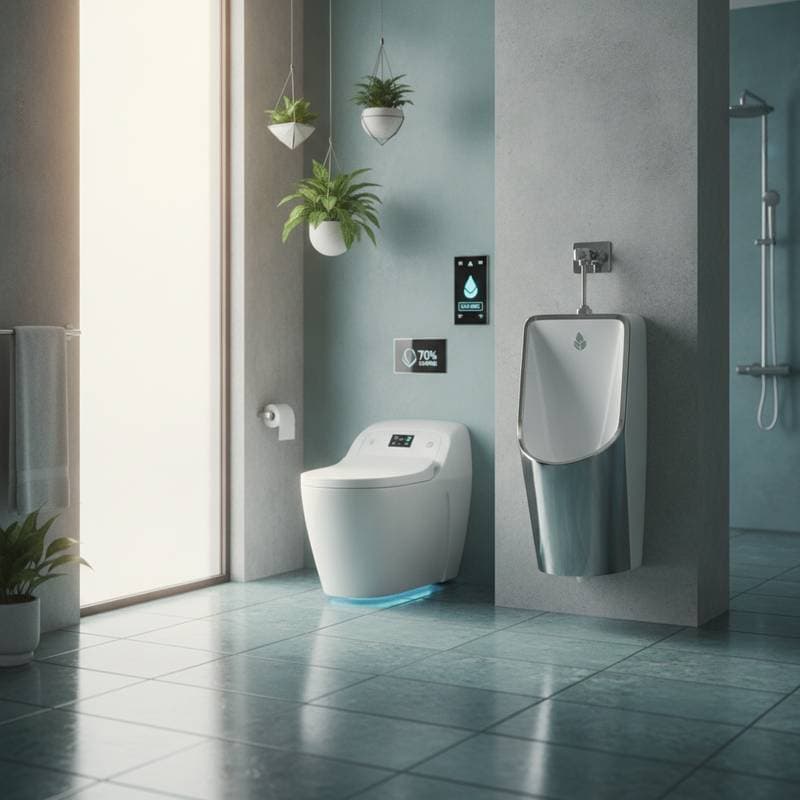
Features such as auto-flush mechanisms, warmed seating, and antimicrobial cleansing go beyond convenience to alleviate physical demands on aging bodies. Retrofit bidet attachments or select full units that enhance personal care independently. Verify electrical capacity beforehand, as these appliances require substantial power.
Prioritize interfaces with straightforward buttons and mechanical backups to prevent user frustration. Integrated low-level illumination and proximity triggers facilitate safe nocturnal access. Regular maintenance schedules, outlined in user manuals, sustain hygiene and functionality over time.
6. Intelligent Flooring with Integrated Safety Features
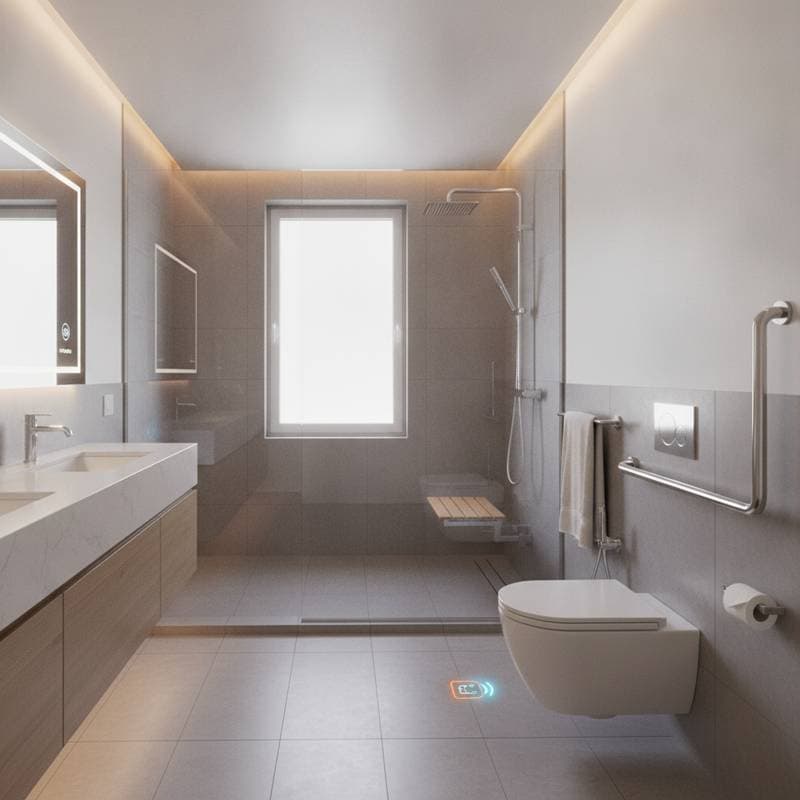
Contemporary flooring incorporates embedded detectors for fluid accumulation beneath surfaces or near appliances, paired with non-slip textures for traction. These systems notify occupants of potential hazards promptly, averting escalation. Waterproof membranes beneath tiles fortify the assembly against incidental water exposure.
Conduct thorough operational checks prior to finalizing installations to confirm alert reliability. Address any detected issues immediately, as post-sealing corrections prove costly. This layered defense transforms floors from vulnerability points into reliable safety assets.
7. Interactive Digital Mirrors for Health Insights
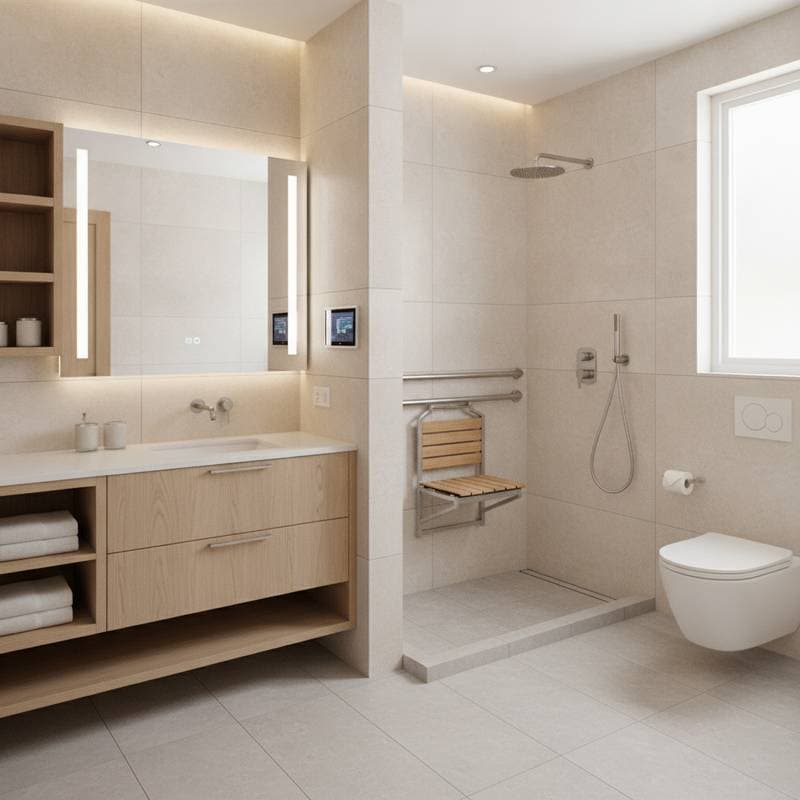
Versatile mirrors project essential information like daily forecasts, medication cues, or biometric readings from linked devices such as scales or monitors. Enhanced magnification and adjustable lighting aid precise grooming tasks, while humidity sensors flag excessive dampness risks. Low-voltage configurations ensure compatibility with wet-area standards.
Secure cabling prevents interference and supports data synchronization. Customize displays to highlight pertinent health metrics, encouraging proactive wellness management. Such integrations subtly embed support into daily rituals, promoting sustained autonomy.
Integrating Technologies for Enduring Reliability
Successful bathroom adaptations harmonize innovation with proven durability, where each element fulfills a defined role in safety enhancement. Collaborate with certified professionals versed in universal design principles and electrical protocols to navigate complexities. Thoughtful execution renders these aids unobtrusive, preserving the space's usability and serenity for extended periods.