Scullery Kitchens: The Ultimate Hidden Prep Upgrade
Every great kitchen balances beauty and function, but few spaces capture that balance as elegantly as the modern scullery kitchen. Once a behind-the-scenes necessity in grand estates, the scullery has reemerged as a coveted feature in contemporary homes. It serves as a hidden prep zone, a place where the practical work of entertaining can unfold quietly while the main kitchen remains pristine. The result is a seamless blend of hospitality and design sophistication.
A Return to Quiet Luxury
The renewed interest in scullery kitchens reflects a wider appreciation for discreet functionality. Designers like Sarah Blank of Sarah Blank Design Studio describe the scullery as a working extension of the main kitchen that supports both the cook and the experience of hosting. This quiet luxury focuses on refinement rather than excess. Behind a soft-close pocket door, the scullery hides the hum of dishwashers and the clutter of meal prep, maintaining the serenity of the primary space.
Seamless Transitions Through Design
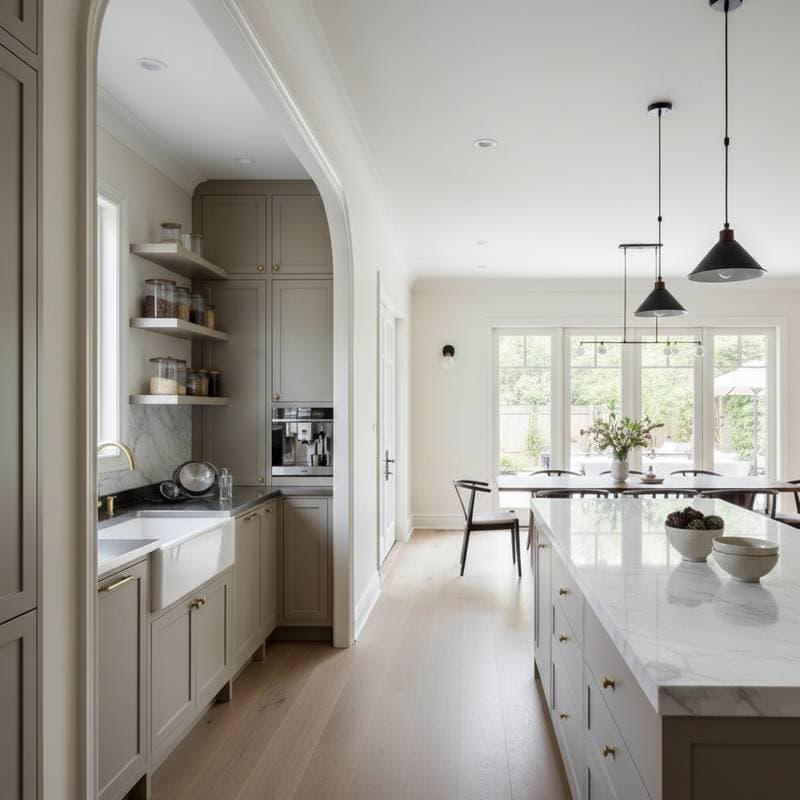
A well-conceived scullery never feels disconnected. Architects often design the transition between kitchen and scullery with visual continuity in mind. Repeating materials such as Calacatta Viola marble or European white oak cabinetry helps the two rooms flow into each other. Designer Steven Gambrel often uses matching finishes but shifts the mood with slightly deeper paint tones, such as Farrow & Ball Railings, to signal a more utilitarian atmosphere while keeping the palette cohesive.
The Function Behind the Form
The scullery's purpose is simple: to make entertaining effortless. Extra sinks, dishwashers, and hidden refrigerators transform it into a working hub. Many homeowners request two dishwashers, one in the main kitchen for daily use and one in the scullery for larger gatherings. Deep fireclay sinks and durable Caesarstone quartz countertops handle the practical demands of food prep and cleanup. Every inch serves a purpose, and every element contributes to a sense of calm efficiency.
Hidden Storage, Visible Craft
Storage defines the success of a scullery. Custom millwork by firms like Henrybuilt or Plain English often includes integrated pullouts, narrow spice drawers, and appliance garages. Finishes range from painted beadboard to hand-rubbed walnut veneer. Brass hardware by Armac Martin or Baldwin gleams softly under warm task lighting. Even though the scullery is hidden, designers treat it with the same level of craftsmanship as the main kitchen, knowing that beauty enhances usability.
Lighting That Works Hard and Feels Soft
Lighting in a scullery must be both practical and atmospheric. Designers often combine under-cabinet LED strips with warm ambient fixtures to avoid harsh contrasts. Urban Electric Co. pendants in aged brass or Visual Comfort sconces add a subtle glow that flatters the space. The goal is clarity without glare, an environment where functionality never overshadows comfort. When doors are open to the main kitchen, the lighting transitions naturally, maintaining visual harmony.
The Role of Texture and Material Contrast
Texture plays a defining role in differentiating the scullery from the show kitchen. Rougher textures like honed marble, brushed stainless steel, or unlacquered brass patina beautifully with age. Some designers opt for limewashed plaster walls or handmade Zellige tiles to introduce warmth and tactility. These surfaces tell a story of use and authenticity, reminding us that kitchens are lived-in spaces, not just visual statements.
The Hidden Coffee Bar or Beverage Zone
A modern scullery often doubles as a coffee station or beverage center. Built-in espresso machines, under-counter wine fridges, and ice drawers transform the space into a morning retreat or an evening bar. Designer Heidi Caillier often conceals these elements behind paneled doors so that the scullery maintains a calm rhythm even when in use. The convenience is undeniable: guests can serve themselves while the host keeps the main kitchen free from congestion.
Integrating Technology and Efficiency
Though rooted in tradition, the scullery embraces innovation. Motion-sensor faucets, concealed induction burners, and smart storage solutions bring contemporary efficiency to a timeless concept. Cabinetry often conceals charging stations and small appliances, allowing the main kitchen to remain clear for presentation. Builders like DeVol Kitchens and Bulthaup approach the scullery as a technical workspace that supports the artistry of cooking while respecting the visual language of the home.
The Art of Concealment
A defining feature of the scullery is its ability to disappear. Pocket doors, frosted glass partitions, or discreet sliding panels allow the space to open or close depending on the occasion. Some designs use full-height cabinetry to disguise the entrance entirely, creating an architectural secret within the home. The concealment adds an element of intrigue, proving that luxury often resides in what remains unseen.
A Reflection of Modern Living
The rise of the scullery kitchen mirrors changes in the way people live and entertain. Open-concept homes invite social connection, but they also expose every surface to view. The scullery restores privacy and order by giving the practical aspects of hospitality their own stage. It allows the main kitchen to function as a social and aesthetic centerpiece while the work happens quietly in the background. Designers like Kelly Wearstler describe this balance as the choreography of living beautifully, where every element has its place and purpose.
Living with Your Design
Once experienced, a scullery becomes indispensable. It transforms the rhythm of daily life, keeping clutter contained and surfaces calm. Investing in one encourages thoughtful routines: prepping ingredients in one space, serving in another, and enjoying a seamless flow between the two. Homeowners who entertain frequently find the scullery invaluable, while even smaller households appreciate the sense of quiet control it brings.
The beauty of the scullery lies in its subtlety. It does not clamor for attention but enhances the way a home feels and functions. Whether concealed behind paneled doors or tucked beneath a staircase, this hidden prep zone represents a new chapter in kitchen design, one defined by intelligence, discretion, and grace. For those seeking a kitchen that works as beautifully as it looks, the scullery is not just an upgrade, it is an evolution in how we live with design.