Universal Design Principles for Aging-in-Place Bathrooms in 2026
Bathrooms often present the greatest challenges for mobility as people age. A single raised threshold or glossy tile can lead to accidents that compromise independence. Thoughtful universal design addresses these risks early, ensuring the space serves users of all abilities while maintaining an attractive appearance.
This approach integrates accessibility into everyday functionality. Homeowners benefit from spaces that evolve with their needs, avoiding the need for disruptive changes later. The result is a bathroom that feels welcoming and secure for years ahead.
The Value of Forward-Thinking Bathroom Planning
Investing in universal design during a remodel yields long-term savings and peace of mind. A comprehensive update incorporating these elements typically ranges from $15,000 to $35,000, influenced by room dimensions, material selections, and installation complexity. Postponing such modifications until mobility declines often doubles costs due to the difficulties of altering fixed structures.
Properties with accessible bathrooms appeal to diverse buyers in the real estate market. Experts observe that these features broaden marketability, potentially increasing resale value by up to 10 percent in aging populations. Planning ahead aligns with emerging 2026 building standards that emphasize inclusivity.
Key Features for Enhanced Safety and Accessibility
Universal design prioritizes elements that prevent falls, ease navigation, and support daily routines. The following components form the foundation of a resilient bathroom. Each contributes to a cohesive environment that balances practicality with elegance.
1. Barrier-Free Showers
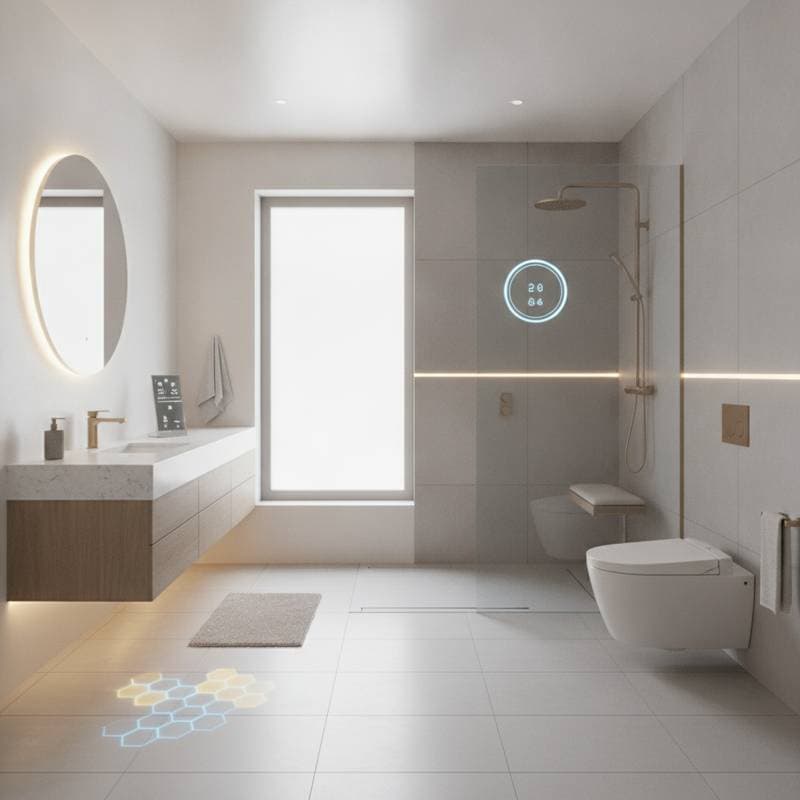
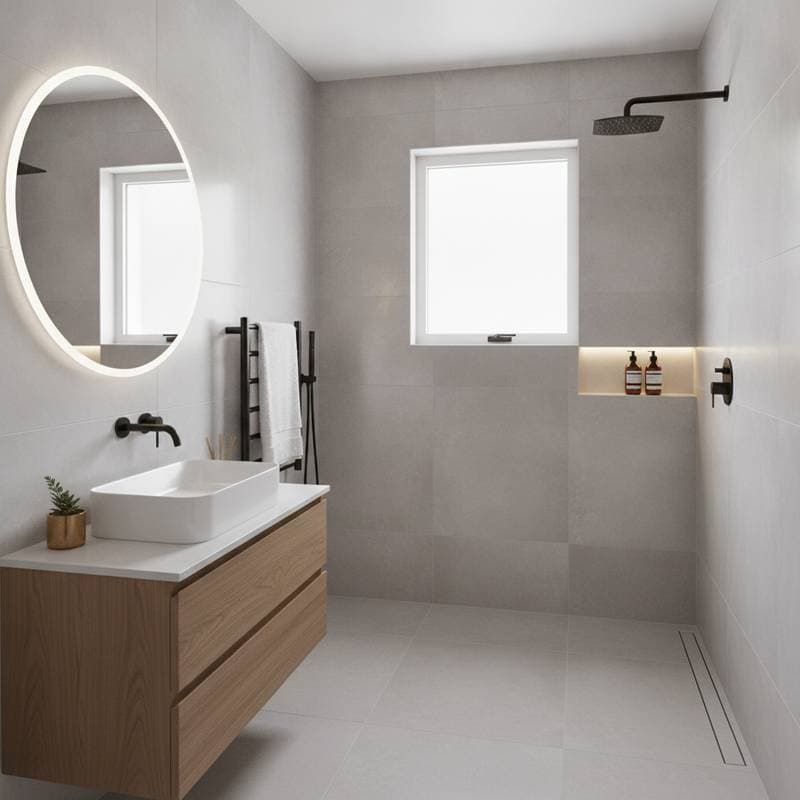
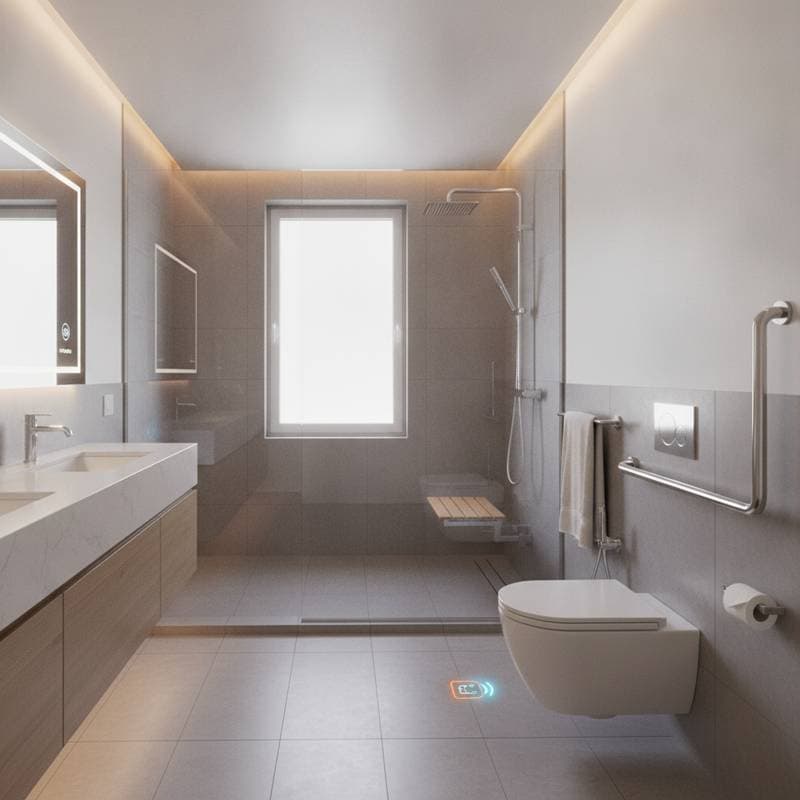
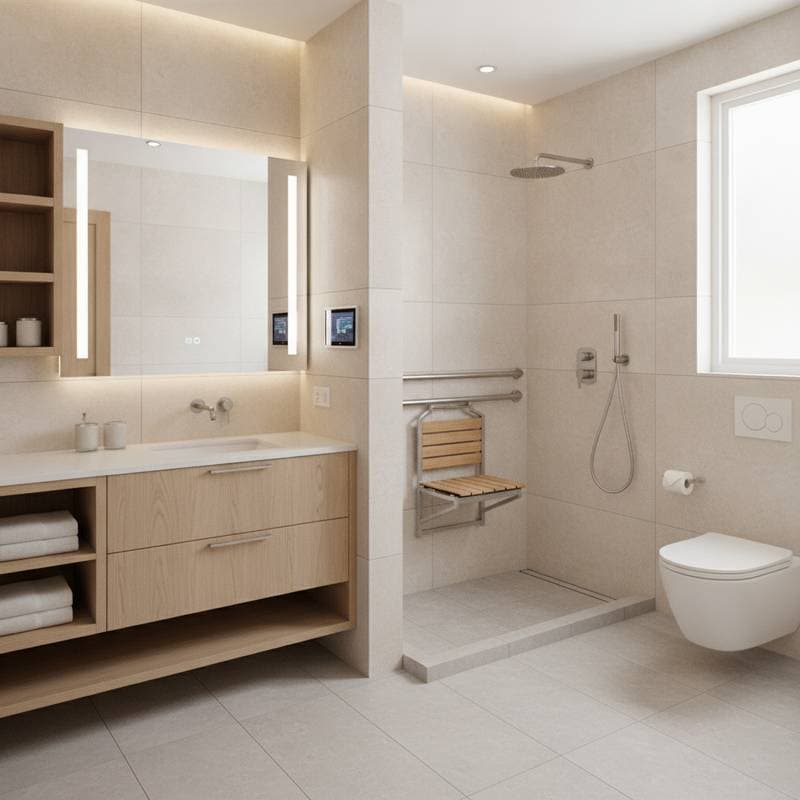
Curbless showers eliminate steps that pose tripping hazards. These designs feature a gradual slope toward the drain, allowing seamless entry from the surrounding floor.
Consider installing a linear drain along the back wall for efficient water management. Pair with a handheld showerhead on an adjustable rail for versatile use. Installation costs range from $5,000 to $12,000, including waterproofing and tiling.
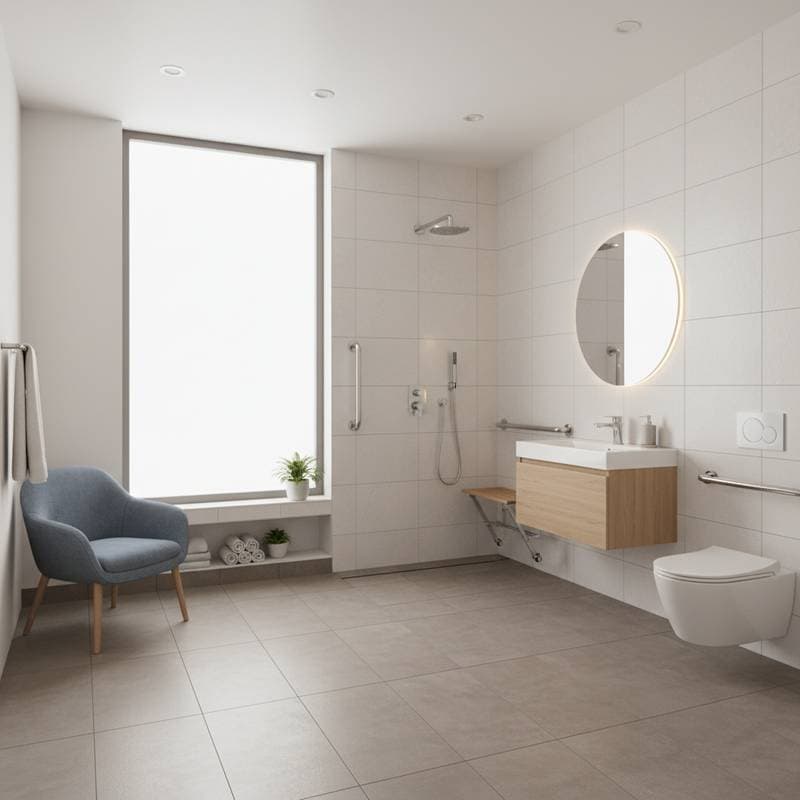
Opt for fold-down seating within the shower to provide rest without obstructing space. This setup accommodates wheelchair access while preserving an open, modern feel.
2. Non-Slip Flooring
Bathroom floors demand materials that resist moisture yet provide reliable traction. Falls on wet surfaces represent a leading cause of injuries in these areas.
Select textured porcelain or ceramic tiles rated at a minimum DCOF of 0.42 for slip resistance. Luxury vinyl tiles offer a softer alternative with a matte surface that conceals water spots. Rubber options deliver superior cushioning and grip, ideal for high-traffic zones.
Installation expenses fall between $3 and $12 per square foot. Incorporate grout lines with anti-slip additives, and avoid loose rugs that create additional obstacles.
3. Optimized Lighting Solutions
Adequate illumination reduces shadows and improves visibility, critical for tasks like shaving or applying medication. Poor lighting contributes to missteps in confined spaces.
Install layered lighting: overhead fixtures for general coverage, task lights above the vanity, and motion-sensor strips along pathways. Dimmable LED options allow customization for different times of day.
Budget $500 to $2,000 for a full setup, ensuring fixtures meet energy-efficient standards. Position lights to highlight grab bars and controls, enhancing overall safety.
4. Grab Bars and Support Rails
Contemporary grab bars integrate into decor, available in finishes like brushed nickel, matte black, or polished chrome to complement existing hardware.
Strategic placement includes one adjacent to the toilet for assistance during transfers, another at the shower entrance, and a vertical bar inside for stability. Ensure horizontal bars span at least 36 inches for broad support.
Each bar costs $50 to $200 installed, with secure anchoring into wall studs or using mounts rated for 250 pounds or more. Professional assessment confirms load-bearing capacity in older homes.
5. Accessible Vanities and Toilets
Vanities with open space beneath accommodate seated users, while comfort-height toilets reduce bending. These adjustments promote ease without altering the room's proportions.
Choose vanities at 34 inches high with knee clearance of 27 inches. Wall-mounted models save floor space and simplify cleaning. Toilet seats at 17 to 19 inches align with ADA guidelines for independence.
Expect $1,000 to $4,000 for these fixtures, including bidet attachments for hygiene. Select durable, water-resistant materials like quartz for surfaces that withstand daily use.
6. Smart Fixtures and Automated Controls
Advancements in technology streamline routines, minimizing physical effort. These innovations fit within 2026 trends toward connected homes.
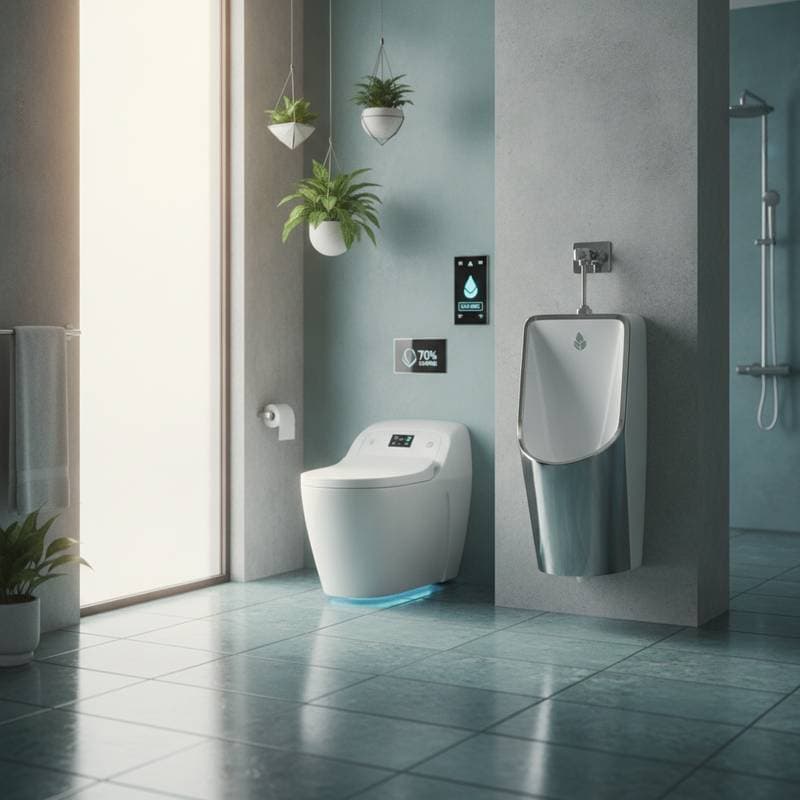
Touchless faucets respond to hand motions, reducing germ transmission. Smart toilets offer bidet functions, heated seats, and auto-flush capabilities. Voice commands control shower temperature and lighting via integrated systems.
Basic units start at $200, while full smart setups reach $3,000. Verify compatibility with home Wi-Fi and electrical infrastructure to avoid integration issues.
Integrating Style Across Generations
Accessibility need not compromise aesthetics. Universal design enhances visual appeal through thoughtful material choices and layouts.
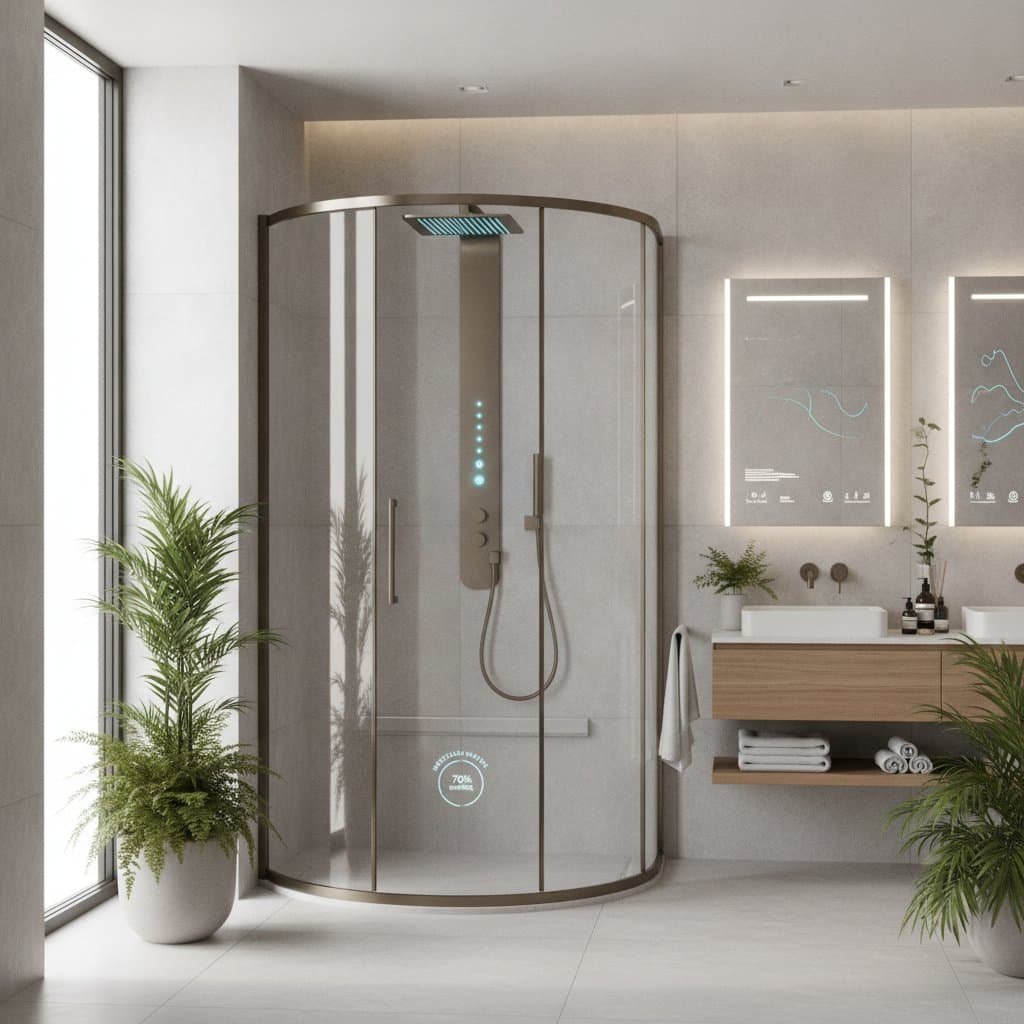
For a contemporary vibe, incorporate frameless glass enclosures, wall-hung sinks, and sleek linear drains. Traditional spaces benefit from wainscoting, pedestal sinks, and ornate mirrors. Spa-like atmospheres emerge with natural stone accents, rain showerheads, and ambient under-cabinet glow.
Prioritize low-maintenance surfaces: large porcelain slabs minimize seams, and antimicrobial coatings ease upkeep. Textural contrasts, such as woven baskets or linen curtains, add warmth without clutter.
Steps to Implement Your Vision
Transforming a bathroom requires a structured approach. Begin with an assessment of current limitations and future needs.
Compile a prioritized list of features, then establish a budget that allocates 20 percent for contingencies. Engage a contractor certified in universal design and familiar with local regulations, such as those updating in 2026 for energy and accessibility.
Phased updates allow gradual progress: start with flooring and lighting, then advance to fixtures. This method distributes costs and minimizes disruption. The outcome is a sanctuary that sustains health, dignity, and enjoyment for decades.