Luxury Technology Transforms Aging-in-Place Bathrooms
Homeowners increasingly view bathrooms as personal sanctuaries where design, comfort, and safety intersect. For those planning to age in place, these spaces gain heightened significance. Accessible design has evolved beyond institutional appearances; luxury technology now combines with universal design to produce bathrooms that prioritize both safety and beauty.
Homeowners often struggle to balance style with safety. Many delay action until an incident like a fall prompts urgent changes, leading to hasty renovations and elevated expenses. Proactive integration of accessibility features during initial remodeling yields intentional designs that avoid the appearance of afterthoughts. Clients frequently express regret over past retrofits; early planning conserves resources and achieves cohesive elegance.
Risks of Overlooking Safety in Bathroom Design
Bathrooms unprepared for mobility or balance shifts pose significant hazards for aging individuals. The following examples illustrate common issues observed in remodeling projects:
- Slippery floors lacking adequate drainage. Premium tiles enhance visual appeal, yet smooth surfaces combined with minor water accumulation can result in severe injuries.
- Showers featuring high curbs or confined entrances. Such designs obstruct access for walkers or wheelchairs.
- Inadequate or misplaced lighting. Dim areas obscure floor hazards or entry thresholds.
- Fixtures demanding significant grip strength. Conventional handles challenge users with arthritis.
- Unreinforced wall structures. Future grab bar installations require costly structural modifications.
These oversights contribute to falls, injuries, and subsequent remodels. Effective solutions involve intelligent planning and seamless integration, areas where contemporary luxury technology excels.
Advanced Technologies Enhancing Bathroom Safety
Luxury technology elevates accessibility by fusing functionality with refined aesthetics. These innovations not only mitigate risks but also preserve user autonomy and dignity. The following technologies deliver substantial improvements.
1. Voice-Activated Fixtures
Hands-free operation of faucets, lighting, and ventilation represents a practical advancement. Voice-controlled systems enable users to activate showers, regulate temperatures, or adjust illumination without physical interaction. This proves invaluable for individuals with mobility limitations or arthritis. Installations often include commands to fill tubs to precise depths and temperatures, minimizing burn risks and overflows while enhancing convenience.
2. Smart Showers with Precise Temperature Management
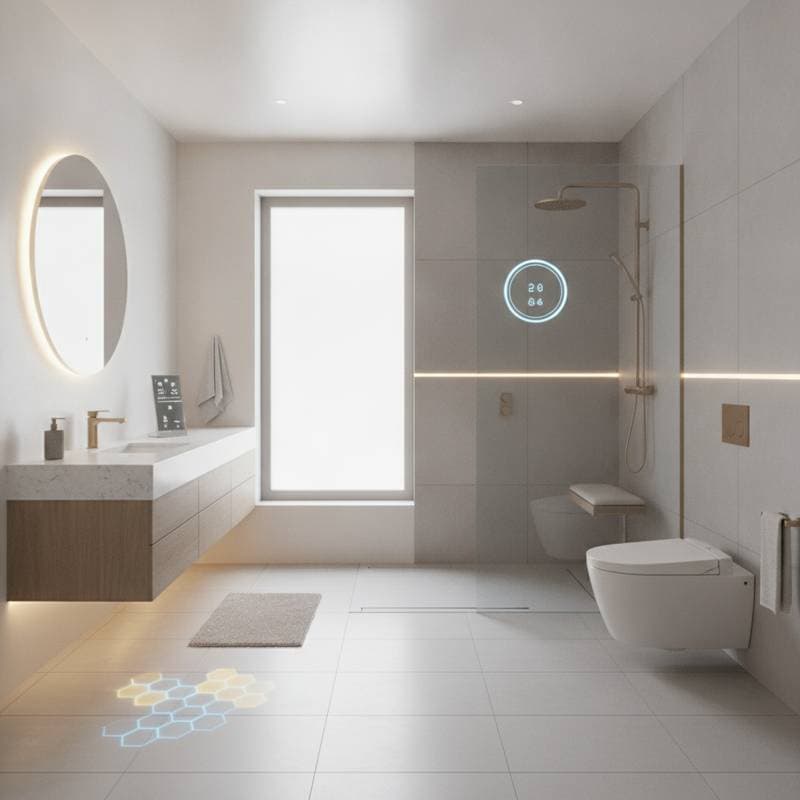
Digital thermostatic valves ensure steady water temperatures, eliminating unexpected fluctuations. This safeguard benefits older adults with reduced response times. Systems frequently offer personalized profiles for individual preferences. Combined with low-entry thresholds and integrated seating, these showers deliver spa-like experiences alongside essential accessibility.
3. Motion-Activated Illumination Systems
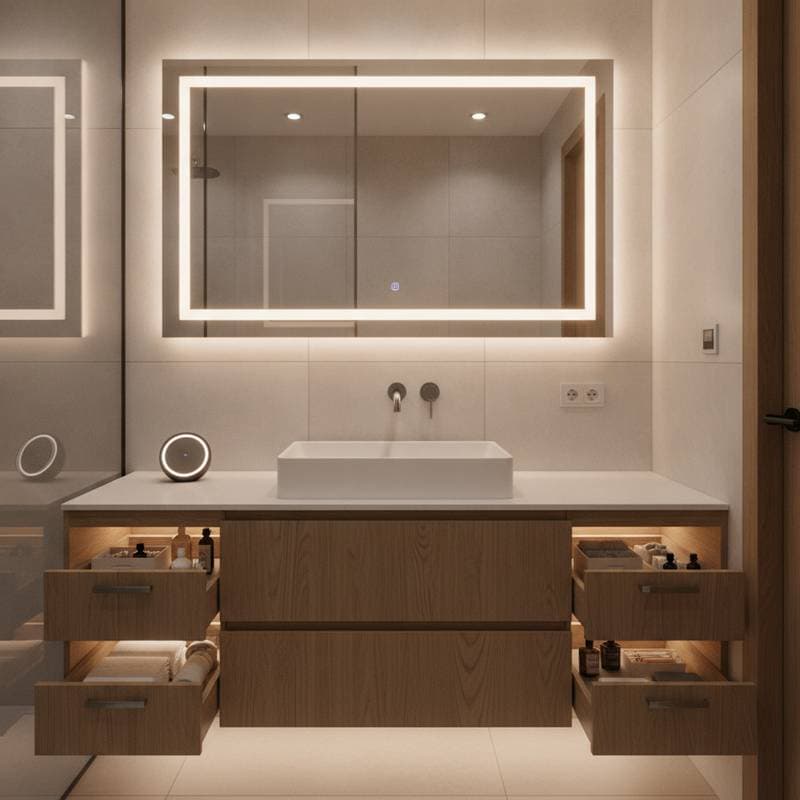
Layered lighting—encompassing general, task, and accent options—serves as a foundational safety element. Motion sensors automatically illuminate spaces upon entry, averting nighttime stumbles and promoting energy efficiency. Luxury implementations feature recessed LED fixtures or subtle under-vanity strips that provide gentle guidance without harsh glare.
4. Radiant Floor Heating Paired with Slip-Resistant Surfaces
Heated floors offer comfort and aid in maintaining dry conditions, thereby lowering slip potential. Textured porcelain or luxury vinyl tiles, certified for wet environments, provide traction without sacrificing sophistication. Clients often appreciate this feature's role in enhancing safety during cooler seasons, transforming initial skepticism into endorsement.
5. Advanced Toilet Systems
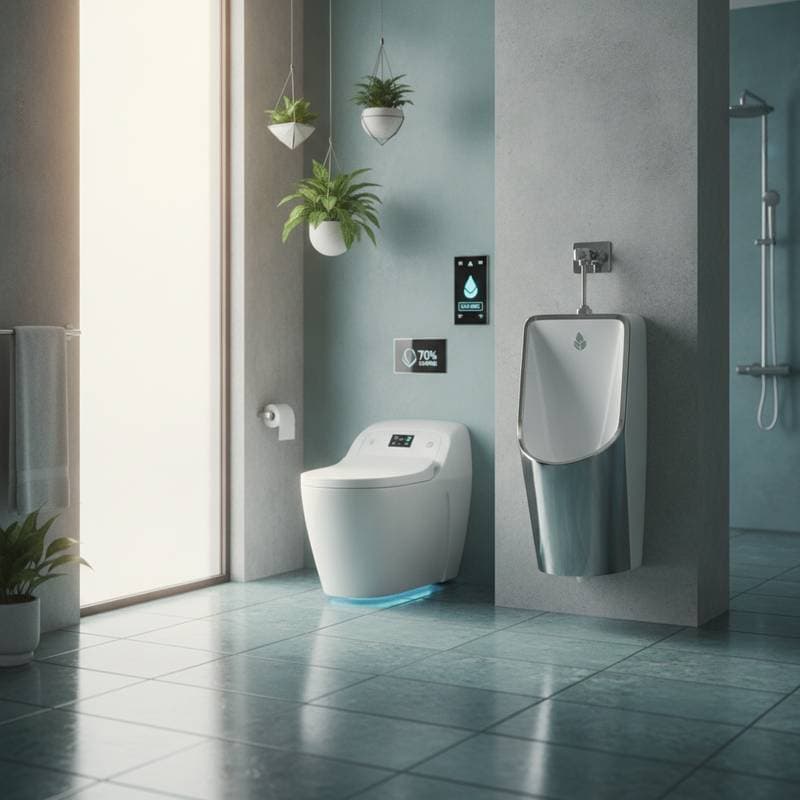
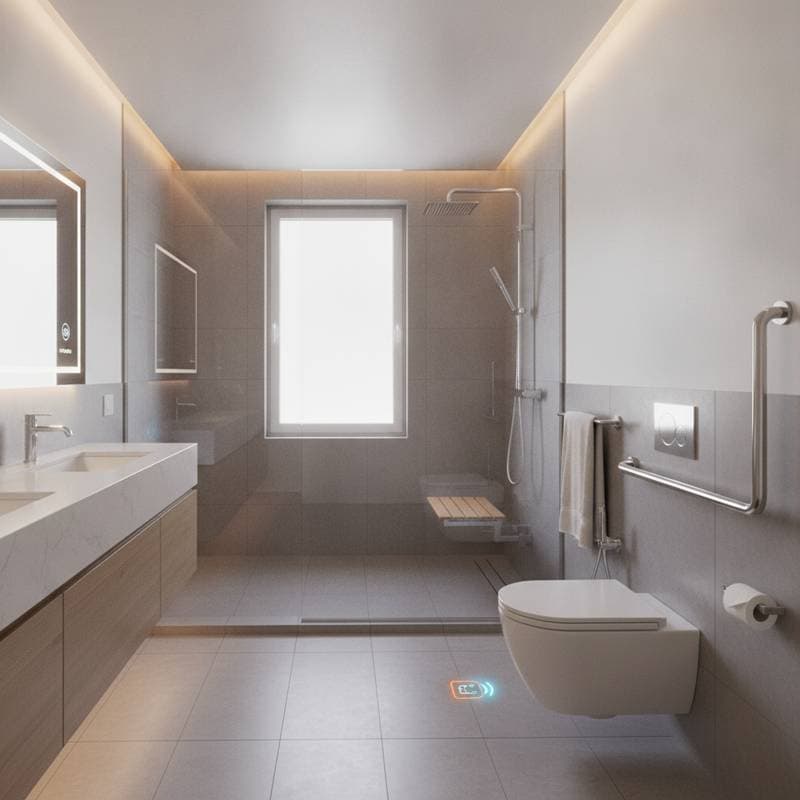
Contemporary toilets incorporate automatic lids, integrated night lights, and bidet functionalities with customizable pressure and warmth. These elements support hygiene and self-reliance for aging users. Sleek profiles and hidden plumbing contribute to elegant appearances. Wall-mounted variants facilitate cleaning, with height adjustments available for versatility.
6. Integrated Safety Monitoring
Select luxury setups include fall detection and overflow sensors. Alerts transmit to smartphones or caregivers upon incidents, ensuring prompt response. These components integrate discreetly, offering reassurance without medicalizing the environment.
Universal Design Principles for Luxurious Accessibility
True luxury harmonizes with accessibility, rendering safety features indistinguishable from the overall design. Core universal design tenets elevate these spaces effectively.
1. Seamless, Curb-Free Showers
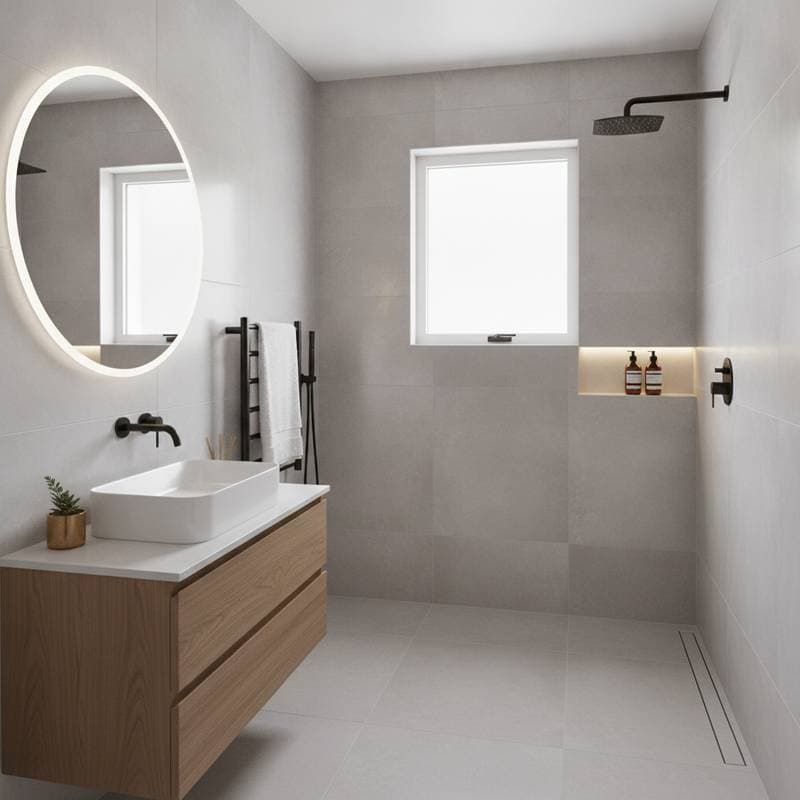
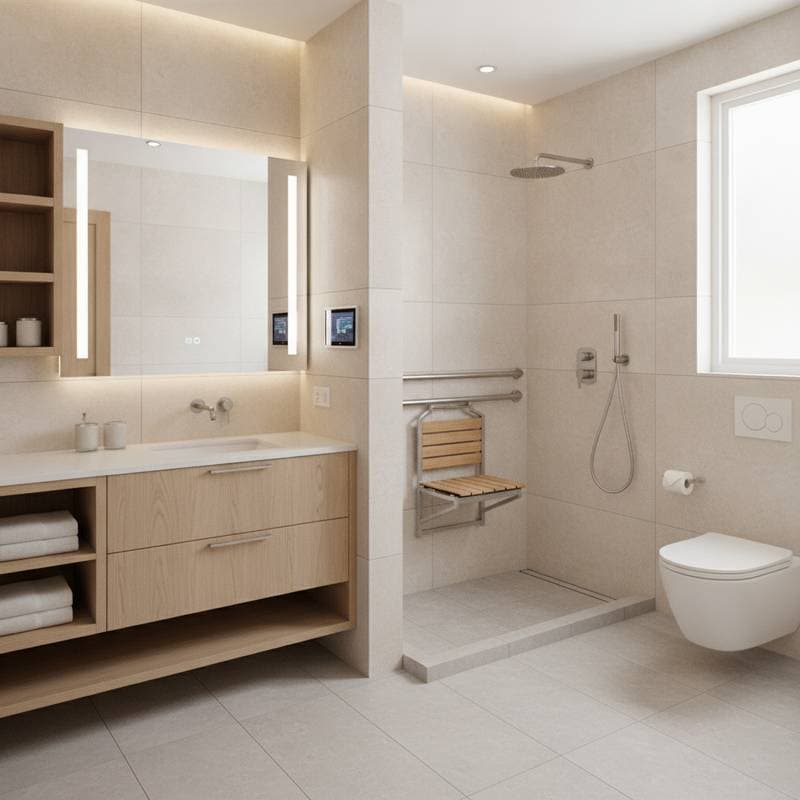
Eliminating curbs produces a streamlined, contemporary aesthetic while removing trip risks. Proper sloping directs water drainage without overflow. Large-format tiles extend floor patterns continuously, accommodating mobility aids and conveying premium quality.
2. Expanded Doorways and Fluid Layouts
Doorways widened to 34 inches minimum accommodate assistive devices. Space-saving pocket or barn doors introduce architectural flair. Open configurations with unobstructed pathways enhance safety and perceived spaciousness.
3. Versatile Fixture Adjustments
Handheld showerheads on adjustable rails, vanities with height modifications, and tilting mirrors provide adaptability. These options suit diverse users without aesthetic compromise. Floating vanities, for instance, allow future lowering while appearing conventional initially.
4. Thoughtfully Positioned Support Elements
Grab bars now match luxury finishes like towel racks and faucets, shedding utilitarian looks. Pre-installing wall blocking during construction enables future additions at minimal cost. This foresight avoids disruptive repairs later.
5. Comprehensive Lighting Strategies
Glare-reduced, multi-layered illumination balances safety and ambiance. Mirror-adjacent task lights, broad ambient coverage, and mood-enhancing accents create harmony. Voice- or touch-activated dimmers afford effortless brightness control.
Selecting Materials for Safety and Elegance
Material selections profoundly influence bathroom functionality and appearance. Premium options need not compromise on grip or durability. Recommended choices for accessible luxury include:
- Porcelain Tile: Offers longevity, simple maintenance, and non-slip variants. Opt for matte or textured finishes to maximize footing.
- Quartz Countertops: Impervious to stains and effortless to maintain. Bullnosed edges minimize impact injuries.
- Tempered Glass Enclosures: Provides transparency and shatter resistance. Frosted or tinted options ensure privacy while admitting light.
- Luxury Vinyl Tile: Yields underfoot comfort superior to ceramics, resists moisture, and mimics upscale wood or stone.
- Solid Surface Materials: Seamless integrations around fixtures deter mold and streamline upkeep.
Contrast plays a vital role alongside aesthetics; darker floors against light walls aid visual navigation. Textures in moisture-prone zones enhance grip without utilitarian vibes.
Essential Planning and Professional Collaboration
Successful aging-in-place designs originate from thorough discussions of present and anticipated needs. Collaboration among contractors, designers, and homeowners proves essential. Optimal outcomes arise from preemptive planning. Key steps include:
- Conduct detailed space assessments. Verify measurements for doorways, maneuverability, and fixture clearances.
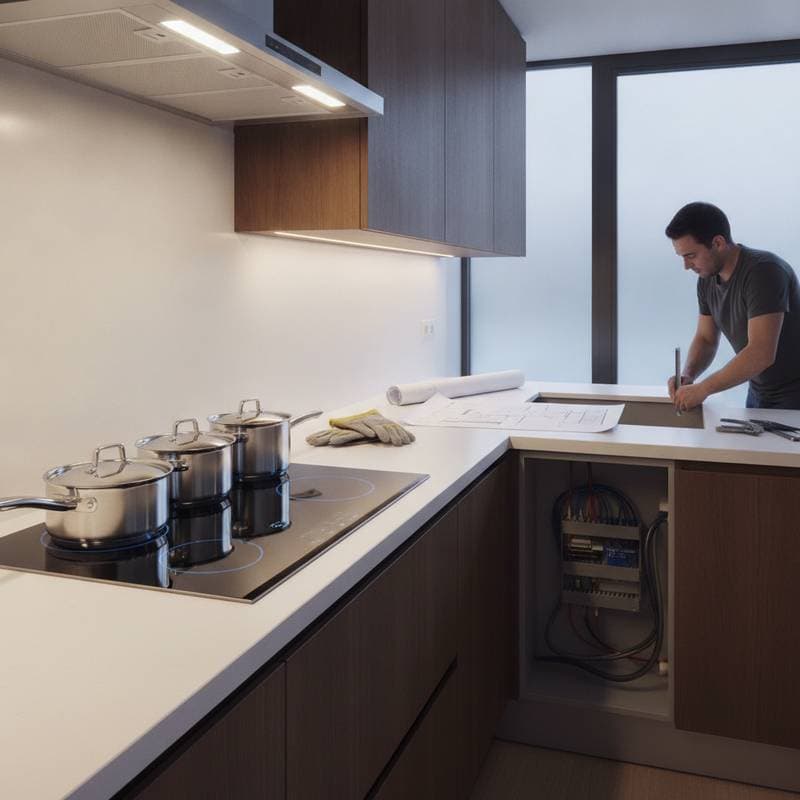
- Examine infrastructure compatibility. Allocate circuits or Wi-Fi for smart features during renovations to simplify implementation.
- Align on personal comforts. Incorporate preferences like steam options or color therapy lights within accessibility frameworks.
- Establish practical budgets. Initial investments yield long-term savings by averting reactive alterations.
- Maintain comprehensive records. Document specifications for fixtures, materials, and systems to support ongoing maintenance.
Preventing Miscommunications in Remodeling Projects
Clear dialogue mitigates remodeling pitfalls. Implement these measures to sidestep disputes and excesses:
- Secure written confirmations for all selections, specifying models and finishes.
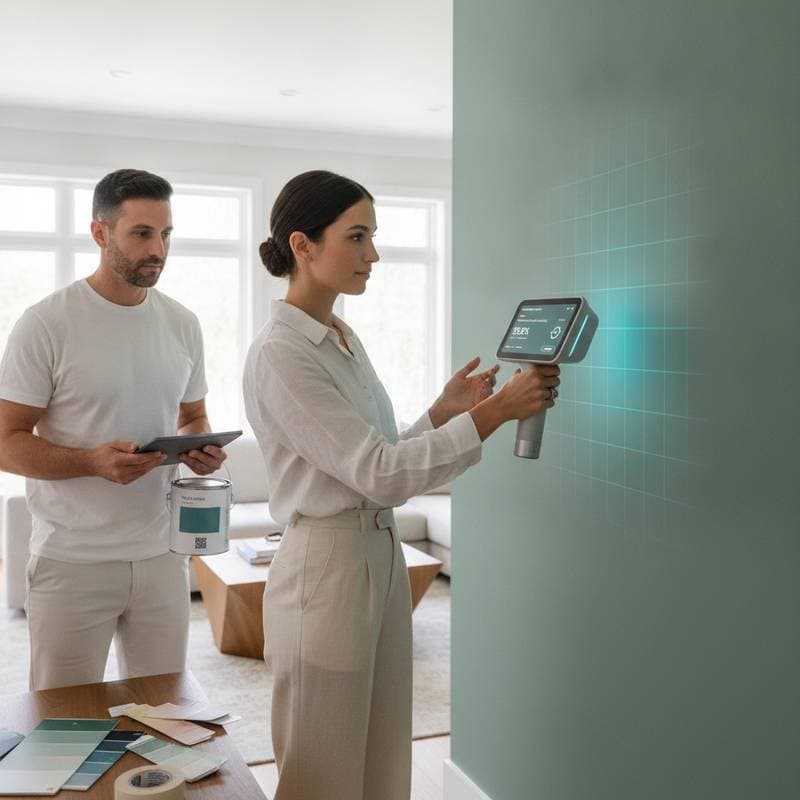
- Request visual aids or samples, as showroom appearances may vary under domestic lighting.
- Validate accessibility metrics, where minor deviations in dimensions impact usability significantly.
- Conduct routine site reviews to approve progress before irreversible installations.
Realizing a Secure and Timeless Bathroom
Approach bathroom renovations as investments in enduring well-being and property enhancement. Merging universal design with premium materials crafts spaces that exude permanence, protection, and luxury. Partner with experts versed in accessibility and contemporary aesthetics to achieve transformative results.