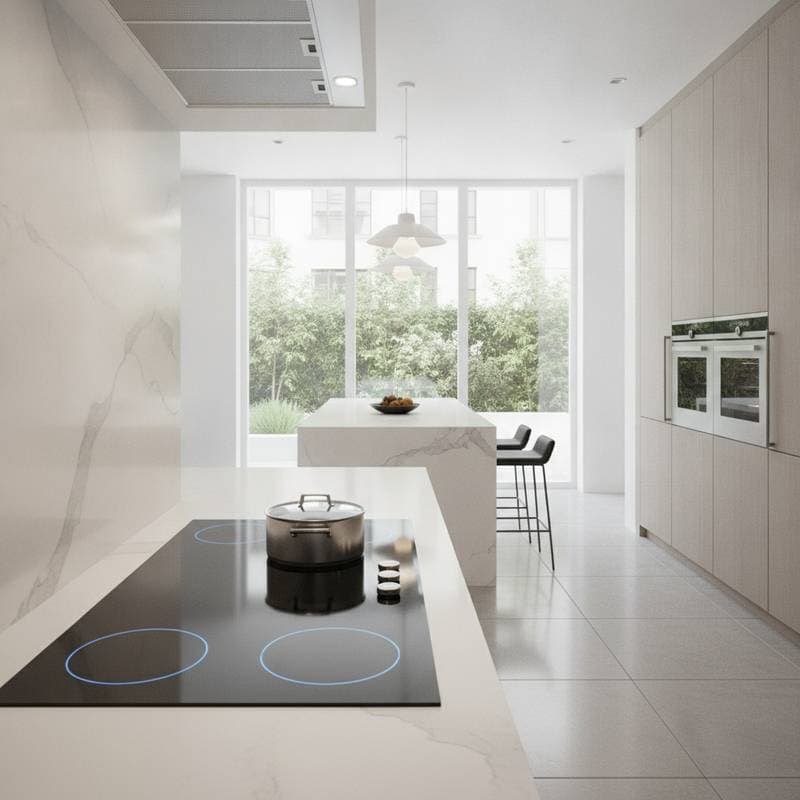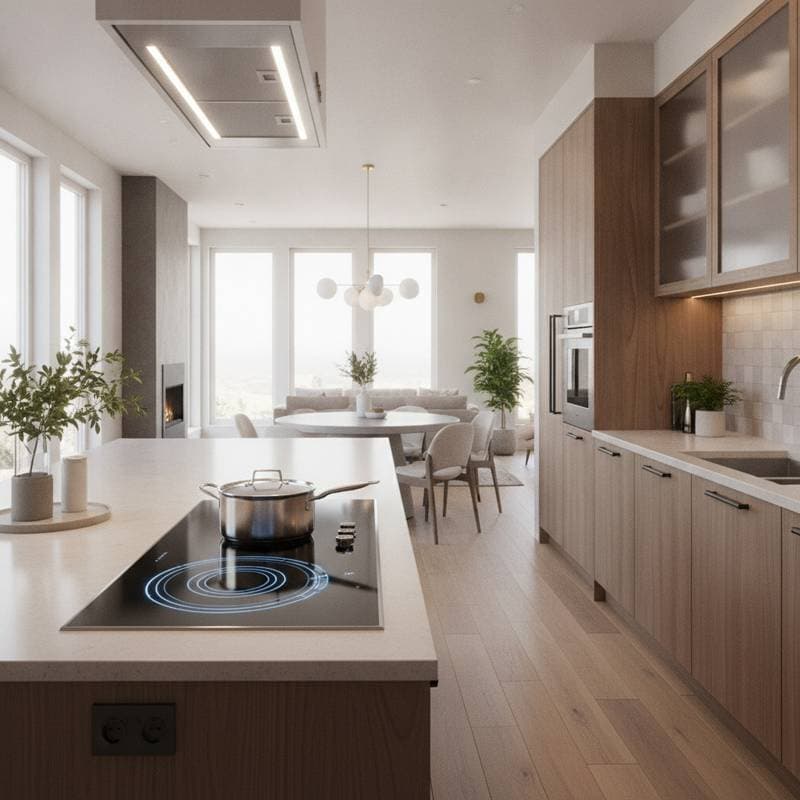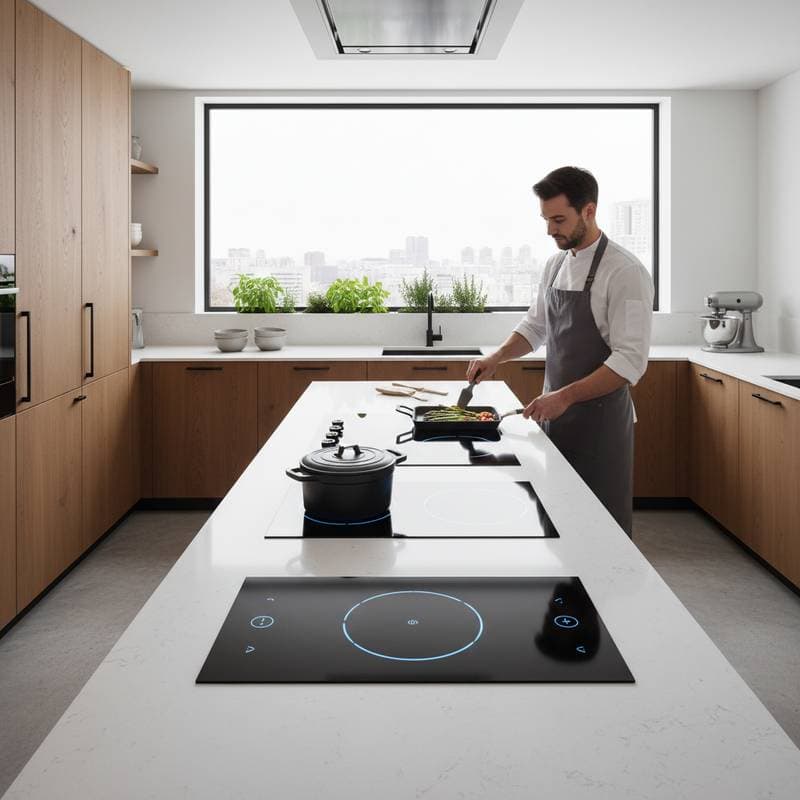
- Countertop Cutouts: Professional installation secures proper clearance and ventilation. Although induction produces less ambient heat, airflow protects internal electronics.
- Cookware Compatibility: Induction works only with ferromagnetic materials. Test items by attracting a magnet to the base; firm adhesion confirms usability. Non-compatible pieces require affordable stainless steel or cast iron alternatives.
- Ventilation Adjustments: Reduced heat output allows for compact, low-noise hoods. Position vents to capture steam from nearby sinks or prep areas without overpowering the space.
Installation complexity exceeds that of plug-in appliances but yields long-term adaptability. Homeowners often recoup costs via lower utility bills and versatile design options.
Budget Options for Induction Zones
Selections range from basic to advanced, aligning with project scope and features.
- Entry-Level Choices: Portable single-zone units or basic two-burner models cost $300 to $600, ideal for renters or trial runs.
- Mid-Tier Installations: Integrated four-zone systems with touch controls and bridge functions run $1,000 to $2,200, balancing performance and price.
- High-End Configurations: Customizable linked zones with app connectivity and seamless counter integration start at $2,800 and exceed $4,500 for premium brands.
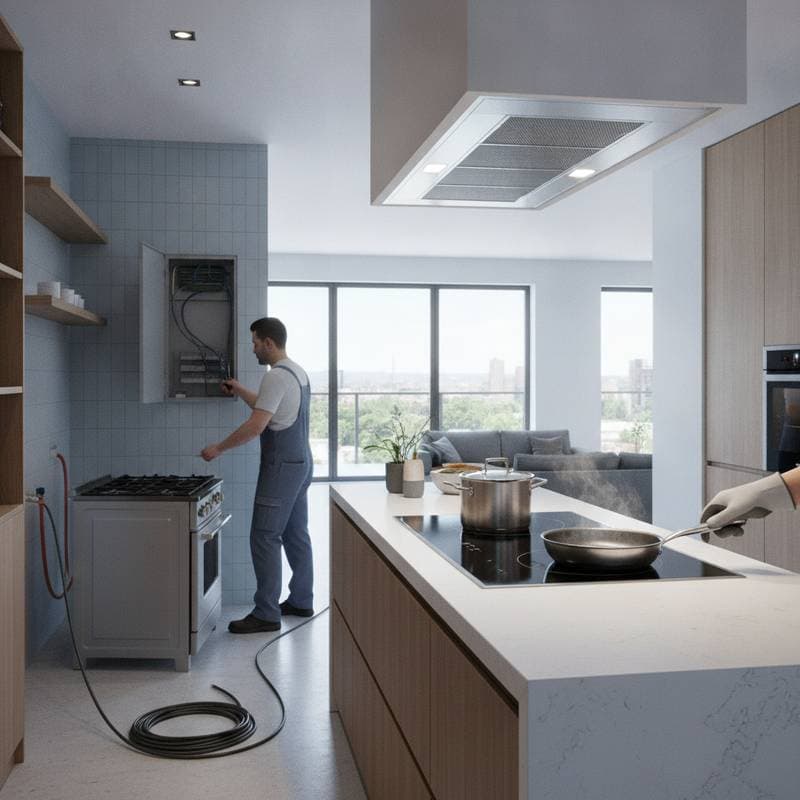
Engage a licensed electrician for fixed installations to comply with regional codes and ensure stable grounding. This step prevents hazards and maintains warranty validity.
Enhancing Workflow with Induction Zones
Induction zones optimize movement during food preparation, eliminating traditional constraints. Fixed ranges often restrict access, causing overlaps in tasks like chopping near a hot stove. Distributed zones allow strategic placement, fostering smoother operations.
Imagine positioning a zone adjacent to the refrigerator for thawing ingredients, another by the sink for pasta cooking, and a third on the island for sauces. This setup minimizes steps, reduces collision risks, and maximizes counter availability for multiple users.
Redefining the Kitchen Work Triangle
The classic work triangle links sink, stove, and refrigerator for efficiency. Induction zones expand this into dynamic activity areas, prioritizing task flow over rigid geometry.
- Preparation Area: Position a zone close to the sink for initial cooking steps, such as parboiling vegetables.
- Primary Cooking Area: Centralize two or more zones for entrees, enabling simultaneous techniques like searing and reducing.
- Plating Area: Install a low-heat zone near dining spaces to keep dishes warm without overcooking.
This zoning transforms the kitchen into a streamlined professional environment, where activities sequence naturally and space utilization improves.
Maintenance and Long-Term Durability
Induction surfaces stay cooler, preventing spills from baking on during use. Cleanup involves a soft cloth and mild cleaner once the unit cools, restoring the finish without effort.
No coils or grates require removal, streamlining routine care. The design minimizes wear from daily operations, preserving both function and appearance.
Strategies for Extended Use
- Select pots with even, flat bases to distribute heat uniformly and prevent surface marks.
- Wipe down only at room temperature to avoid thermal shock to the glass.
- Lift rather than slide cookware to maintain the smooth top.
- Adhere to ventilation specs to safeguard electronic parts from dust buildup.
Units typically endure 12 to 20 years under regular conditions. High-quality models feature modular parts for targeted repairs, often surpassing gas counterparts in reliability due to the absence of fuel-related components.
Environmental and Health Advantages
Induction avoids gas combustion, eliminating emissions like carbon monoxide and particulates that affect indoor air. This benefits respiratory health, particularly in sealed modern homes.
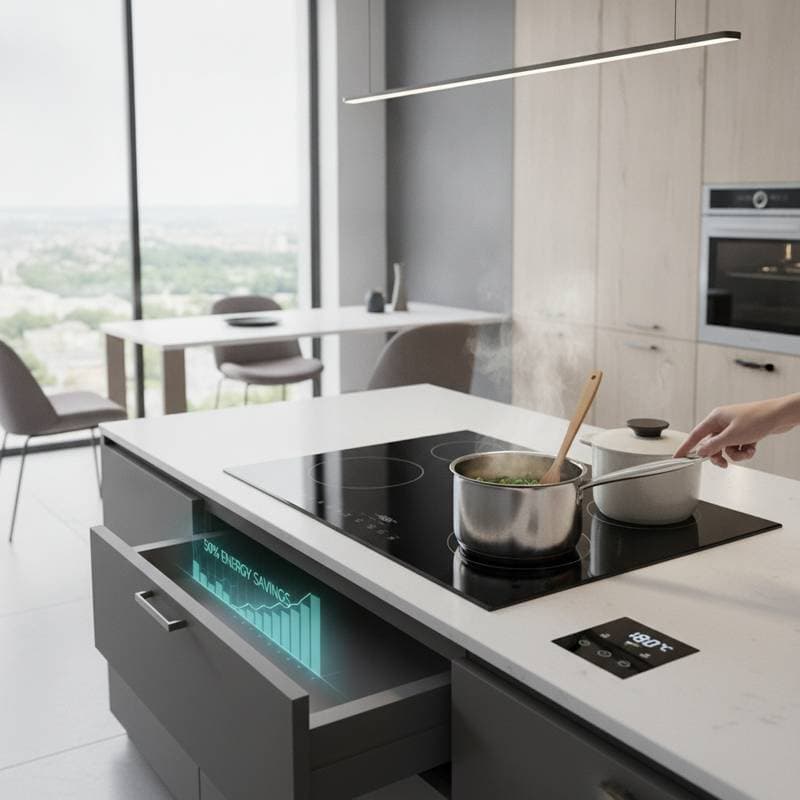
Electrically powered systems lower household carbon output, especially with renewable grid sources. Their targeted heating cuts energy consumption by 30 to 50 percent over traditional methods, supporting sustainable practices.
Kitchens remain comfortable, with less heat escaping to raise room temperatures. This reduces reliance on cooling systems, enhancing overall efficiency during peak cooking seasons.
Engaging Professionals for Installation
Portable models offer plug-and-play convenience, but built-in systems demand expert handling. A licensed electrician assesses wiring capacity and installs dedicated lines to avoid performance dips.
For renovations, collaborate with designers to align zones with cabinetry and workflows. Multiple placements may necessitate separate circuits, ensuring even power distribution.
Consult local regulations early to meet standards for electrical and airflow requirements, securing a compliant, future-proof setup.
Integrating Induction into Your Kitchen
Transitioning to induction zones involves evaluating current habits to identify inefficiencies, such as crowded counters during family meals. Map out high-traffic moments to pinpoint ideal zone locations.
Choose scale based on needs: a compact unit for occasional use or an expansive array for avid cooks. Involve specialists during planning phases to harmonize electrical, structural, and aesthetic elements.
These zones deliver more than updated appliances; they create a responsive cooking environment that boosts productivity, conserves resources, and inspires culinary innovation.