Prepare for Gas Bans: Induction Kitchen Rewiring Costs
Local gas restrictions and potential bans prompt many homeowners to consider converting their kitchens from gas to electric cooking. If your setup relies on gas, the transition to induction cooktops involves electrical upgrades that can catch people off guard. Proper planning helps control expenses and ensures a reliable installation.
This guide details the rewiring process for induction cooktops, including circuit needs, cost estimates, and practical steps. Homeowners gain insights into budgeting, safety considerations, and the advantages of modernizing electrical systems.
Why Switch from Gas to Induction Cooking
Gas restrictions force reliance on electric appliances, with induction cooktops emerging as a top choice for their rapid heating and precise control. These units generate electromagnetic fields to heat pots and pans directly, bypassing the need to warm the cooktop surface. The result offers cleaner operation and superior energy use compared to traditional electric or gas methods.
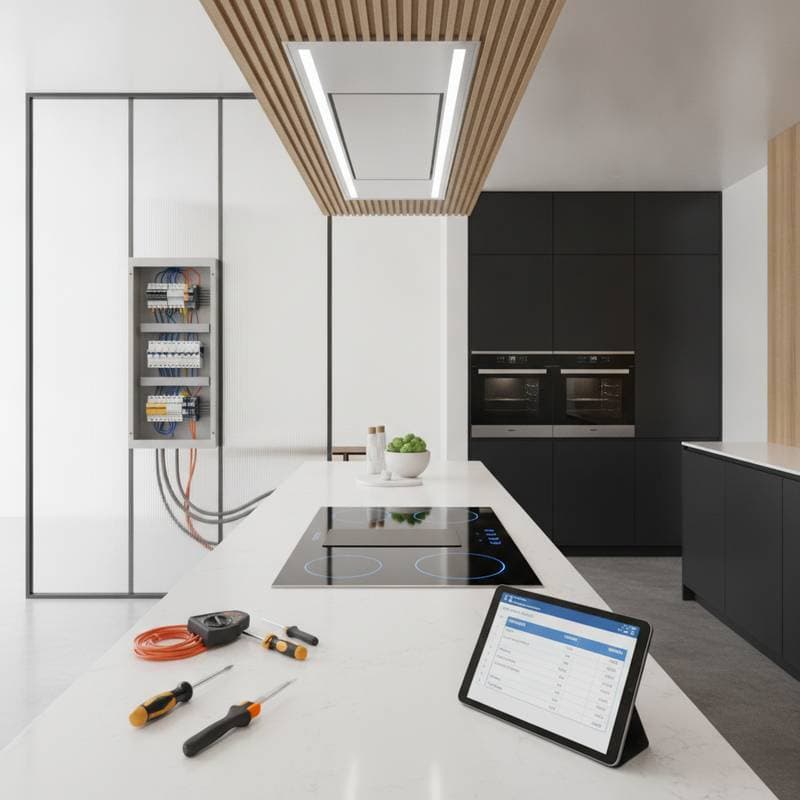
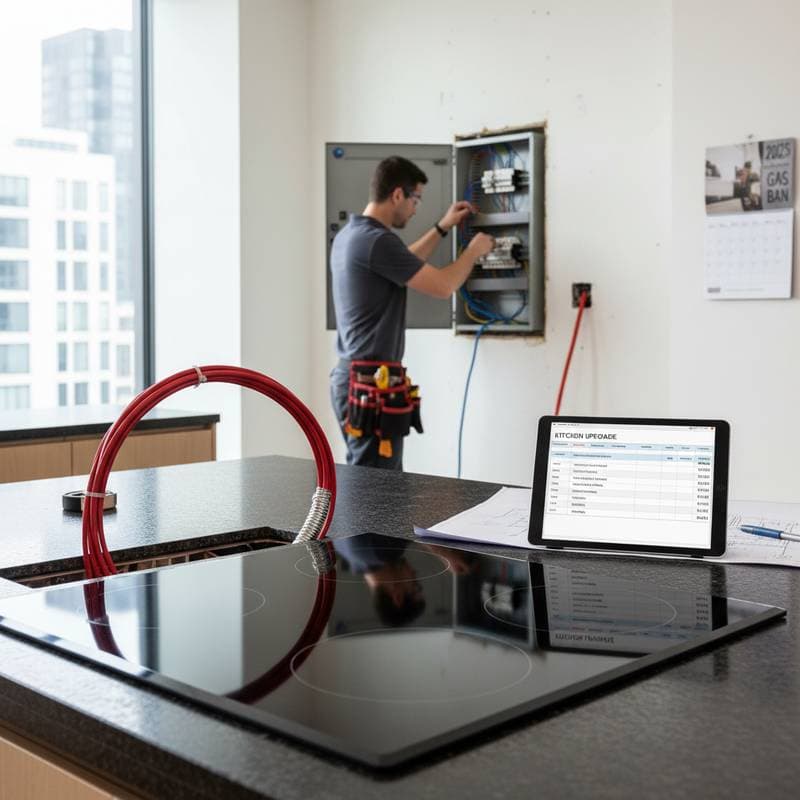
Gas cooktops typically consume little electricity, mainly for ignition. Induction models, however, require substantial power, often 7,000 to 11,000 watts based on size and features. This demand necessitates a dedicated 240-volt circuit with a 40- to 50-amp breaker to prevent overloads and ensure safe performance.
Homes built before the 1990s frequently lack such capacity, leading to required upgrades. Addressing these early avoids disruptions during a full kitchen remodel or when bans take effect.
Breaking Down Rewiring Expenses
Installing an induction cooktop extends beyond the appliance itself; it demands evaluation of the entire electrical infrastructure. Factors like home age, panel capacity, and wiring distance influence the total investment.
Expect these key components:
-
Dedicated Circuit Wiring: $300 to $800
Running a 240-volt line from the panel to the cooktop involves appropriate wire gauge, such as 6- or 8-gauge copper, to minimize resistance over distances up to 50 feet. -
Panel Capacity Upgrade: $1,200 to $3,000
Many older panels provide only 100 amps, insufficient for induction plus other loads. A 200-amp upgrade accommodates future electric additions like EV chargers or heat pumps. -
Permits and Inspections: $100 to $300
Local authorities mandate permits for high-amperage work to verify code adherence. -
Appliance Installation Labor: $150 to $500
This covers connections and any countertop modifications, with additional fees if gas lines require capping.
Total costs for a complete project typically span $1,800 to $4,500. Homes with recent electrical updates may incur expenses at the lower range, while extensive retrofits push toward the higher end.
Guide to Converting Your Kitchen
Approach the conversion methodically to minimize stress and costs. Follow these steps for an organized process.
-
Evaluate Panel Capacity
Locate the main breaker in your service panel and note its amperage. Panels under 200 amps often need expansion to support induction without compromising other circuits. -
Engage a Licensed Electrician
Schedule an inspection to assess wiring compatibility and recommend breaker sizes. Request details on wire types, such as THHN for conduit runs, tailored to your cooktop's manual. -
Select an Appropriate Cooktop
Opt for models between 24 and 36 inches, checking specs for amp draw. For example, a 30-inch unit might need 40 amps at 240 volts; ensure it matches your outlet configuration. -
Address Cabinet and Surface Fit
Measure the existing cutout against the new cooktop dimensions. Minor adjustments, like adding shims or resizing openings, prevent installation delays. -
Coordinate the Installation
Allocate time for the work, which may span several hours to a day. Shut off power and gas in advance, and prepare alternative cooking arrangements. -
Verify Functionality Post-Installation
Run tests on all elements and circuits. Secure a final inspection to confirm grounding integrity and load balance.
Weighing DIY Options Against Professional Services
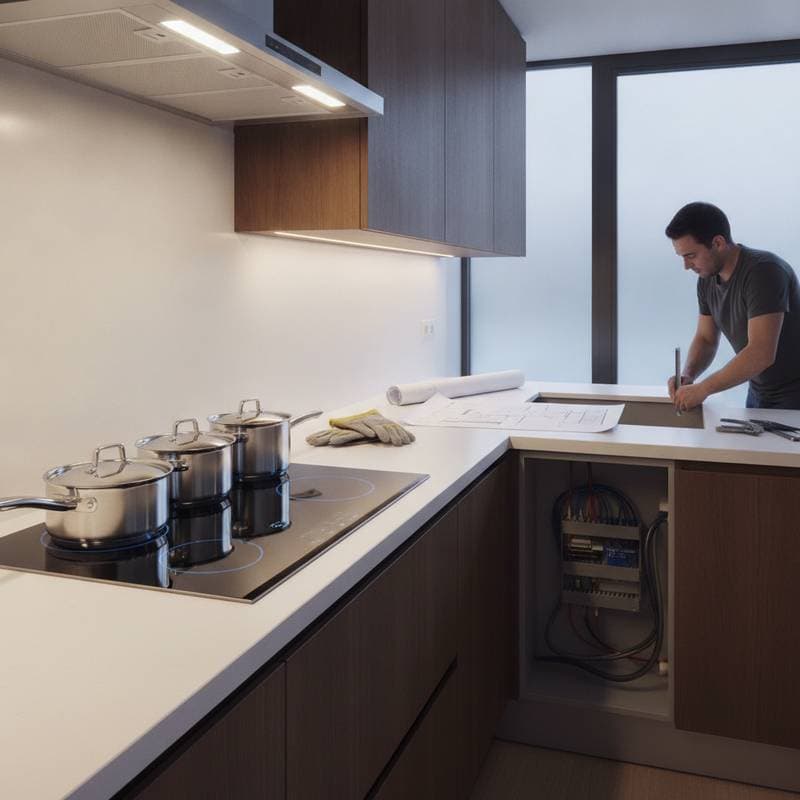
Homeowners sometimes explore self-installation to save money, but limitations exist. Swapping the cooktop unit appears simple, yet handling 240-volt wiring or panel modifications demands expertise.
Electrical codes prohibit unlicensed high-voltage work in most areas, and errors risk fires, shocks, or voided warranties. Professionals carry insurance and tools for safe execution.
Safe DIY contributions include:
- Disconnecting and removing the gas cooktop after isolating the supply line
- Sealing unused openings in walls or counters
- Preparing the space by clearing debris
Delegate all electrical tasks to certified experts for compliance and peace of mind.
Tailoring Upgrades to Your Budget
Assess your home's needs to align upgrades with financial constraints. Consider these tiers for planning.
-
Basic Upgrade ($1,000 to $2,000)
Ideal for properties with existing 240-volt infrastructure. Focus on the cooktop purchase and basic hookup. -
Standard Upgrade ($2,000 to $3,500)
Covers new wiring, breaker additions, and labor for mid-century homes. Includes minor panel enhancements. -
Comprehensive Upgrade ($3,500 to $5,000+)
Essential for pre-1980s structures needing full panel replacement and rerouting. Incorporates safety features like arc-fault breakers.
Explore utility rebates for electrification, which can reduce outlays by 20 to 50 percent.
Prioritizing Safety and Regulatory Standards
Electrical safety forms the foundation of any induction installation. Proper grounding prevents shocks, while correctly sized breakers avoid overheating.
Electricians calculate wire thickness based on ampacity and run length; for instance, 6-gauge wire suits 50-amp circuits over 100 feet. Adhering to National Electrical Code guidelines ensures durability.
Obtain permits upfront to facilitate inspections. Compliance not only safeguards your household but also maintains home resale value and insurance eligibility.
Advantages of Electrical Modernization
Beyond meeting regulations, updated wiring unlocks efficiency gains. Induction delivers instant heat response, cutting cooking times by up to 50 percent over gas.
Kitchens stay cooler without gas emissions, improving air quality. The seamless surface cleans effortlessly, and integration with smart home systems enhances usability.
This foundation supports broader shifts, such as installing induction-compatible ranges or electric ovens, stabilizing utility bills amid rising energy demands.
Execute Your Kitchen Upgrade Plan
Initiate the process by inspecting your electrical setup and obtaining multiple electrician quotes. Prioritize professionals who detail upgrade scopes and timelines.
View the project as an investment in safety and performance. With robust 240-volt support, your kitchen equips for efficient, enjoyable cooking well into the future.