Electrify Your Kitchen: Induction Ends the Gas Era
The modern kitchen reflects evolving cultural priorities. From open hearths to professional-grade ranges, each era redefines the interplay of food preparation, energy sources, and design elements. Induction cooking now leads this shift, transforming high-performance spaces into sustainable havens. Homeowners cap gas lines during remodels and new constructions, opting for elegant electric cooktops that deliver cleaner air, rapid heating, and refined visuals.
How Induction Works: Precision Without Chaos
Induction technology employs magnetic fields to channel energy straight into cookware. This process generates instant heat without flames or glowing elements. The cooktop surface remains cool, boosting safety and enabling smooth shifts from cooking to serving. Designer Lena Ortiz of Atelier Verde Interiors calls it precision without chaos. The subtle hum replaces gas hisses, fostering a calm atmosphere for focused tasks and social interaction.
Aesthetic Integration: Minimalism Redefined
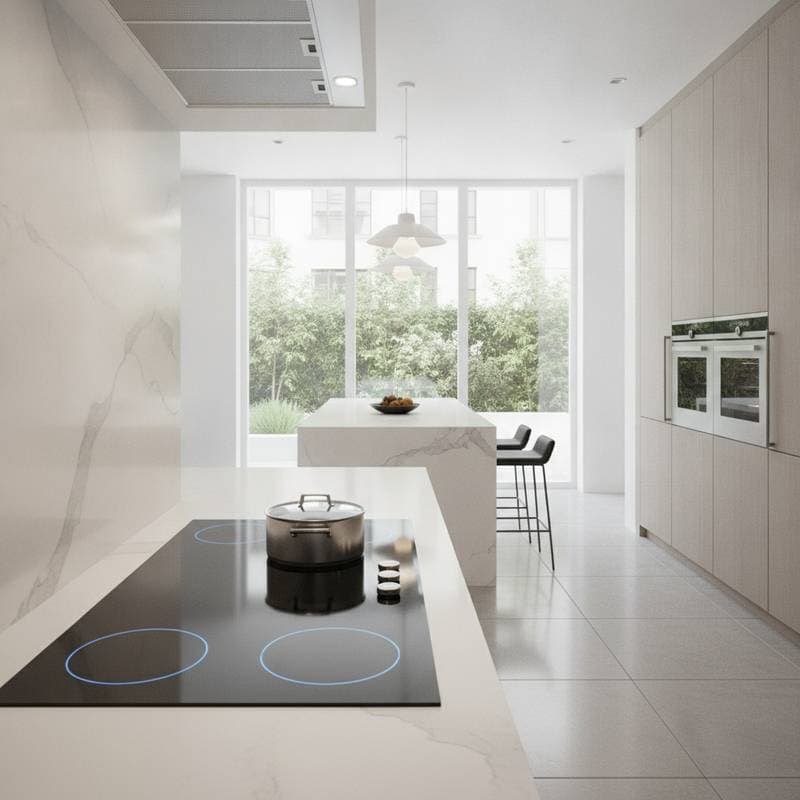
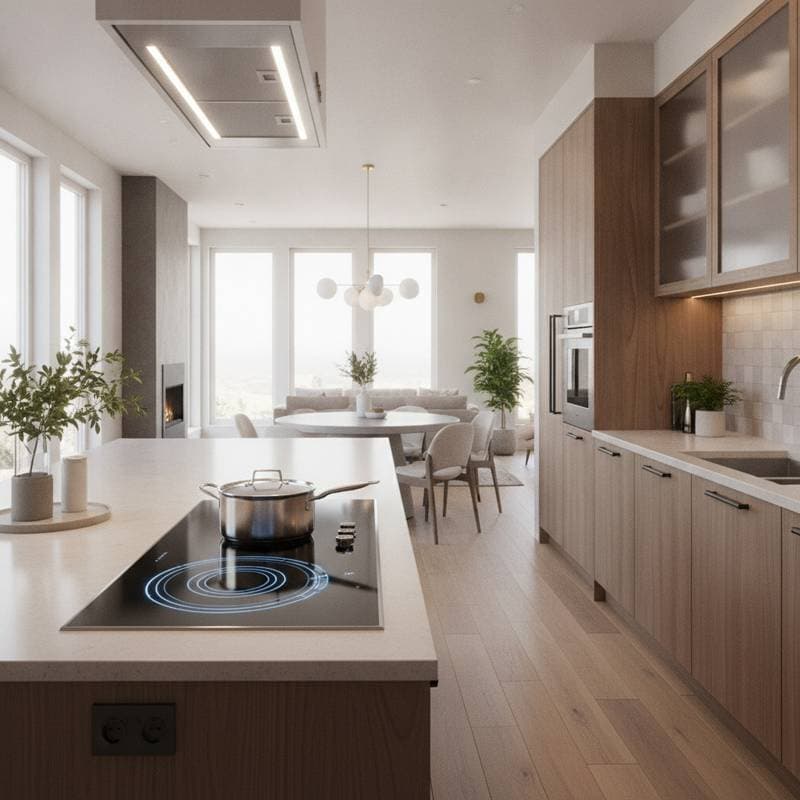
Induction surfaces embody pure minimalism as architectural features. Brands such as Gaggenau, Miele, and Fisher & Paykel craft them from flush black glass edged in brushed aluminum. These integrate seamlessly into countertops of honed marble or matte quartz. In a Studio MKN project, a 36-inch induction zone blends into Arabescato Corchia marble, its gray veins echoing graphite cabinetry. Free of knobs and grates, the design functions as subtle sculpture.
Performance Excellence: Speed and Control
Gas once dominated for speed, but induction exceeds it in responsiveness. Water reaches a boil in moments, sauces maintain steady temperatures, and reductions avoid scorching. Chef Elias Tran, after equipping his test kitchen with induction, remarked, It is like shifting from analog to digital. Every degree proves intentional. This instant response and fine adjustments enable home cooks and professionals to match restaurant standards with reduced energy use.
Health Benefits: Pure Indoor Air
Contemporary design prioritizes wellness. Research links gas combustion to indoor pollutants like nitrogen dioxide and carbon monoxide. Induction removes these risks entirely. Faye Linton of Linton & Co. Design Build observes that clients pair these systems with enhanced ventilation or skip oversized hoods. Kitchens gain openness and quiet, preserving materials such as natural oak, lime plaster, and brushed brass from residue or fading.
Sustainability: Aligning Design with Ecology
Electric cooking aligns with the rise of homes powered by renewables. Paired with solar panels or green grids, induction advances technical and ethical goals. This move from gas ties aesthetics to environmental stewardship. Manufacturers innovate with recycled aluminum, energy-efficient production, and modular parts that prolong usability.
Design Freedom: Uninterrupted Spaces
Absence of burners and grates liberates creative possibilities. Countertops flow without interruption, enhancing work areas and tranquility. Harrison Lowe Studio created a satin stainless steel expanse where the induction zone subtly reflects light. This setup promotes versatility: preparation zones double as bars, cooktops as serving areas. Such flexibility matches the dynamic routines of modern households.
Sensory Shift: The Quiet Rhythm of Cooking
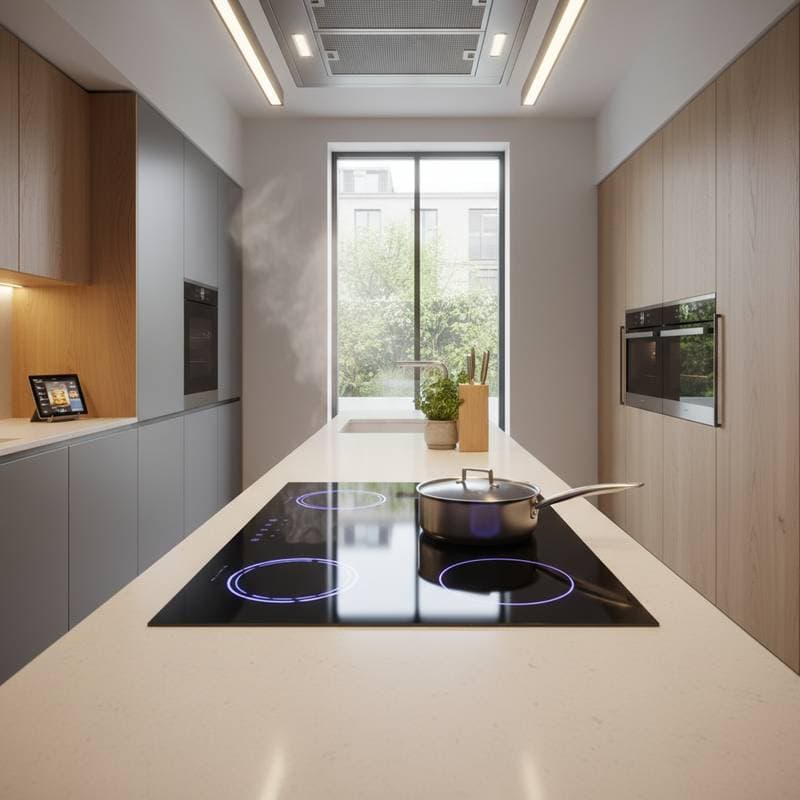
Induction alters the cooking experience on a sensory level. Without flames, light and motion interact softly through LED illumination and glass reflections. Subtle sounds create a meditative tone. Those avoiding visual excess discover that induction reinforces minimalism, where items balance utility and elegance. The change affects mindset as profoundly as the physical space.
Smart Connectivity: Responsive Kitchens
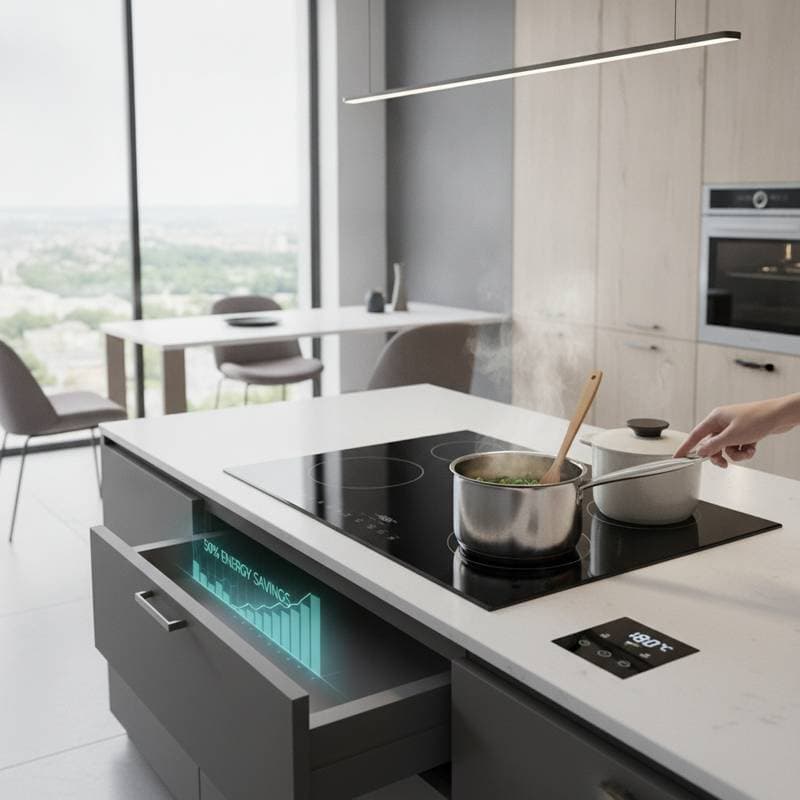
Advanced models sync with home automation. Touch interfaces, app controls, and sensors adapt power to cookware dimensions and contents. Bosch Benchmark Induction Series employs sensors for uniform heating. Samsung Virtual Flame projects flame-like visuals on the surface for users nostalgic for fire. These features blend tech with intuitive use, allowing kitchens to anticipate needs.
Navigating the Switch: Addressing Concerns
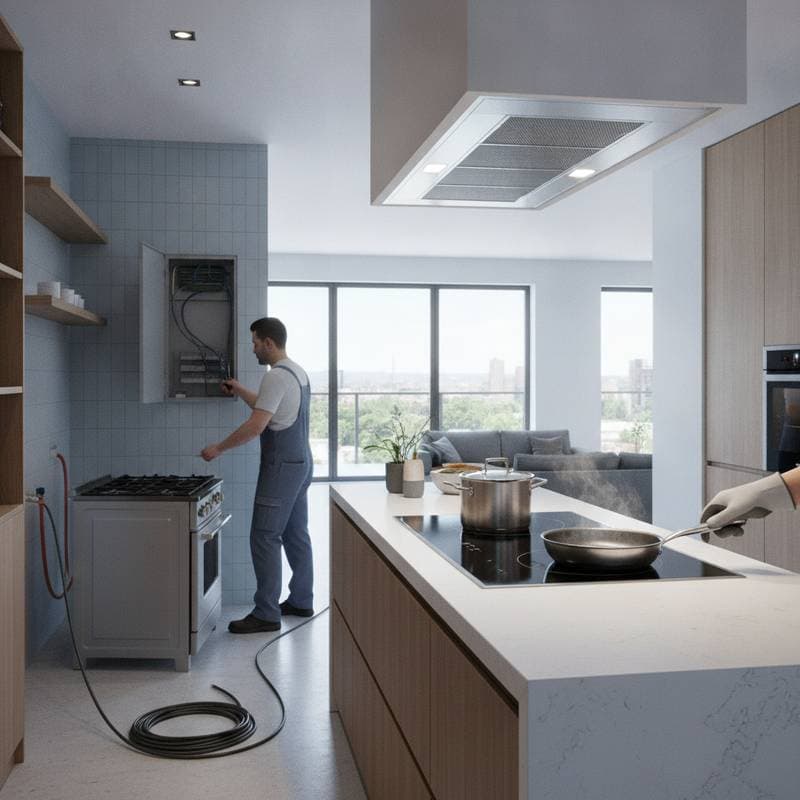
Transitioning from gas involves technical and sentimental hurdles. Many link open flames to heritage and taste. Designers counter this through demonstrations highlighting induction control and efficiency. Architect Julian Reed of Reed + Partners notes, Once clients feel the control and speed, they never look back. The ritual evolves, yet pleasure persists. This process sparks discussions on cabinet airflow, power upgrades, and layout adjustments.
Future Visions: Kitchens as Curated Spaces
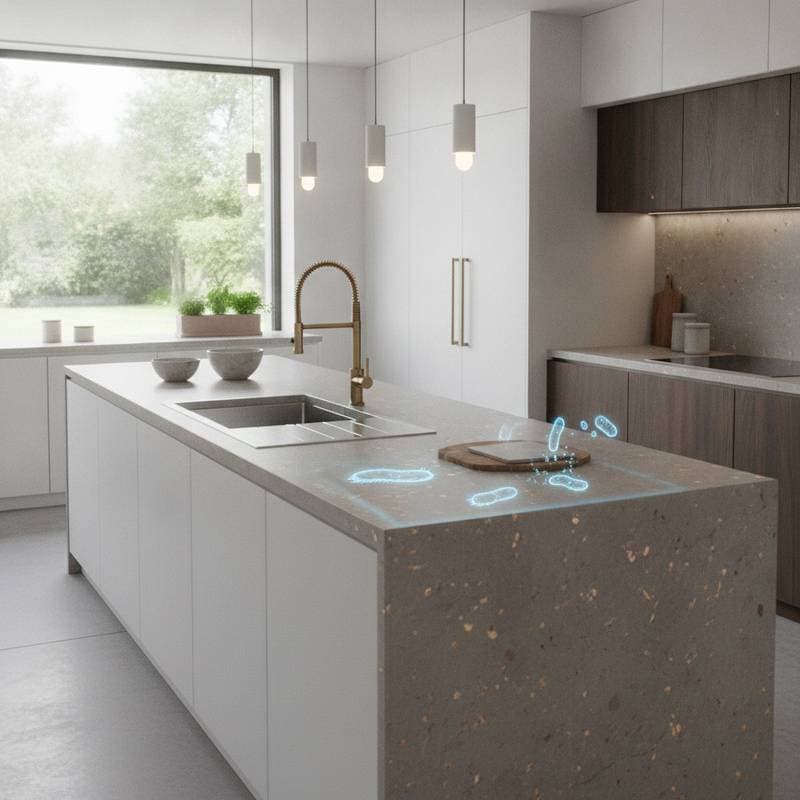
Induction sets the stage for kitchens blending utility and artistry. Picture a graphite island in Dekton Trilium, hiding a cooking zone amid mottled patterns. A Venetian plaster backsplash in Benjamin Moore Balboa Mist catches hidden LED glow. Each detail advances sustainable narratives. The kitchen transcends mere function to showcase subtle strength and discerning style.
Practical Advantages of Induction Living
Induction elevates cooking without sacrificing quality or appeal. It prioritizes accuracy, security, and environmental awareness. Cleaning proves simple on smooth surfaces. Families appreciate the safe, cool touch. Designers explore fresh spatial arrangements. Globally, it advances energy efficiency. As professionals and residents reshape homes, electric kitchens symbolize forward thinking, favoring clarity and insight over tradition.