How AI Color Tools Deliver Pro-Level Paint Matching for Your Home
Color shapes the emotional core of interior design. It dictates a space's mood, interacts with light, and alters perceptions of furniture and architecture. For years, achieving the ideal shade meant booking in-person consultations with experts. Now, AI color tools make this expertise available instantly and affordably, empowering users to match paint like seasoned professionals.
These tools preserve the creative essence of color selection while streamlining access. Advanced algorithms, image recognition, and machine learning enable them to analyze photos, detect undertones, and recommend harmonious hues. Tasks that once demanded site visits and specialized equipment now occur seamlessly on mobile devices.
Democratizing Expert Color Advice
Custom color guidance previously required hiring specialists. AI tools change this dynamic, allowing individuals to serve as their own consultants. Applications such as Backdrop's Color Match, Benjamin Moore's Color Portfolio app, and Sherwin-Williams ColorSnap Visualizer process uploaded images to pinpoint exact paint matches and curate palettes based on style or mood.
These platforms excel by considering context. They go beyond identifying primary colors to assess how lighting and adjacent materials influence appearance. For colors like Backdrop's Harajuku Morning or Farrow & Ball's Dead Salmon, users preview shifts from daylight to lamplight, ensuring selections suit real-world conditions.
Integrating Machine Learning with Material Insights
AI extends beyond walls to encompass fabrics, floors, and fixtures. Scanning a room photo reveals details like the subtle chill of brushed nickel or the cozy glow of oak cabinets, then suggests aligned paint options.
This material synergy mirrors the expertise of veteran designers, who grasp pigment-texture interactions. AI achieves similar results via pattern recognition trained on vast project datasets. Uploading an image of a cherished vase or heirloom rug yields palettes that capture color harmonies and preserve the item's essence.
Streamlining Color Choices with Psychological Guidance
The abundance of options often overwhelms during selection, risking indecision or expensive errors. AI tools counter this by using personality quizzes or emotional keywords to refine suggestions, such as calm neutrals or vibrant accents.
Platforms like Clare's Color Genius employ interactive formats to gauge preferences and lifestyle, delivering bespoke recommendations. Users receive focused options that align with daily needs, bypassing exhaustive swatch reviews. The system improves with user input, enhancing future precision.
Enhancing Decisions Through Virtual Visualization
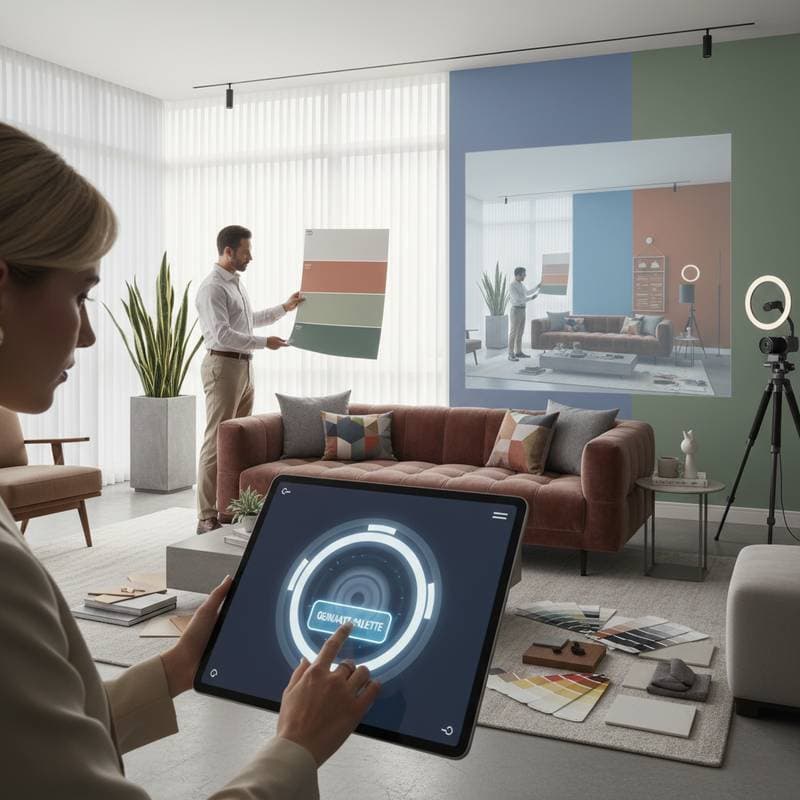
Visualization stands out as a key advantage of AI tools. Augmented reality lets users apply colors digitally to their spaces, observing how shades like Backdrop's Palo Santo or Behr's Graphic Charcoal perform under personal lighting.
This feature connects vision to outcome, minimizing post-application regrets from mismatched tones. Professionals traditionally used sample pots and broad tests; AI provides equivalent validation online, promoting cost-effective trials.
Fostering Collaboration Between Designers and AI
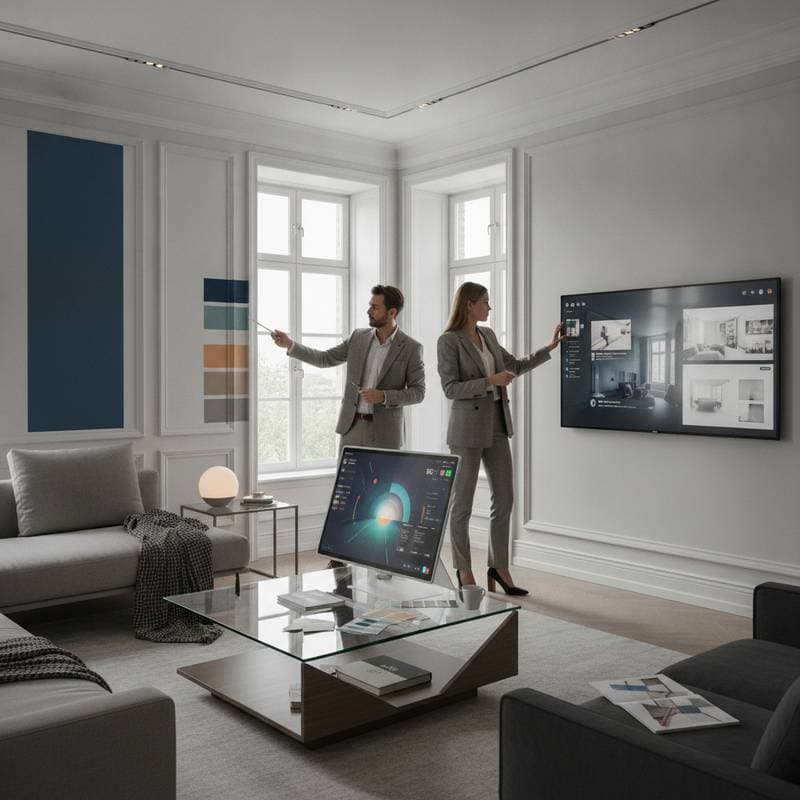
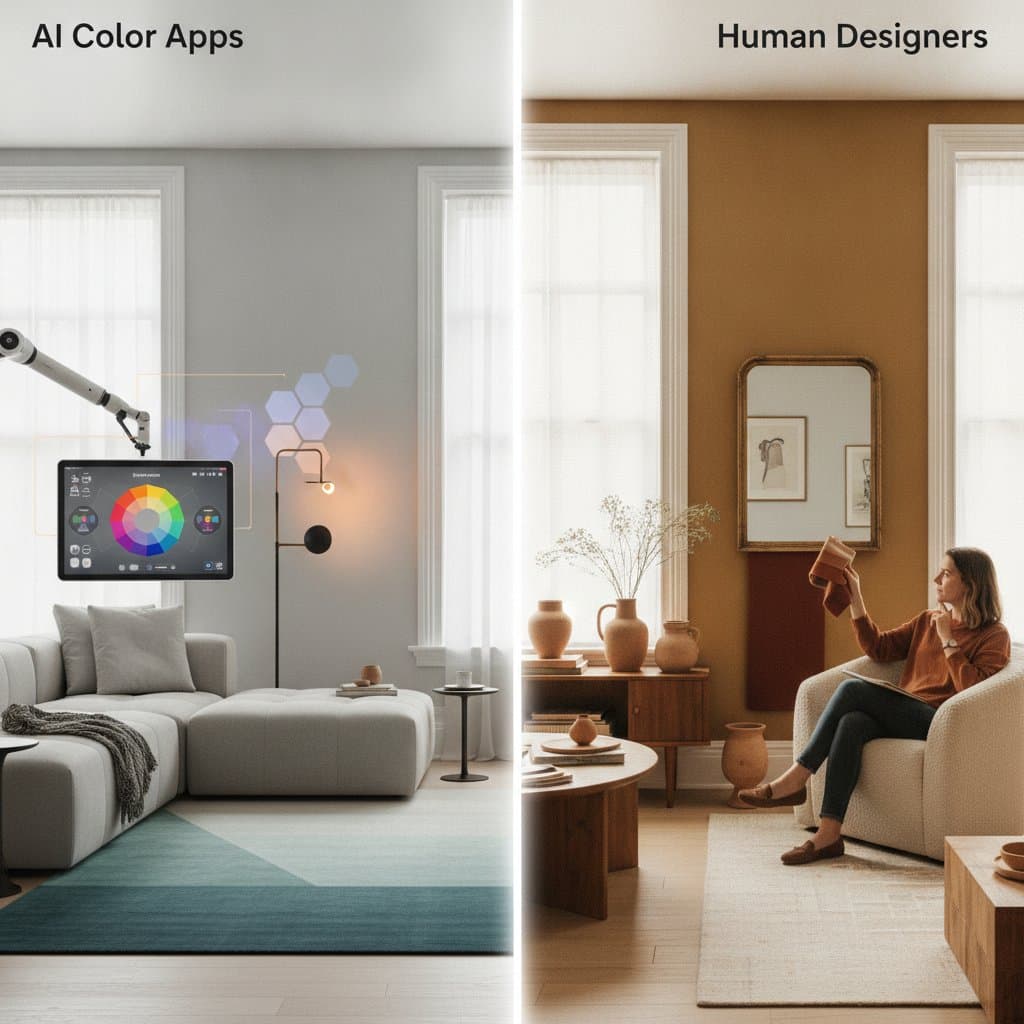
AI complements rather than supplants human designers. Many incorporate these tools to accelerate brainstorming and share dynamic palettes with clients.
Architect Talia Reece of Studio Ardent Interiors notes, "AI color tools allow us to start conversations more quickly. We can test ideas digitally and reserve in-person time for fine-tuning texture and finish." This partnership blends algorithmic reliability with human insight, advancing design methodologies.
Building Aesthetics on Data Foundations
AI recommendations stem from extensive datasets of projects and interactions. Systems identify popular pairings, light-responsive hues, and spatial compatibilities, evolving predictions accordingly.
A request for a coastal palette might yield chalky whites, soft blues, and warm taupes, informed by proven coastal designs. Outputs reflect aggregated wisdom, offering reliable rather than arbitrary trends.
Expanding Access to Professional Precision
High consultation fees often deter expert input. AI tools provide comparable advice at minimal or no expense, broadening design reach.
Renters, entrepreneurs, and self-starters gain tailored palettes via photo uploads and prompts, accounting for architecture and illumination. This inclusivity boosts user assurance and innovation in personal environments.
Simulating Lighting for Accurate Predictions
Light profoundly alters color, yet predicting its effects challenges most. AI simulates scenarios, comparing hues across sunlight, bulbs, and shadows.
Rendering engines compute changes in reflectivity and intensity, previewing Benjamin Moore's Classic Gray in varied settings like dim bedrooms or bright kitchens. This foresight averts frequent selection errors for all skill levels.
Promoting Sustainability via Exact Matches
Repaints generate waste from unused paint and coverings. AI's precision curtails errors, supporting eco-friendly practices.
Manufacturers embed AI in operations for batch uniformity, cutting defects and overproduction. Benefits span financial and planetary gains, positioning technology as a sustainability partner.
Capturing Emotional Nuances in Color Algorithms
AI increasingly deciphers color's emotional language, converting terms like soothing or nostalgic into suitable combinations.
Users describe desires conversationally, such as a warm quiet gray, and receive filtered matches avoiding undesired undertones. This intuitive interface fosters connection between tech and sentiment.
Embracing AI for Empowered Design Choices
AI color tools enrich rather than replace creative processes. They expedite exploration, curb mistakes, and instill decision-making confidence. While color's heartfelt impact stays human-led, the journey to ideal selections grows smoother and more equitable.