How AI Tools Revolutionize Paint Color Selection
Selecting paint colors remains a challenging aspect of home renovations. Homeowners often hesitate before shelves of paint samples, struggling to envision a small swatch expanded across entire walls. While some choices succeed, others lead to repaints that consume time and resources. Emerging AI color tools address this issue directly, transforming the process for homeowners, designers, and contractors through precise, technology-driven insights.
Challenges in Conventional Color Selection
Contractors frequently encounter situations where a color appears ideal in the store but transforms unexpectedly on site. Factors such as natural light, artificial illumination, wall textures, and surrounding furnishings alter the final appearance. Paint companies provide sample cards and test pots to mitigate these issues, yet these depend on subjective human judgment. Professionals may still overlook subtle undertones or shifts in brightness after drying.
The consequences of an ill-chosen color extend far beyond material costs. Labor expenses mount, daily routines disrupt, and dissatisfaction lingers in mismatched spaces. AI-driven color matching tools intervene here, offering data-backed solutions that enhance reliability.
Mechanics of AI Paint Color Tools
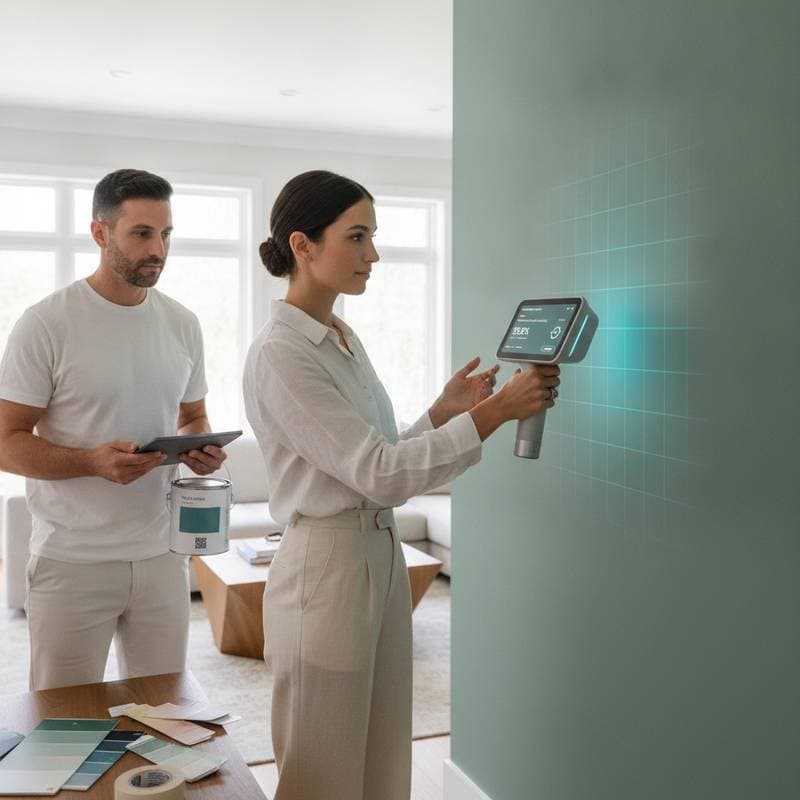
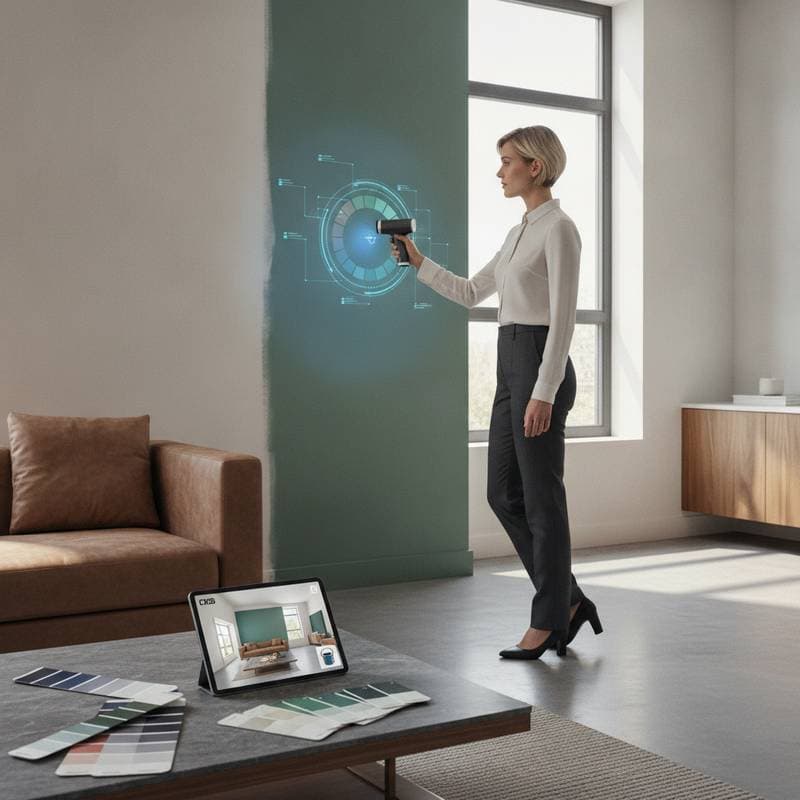
Contemporary AI color tools employ image recognition, lighting evaluation, and predictive algorithms to simulate color performance in specific environments. Users upload room photographs, prompting the system to examine elements like illumination sources, surface reflections, and current color schemes. The tool then forecasts enhancements or conflicts and suggests harmonious combinations guided by principles of contrast, balance, and emotional impact.
These platforms draw from extensive datasets of actual installations, refining predictions through machine learning. This approach delivers precision once achievable only via expert consultations or prolonged testing. Homeowners gain access to sophisticated visualization without specialized software.
Practical Advantages for Contractors and Projects
Contractors benefit from AI tools by curtailing delays stemming from client uncertainty. Visual previews enable quicker commitments, preserving timelines and reducing idle labor. Projects proceed smoothly when expectations align from the outset.
Key advantages observed in practice include:
- Minimized mid-project alterations. Digital simulations build client assurance, limiting changes after initiation.
- Seamless material integration. Tools align wall colors with elements like flooring, cabinets, and upholstery for cohesive results.
- Less material waste. Accurate forecasts decrease the need for excess test paints or incorrect batches.
- Heightened client approval. Matching outcomes to previews fosters greater trust in the contractor's expertise.
Leading AI Color Selection Platforms
Major paint manufacturers and tech developers provide diverse AI-enhanced options. Mobile applications scan rooms via smartphone cameras to propose instant shade matches. Web-based interfaces allow photo uploads, palette experimentation, and lighting adjustments to mimic various times of day. Advanced software connects with design suites, enabling contractors to generate shareable mockups for proposals and meetings.
Despite variations in features, these tools prioritize data-informed choices over intuition, accelerating decisions while upholding aesthetic quality.
Best Practices for Effective AI Tool Use
AI tools maximize value when applied thoughtfully. Users sometimes encounter discrepancies due to overlooked preparation. Consider these strategies to optimize results:
- Capture high-quality images. Opt for natural daylight and sharp focus to supply the AI with optimal input.
- Verify display accuracy. Screen variations can distort hues; cross-check previews across devices.
- Factor in paint finishes. Sheens like gloss or matte affect light interaction; select tools that simulate these alongside colors.
- Pair digital tools with physical tests. Virtual renders guide choices, but apply actual swatches to walls for confirmation before bulk purchases.
Integrating AI Tools into Contractor Workflows
Adopting AI technologies elevates a contractor's professional image. Presenting simulated visuals during consultations demonstrates foresight and commitment to accuracy. This practice sets realistic expectations, acknowledging that while AI handles predictions, human expertise navigates nuances like surface imperfections.
Such integration expands service offerings, facilitating visual dialogue that surpasses verbal descriptions. Contractors position themselves as forward-thinking partners in design and implementation.
Steps to Optimize Your Next Painting Project with AI
Homeowners embarking on renovations should incorporate AI color tools early to avert expenses and regrets. Begin by selecting a reliable platform, upload detailed room images, and iterate on suggestions. Consult professionals to refine outputs, ensuring alignment with personal style and space dynamics.
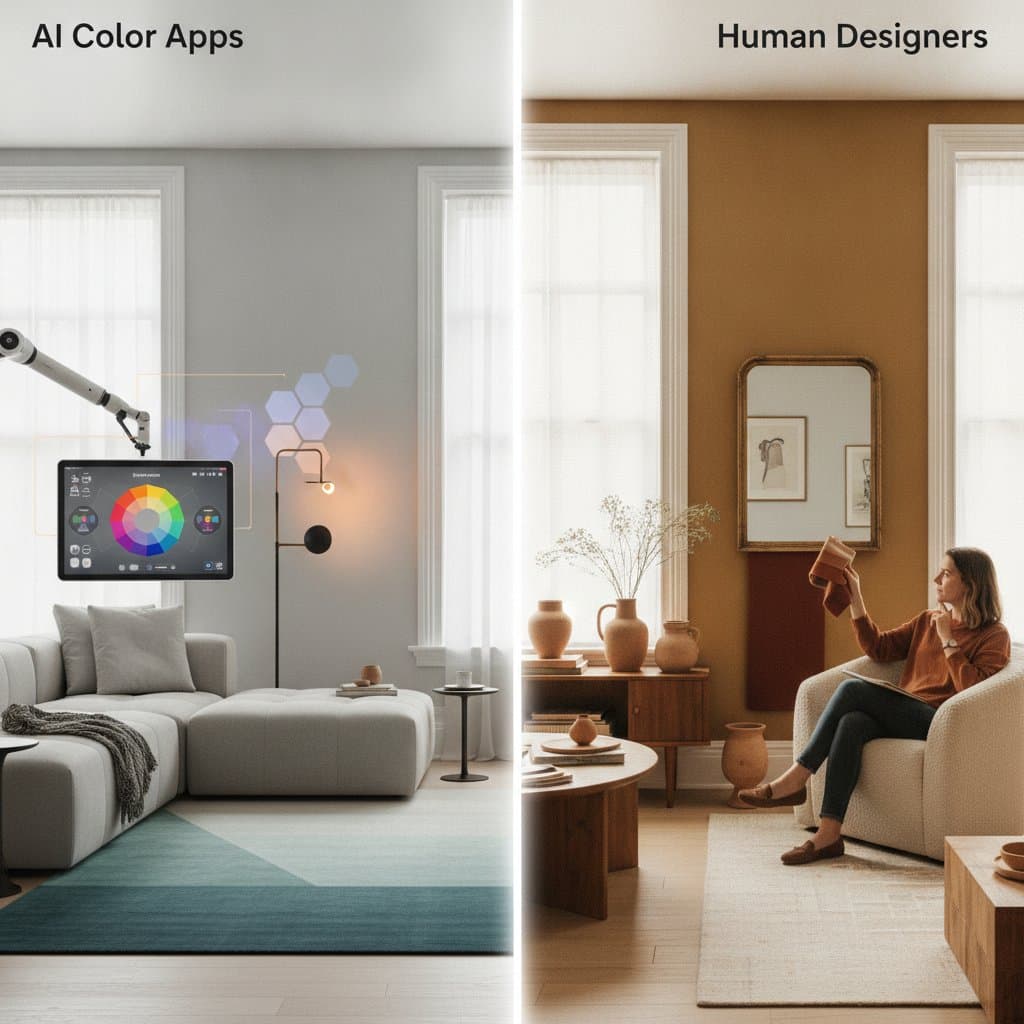
AI sharpens decision-making without supplanting creative intuition. Pair it with skilled execution to realize envisioned transformations efficiently and effectively.